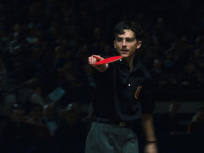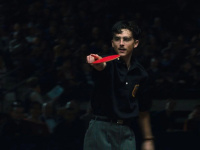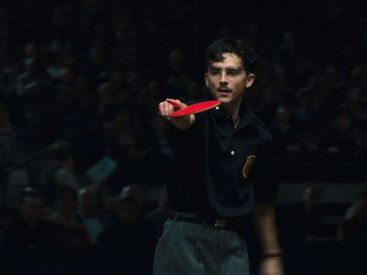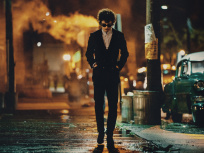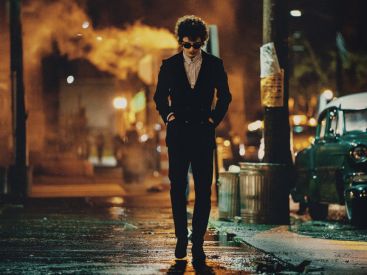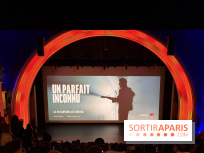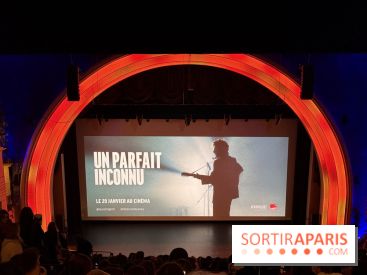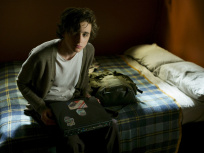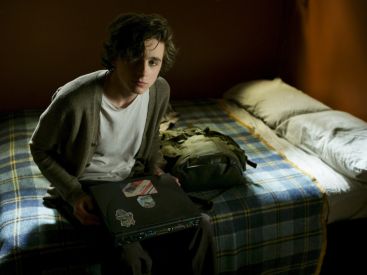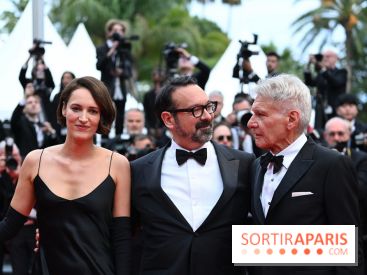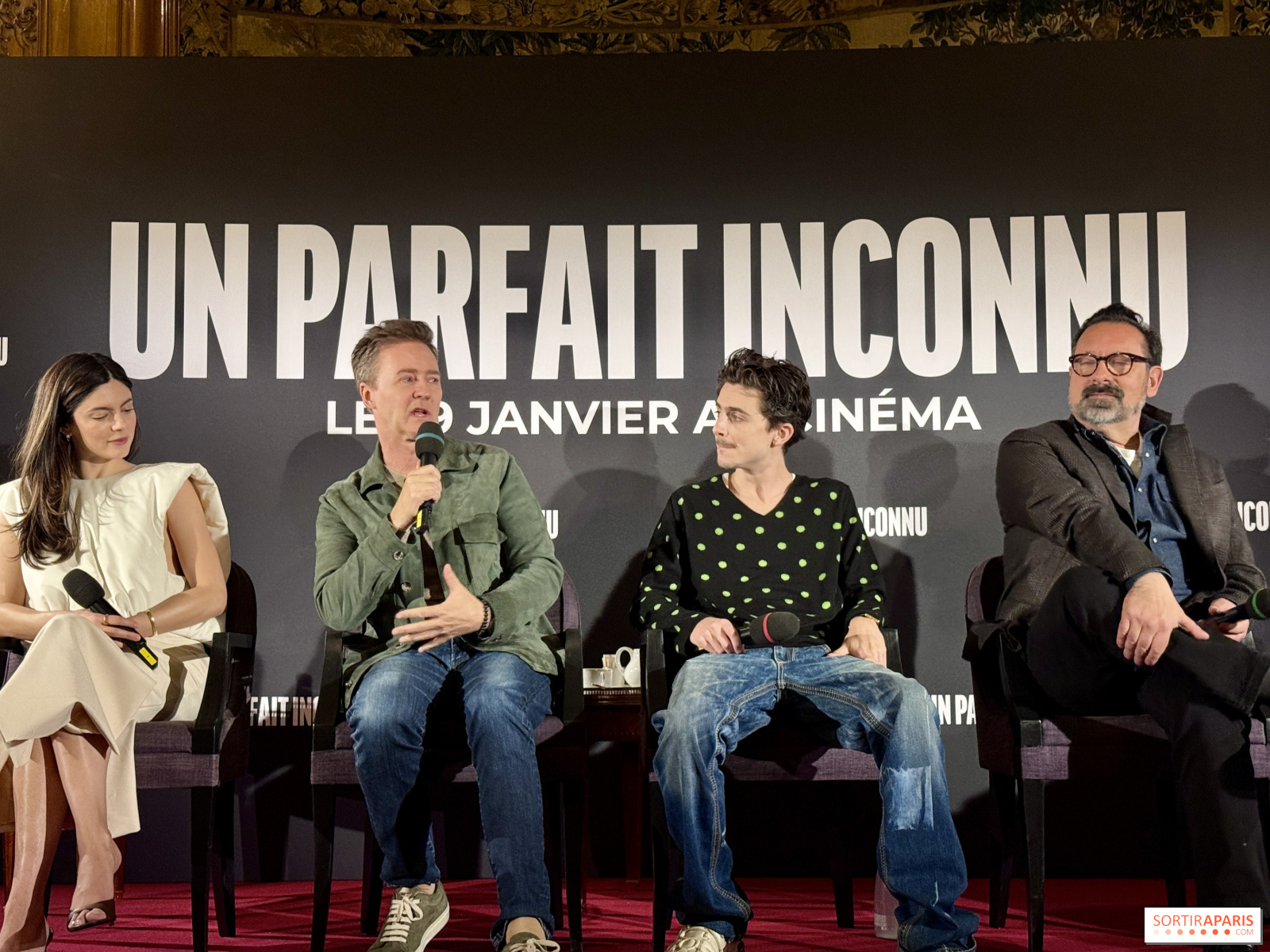
This ambitious project, focused entirely on the pivotal years of Dylan's career, takes us to the heart of the 1960s, a period marked by cultural and political upheaval. Here's a summary of the highlights and viewpoints expressed by the cast and director at the event.
Timothée Chalamet, who plays Bob Dylan: I was approached with this project in 2018 or 2019. Frankly, there are a million reasons, if not a billion, that drew me to this project. The first was that, at the time, my career was starting to take off, and I was sent the material for this film. Before even listening to his music, I watched his first interviews on YouTube.
He had a rather confrontational and mysterious attitude, in a way that is completely unusual today in interviews. For example, if I answered your question in Dylan's way, it would be strange, there would be no real conversation. So it was his persona and these interviews that attracted me in the first place.
Then, of course, there's the music and everything he stood for in the 60s. He was not only a major figure in the U.S., but also in France, Japan and all over the world!
After five and a half years working on this film, I can say that it's the role and project that have had the biggest personal impact on me in everything I've done so far. I'm proud of all my films, but this one had a unique impact on me.
Edward Norton, who plays Pete Seeger: You know, I think the real testament to Dylan's importance lies in one of his famous phrases: "I contain multitudes". His work is immense, it spans several decades, and it evolves with our own lives. At certain moments, certain aspects of what he did take on a particular meaning for us, and later, we become attached to other dimensions of his work.
His legacy goes far beyond music: it encompasses so many phases, aspects and dimensions of life - be it political, emotional or other. It's a huge job. And I think it's this depth and diversity that makes his creativity so enduring and wide-ranging.
We also talked a lot about how inspiring he is as an artist. What particularly impresses me is his fierce defense of his art. He followed his creative impulses with fierce determination, never worrying about commercial results or even public approval. It's a very strong approach, difficult to imitate, but invaluable as a benchmark.
I also think he had deep philosophical wisdom from a very early age. He spoke very little about his works, and when asked to explain their meaning, he would often say, "I'm not going to explain what it means. You have to decide for yourself what it means." He had an intuitive understanding that the power of his art lay in the personal interpretation that each person could make of it.
Take the song "Boots of Spanish Leather", for example. If he had said it was simply about his girlfriend Sylvie going to Spain, then the song would have lost its universality. That's all it could have been. But by not explaining it, he allows the song to resonate differently for each person, depending on their own experience.
As time goes by, I wonder more and more why we have this tendency to want to dissect a work before even giving it time to be fully appreciated. It's something I think about a lot.
Monica Barbaro,Joan Baez: Well, I knew his work, but I can't say I was a big Dylan fan. I wasn't a fan, far from it. What this story means to me, and what I've loved, is watching the different reactions to this film.
I've seen two people come out of the same screening with completely opposite opinions. For example, my mother was in tears after seeing the film. She couldn't stop talking about how times are changing(The Times They Are A-Changin'). I could feel her sitting next to me, deeply moved, almost suffocating with emotion. She was saying that it was essential that times change, that this resonated deeply with her interest in evolution and this idea that generations can't hold on to their own discourse indefinitely.
And then, on the other hand, a friend's father told me that, for him, this film reflected the golden age of music, the best era in musical history. He thought we should never have strayed from it or tried to change things.
I find it fascinating that each person has such a unique interpretation of the film. It depends entirely on their own relationship with music, art and that particular period, whether they lived through it or not.
For me, what struck me most about the film was the way it embraced the evolution of an artist, showing what that looks like, and presenting the multiple perspectives possible. Each character in the film has a different relationship with Bob Dylan, a unique reaction to his legacy, and it perfectly reflects this diversity of interpretations.
James Mangold is a brilliant director. He never forces a particular opinion on his audience. He leaves everyone free to have their own experience of the film and of Bob Dylan. I find that fascinating. Dylan means so many things to so many people, and what's striking is that there's no fixed coherence.
And I think Dylan himself would be happy to embody this idea, this freedom not to impose a particular way of feeling about his work. This film reflects that philosophy, and I deeply admire him for it.
James Mangold, director: Oh, right. Lots of questions! The caterpillar on the carpet... (laughs). So, legacy. It's something I think about a lot, as do my collaborators who are also Dylan fans. But honestly, it's not really something I considered while making the film.
The film ends in 1965. At that point, none of the characters was aware of any "heritage". I'm not even sure they clearly perceived the dogma or principles they would develop in their respective careers. Maybe Pete, yes, but I doubt Bob had a fully formed artistic philosophy at that time.
My main aim, whether writing, directing or collaborating with these talents, was to anchor us in that particular moment, in what it represented at the time. Not in the way we interpret these events 25, 35 or 50 years later.
No one who sings a song for the first time knows that it will become emblematic. Nobody knows that it will become a cultural landmark. The word "icon" is a very modern, post-Internet way of referring to almost anything and everything. At the time, Bob Dylan was just a singer and songwriter, but it was clear that he was connected to something profoundly powerful.
And I think he was aware of it himself, on some level. All I tried to do, especially for Timothée, but also for the whole team, was to focus on that particular moment, on those interpersonal relationships. What was happening then hadn't yet reached that magnitude. It was almost a shock for them to see how gigantic it had become.
And all this was born of a simple act: guitar strings, a pick, a few fingernails, a voice. These small, intimate gestures were transformed into something incredibly influential in the face of commerce and popular culture.
So, inheritance, yes...
James Mangold: It only confirmed one thing: he's an enigma, a mystery. But in reality, he was just a man sitting at a table with a cup of coffee, answering banal questions: "Who called you Bob? Who called you Bobby?" or "When you wrote, was it on your bed or at a desk? What time of day?"
I had all these simple questions in my head that maybe the biographers wouldn't have asked. And at the same time, I was getting his impressions of the script Jay and I had written, his comments. What struck me was that he gave me a very honest perspective. For example, he told me that his decision to go electric wasn't an attempt to revolutionize the culture or meet an expectation. It was simply a desire not to be alone on stage, to collaborate with other musicians he admired, like Buddy Holly, Little Richard or Hank Williams.
He wasn't aware that he was at the peak of a pivotal cultural moment. He was just living it. And it reminded me of a universal truth: we don't always know when we're experiencing major turning points in our lives. It's only with hindsight that we realize it.
This humility was very inspiring for me. Too often, we try to explain everything, to find answers to justify our behavior. But if we were to apply this analysis to ourselves, we'd all be enigmas. Why did you eat that for breakfast today and not yesterday? Sometimes there is no answer.
People call Bob Dylan a mystery, but this is a man who has written 55 original albums, songs about love, philosophy, politics and human relationships. Can we really accuse such an artist of being a "mystery"? How much do you have to create for people to say "that's enough"? Or is it that the more you create, the more questions you ask, and if you don't answer those questions, you get labeled?
For me, what I took away from our meeting was that Bob Dylan is first and foremost a man. He's lived a life, felt primal emotions like loneliness, doubt and confusion. And that freed me, as a director, in the way I directed the actors. I wasn't making a documentary about the signing of the Magna Carta or the Declaration of Independence. I was telling a story about artists, their relationships, jealousies, loves and conflicts. That's what the actors could work on, and it was incredibly useful.
Timothée Chalamet: A "before", in terms of my passion or understanding of Bob Dylan? Hmm, I don't know which was more difficult. I have to say that, on the one hand, rock'n'roll songs from '64, '65 were more familiar to me before the film started, unlike folk music. But once we started working on it, it was in folk music that I found the most freedom!
When you play guitar alone, you can really find your own rhythm, your own moments. Whereas with rock'n'roll songs like "Like a Rolling Stone", which are so rooted in the American imagination, you're almost trapped, because they're already so iconic.
In terms of before and after, yes, absolutely. I talked about it a lot in the States. I grew up with mainstream music: hip-hop, pop, whatever was on iTunes at the time. But after this film, and thanks to Bob Dylan, I discovered iconic artists like The Rolling Stones or The Beatles. These discoveries weren't limited to the best-known songs, but also opened my eyes to movements like the Nouvelle Vague in France.
Although it sounds different from the American music of the 60s, there was this same desire for artistic transformation in France at the time. It's fascinating to see how these attitudes converge.
I think it's important to remind young people, those who are 18 or 25, that it's not just a question of musical education, but a way of understanding where we are today. This openness is essential, especially at a time when it sometimes seems difficult to get everyone to move forward together, with impatience but also with hope.
Timothée Chalamet: Frankly, I don't have a good answer to that, I swear! It's really hard to say. But I'd say there was a certain freedom, and at the same time, one of the biggest challenges was the lack of material on that particular period of his life.
There's a wealth of visual material, documentaries and music about Bob Dylan from 1963, 1964 and 1965. But the film begins in 1961-1962, a period when very little content exists about him. There are hardly any videos on the Internet, and the music available is often limited to demos.
These demos are very rarely produced, which has given me greater freedom to explore this era. But paradoxically, it's also a period that even historians or die-hard Bob Dylan fans know less about. There are far fewer known stories or details about those years, which made the interpretation both fascinating and complex.
Edward Norton: Well, I already had a certain base through my circus training, which included a bit of classical banjo. But, you know, French classical banjo is not the same as folk banjo. It was a bit of an adjustment.
But honestly, music was never a challenge. It was a joy. Music is the greatest gift a director can give you. You know, when someone says, "Come and work and play this music", it's just a dream come true.
Monica Barbaro: Yes, I'd say it was, as Edward said, the greatest gift ever. To be able to consider it a full day's work to sit down, learn guitar and sing, day after day, for several months, was incredible. I feel really lucky to have had access to extraordinary coaches to accompany me in this process.
But yes, it was also extremely difficult, mainly because I admire Joan so much. She's an incredible musician, and a lot of people share that respect and admiration I have for her. So trying to get close to her sound, her musicality, was intimidating. It was a pretty scary challenge to take on.
But then again, it was also the best gift ever. And now I can play guitar, can't I? So that's a victory in itself.
Timothée Chalamet: I'd say that, sincerely, it's a collective pride, not just a personal one. It's a real pride for all of us here, and also for Elle Fanning, who isn't here today. We completely immersed ourselves in the world of the 60s. We gave everything we had for this film.
When I say we went all out, I mean we put aside all our modern habits - the phones, today's distractions - to immerse ourselves entirely in that era. Edward was the staunch defender of Pete Seeger, in his mind it wasn't "the Bob Dylan movie". Monica, for her part, played Joan Baez with the same mentality, that of defending her character with passion and loyalty.
This was one of my fears: that this film would become another classic Hollywood biopic, a little "formatted", as we've seen a lot of recently. Bob Dylan is a character who deserves to be done justice, to be approached with deep respect, impeccable casting and total involvement. We did that, 150%. It's not just a film about Bob Dylan, it's a film that explores an entire era, that of the 60s. As I was saying, there was a Nouvelle Vague in France, and in the United States, it was a musical movement, a cultural upheaval.
As for fears, no, I don't feel any. Frankly, I'm feeling less and less worried. I'm approaching 30, and this life - this career I've chosen - is so strange that it would be foolish to venture into it with any fears. It's a strange life to choose to live under the world's gaze, but it's a life where you have to move forward without fear.
Timothée Chalamet: My answer is short: no, I never had the opportunity to meet him. I would have liked to, of course, but I also had a lot of respect for him. As you can see in the film, he's quite a mysterious person.
I realize that it may not have been easy for this meeting to take place. I would have loved to meet him, and still do, but my desire to see him in person has never surpassed my respect for him. I also understand that he's not someone who particularly likes to put himself forward, reveal himself in public, or make new friends at 83.
James Mangold: Ah, artistic freedom... Well, this film, like Walk the Line, isn't the only one where I'm working with real characters. Even in Le Mans 66 or A Stolen Life, we tell stories inspired by real events. Some people call them " biopics ", others " racing car films ", when in fact they're always biographical stories told from different angles.
The important thing is to find the truth. But there is no one truth. Even with Bob Dylan, each person will have their own perspective on what happened. As a director, I can't shoot three versions of a scene; I have to choose one and stick to it.
In terms of artistic freedoms, Dylan wasn't out there saying, "Here's what really happened, but go ahead and do it differently." He understood that the whole project was a different enterprise from simply transcribing facts. We weren't looking to make a Wikipedia entry, a timeline or a string of subtitles with dates. Our aim was to capture an emotion, a feeling.
Books can document facts. Discographies archive music. Documentaries show real footage of what happened. But our film had to capture what none of these formats can: what was happening in the rooms where there were no cameras, what the characters were feeling in the privacy of their own homes, far from the outside world.
Because a documentary, let's be honest, is not a capture of reality, but a representation of that reality in the presence of a camera. And what Dylan offered me was a very honest account of what he was feeling at the time. It's not so much what happened that interested me, but how he experienced it.
One thing that stood out for me, and which I shared with Timothée and incorporated into the script, was when Dylan told me about his desire to have a band. The word he used several times was "solitude". He described to me what it was like to be a solo artist, and it was powerful.
It wasn't a desire to revolutionize culture or change the direction of popular music. It was a fundamental need: to no longer feel alone on stage. He'd see Johnny Cash and the Tennessee Three, and he'd think, "They're having fun, and I'm all alone."
These primal feelings, like loneliness or the desire for connection, are fundamental elements that I always try to capture as a director and writer. Because, for an actor, playing the need for connection is much more tangible than playing a desire to change the cultural model of popular music.
And I think a lot of what we do in our lives is driven by these primal feelings. Dylan offered me a valuable perspective on the emotional realities of this period of his life, and it was invaluable.
Timothée Chalamet: Yes, I think there's nostalgia. And if this nostalgia exists, it's because, in the 60s, young artists like Bob Dylan, Joan Baez, Pete Seeger or thinkers like James Baldwin had no precedent. There was a real optimism, the idea that people and things could change, and that art could have a significant political or cultural impact.
I think it's different today. There's a lot more cynicism, in my opinion. The younger generation - whether in the United States, France or elsewhere in the world - is facing obstacles that are perhaps even more intense than those of the 60s. If we think of the environmental issues or the political crises you mentioned, these challenges are enormous.
It would be incredible to see a figure like Bob Dylan emerge today. But even at that level, I think there's a certain cynicism. For example, if someone released a very critical or committed song or film, it could be perceived as being recuperated or "corporate". This kind of attitude makes it even harder to overcome obstacles today.
Thank you.
A Perfect Stranger isn't just a biopic about Bob Dylan. It's a vibrant tribute to an era when music was a vehicle for change, carried by a team of passionate actors and technicians. Chalamet, Norton, Barbaro and Mangold convey the soul of the period and Dylan's lasting impact on art and culture.
The film, in cinemas from January 29, 2025, promises an emotional and reflective immersion. An experience not to be missed, whether you're a Dylan fan or simply curious to discover the spirit of the Sixties.
Dates and Opening Time
On January 16, 2025
Location
Le Bristol Paris
112 Rue du Faubourg Saint-Honoré
75008 Paris 8