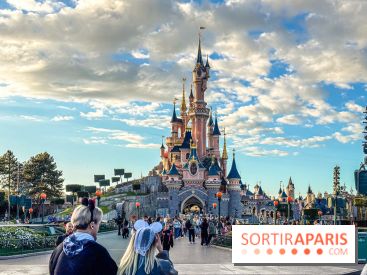
At Disneyland Park in the Paris region, Frontierland has a unique story that unfolds as you explore its attractions and walking paths. We reveal the secret this Wild West town holds!
It's one of the most iconic spots at Disneyland Paris: behind its façades worthy of the greatest Westerns, dusty saloons and rocky mountains, Frontierland conceals a fascinating story that even park regulars don’t always know about! Because here, nothing—or almost nothing—has been left to chance.
Every building, inscription and decorative detail helps tell the story of Thunder Mesa, a fictional Wild West town shaped by the gold rush, legends and a few rather unsettling mysteries. From Big Thunder Mountain to Phantom Manor, not to mention the shops, the cemetery and the riverbanks, Disney Imagineers have packed in plenty of nods, historical references and closely guarded secrets. Ready to discover Frontierland as you’ve never seen it before? Keep your eyes peeled—some clues are hiding in plain sight!
Thunder Mesa: Frontierland as a whole tells the story of a town
- Frontierland is not simply a generic Wild West setting: the land represents the fictional town of Thunder Mesa. Its architecture reflects the different stages in the town’s development.
- The discovery of gold in Big Thunder Mountain is officially dated to 1848 in the history of Thunder Mesa. This is the event that sparks the town’s growth.
- The arrival of the railroad in 1885 marks another stage in its development: Thunder Mesa then becomes a small farming community.
- This explains why the buildings are not all the same age or built in exactly the same architectural style: the Imagineers deliberately made it look as though a town had gradually grown up around the gold rush.
- The Imagineers, including Jeff Burke, traveled across the American West, from Monument Valley in New Mexico, photographing landscapes, buildings, vegetation and mining relics. Some of the objects seen in Frontierland came directly from this field research.
- Cinema also served as a guiding thread: How the West Was Won helped shape the story and landscapes of Thunder Mesa and Big Thunder Mountain.
- Another detail often overlooked: the land’s soundtrack features actual Western movie music. Musical references include Silverado, High Noon, Return of the Seven and The Good, the Bad and the Ugly. The Paris concept later inspired the American Frontierlands.
Fort Comstock: The entrance already tells the story of the conquest of Thunder Mesa
- You enter Frontierland through Fort Comstock, whose large gates are made of rough-hewn logs. Disneyland Paris presents it as the first sign of settlers establishing themselves in this part of the Land’s fictional history.
- The upper ramparts were not accessible to visitors when the park opened in 1992. They did not open until May 30, 1993, with the creation of Legends of the Wild West.
- Legends of the Wild West features several scenes depicting five major figures from the American West’s mythology:
- the prospector;
- the outlaw;
- the lawman;
- the showman, represented by Buffalo Bill;
- the frontiersman, represented by Davy Crockett.
- The sets were not designed at random: the Imagineers conducted research at the Buffalo Bill Historical Center, the Denver Public Library, the Circus World Museum and the United States Military Academy.
- The many objects placed in the scenes were therefore chosen to create the impression of small historical tableaux, rather than simple Western-themed displays.
- The ramparts are also one of the best vantage points over Frontierland.
The residents whose names are hidden all over Thunder Mesa
- Thunder Mesa has its own sheriff: Will Ketchum. The pun is intentional: his name sounds like “will catch ’em.” Disneyland Paris officially recognizes him as the town’s sheriff.
- The town’s mayor is named Artemus L. Hector.
- Diamond Lil owns the Lucky Nugget Saloon.
- Thunder Mesa’s undertaker goes by the decidedly gentle name of J. Nutterville.
- The traveling medicine man is Doc Wassel. But Disney reveals that he was originally supposed to be called Wes Stern, a particularly obvious play on “Western.”
- For the most part, these characters are never introduced directly to visitors: their names appear mainly on signs, props and set dressing, making it feel as though Thunder Mesa really has its own residents and businesses.
Thunder Mesa Mercantile: three shops, three eras
- The Thunder Mesa Mercantile Building is not meant to represent a single shop, but a collection of businesses reflecting several periods in Thunder Mesa’s development.
- Tobias Norton & Sons – Frontier Traders represents the time of the early pioneers and trappers, at the beginning of the town’s history.
- The shop refers in particular to Davy Crockett, extending the references already found in Fort Comstock.
- Eureka Mining Supplies and Assay Office represents the period of the gold rush. An Assay Office is, by definition, a place where prospectors can have their ore assayed.
- Bonanza Outfitters is more representative of the cowboys-and-ranches era, around the 1880s, the period in which Thunder Mesa’s setting seems to have been “frozen.”
- By looking at the three storefronts in order, you can therefore practically read the evolution of Thunder Mesa chronologically.
Big Thunder Mountain: a one-of-a-kind version
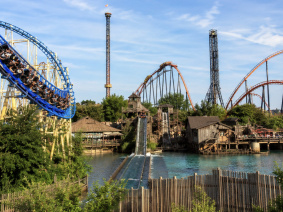
- The Parisian Big Thunder Mountain is the only version built on an island.
- This means there’s a detail invisible from the outside: the trains enter and leave the island through tunnels running underwater.
- The attraction covers nearly two hectares, spread across both shores of the lake.
- The rock formations aren’t generic: the landscapes of the American West, particularly Monument Valley, inspired the creation of Big Thunder Mountain.
- On the opposite shore, some formations are reminiscent of Arches National Park in Utah.
- The terraced hot springs and geysers, meanwhile, are a direct reference to the landscapes of Yellowstone.
- These geysers and geothermal areas aren’t there just to create a pretty water effect: they’re part of Thunder Mesa’s carefully imagined geography.
The real steam engine hidden near Big Thunder Mountain
- One of the Land’s most striking props is a genuine antique steam tractor installed near the exit of Big Thunder Mountain, next to the blacksmith’s shop.
- Imagineer and decorator Pat Burke was determined to find a machine like the one seen in the Western film McCabe & Mrs. Miller.
- He eventually found one on a farm in Missouri, where its owners had nearly forgotten about it.
- The object was salvaged for Frontierland and installed in Thunder Mesa. It is therefore a genuine piece of American industrial heritage, not a Disney reproduction.
Details of the Big Thunder Mountain queue and ride
- The abandoned-mine feel extends even to the props: Disney says that hundreds of objects are scattered throughout the queue and the ride.
- During the 2025 refurbishment, these props were deliberately repatinated after restoration, so they would continue to look old and worn rather than new.
- A huge steam engine visible in the queue even has a name of its own: Lavinia. It is so imposing that it had to be restored on site.
- Mill Camp Tower, one of the wooden structures on the mountain, was completely dismantled and rebuilt before being returned to the setting in 2025.
- Several animals are hidden along the route:
- mules;
- opossums;
- bats;
- the ever-present goat.
- This famous goat even got a new coat during the refurbishment.
- The cacti were also replanted to preserve the evocation of the North American deserts.
- In 2025, Disney also restored several water, visual and sound effects, so some details that may have gone unnoticed for several years are now working again.
Big Thunder Mountain and Phantom Manor: Frontierland’s big secret
- Only the Paris version of these attractions links Big Thunder Mountain and Phantom Manor through a story steeped in mystery.
- In the storyline developed around Frontierland, the Ravenswood family is closely tied to Thunder Mesa’s rise and the wealth generated by the mine.
- The year 1860 also recurs in several details surrounding Phantom Manor and Boot Hill, helping connect the fall of the Ravenswood family to the dark events that befell Thunder Mesa.
Rivers of the Far West: the geography conceals genuine American references
- The Rivers of the Far West are inspired by pioneer towns established along the Colorado, Rio Grande and Sacramento rivers.
- The body of water also serves as a narrative barrier: it separates the Big Thunder Mountain mine from the residents of Thunder Mesa.
- Smuggler's Cove is a rock formation inspired by the terrain eroded by the Colorado River.
- This cove once served as a landing for the River Rogue Keelboats, a now-defunct attraction.
- The caves at Smuggler's Cove are said to have served as a hideout for trappers and river pirates lying in wait for travelers.
- Farther on is Wilderness Island, with waterfalls, birch trees and cottonwoods.
- The animals placed in this area are intended to evoke Wyoming and Colorado.
Old Joe and Moonshine
- Near the river stands Old Joe, a character seen by thousands of visitors who may not know his story.
- Disneyland Paris humorously describes him as the only professional fisherman known never to have caught a fish.
- The reason is simple: he spends all his time sleeping by the water.
- His dog is called Moonshine and barks in an attempt to wake him.
- Old Joe is inspired by Beacon Joe, a character conceived by Disney Legend Marc Davis for the Rivers of America at Florida’s Magic Kingdom.
The new details added to Rivers of the Far West in 2026
- Since the summer of 2026, four new scenes have gradually been added along the riverbanks. They are directly inspired by original drawings by Marc Davis.
- Among other things, you can look for a buffalo in the meadow.
- Does drinking near a waterfall were also among the scenes announced by Walt Disney Imagineering Paris.
- Another scene features raccoons and a skunk on a floating log.
- The Imagineers also sourced and installed authentic 19th-century American West props to enhance the riverbanks.
The remains of old attractions around the river
- Davy Crockett and the River Pirates inspired much of the design of the Rivers of the Far West.
- Two attractions that have since closed once allowed visitors to explore the river:
- River Rogue Keelboats;
- Indian Canoes.
- The former Keelboats dock was at Smuggler's Cove.
- The canoes dock was in the area now occupied by Frontierland Playground.
- In other words, some areas that now seem to be nothing more than landscaping features are actually remnants of attractions that have since closed.
Frontierland Depot: one of the Land’s most successful secrets
- Frontierland Depot is technically not just a station: it’s a railroad depot.
- The locomotives can therefore theoretically take on water and fuel there.
- Its water tower can hold more than 7,000 liters, enough to produce the steam needed for about three trips around the park.
- According to the storyline, the depot was built in 1865 near Cottonwood Creek Ranch.
- Its location made it easy to move cattle from the stables to the railcars.
- The barn at Cowboy Cookout Barbecue and the former Critter Corral preserve the memory of this farming activity.
- Even better: Frontierland Depot is an almost exact replica of the original Frontierland station at Disneyland in California, which disappeared in that form when New Orleans Square was created in 1966.
The telegraph at Frontierland Depot
- The telegraph sound you hear near the control booth isn't random.
- It transmits in Morse code the opening words of the speech Walt Disney gave at Disneyland's opening in 1955.
- The message is his welcome to Disneyland's first visitors. It's one of Frontierland's most subtle and best-documented Easter eggs.
The W.F. Cody Train
- One of the Disneyland Railroad locomotives is named W.F. Cody.
- Those are the actual initials of William Frederick Cody, better known as Buffalo Bill.
- The reference makes particular sense since Buffalo Bill appears in Legends of the Wild West, just a few steps away.
Cottonwood Creek Ranch and Cowboy Cookout
- The barn and ranch are inspired not only by traditional Western imagery: they were heavily influenced by the boarding house in the film The Shootist (The Shootist, 1976), starring John Wayne.
- This inspiration explains why the far end of Frontierland feels deliberately more rural and agricultural than the mining town around Thunder Mesa Square.
The Lucky Nugget Saloon
- The name Lucky Nugget comes directly from a Disney film, The Adventures of Bullwhip Griffin, released in 1967.
- In the film, the heroes end up in a saloon called The Lucky Nugget.
- The Sherman Brothers even wrote a song for the film that mentions the saloon.
- In Thunder Mesa, its fictional owner is Diamond Lil.
- The restaurant’s interior was inspired in part by the look of the Oriental Saloon at Old Tucson Studios, a Western set extensively photographed by Jeff Burke.
Silver Spur Steakhouse
- The façade of the Silver Spur Steakhouse is directly inspired by the sets of Silverado by Lawrence Kasdan.
- The film was shot in New Mexico in a town specially built to resemble the small towns of the 19th-century West, which served as a reference for the Imagineers.
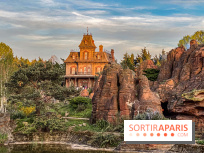
Phantom Manor: the first details are hidden before you even enter
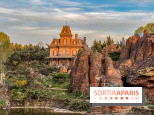
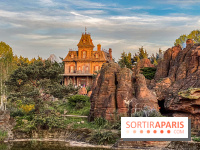
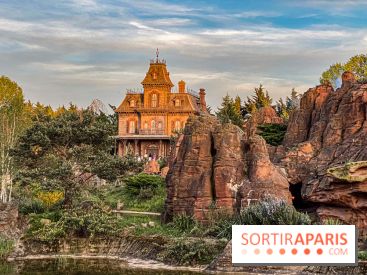
- Smoke really does rise from the manor’s chimney. This is intentional, creating the impression that the house is still occupied.
- The shutters bang in the wind, giving the impression of neglect and disrepair.
- Look closely at the upstairs windows and you can catch a glimpse of the weeping bride.
- When the wait time drops to 13 minutes, the sign displays it instead of rounding up.
- The manor is deliberately situated high above Thunder Mesa, like a residence overlooking the town and the mine.
Phantom Manor: the story was made even more precise in 2019
- The major renovation in 2019 did more than refresh the attraction: Walt Disney Imagineering deliberately clarified several aspects of its story.
- Ghostly faces appear in some of the mirrors.
- Several scenes transform before visitors’ eyes, providing new clues about the Ravenswoods’ story and the Phantom’s identity.
- Since the renovation, the narration has used the voice of Vincent Price, a legend of horror cinema.
- The recording had actually been made for the 1992 opening, but was ultimately set aside before being resurrected nearly three decades later.
- Phantom Manor features more than 50 Audio-Animatronics figures, roughly as many special effects, and more than 60 animated props.
Mélanie Ravenswood’s four suitors
Disneyland Paris officially confirms that Mélanie had four suitors. Their exact names have been visible in the attraction since 2019 and are documented in particular on the final mausoleum and the funeral wreaths.
- Sawyer Bottom is associated with the Thunder Mesa sawmill and death by saw. His name itself works as an English pun.
- Captain Rowan D. Falls is linked to the Thunder Mesa boats and dies in a waterfall; his name plays on rowing the falls.
- Ignatius “Iggy” Knight works with the explosives used in the mines and dies in a TNT explosion. “Iggy Knight” is a phonetic echo of ignite.
- Barry Claude is associated with the oil industry.
- In the Stretching Room, the portraits therefore do not depict Melanie with four anonymous men: they are her four suitors.
- By observing the part revealed as the paintings stretch, you discover how each man meets his end.
- The four men’s names appear again elsewhere, notably on the funeral wreaths and the mausoleum, turning the attraction into a real-life treasure hunt.
The music in Phantom Manor is packed with references
- The main theme is derived from “Grim Grinning Ghosts,” music composed for California’s Haunted Mansion.
- Composer John Debney turned the theme into a full series of symphonic variations to tell Mélanie’s story without relying solely on a narrator.
- The solo voice represents Mélanie, as if her singing came from beyond the grave.
- The orchestration deliberately draws on Camille Saint-Saëns’s Danse macabre.
- The bass flute pays homage to Buddy Baker’s original score for Haunted Mansion.
- The organ heard in the score was recorded in a London church.
- In Phantom Canyon, the saloon deliberately features an out-of-tune honky-tonk piano.
- In the catacombs, the vibraslap and xylophone accompany skeletons playing with their own bones.
- The scene directly references Disney’s 1929 short, The Skeleton Dance. Disneyland Paris also confirms that the skeletons themselves were inspired by it.
The garden’s very own music box
- The melody heard near the gazebo isn’t simply a digital sound imitating an old-fashioned music box.
- Disney had the tune physically engraved on a metal disc by a traditional music-box maker.
- Imagineer Glenn Barker brought his own music box to the studio, put the disc in it and recorded the actual mechanism.
- So the little mechanical sound heard in the garden is that of a real instrument, not a simulation.
The chimneys of Phantom Manor
- The many chimneys visible on the roof correspond to real chimneys depicted in the rooms of the manor.
- In the ballroom, the fireplace emits an eerie green light, signaling a supernatural presence.
- In Mélanie’s boudoir, the firelight reveals grimacing faces and menacing eyes hidden in the fireplace decorations and andirons.
- This is exactly the kind of detail you miss if you only look at Mélanie.
The Demon Dog of Phantom Manor
- As you leave the boudoir for the garden, a demonic dog with glowing eyes accompanies the Phantom.
- Its barks and howls contribute to the soundscape around this part of the manor.
Boot Hill: The cemetery is full of gags and clues
Here, the inscriptions are physically observable, but several interpretations come from specialist sources rather than recent Disney publications.
- Boot Hill contains the graves of Henry and Martha Ravenswood, Melanie’s parents.
- Their epitaph pokes fun at their turbulent marriage: after spending their lives quarrelling, they could finally rest together in silence.
- A large, unmarked grave makes a sound like a heartbeat or someone knocking from inside. Its exact identity is deliberately ambiguous; it’s best not to definitively identify it as Melanie’s.
- Several graves feature humorous epitaphs, including Barroom Benny’s, who died after “one drink too many.”
- There is also the grave of Leadfoot Fred, whose boots bear bullet holes.
- Anna and Jasper Jones, the Ravenswoods’ servants, also have their own gravestones.
- Their epitaphs even deliver a little gag: Jasper supposedly made his master “happy,” while Anna made him “even happier”.
Boot Hill’s food chain
- Four small graves form a macabre food chain.
- A squirrel is eaten by a predator, which is then eaten by a man, who ends up being eaten by a bear.
- The bear is the only one to survive for several more years, giving the gag its punchline.
A tomb visible… from the river
- Looking at Boot Hill from Thunder Mesa Riverboat Landing, you can spot a broken tombstone jutting out of the water.
- It’s exactly the kind of detail designed to be discovered from a vantage point other than the cemetery itself.
Frontierland Playground hides the story of a vanished attraction
- The site of today's Frontierland Playground was once home to the Indian Canoes landing.
- At the other end of the Rivers, Smuggler's Cove served as the starting point for the River Rogue Keelboats.
- Both former attractions were directly inspired by Davy Crockett and the River Pirates.
Film references scattered throughout the Land
You could almost set out on a second treasure hunt just for them:
- The Conquest of the West → the scenery and story of Big Thunder Mountain.
- The Last of the Giants → Cottonwood Creek Ranch and Cowboy Cookout Barbecue.
- Tombstone → the architecture and décor of the Lucky Nugget Saloon.
- Silverado → particularly the façade of the Silver Spur Steakhouse, as well as the Land’s background music.
- John McCabe → the real steam tractor installed near Big Thunder Mountain.
- The Honorable Griffin → the name Lucky Nugget.
- Davy Crockett and the River Pirates → the Rivers of the Far West and the former river attractions.
This page may contain AI-assisted elements, more information here.


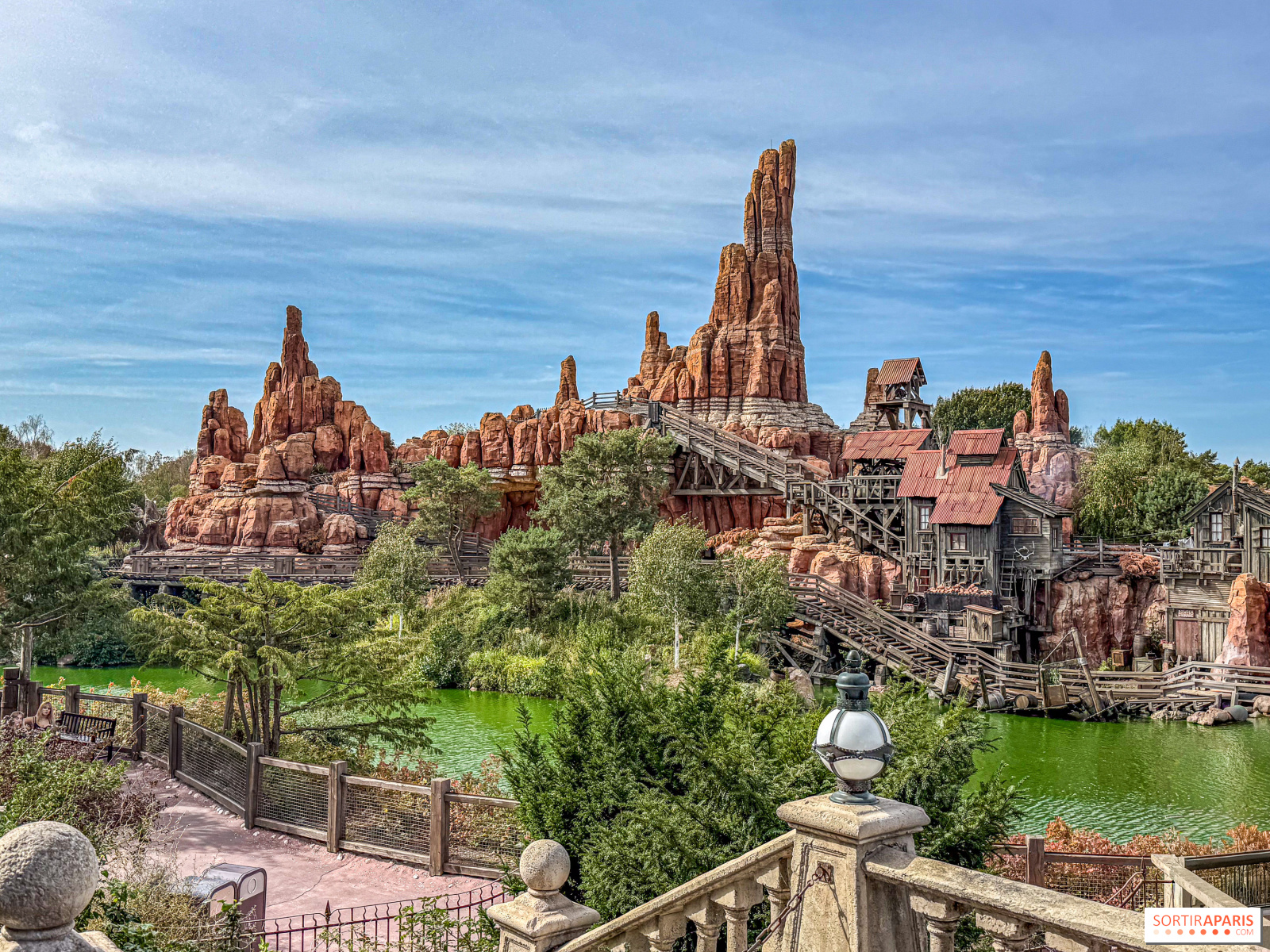


Disneyland Paris: Whatever happened to the River Rogue Keelboats in Frontierland?













 Disneyland Paris: Whatever happened to the River Rogue Keelboats in Frontierland?


 At Disneyland Paris, visitors could enjoy canoeing around Big Thunder Mountain.