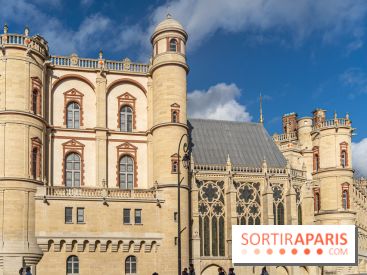
The Heritage Days are eagerly anticipated each year by enthusiasts and curious minds hungry for exceptional experiences. This flagship cultural event on the European calendar invites us to discover our heritage in a different way through a rich program of visits, often free, and new activities for young and old. Museums, monuments, castles, churches as well as nothing but surprising places across the four corners of the Île-de-France region.
Moreover, you can imagine it: in Paris, an XXL program awaits you! It must be said that the City of Light, also known as a museum city, is brimming with fabulous treasures that captivate Parisians, yesterday, today and always. As the Heritage Days return for a 43rd edition, on September 19 and 20, 2026, what about spending this weekend to the rhythm of the exceptional openings?
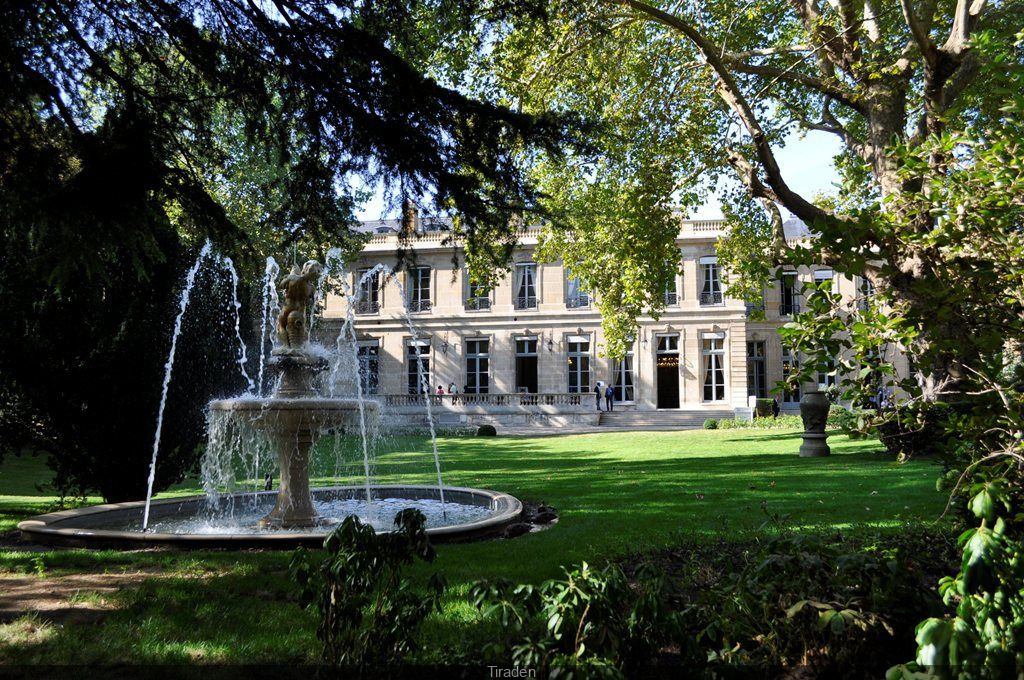
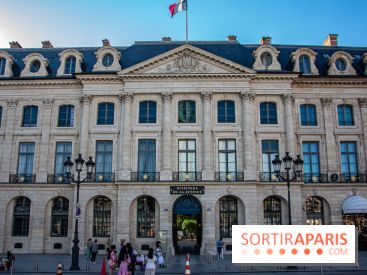
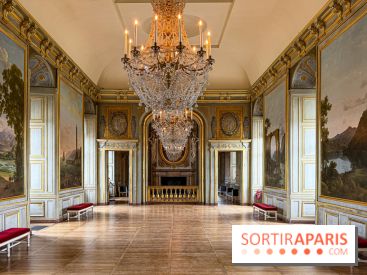
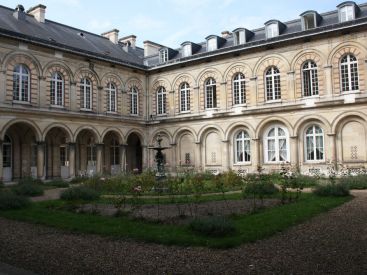
Among the sites normally off-limits to the public that participate in the Heritage Days, you’ll find a number of ministries. These are often hosted in historic grand townhouses with stunning interiors. In the 7th arrondissement of Paris, for instance, you can embark on a tour of the Hôtel de Roquelaure, which currently houses the Ministry of Territorial Cohesion and Ecological Transition. Located on the famed Boulevard Saint-Germain, this hôtel particulier dates back to the early 18th century and has expanded over time. Discover its history through the exceptional program awaiting you for the Heritage Days!
Visit to France's Ministries of Ecological Transition and Territorial Planning
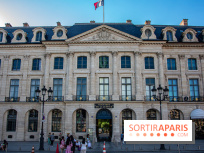
The Hôtel de Roquelaure, listed as a historical monument since 1961, now houses the offices of the Ministry of Land Use Planning and the Ministry of Ecological Transition.
### The Hôtel de Roquelaure (1709-1740)
In 1709, Marshal Antoine Gaston, Duke of Roquelaure, chose to settle in the Faubourg Saint-Germain, the fashionable new quarter, and purchased the Hôtel de Villetaneuse on September 24, 1709.
During the early years, the Roquelaures made few drastic changes but expanded the grounds in 1711. It was not until 1724 that the Duke commissioned architect Pierre Cailleteau, known as Lassurance (1655-1724), to draw up plans for a new hôtel. He radically transformed the residence, enlarging it to reflect its ducal status.
After the death of the marshal, the hôtel was sold in July 1740 to Mathieu-François Molé, the First President of the Parliament of Paris.
### The Hôtel Molé (1740-1807)
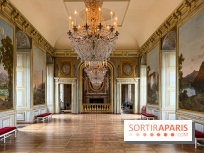
The hôtel took its new owner’s name. President Molé, reputed to be wealthy, well integrated, and not a society man, nonetheless valued a modern interior and commissioned new panelling and paintings for the house. He called upon renowned painters, including Jean-Baptiste Oudry and Charles-Joseph Natoire, who received a commission for four canvases. Through the Revolution, various generations of the Molé family occupied the property. Seized in 1793 upon the arrest of its owner—Édouard-François Molé (beheaded on April 20, 1794)—the hôtel was turned into a shelter for the plague-stricken, then allocated to the Agriculture and Arts Commission. In 1795, the Convention returned the hôtel to the family. The apartments were then leased to various tenants, including the Count of Hatzfeld and Baron Van Hoorn Van Vlooswyck, until 1807.
### From Cambacérès to the Present...
After succeeding Robespierre at the head of the Committee of Public Safety, Jean-Jacques Régis de Cambacérès (1753-1824) becomes, after Brumaire, Napoleon’s right-hand man who helps shape his fortune. He takes over from Napoleon once the Emperor leaves the capital, heads the Council of State, represents the Assemblies, and organizes justice. Cambacérès was the architect of Napoleon’s grand projects. Richly endowed and richly honored, he was made Archchancellor of the Empire in 1804, Duke of Parma on March 19, 1808, grand eagle of the Legion of Honor, and a member of the Institute. Cambacérès purchased the Molé hôtel in 1808. He thereafter annexed the Hôtel de Lesdiguières (later Sully), uniting the two properties for good. He hosted Europe under his roof, and official dinners—twice weekly—were organized for political purposes in service of the Emperor. Like Talleyrand, Cambacérès understood that a good cook could be worth an army, and the archchancellor’s table was among the era’s most celebrated. He resided there until his exile in 1816.
The hôtel was sold the same year to the Duchess of Orléans. From 1816 to 1821, Louise-Marie-Adélaïde de Bourbon-Penthièvre maintained the residence as a grand, richly adorned noble house and arguably one of the Faubourg Saint-Germain’s finest. Her children, the future King Louis-Philippe and Madame Adélaïde, did not inhabit the hôtel.
In 1823, the Duke of Orléans proposed to Louis XVIII exchanging the hôtel for timber in the Bondy forest to house the Crown’s Sawmill.
Under the July Monarchy, the hôtel housed the Council of State (1831) before being assigned to the Ministry of Public Works (order of September 10, 1839).
The Hôtel de Roquelaure now houses the office of the Ministry for the Ecological Transition and Solidarity, whose central administration is in the La Défense district.
The history of the Hôtel de Roquelaure is thus that of an 18th-century private town residence that became the seat of a ministry. In that sense it mirrors the trajectories of many other hôtels in the district. Yet it stands out as one of the best-preserved, its successive occupants having avoided major alterations and preserved the antique decors.
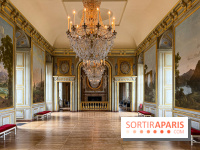
Consequently, the hôtel preserves a classical rigor inherited from the 17th century. It stands as a valuable testament to Louis XIV’s architectural era. The opulent Rocaille-style decorations in select rooms, crafted by ormolu specialist Nicolas Pineau (1684-1754) and architect Jean-Baptiste Leroux, render the Hôtel de Roquelaure a unique site still echoing its illustrious owners’ memory.
The distinctive contributions of 19th-century Louis-Philippe and Second Empire decorations—intended to harmonize with the other rooms—are equally significant, complementing two centuries of civil and public interior décor housed in a single building.
The façades and roofs, as well as the gate, the courtyard paving, and the garden, have been listed as historical monuments since April 29, 1961.
Participation conditions: Free, prior registration required, identity document mandatory, sharp or cutting objects are forbidden (utensils, scissors, etc.), water fountains are available—remember to bring your reusable bottle! Booking required | Free - https://www.ecologie.gouv.fr/
Hours: Saturday, September 19, 2026 — 2:00 PM to 6:00 PM | Sunday, September 20, 2026 — 2:00 PM to 5:30 PM
Dates and Opening Time
From September 19, 2026 to September 20, 2026
Location
Hôtel de Roquelaure
246 Boulevard Saint-Germain
75007 Paris 7
Route planner
Access
Solférino metro station (line 12)
Prices
Free
Official website
www.ecologie.gouv.fr