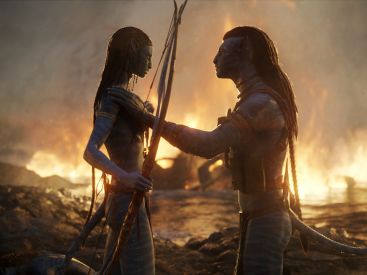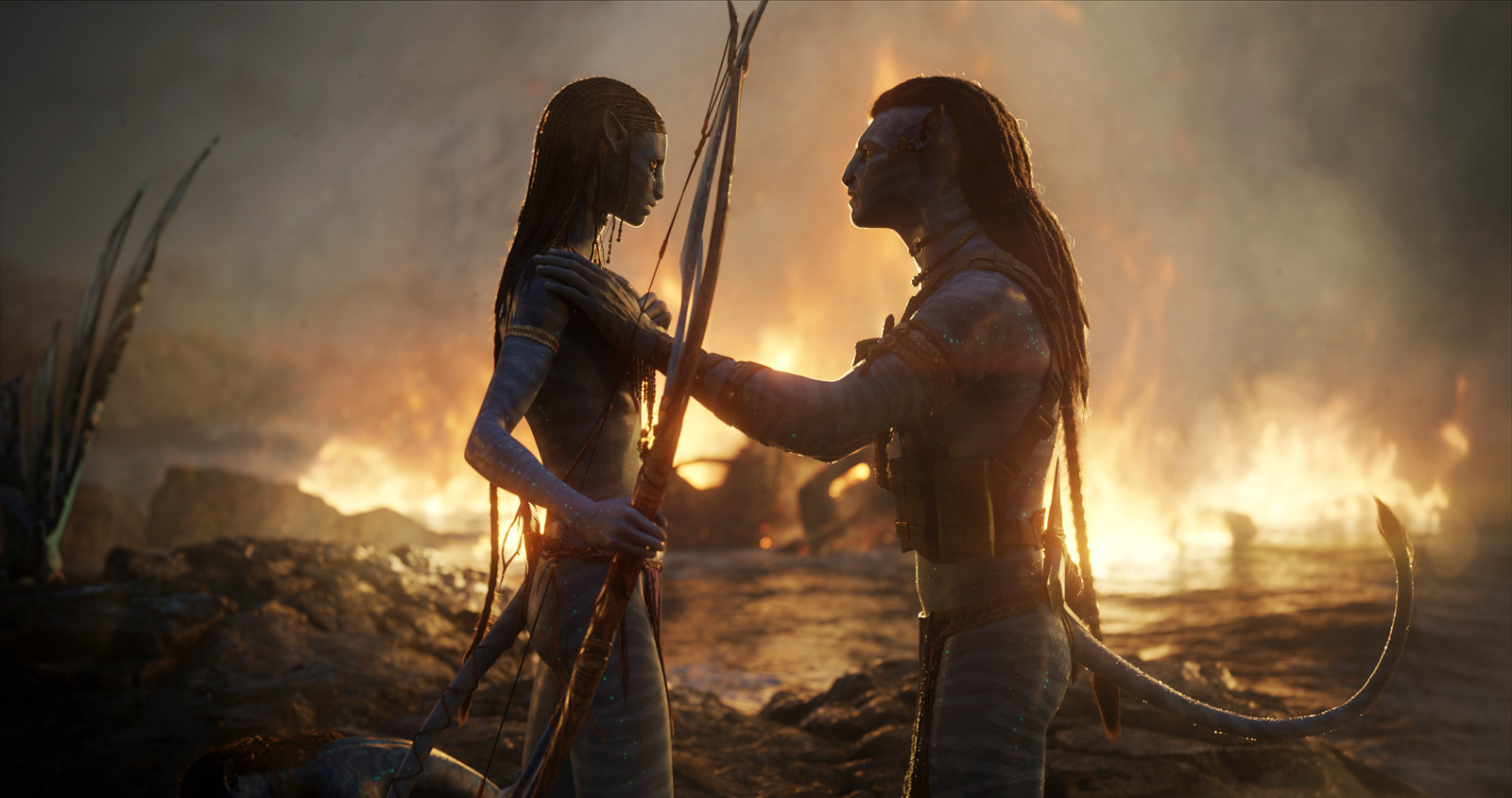
The third installment in the saga envisioned by James Cameron, Avatar: The Seed and the Flame, is set to hit French cinemas on December 17, 2025. Directed by Cameron himself and co-written with Rick Jaffa and Amanda Silver, the film brings back Sam Worthington and Zoe Saldaña as Jake Sully and Neytiri, while introducing new characters, including one played by Oona Chaplin. This major sci-fi blockbuster continues directly from Avatar: The Way of Water, the worldwide hit of 2022.
Set just three weeks after the events of the previous installment, Avatar: Fire and Ashes continues to delve into Pandora’s world, expanding its visual, cultural, and political horizons. James Cameron takes a darker turn here, highlighting internal tensions among the Na’vi and introducing new antagonists to the story.
The Sully family faces a brand-new threat with the emergence of the Ash People, a Na’vi clan rooted in volcanic regions. More aggressive and combative, these new characters represent a drastically different side of Pandora, forcing Jake, Neytiri, and their children to reevaluate their alliances and their role in this evolving world.
The story also introduces a fresh narrative perspective: for the first time in the saga, the voiceover is no longer provided by Jake Sully but by Lo’ak, his son. This shift in viewpoint opens the door to themes of legacy, grief, anger, and rebuilding, firmly placing the saga within a conscious generational narrative.
Much like The Way of Water, this third installment was primarily shot in New Zealand, mainly at Stone Street Studios in Wellington. Additional scenes were filmed in the United States and Eastern Europe. A significant portion of the filming took place concurrently between 2017 and 2018, with the project being finalized over several years, including reshoots scheduled for 2024.
With a budget estimated at around $250 million, the film continues the technological evolution of the franchise, showcasing cutting-edge performance capture, native 3D technology, and innovative rendering tools. Director James Cameron teams up once again with Russell Carpenter behind the camera, a longtime collaborator who previously worked on Titanic and True Lies.
Our Opinion
The third installment of the Avatar saga, directed by James Cameron, stands once again as a must-see cinematic experience on the big screen, just like its predecessors. The visual beauty of Pandora and its bustling details are more striking than ever, especially in the 3D format that truly showcases the project's technical ambitions — though it’s worth noting that this may cause headaches for the sensitive viewer.
Despite its considerable length of around three hours, the film keeps a fast-paced rhythm, with many action scenes that prevent stagnation. Calm, emotional sequences also enrich the experience, demonstrating a consistently effective handling of pacing—a commendable achievement.
The main critique lies in the narrative. The film struggles with a tendency to recycle familiar dynamics, leaving viewers with a sense of déjà vu. It feels as though the story rehashes the same plots, which dampens the sense of novelty and surprise, especially considering this is the second half of the second movie. Aside from a stunning, iridescent flying creature, many of the landscapes and animals that delighted audiences with their novelty in Avatar: The Way of Water remain largely familiar.
However, Avatar 3 ventures into more complex and darker themes, exploring for the first time an internal conflict within the same peoples. Themes of grief are omnipresent, expressed through characters’ loss of faith, anger, or resentment—particularly for Jake Sully and Neytiri, who strive to hold their family together amid pain and conflicting emotions.
A particularly fascinating aspect is the theme of faith. The introduction of a new clan, cast aside in an environment where the connection to Eywa feels strained, raises questions about humanity and spirituality in times of isolation.
Unlike previous tribes, this new group shows a similar desire for hatred and destruction as seen in humans, embodied by Varang, a terrifying figure played by Oona Chaplin. Fascinated by human weapons and willing to go to extremes for her tribe—and driven primarily by her unhealthy curiosity—she is manipulated by Quaritch. Her complex character adds an intriguing layer to this installment.
Finally, the critique of colonization remains a core element of the story. It continues to pit the empathy and nuanced individuality of the Na'vi against the often black-and-white and destructive human figures, all while emphasizing environmental concerns—an issue deeply cherished by James Cameron, who continuously draws a parallel to today’s world.
Avatar 3 is a spectacular technical achievement that deserves to be experienced on the big screen. While some may wish for more daring storytelling—avoiding repetitive patterns—the exploration of more mature themes coupled with jaw-dropping visuals ensures both entertainment and reflection, as the franchise has always offered.
The ending is effective and satisfying, raising questions about the necessity of a sequel. It’s hard to predict where the trilogy will go from here, especially since this installment could stand alone as a concluding chapter of the saga. As the conclusion of the first cycle, it marks a generational shift, introduced through Lo'ak’s narration, hinting that he may one day succeed his father as the new leader.
Following the third installment, Avatar 4 is scheduled for 2029, with Avatar 5 set for 2031. The director has hinted at the possibility of expanding this universe further, should audience enthusiasm continue to grow—building on the success of the first two films, which rank among the highest-grossing movies of all time worldwide.
What movies to catch in theaters in December 2026?
Get ready for the holiday season at the movies: comedy hits, family favorites, and blockbuster epics to catch in December 2026 in Paris. [Read more]
This page may contain AI-assisted elements, more information here.







 What movies to catch in theaters in December 2026?