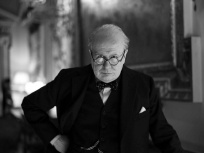
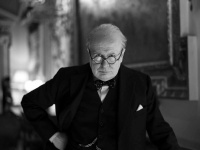
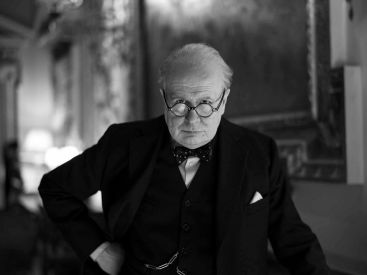
Anthony Hopkins returns in a landmark role with Freud, the Last Confession, a historical drama directed by Matt Brown. Based on the play by Mark St. Germain, the film depicts a fictional encounter between two major figures of the 20th century: Sigmund Freud, founder of psychoanalysis, and C.S. Lewis, Christian writer and future author of The Chronicles of Narnia. Set in London on the eve of the Second World War, this philosophical huis clos pits two worldviews against each other in an intense, intimate dialogue.
Freud, the Last Confession will be released in cinemas from June 4, 2025.
The face-off between Anthony Hopkins and Matthew Goode is revealed in the trailer for Freud, the Last Confession, between introspection, faith and reason.
Synopsis: On the eve of the Second World War, Sigmund Freud took refuge in London with his daughter Anna. Weakened by illness, Freud's interest is rekindled when he discovers that C.S. Lewis, a Christian novelist, has mentioned him in his writings. Their meeting turns into a verbal duel over the question of God, pitting two radically different worldviews against each other.
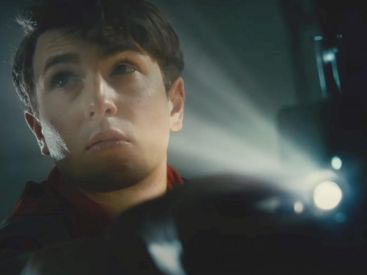
Directed by Matt Brown, Freud, la dernière confession(Freud's Last Session) follows in the footsteps of films such as Les Heures sombres, Le Discours d'un roi and Le Cercle des poètes disparus: works where the spoken word prevails over action, where tensions are played out in words, silences and glances. The film imagines a fictional meeting between Sigmund Freud, played by Anthony Hopkins, and C.S. Lewis(Matthew Goode), in London on the day the United Kingdom entered the war, September 3, 1939.
Carried by dense dialogue and an introspective atmosphere, the story explores the fundamental tensions between faith and reason, science and spirituality, death and intellectual legacy. Although imagined, the confrontation between Freud and Lewis is based on solid historical and philosophical foundations, giving the film a reflective scope that goes far beyond its narrative framework.
The heart of the film is a dialogue between two major figures of the 20th century. Freud, exiled and gravely ill, invites Lewis to confront his atheistic thinking with that of the Christian writer, renewed by faith. Their exchanges on God, suffering, guilt and grief are spread over the course of a day, punctuated by flashbacks illustrating their past wounds: Lewis facing war, Freud facing illness and loss.
These temporal shifts, while illustrative, sometimes detract from the fluidity of the narrative. Their integration lacks naturalness, undermining the balance of the narrative and creating a kind of emotional distance from the audience.
Visually, the film assumes its theatrical origins: fixed shots, tight framing, subdued lighting and a dark color palette. This sobriety, intended to underline the intensity of the debate, can also reinforce the impression of slowness. The atmosphere is heavy, almost claustrophobic, and some critics have complained that the staging is too wise, even austere.
The soundtrack is minimalist, emphasizing the words. A few historical elements - such as radio excerpts of Hitler's speeches - recall the anxious geopolitical context in which this meeting takes place.
Anthony Hopkins dominates the screen with a nuanced performance: an authoritarian Freud, riddled with doubts, whose physical pain and fear of death make him more human. Matthew Goode, as C.S. Lewis, is more restrained. His character, though central to the idea of the film, remains under-exploited, sometimes overwhelmed by Freud's stature.
But it's in a more discreet role that one of the film's real riches lies: Liv Lisa Fries plays Anna Freud, Sigmund's only daughter, herself a great psychoanalyst specializing in children.
Her seemingly secondary character adds a deep, almost silent emotional dimension. Anna embodies that figure of the intellectually brilliant daughter, but entirely devoted to her father, submissive to his whims and a prisoner of his authority.
The film sketches out, without explaining it outright, the emotional and psychological dependence that bound Anna to Freud. This relationship is as revealing as the theoretical debates, and echoes Freud's own concepts of transference and sublimation. In counterpoint, C.S. Lewis, who evokes his mother's bereavement as a point of spiritual rupture, embodies a form of liberation from parental authority.
Anna thus becomes, through her silences and self-effacing gestures, the unconscious reflection of Freud's contradictions. She hardly ever speaks, but her presence is enough to reveal the intimate, emotional side of the great theorist.
The film raises fundamental questions, without necessarily answering them: is faith a refuge? Is reason enough to console? Does suffering have meaning? Freud and Lewis confront each other without cancelling each other out. The film never makes up its mind, preferring ambiguity to demonstration, in a style that will appeal to those who love the cinema of words and reflection.
Freud, la dernière confession will appeal to fans of verbal jousting, philosophy and psychoanalysis, and to those who appreciate intimate, cerebral theatrical adaptations.
On the other hand, viewers looking for a steady pace, strong dramatic tension or more lively staging are likely to be bored. This film requires concentration and a willingness to listen.
At the crossroads of the intellectual and the intimate, Freud, The Last Confession is a work as sober as it is dense. If it sometimes lacks narrative breath and visual élan, it can captivate through the quality of its performers and the relevance of its interrogations. Behind the monumental figure of Freud, the film succeeds in showing his flaws, his blind spots, and the human echoes of his theories.
Movies in theaters in June 2026: must-see releases this month
Which films to see in cinemas in June 2026? Between blockbusters, family animation, comedies, thrillers and auteur cinema, the screens are offering Toy Story 5, Scary Movie 6, La Bataille de Gaulle : L'âge de fer, L’Affaire Zanetti, The Furious, Backrooms, Des Minions et des monstres, and Les Parfait(s). [Read more]
Intimate films, social dramas, family stories, or big-name performances: discover the dramas to watch in cinemas right now and coming soon. [Read more]
Comedy, horror, animation, drama or blockbuster: our picks of films to see in theaters right now, tailored to whatever you’re in the mood for. [Read more]
This page may contain AI-assisted elements, more information here.








 Movies in theaters in June 2026: must-see releases this month


 Dramas to watch in theaters right now and coming soon


 What movies to watch in theaters right now? Our picks