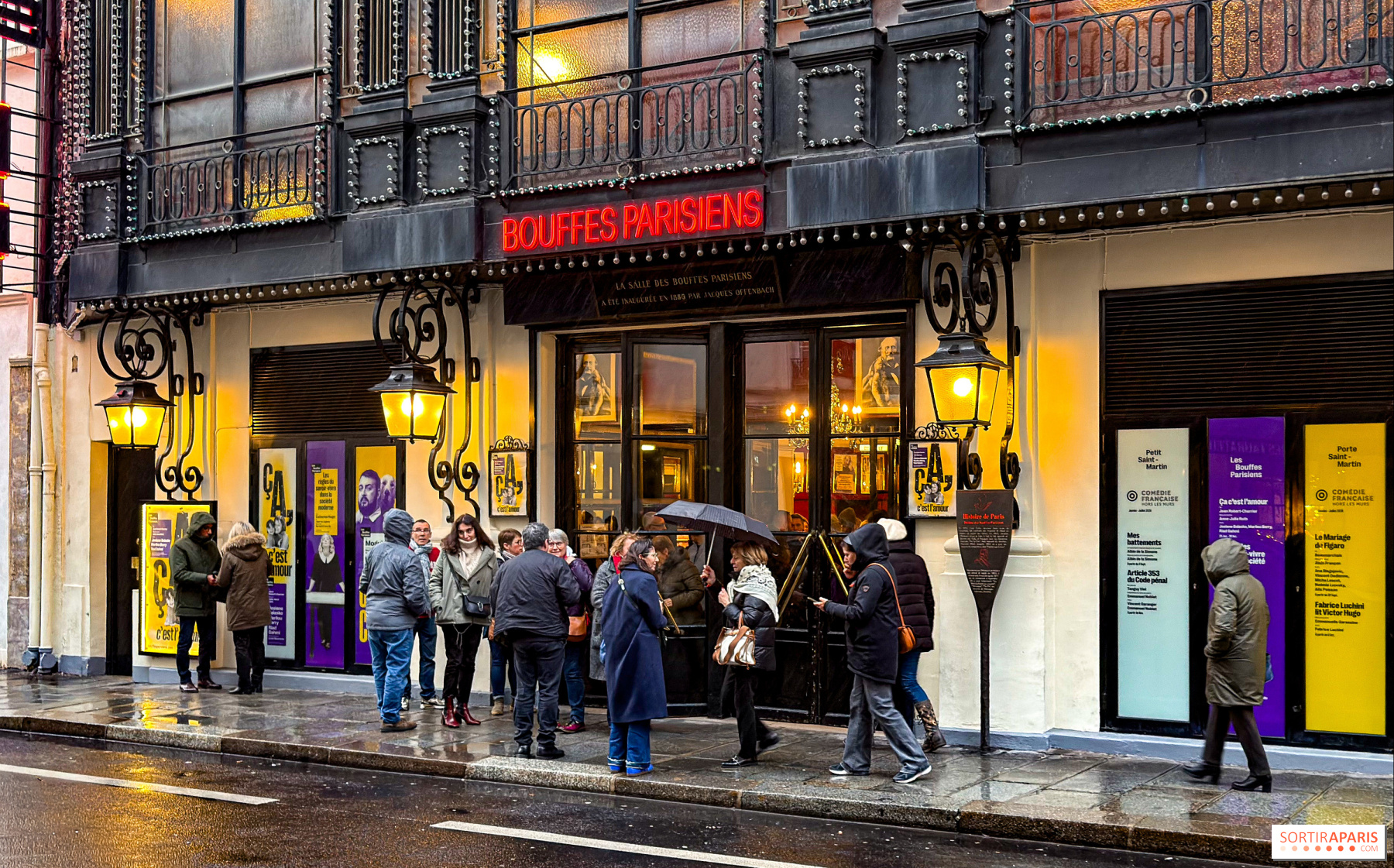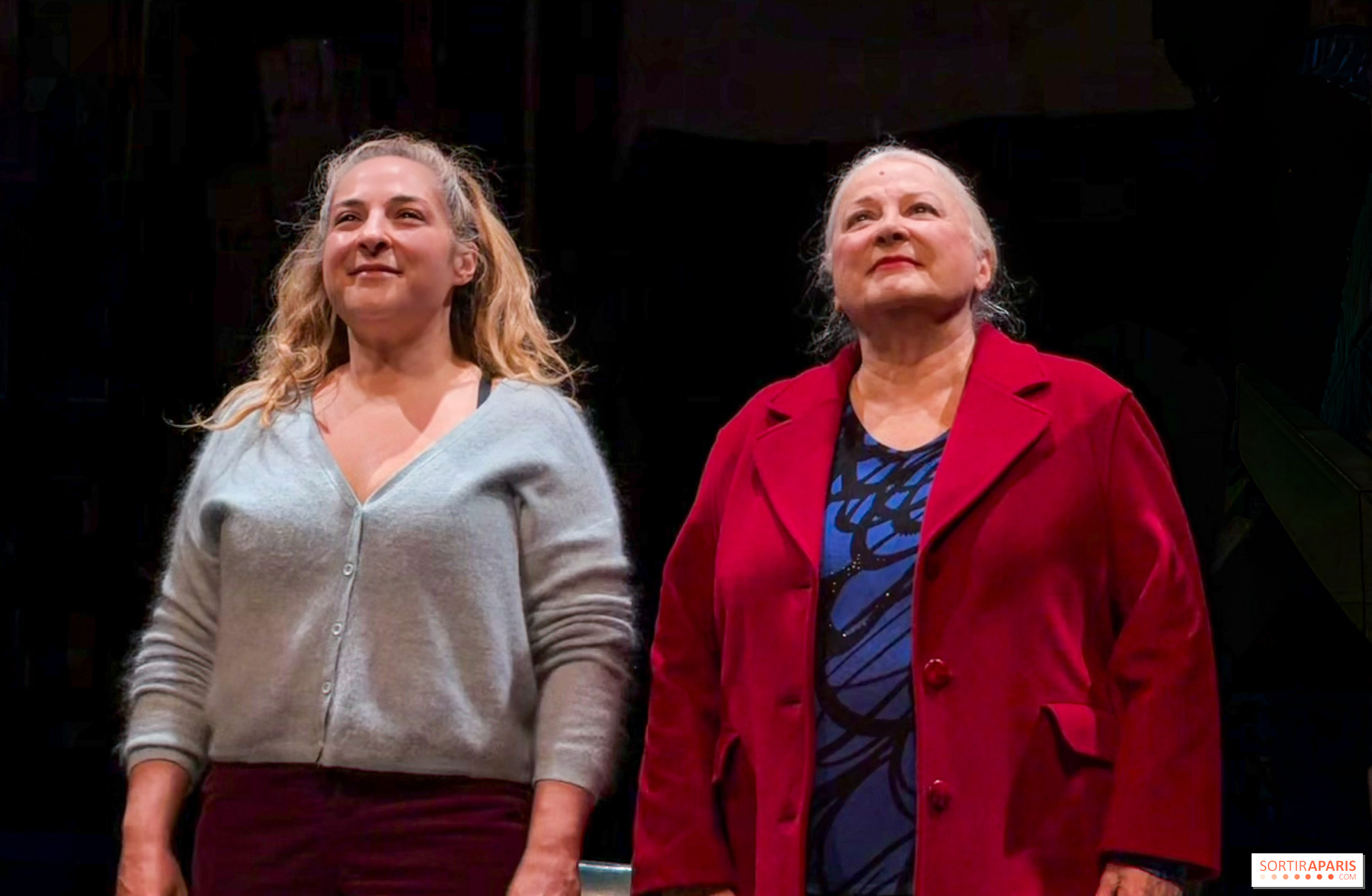
With the play piece Ça, c’est l’amour, Jean Robert‑Charrier brings together for the first time on stage Josiane Balasko and Marilou Berry, directed by Julie‑Anne Roth. After an initial run in 2026, the production will return to the Théâtre des Bouffes‑Parisiens from January 9 to February 20, 2027.
What to see this week in Paris? Plays and shows not to be missed
Plays and shows to see this week in Paris: comedies, dance, humor, magic, cabaret... Our selection of must-see events. [Read more]
On Christmas Eve, Frédérique arrives at the home of her daughter Mathilde, who has been trapped in a violent relationship for years. She wants to help her and get her out. But Frédérique is surprising, endearing and sometimes clumsy, and Mathilde, who has been used to male domination since adolescence, is tempted but wary. Dramatic tension builds in this sensitive face-off, as the mother tries to free her daughter from an inherited, almost genetic, suffering.

Our opinion:
As you step into the Théâtre des Bouffes-Parisiens with a smile on your face, you expect to enjoy a witty comedy delivered by two well-known figures from theater and cinema. This is Love rides this anticipation... only to shatter it. What begins as a Christmas-style farce quickly turns into a powerful emotional punch. One that leaves the audience stunned, silent, almost overwhelmed by what unfolds on stage. A theatrical wake-up call about domestic violence, deeply unsettling yet vital and impossible to ignore.
The first act sets a false sense of comfort. On Christmas Eve, Frédérique (Josiane Balasko) arrives at her daughter Mathilde’s (Marilou Berry) home. Around a round table, gossip, barbs, and sharp wit fly effortlessly. Balasko is commanding, biting, delightfully acerbic. Facing her, Mathilde seems a bit sad, a little downbeat. Nothing alarming—yet. The tension builds gradually and relentlessly: laughter is genuine at first. Then it diminishes. Soon, the laughs cease altogether. When her husband appears, an uneasy silence falls. Nervous chuckles. Discomfort. And then—shock.
The play then uncovers its core. Mathilde grew up witnessing violence—her father hitting her mother—and now reenacts that cycle. "This is love," the two husbands have repeatedly claimed to justify the unjustifiable. The mechanisms of control are exposed with chilling accuracy: apologies, guilt, denial. Domestic violence, both physical and psychological, often hidden or minimized, is shown here uncensored. The scenes are sometimes brutal, even shocking, yet strikingly close to real life.
The second act marks a visual and emotional shift. The scenery drops away abruptly, as if stripped bare—a naked truth: no more Christmas decorations, no pretenses. The reality is laid bare. Marilou Berry delivers an emotionally charged performance, addressing the audience and potential victims directly. The play then takes on a tone of prevention, awareness, and education. The packed house remains frozen until the last tears...
This profoundly moving prevention piece leaves a lasting impact. Don’t judge the production solely by its posters or cast list: it’s serious, raw, and not suitable for the faint-hearted or those who’ve experienced violence. The subject matter is grave, direct, and challenging. An intense, necessary, and vital play—definitely worth seeing for a discerning viewer.
Dates and Opening Time
From April 26, 2026 to February 20, 2027
Location
Théâtre des Bouffes Parisiens
4 rue Monsigny
75002 Paris 2
Prices
À partir de: €15.5
Recommended age
From 13 to 99 years old
Booking
View the prices of this ticketing service
More information
From Wednesday through Saturday







 What to see this week in Paris? Plays and shows not to be missed