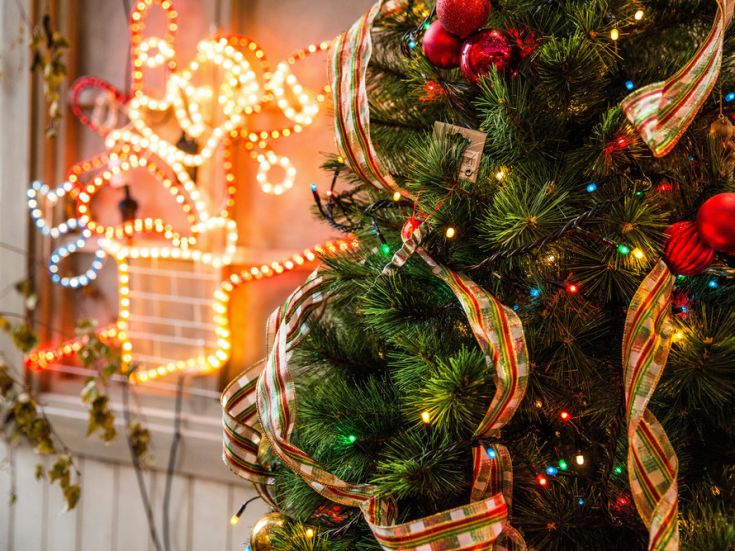
Strings of tinsel that catch the eye when you wake up, pine needles covering the floor, or a resilient artificial tree... every year, the same question arises: When should you take down your Christmas tree? It all depends on your personal preference, traditions… and the type of tree you have.
Christmas history and traditions: when should you put up your Christmas tree? The question that divides opinion
The Christmas window displays are lit up, the first gifts are being bought and wrapped... It might be time to put up and decorate your Christmas tree. But what does tradition say? Here are a few answers. [Read more]
The most widely held theory in Europe is the celebration of Epiphany, observed on January 6th. This day commemorates the visit of the Wise Men to the baby Jesus and for many signals the official end of the Christmas season. In several countries, the Christmas tree is taken down either on this day or the nearest Sunday. In the UK, traditions go even further: leaving decorations up past Twelfth Night (the twelfth night after Christmas) is believed to bring bad luck.
Another perspective, more lenient: those who celebrate the Chandeleur on February 2nd. In some Catholic regions, the Christmas season extends right up to this holiday, which symbolizes light and renewal. As a result, the Christmas tree can stay up for another month without any guilt.
In contrast, some popular beliefs suggest taking down the decorations before the New Year to avoid carrying over the energies of the past year. This minimalist approach is an option, although it has less historical tradition behind it.
When it comes to practicality, the type of Christmas tree makes a difference. A real tree begins to dry out as early as January, posing risks of falling needles and increased fire danger. It's best to remove it promptly after Epiphany. An artificial tree, on the other hand, doesn’t deteriorate and can stay in place longer—your only limit being your own visual tolerance for holiday decor.
The verdict? There isn't just one perfect date, but rather several well-established cultural benchmarks. It's up to you to pick the one that best fits your post-holiday rhythm!
This page may contain AI-assisted elements, more information here.







 Christmas history and traditions: when should you put up your Christmas tree? The question that divides opinion