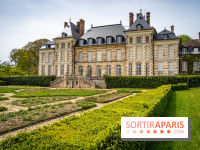
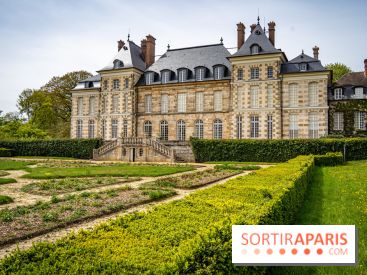
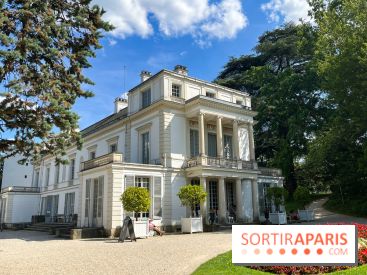
As in every September, the month that commands attention, the European Heritage Days bring together hundreds of thousands of curious visitors (often millions), eager to discover our incredibly rich French heritage. So, in Paris, it would be hard to miss the major tours on offer (sometimes requiring a half-day wait): the Senate, the ministries, the National Assembly, the historic monuments... Yet, far less heralded, some truly beautiful visits await across the Île-de-France, with sometimes little-known heritage treasures to discover or rediscover during this 2026 edition of the Heritage Days.
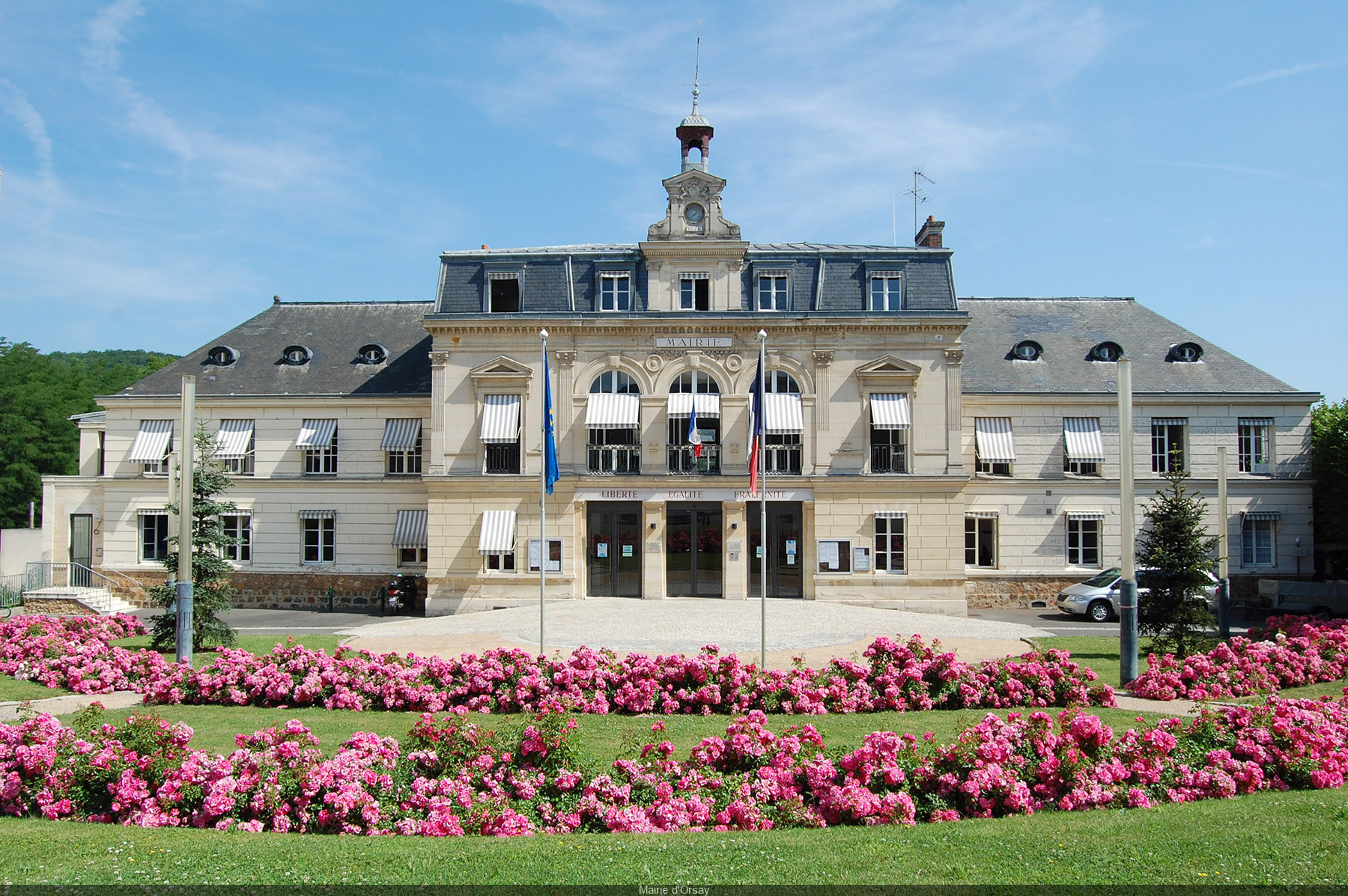
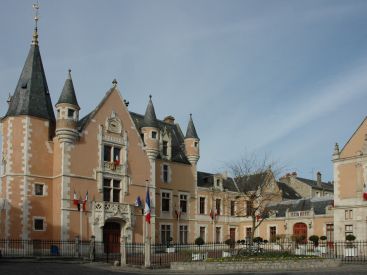
In the Essonne department, the town of Essonne, the city of Orsay is best known for being one of the towns most closely linked to the new Paris-Saclay science campus. If you’re passing through for these European Heritage Days 2026, don’t miss the Parc de la Bouvêche for a stroll, the Paris-Sud University campus (which is part of the Paris-Saclay campus), and a quick tour of this small town that blends modernity with traces of the past. Without further ado, discover the program for the Heritage Days 2025 in Orsay!
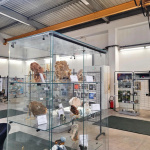
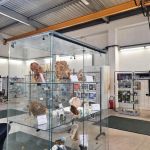 In Bures-sur-Yvette, tours of the mineralogy museum for Heritage Days 2026
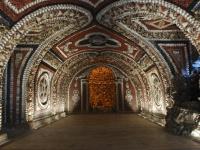
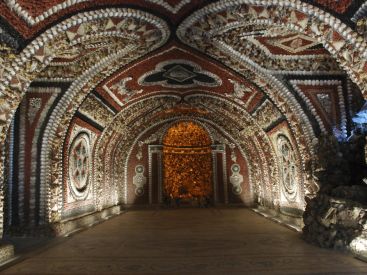
For Heritage Days 2026, the Mineralogy Museum in Bures-sur-Yvette will exceptionally open its doors. Discover a scientific treasure unique to Essonne. [Read more]
University Library of Orsay
Aucun événement annoncé à ce jour, le programme est mis à jour en fonction des annonces officielles.
Corbeville Estate in Orsay
Aucun événement annoncé à ce jour, le programme est mis à jour en fonction des annonces officielles.
Orsay Church
Organ showcase and recital at Orsay Church
Introduction to the organ and recital
Participation conditions: Limited to 50 people — Free | No reservation required
Timings: Sunday, September 20, 2026 — 5:00 PM to 6:30 PM
Escape Room: "Mission Fébétron"
### The Escape Room at the Orsay Faculty of Sciences, a milestone in the Institute of Physical Chemistry
You’ll step back to the 1980s, inside the radiation physico-chemistry lab. Jacqueline Belloni’s team, experts in radiolysis techniques, is working with an electron accelerator—the Fébétron. Their studies have dramatically boosted the sensitivity of photographic films, a breakthrough that has captured the attention of AGFA-Gaertvert, whose representatives are set to attend a demonstration. They’ll arrive in an hour, but the team has vanished... you must start the Fébétron as quickly as possible! Can you rise to the challenge and salvage this demonstration teetering on disaster?
Sessions for groups of 4 or 5 people. Registration for 1/2/3 people is possible, with groups completed by other participants.
Duration 1h15
From 12 years old.
Participation requirements: Teams of four or five people, mixed groups allowed — Free of charge | Booking required — communication.sciences@universite-paris-saclay.fr
Timings: Saturday, September 19, 2026 — 12:45–14:00, 14:20–15:35, 16:00–17:15, 17:30–18:45 | Sunday, September 20, 2026 — 13:00–14:15, 14:45–16:00, 16:30–17:45
A musical, guided tour of 22 works by renowned contemporary artists at the ISMO laboratory, and by Berrada, a prehistoric stump and an Ubac
Guided tour led by Patrice Godard, head of promoting the university’s cultural heritage at Université Paris-Saclay, with musical accompaniment by two professional musicians, Célestine Asselin and Thomas Cordero.
The Gorgone sculpture is the work of Vincent Barré, a renowned artist who is a former architect and head of the workshop at the École des Beaux-Arts in Paris. Located on the first floor and visible from the grand entrance hall, it now greets all ISMO visitors. For the sculptor, who attended the inauguration, “this intriguing figure and its 11 kilos of wood provide a beautiful counterweight to the modern building with its majestic, clean-cut appearance.”
The 16 prints, which can be admired on the various floors of ISMO, are the works of internationally acclaimed artists: among the most famous, the ironic Ben with his “La liberté ou la mort,” or the German Baselitz, known in particular for his inverted figures. A minimalist etching by Pierrette Bloch, lithographs by Bertrand Vivin, Titus-Carmel, Villeglé, Furudoi, Julien Tiberi, Jean Hucleux, a linocut by Frédérique Lucien, an aquatint by Dominique Labauvie, a paper engraving by Bernard Moninot, a lenticular print by Dorotte and Pagès, an acrylic painting by Takis, a silkscreen by Gérald Petit and a digital print by Detanico and Lain—works whose titles are often as poetic as they are enigmatic, inviting discovery. A number of these pieces were acquired by the CNAP to celebrate the bicentennial of the Revolution.
This deposit complements five important works installed for a year within the institute. Acquired thanks to Philippe Roncin, a researcher at ISMO, this collection includes paintings by artists celebrated at the end of the 20th century, such as Robert Wogensky, Jean Vérame, Jacques Vimard, and Yves Lévêque.
Then a visit to Hicham Berrada’s Polygonal Garden (1% for artistic creation at the Institut Pascal).
Followed by two exceptional new features:
the discovery of a 30-million-year-old mineralized tree stump with a geologist
the restoration of Raoul Ubac’s monumental mosaic, commented on by its restorer Stéphane Ancenay
Duration: 1h30
Université Paris-Saclay - Institut des Sciences Moléculaires d’Orsay
Rue André Rivière
Bâtiment 520
91405 Orsay
Participation conditions: Limited to 30 people – Free | No reservation required
Schedule: Sunday, September 20, 2026 — 4:00 PM to 5:30 PM
Tour of the Museum of Light and Matter — Orsay’s Ring of Collisions
### Discover the cradle of particle physics by visiting the pioneer of particle accelerators, the Orsay Collisions Ring.
As the first collision ring built in Europe, it made possible the observation of electron-positron annihilation, and it was the first storage ring on which a beamline of synchrotron radiation was constructed and operated. The Orsay Collisions Ring (ACO) is listed in the additional inventory of historic monuments.
It is also France’s trailblazer in light sources, the ancestor of modern synchrotron facilities SOLEIL and ESRF. It is on the ACO that the world’s first free-electron laser was realized.
During the visit you’ll see the accelerator as it has been preserved since its closure; you’ll also view a replica of a light beamline and a wealth of objects tied to the history of particle physics and synchrotron radiation.
Visits are guided by researchers and engineers who work or have worked in the scientific fields related to the ACO.
Ages 11 and up
Access: https://maps.app.goo.gl/nbC5JyNctVCjFPAu8
Participation terms: Free | No reservation required
Hours: Saturday, September 19, 2026 — 2:00 PM to 5:00 PM | Sunday, September 20, 2026 — 2:00 PM to 5:00 PM
Exhibition “Light and Matter: A Whole Story!”
Immerse yourself in the world of electromagnetic waves with an exhibit celebrating Université Paris-Saclay’s scientific heritage. Learn more about the electromagnetic spectrum and how it has been—and continues to be—used in the university’s scientific work. The display will also feature demonstrations of several instruments.
For ages 12 and up.
Access: https://maps.app.goo.gl/nbC5JyNctVCjFPAu8
Participation requirements: Free | No reservation required
Hours: Saturday, September 19, 2026, 2:00 PM – 5:00 PM | Sunday, September 20, 2026, 2:00 PM – 5:00 PM
A tour of a particle accelerator: Orsay's collision ring
Discover the cradle of particle physics by visiting the pioneering Orsay Collision Ring, one of the earliest particle accelerators.
The first collision ring built in Europe to observe electron-positron annihilation, and the first storage ring on which synchrotron-light beams were constructed and operated, the Orsay Collision Ring (ACO) is listed on the supplementary inventory of historic monuments.
It is also the pioneer of light sources in France, the ancestor of the modern synchrotron light sources SOLEIL and ESRF. It was on the ACO that the world’s first free-electron laser was realized.
During the visit you will see the accelerator as it has been preserved since its shutdown; you will also be able to view a replica of a beamline and many objects related to the history of particle physics or to the history of synchrotron radiation physics.
Guided tours are led by researchers and engineers who are currently working or who have worked in scientific fields related to the ACO.
Participation conditions: Free admission, either self-guided or in small groups with a guide. - Free | No reservation required
Schedule: Saturday, September 19, 2026 – 2:00 PM to 5:00 PM | Sunday, September 20, 2026 – 2:00 PM to 5:00 PM
La Bouveche, Tower workshop
Aucun événement annoncé à ce jour, le programme est mis à jour en fonction des annonces officielles.
Université Paris Saclay Lumen
Guided Tours of the Lumen
Lumen is a building at Université Paris-Saclay open to the public since September 2023. A hub for study, culture and innovation, it was designed by Laurent Beaudouin and the firm MGM Morales Arquitectos: come discover inspiring spaces, a selection of heritage documents—“masterpieces in peril”—and the exhibition “It’s getting hot for scientists.”
Participation requirements: Free | Booking required - 01.70.56.52.60, culturel@mairie-gif.fr
Hours: Saturday, September 19, 2026 — 2:00 PM to 3:00 PM, 3:30 PM to 4:30 PM
This page may contain AI-assisted elements, more information here.
Dates and Opening Time
From September 19, 2026 to September 20, 2026
Location
City of Orsay
orsay
91400 Orsay
Route planner
Accessibility info
Official website
www.mairie-orsay.fr