Have you ever wondered how a block of raw metal becomes a sculpture with delicate curves? Every third weekend of September, the Heritage Days invite young and old to discover Paris and Île-de-France’s hidden treasures, from historic monuments to the region’s most discreet workshops. On Saturday 19 and Sunday 20 September 2026, the event takes on a distinctly artisanal flavor in the Hauts-de-Seine: the renowned Fonderie d’Art Thinot, based in Châtillon, lifts the veil on its furnaces and its exceptional craftsmanship.
For decades now, in this suburb just outside the capital, the Fonderie Thinot has kept alive a centuries-old tradition, serving sculptors, designers, and heritage restorers. Here, working bronze, brass, and aluminum isn’t about mass production but about a genuine manual alchemy. Word around the workshop suggests that several monumental pieces now gracing Île-de-France parks first learned their craft in these blistering vats, though the artisans’ legendary discretion leaves some illustrious patrons shrouded in mystery.
The site’s uniqueness comes largely from its lost-wax casting technique, a method born in antiquity and that has changed little since. The idea is straightforward: sculpt a precise wax model, encase it in a refractory shell, then heat the assembly. The wax melts away, leaving a hollow mold into which molten metal, heated well above 1,000 °C, is poured. Once the piece cools and is released from its mold, the meticulous filing and chiseling begin to remove any flash, followed by patination. That final touch—the chemical signature created by hot oxidation—gives bronze its distinctive greens, browns, and golden tones. Step into such a workshop and you’ll see raw material come alive under hammer and blowtorch, far from the hushed ambience of museums.
Visits to the Thinot Art Foundry
The Thinot Art Foundry, founded in 1947 by Lucien Thinot, a premier caster trained in the Rudier workshops, one of the historic founders of Auguste Rodin.
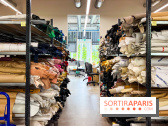
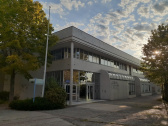
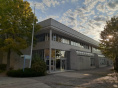
In 1985, his son Pierre Thinot took over the workshop, continuing operations until its closure in 2010. In 1974, the foundry was moved to Châtillon, in a district that was still very much artisanal. Today the workshop remains as it was, with its furnaces, machines and original tooling—an increasingly rare witness to the traditional sand-casting process, nearly extinct.
Lucien Thinot carried on the Rudier dynasty’s legacy and, at the end of the war, collaborated on posthumous Rodin productions with the Susse foundry. Several castings drawn from Rodin’s molds bear the Susse and Thinot marks, signaling an indirect yet real technical connection. The foundry also worked with Germaine Richier, Yves Klein, Salvador Dalí, Étienne Hajdu, Kumi Sugaï, Bourdelle, Gauguin, Alberto Giacometti, and other major artists. It stands as an important crossroads between the tradition of figurative bronze and modern experimentation.
Admission free by reservation
Participation conditions: Free admission | Reservation required - https://www.billetweb.fr/visite-de-la-fonderie-de-chatillon
Hours: Saturday, September 19, 2026 — 2:00 PM ⤏ 3:30 PM | Sunday, September 20, 2026 — 2:00 PM ⤏ 3:30 PM
This page may contain AI-assisted elements, more information here.
Dates and Opening Time
From September 19, 2026 to September 20, 2026
Location
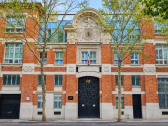
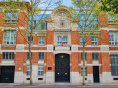
Thinot Art Foundry
91 Avenue de la République
92320 Chatillon
Route planner