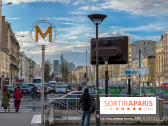
As part of its 2020-2026 Bicycle Plan, the City of Paris has undertaken a number of projects to promote active mobility. These include the creation of a continuous, safe cycle path linking Place de l'Opéra to Place de la République, via Rue du Quatre-Septembre, Rue Réaumur and the northern section of Rue du Temple, over a distance of more than 2 km. The work includes the installation of traffic lights specifically for cyclists, offering improved visibility and greater anticipation of stops.
Work on rue du Temple, between rue Réaumur and rue de Turbigo, took place from October 28 to December 19, 2024. They involved creating a two-way cycle lane on the odd (west) side, installing dividers, upgrading the traffic lights, creating delivery zones and bicycle parking spaces, and relocating the cab rank.
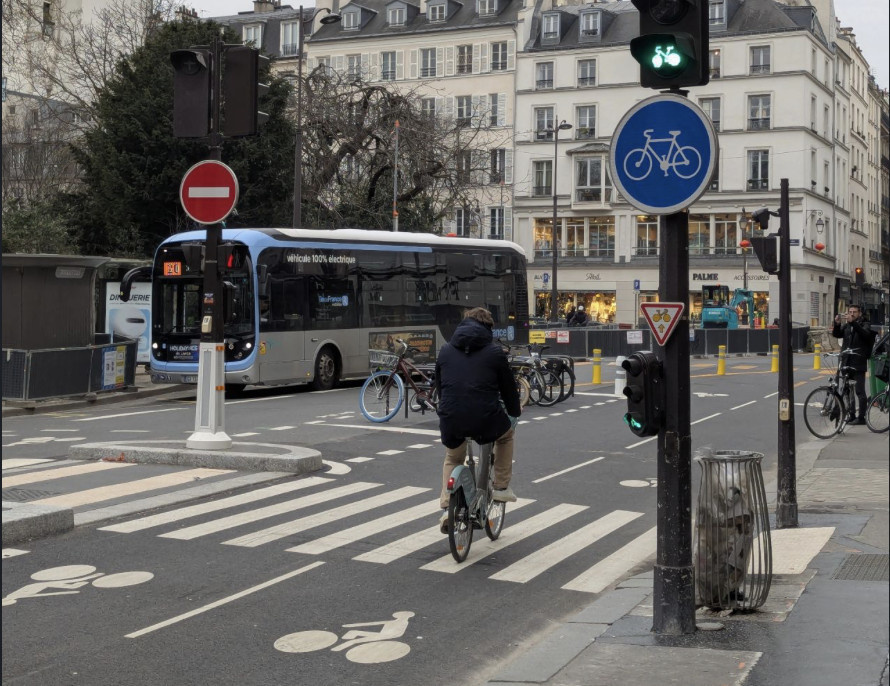
These traffic lights dedicated to cyclists are similar to those for motorists, but adapted for better visibility from cycle paths. They enable cyclists to better anticipate stops and ride safely, in harmony with other road users. This initiative is part of a global approach by the City of Paris to promote active modes of transport and make cycling safer.
These lights, named R13c ⌀200mm according to the official nomenclature, adopt the same format as conventional traffic lights, unlike the smaller repeaters often hidden by vehicles, street furniture or vegetation. Thanks to their size, they should be better respected by cyclists, even in busy or fast-moving traffic.
The City of Paris currently manages almost 2,000 intersections equipped with traffic lights, with a total of 14,000 light signals. The deployment of the new traffic lights is part of an overall initiative to modernize the city's infrastructure, in parallel with the construction of bicycle lanes.
This project is not limited to the installation of traffic lights for cyclists. It is part of a wider program aimed at optimizing the operation of intersections, improving user safety and adapting the city to new forms of mobility. Current initiatives include
The project involves several players specializing in urban infrastructure and signage. Design was led by Paris Infrastructures et Mobilités, with project management by Setec TPI, Atelier NOUS and Solcy. Equipment supply was entrusted to Cielis - I Light Paris, while installation and connection were handled by Citeos. Finally, infrastructure and signage are managed by Entreprise Jean Lefebvre - Île-de-France, Signature and Reflex Signalisation.
The installation of these facilities on rue du Temple now provides a safe connection between Place de la République and the Marais district, facilitating daily commuting for Parisian cyclists. This achievement testifies to the municipality's commitment to developing infrastructures adapted to users' needs, and to encouraging the use of bicycles as the preferred means of transport in the capital.
With this system, Paris confirms its ambition to facilitate the cohabitation of different modes of transport and make cycling safer, at a time when the number of cyclists in the capital continues to grow. In the coming months, these new traffic lights could well be multiplied on other strategic cycling routes.
For residents and visitors to Paris, these new facilities represent a way of discovering the city in a different way, by taking advantage of an increasingly extensive and safe cycling network. Rue du Temple, with its traffic lights dedicated to bicycles, is a concrete example of the efforts being made to make Paris more welcoming to cyclists.
Recommended age
For all