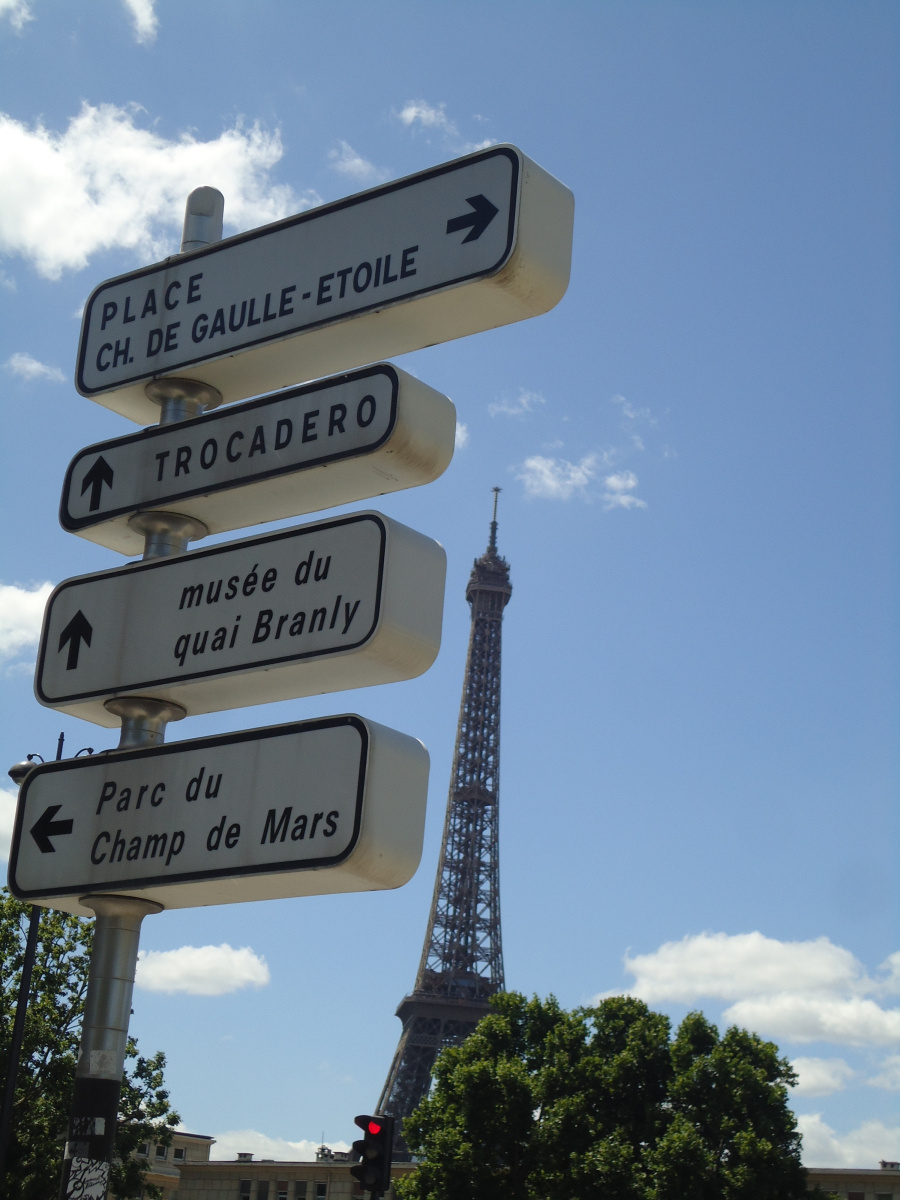
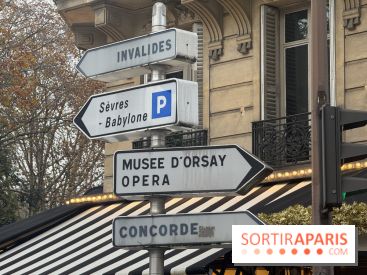
What if we could soon hang an authentic sign pointing toward the Bastille, the Opéra or Place de la République in our homes? The City of Paris plans to remove most of its roughly 1,800 directional signs over the next few years. While some will join the capital’s heritage collections, others could be offered for sale to the public.
Announced in November 2026 by Pierre Lombard, Paris deputy mayor for sanitation, the initiative is expected to gradually transform the city’s streets.
Installed between the late 1970s and early 1980s, these signs bear witness to a time when car travel played a central role in the capital’s urban planning.
Several decades later, the city considers these signs to have largely outlived their usefulness. The widespread use of GPS and navigation apps, as well as successive changes to traffic plans, have made some directions outdated. According to Le Parisien, their removal is expected to be staggered over the next five years.
The municipality also aims to clear the sidewalks to make it easier for pedestrians to get around, particularly people with reduced mobility and families with strollers.
Removal has already begun in the capital’s 20th arrondissement and is set to continue gradually in other Paris neighborhoods as part of the municipal initiative dubbed “Le Grand Entretien”.
However, this project is nothing new. As early as November 2020, during a meeting of the Paris Council, the city government had already discussed the gradual removal of these aging facilities. Initial dismantling work began in 2021. The November 2026 announcement therefore marks a new stage in a project that has been underway for several years.
This is undoubtedly the aspect of the project that will most interest collectors, vintage décor enthusiasts and lovers of the capital. Rather than routinely disposing of dismantled equipment, the city is considering giving it a second life. According to statements by Pierre Lombard reported by Le HuffPost, some pieces could be added to the Archives de Paris or the Carnavalet Museum, which is devoted to the history of the capital.
The sale of old directional signs to the public is also one of the options being considered by the city, but “the details have yet to be worked out,” Le HuffPost reports.
These everyday objects could therefore potentially leave the streets and find a place in apartments, shops, restaurants or private collections—a way to preserve part of Paris’s urban heritage.
No. The operation mainly concerns signs used to direct motorists, not all road signs. As TF1 Info points out, the removal has nevertheless raised concerns among some road users who still rely on these signs to get around, particularly when they do not have a GPS.
Directional signage should be retained in areas where it remains necessary, particularly around the Boulevard Périphérique, at major intersections and at complex interchanges. After nearly half a century on Paris’s streets, these signs are therefore set to become less common.
This page may contain AI-assisted elements, more information here.