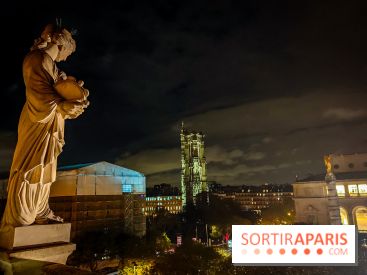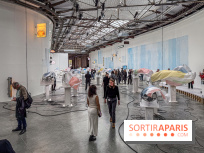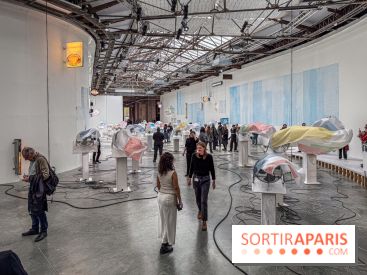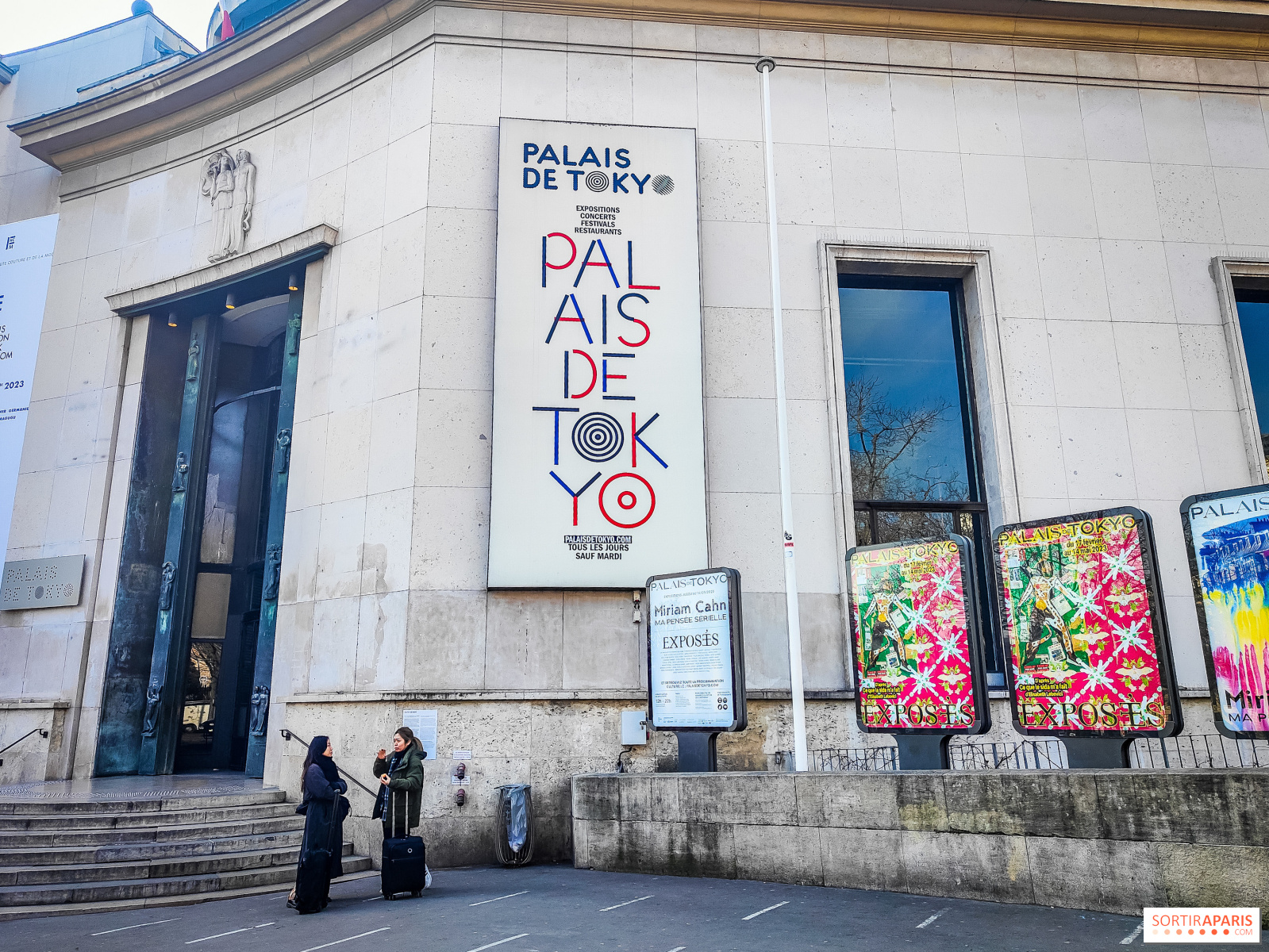
You know it: the Palais de Tokyo is always ready to party with you. Whether for special evenings or contemporary exhibitions, this Parisian cultural hotspot draws the most lively artists and visitors. Save the evening of Saturday, May 23, 2026, because the Palais de Tokyo has lined up a dazzling program for this year’s Night of Museums, which is shaping up to be thrilling.
With a magnificent view of the Eiffel Tower, the Palais de Tokyo focuses on modern and contemporary art. Inaugurated in 1937 for the Exposition Internationale des Arts et Techniques, it has evolved over the years into an avant-garde art center with bold architecture and innovative exhibitions.
The Nuit des Musées is the perfect opportunity to explore this exceptional building free of charge, during a unique nocturne that plunges us into the heart of the contemporary scene.
Exhibition - Cheryl Marie Wade, Queen Mother of Knots. Lucie Camous and Etienne Chosson
The show stems from footage shot for a documentary about California-based disabled poet Cheryl Marie Wade, directed by Diane Maroger. Known as “The Queen-Mother of Gnarly,” Wade is part of a Berkeley-born community of disabled artists that emerged in the late 1970s, alongside the rise of Disability Studies. Her texts, and those of the artists she associates with, pull disability away from the medical frame to reveal it as a vivid, shared experience of the world.
The exhibition’s duration is used to sift through dozens of hours of documentary footage of this community at the turn of the 1990s into the 2000s, and to craft a montage that brings together the works of artists who are directly connected to—or metaphorically linked with—the Berkeley crip scene.
Participation terms: Free | No reservation required
Schedule: Saturday, May 23, 2026 — 6:00 PM to 11:30 PM
Exhibition - Virgin Turns. Pauline Curnier Jardin
“Virgin Turns” designates those tipping points when bodies, narratives, beliefs and social constructs depart from well-trodden paths to irreverently and indocilely open up other possible futures.
This expansive monographic exhibition lets Pauline Curnier Jardin unfold her practice through a selection of major installations and new productions. It reveals her phantasmagoric atmospheres, weaving together theatre, cinema and ritual to explore recurring themes: the fluid boundary between vulnerability and strength in the body, the place of women in society, and the forms of spirituality and popular syncretism.
WARNING: These videos contain imagery that may offend certain sensitivities, particularly younger viewers:
* Fat to Ashes, screened at the Colisée at the start of the route
* Qu’un sang impur, screened in the forest at the end of the route
Participation requirements: Free | No booking required
Schedule: Saturday, May 23, 2026 — 6:00 PM to 11:30 PM
Exhibition - The Ambassadors. Jessie Darling
Through gestures that are at once simple, minimal, and spectacular, Jesse Darling’s sculptures and installations reveal the clandestine narratives that haunt the objects, materials, and forms that populate our daily lives. Working with industrial materials, reclaimed objects, or scraps, they assemble them into unusual compositions—hybrid relics or fantastical landscapes—emphasizing the marks of time on their physical state, between wear and decay, as if to underscore their fragility and precarity.
Imbued with a form of critical melancholy or a vigilant romance, their work links us to the poignant precariousness of the materialities around us, but also to the fragility of the production, consumption, and domination structures that made them possible.
Eligibility criteria: Free | No reservation required
Schedule: Saturday, May 23, 2026 — 6:00 PM–11:30 PM
Spring–Summer 2026 Exhibition Season: Body Norms
This season, the exhibition positively reframes ideas of vulnerability, fragility, and, more broadly, deviations from the norm to offer aesthetic and sensory experiences that overturn hierarchies and clichés.
Now more present than ever in society, these concerns deeply shape contemporary art, challenging how institutions open up and placing accessibility at the heart of reflection and practice. Through a variety of forms—ranging from the abstract to the directly activist—this is about imagining, with the artists, how minority positions can speak for the many.
Featuring: Jessie Darling, Cathy de Monchaux, Benoît Piéron, Pauline Curnier Jardin, Joseph Grigely, Sheryl Marie Wade.
Adapted provisions
Hearing impairment:
• Magnetic loops at the ticket desk.
Available at the Information and Membership Desks, as well as at the hamo.
• Sound amplification arrangements in Pauline Curnier Jardin’s Virages Vierges and Cheryl Marie-Wade’s works, with Lucie Camous and Etienne Chosson.
On loan at the Information and Membership desk.
• LSF (French Sign Language) introduction videos: a general presentation of the Palais de Tokyo in the lobby plus an exhibition-by-exhibition briefing.
A QR code is available for each exhibition, located beneath the label of an artwork. To access it, please download the Lingua Vista app and then scan the QR code to view a video by Léandre Chevreau, a Deaf mediator.
Visual impairment:
Three seating areas equipped with audio description are available across the following three exhibitions:
• Cathy de Monchaux: audio description and tactile panel for Unicorn.
• Pauline Curnier Jardin: audio description and tactile panel for Fat to ashes.
• Joseph Grigely: audio description and tactile panel for the entire exhibition setup.
Mental health concerns: The Palais de Tokyo mediators are trained in Mental Health First Aid. Feel free to approach them if you need assistance.
Mobility impairment:
• Wheelchair loans.
Available at Security PS.
• Seat cradles.
Available in the hall.
• Accessible route map (PMR).
Available at the administrative entrance and at the Information and Membership desk.
Intellectual disability:
• Easy French documents.
Available at the hamo and the mediation lounge.
• QR code system linking to a simplified French text.
A QR code is available for each exhibition, located beneath the label of an artwork.
To prepare your visit : Plan of the Palais - Palais de Tokyo
For on-site requests, please don’t hesitate to approach the reception and ticketing staff and the mediators.
Participation requirements: Free | No reservation required
Schedule: Saturday, May 23, 2026 — 6:00 PM to 11:30 PM
Exhibition — This is where we stand. Joseph Grigely
Accessibility begins in the very layout of a place. Invited by the Palais de Tokyo to enact a gesture in one of its spaces that is notoriously difficult for people with limited mobility, Joseph Grigely brings disability and accessibility to the fore. How could the architecture of the venue be reshaped? What would a meeting of stairs and a ramp look like? And how can access for everyone become a shared responsibility?
Through a suite of works, the artist set out to think through—and to prototype—a “prosthesis of access,” a tool that is at once conceptual and tactile, through which he tests his own experience moving through the world as a deaf person, while sketching avenues to make that journey more navigable and meaningful.
How to participate: Free | No reservation required
Hours: Saturday, May 23, 2026 – 6:00 PM to 11:30 PM
Exhibition - Studio, wounds and battles, desire is the reiteration of hope. Cathy de Montchaux
Palais de Tokyo presents the first retrospective of Cathy de Monchaux, a major figure on the British art scene, spanning roughly fifty works from 1984 to the present.
The exhibition pulls us between visceral desires and epidermal dangers, unsettling our bearings—especially the male-dominated language of philosophy and art. It also plays with scale, moving from intimate to demonstrative, and with materials, from the velvet grain to the chill of metal. Cathy de Montchaux’s practice kneads form and feeling alike, leaving a lingering taste in the eye: metal under the tongue, a moment one can even commune with.
Participation terms: Free | No reservation required
Schedule: Saturday, May 23, 2026 — 6:00 PM to 11:30 PM
Exhibition – Shadow Varnish. Benoît Piéron
Benoît Piéron’s works stage experiences of suspended time, anticipation, hallucination, and reverie by subverting a functional, clinical aesthetic. By reintroducing softness and desire where they had been expelled, the artist unfolds alternative narratives around bodies, affects, and the spaces tied to illness.
The exhibition presents an erotic, abstract film in the form of a shadow theatre, projected within a staging that carries a troubling strangeness. Drawing on urban functional design as well as the register of the marvelous, this unsettling setting gives shape to the notion of impermanence—of statuses, identities, and physical and psychological states—thereby becoming a space for collective imagination.
Participation requirements: Free | No reservation required
Schedule: Saturday, May 23, 2026 — 6:00 PM to 11:30 PM
Mediation Office
As a hub for contemporary creation and a home for everyone, the Palais de Tokyo is fully embracing its mission to democratize contemporary art. The cultural mediators at the Palais de Tokyo are on hand to guide you through the artistic and cultural program, and to bridge the gap between each visitor’s aesthetic experience and the artists’ intent. Have a question about the works? Want to share a reaction or a perspective? Come meet our team at the Mediation Office, in the Palais de Tokyo lobby, from 6 to 11 p.m.!
Accessible arrangements
Hearing impairment:
• Magnetic loops at the ticket office.
Available at the Ticketing and Information Desks, and at the hamo.
• Audio amplification setup in the exhibitions Virages Vierges by Pauline Curnier Jardin and Cheryl Marie-Wade, reine-mère des noueux by Lucie Camous and Etienne Chosson.
Loan available at the Information and Membership desk.
• LSF (French Sign Language) presentation videos: a general Palais de Tokyo introduction in the hall + an exhibition-specific presentation.
A QR code is available for each exhibition, located beneath the label of a work. To access it, please download the Lingua Vista app and then scan the QR code to watch a video by Léandre Chevreau, a deaf mediator.
Visual impairment:
Three seating areas equipped with audio description are available in the following three exhibitions:
• Cathy de Monchaux: audio description and tactile board for the Unicorn work.
• Pauline Curnier Jardin: audio description and tactile board for Fat to ashes.
• Joseph Grigely: audio description and tactile board for the entire exhibition scenography.
Psychic/smental health accessibility: The Palais de Tokyo mediators are trained in Mental Health First Aid. Don’t hesitate to approach them if you need assistance.
Motor disability:
• Wheelchair loans.
Available at Security PC.
• Seat-cane trolleys.
Available in the lobby.
• PMR (accessible) plan.
Available at the administrative entrance and at the Information and Membership desk.
Intellectual disability:
• Document in Easy French.
Available at the hamo and the mediation lounge.
• QR code system linking to Easy French text.
A QR code is available for each exhibition, located beneath the label of a work.
To plan your visit : Plan of the Palais - Palais de Tokyo
For any on-site requests, please don’t hesitate to ask the reception/desks and the mediators.
Participation terms: Free | No reservation required
Schedule: Saturday, May 23, 2026 — 6:00 PM to 11:00 PM
Visit – The Ambassadors. J. Darling / Shadows Varnish. B. Piéron / Studio, Wounds and Battles, Desire Is the Reiteration of Hope. C. de Montchaux
A quick tour of the three Entrance Level exhibitions with one of our cultural mediators for an initial briefing on what they contain.
After your visit, you’ll be free to wander the exhibitions at your own pace, delving into their details as you wish.
Les ambassadeurs. Jessie Darling
Through simple, minimalist yet spectacular gestures, Jesse Darling’s sculptures and installations reveal the clandestine stories that haunt the objects, materials, and forms that populate our daily lives. Using industrial materials, used objects, or scraps, they are assembled into unconventional compositions, hybrid relics, or fantastical landscapes, emphasizing the signs of time on their physical state—wear and degradation—as if to stress their fragility and precariousness.
Imbued with a form of critical melancholy or an alert romanticism, the work connects us to the poignant precariousness of the materials around us, as well as to the structures of production, consumption, and domination that made them possible.
Vernis a ombres. Benoît Piéron
Benoît Piéron’s works offer experiences of suspended time, waiting, hallucination, and daydreams through the subversion of a functional, sanitary aesthetic. By reintroducing gentleness and desire where they were expelled, the artist unfolds alternative narratives around bodies, affects, and spaces tied to illness.
The exhibition includes an erotic, abstract film in the form of a shadow theatre, projected within a staging that conveys a troubling unease. Drawing on urban functional design as well as the register of wonder, this disquieting setting gives shape to the notion of impermanence—the status, identities, and physical and psychological states—to become a space for collective imagination.
Studio, wounds and battles, desire is the reiteration of hope. Cathy de Montchaux
The Palais de Tokyo presents the first retrospective of Cathy de Monchaux, a major figure on the British art scene, spanning around fifty works from 1984 to today.
The exhibition tugs at the tension between epidermal desires and dangers, upending familiar reference points, especially the phallocracy of philosophical and artistic language. It also invites play across dimensions—from the intimate to the demonstrative—and across materials, from velvet’s grain to the chill of metal. Cathy de Montchaux’s work coils forms as it does emotions, leaving a lingering taste in our mouths: the taste of metal under the tongue, a moment to pause and reflect.
Participation requirements: Capacity: 25 people / Duration: 30 to 40 minutes / How to participate: Please arrive 5–10 minutes before the tour begins; a guide will meet you at the starting point of the tours, in the Palais de Tokyo lobby. - Free | Reservation required - reservation@palaisdetokyo.com
Schedule: Saturday, May 23, 2026 — 6:30 PM–7:00 PM, 8:30 PM–9:00 PM, 10:30 PM–11:00 PM
“Mini-Mediators” Project
The Palais de Tokyo has, this year, launched an Educational and Cultural Arts project titled “Mini-Mediators,” engaging 18 students from the CHAAP class (an Arts Plastiques–oriented timetable) in the 8th and 9th grades at Collège Louise Michel in Corbeil-Essonnes, under the guidance of Madame Garance Malbreil. Over several months, the students were introduced to the practice of cultural mediation and gained a broader understanding of how the art center operates.
During Europe’s Night of Museums, you’ll find these budding mediators in the exhibition spaces. It’s a chance for them to put what they’ve learned into practice by guiding their families and Palais de Tokyo visitors through the exhibitions, from 6:30 to 7:30 p.m. Do stop by to meet them!
Participation conditions: Free | No reservation required
Schedule: Saturday, May 23, 2026 — 6:30 PM to 7:30 PM
Visit – Virgin Curves. P. Curnier Jardin / This is where we are. J. Grigely / Cheryl Marie Wade, Queen Mother of the Knots. L. Camous and E. Chosson
A Brief Tour of the Three Exhibitions on the Rotonde Level, with one of our cultural mediators for an initial briefing on their contents.
After your visit, you can linger at will to explore the exhibitions in more depth.
Virages vierges. Pauline Curnier Jardin
“Virages Vierges” marks those tipping points when bodies, stories, beliefs and social constructs diverge from the well-trodden path, opening, in a irreverent and unruly spirit, other possible futures.
This major solo show allows Pauline Curnier Jardin to unfurl her practice through a selection of landmark installations and new works. Visitors will encounter her fantasmagoric atmospheres, straddling theatre, cinema and ritual, tied to recurring themes: the fluid boundary between vulnerability and power in the body, the role of women in society, and forms of popular spirituality and syncretism.
This is where we are. Joseph Grigely
Accessibility begins with the building itself. Invited by the Palais de Tokyo to create a gesture in one of its spaces that is particularly inaccessible to mobility-impaired visitors, Joseph Grigely foregrounds questions of disability and accessibility. How could the architecture of the space be reimagined? What would a meeting between stairs and a ramp look like? How can access for everyone become a shared responsibility?
Across a suite of works, the artist undertakes to conceive a “prosthetic of access,” a tool that is both conceptual and tangible, through which he tests his own mobility in the world as a Deaf person, while sketching out ways to make this journey more navigable and meaningful.
Cheryl Marie Wade, Reine-mère des noueux. Lucie Camous et Etienne Chosson
This exhibition originates from footage shot for a documentary about the Californian poet and disabled artist Cheryl Marie Wade, directed by Diane Maroger. Known as “The Queen-Mother of Gnarly,” Wade was part of a community of disabled artists in Berkeley at the end of the 1970s, alongside the rise of Disability Studies. Her writings and those of the artists she mingled with separate disability from medical discourse to reveal it as a vivid, shared experience of the world.
The exhibition time is used to sift through tens of hours of documentary footage from this community at the turn of the 1990s–2000s, assembling a montage with works by artists connected directly or metaphorically to Berkeley’s crip scene.
Participation requirements : Capacity: 25 people / Duration: 30–40 minutes / How to participate: Please arrive 5–10 minutes before the tour starts; a guide will greet you at the starting point of the tours, in the Palais de Tokyo hall. - Free | Booking required - reservation@palaisdetokyo.com
Schedule: Saturday, May 23, 2026 – 7:30 PM to 8:00 PM, 9:30 PM to 10:00 PM
Are you ready to take full advantage of this year's Nuit des Musées at the Palais de Tokyo?
Dates and Opening Time
On May 23, 2026
Location
Palais de Tokyo
13, avenue du président Wilson
75116 Paris 16
Route planner
Access
Metro line 9 "Iéna" or "Alma-Marceau" station
Prices
Free
Official website
palaisdetokyo.com