Snow White, Marc Webb's live-action Disney film starring Rachel Zegler and Gal Gadot, arrives on Disney+ on December 19, 2025. Date, synopsis, review, and behind the scenes.
Disney continues its live-action adaptation of its classics with Snow White, directed by Marc Webb, already known for (500) Days of Summer and The Amazing Spider-Man. Starring Rachel Zegler, who made her breakthrough in West Side Story, and Gal Gadot as the Evil Queen, the film was released in theaters on March 19, 2025, and will be available to stream in France on Disney+ on December 19, 2025.
This new version revisits the 1937 classic Snow White and the Seven Dwarfs in the form of a musical adventure. The young princess, whose beauty and kindness arouse the jealousy of her stepmother, must flee the castle to escape a growing threat. Lost in an enchanted forest, she finds refuge with seven companions with contrasting personalities, who become her new family and allies against the Queen.
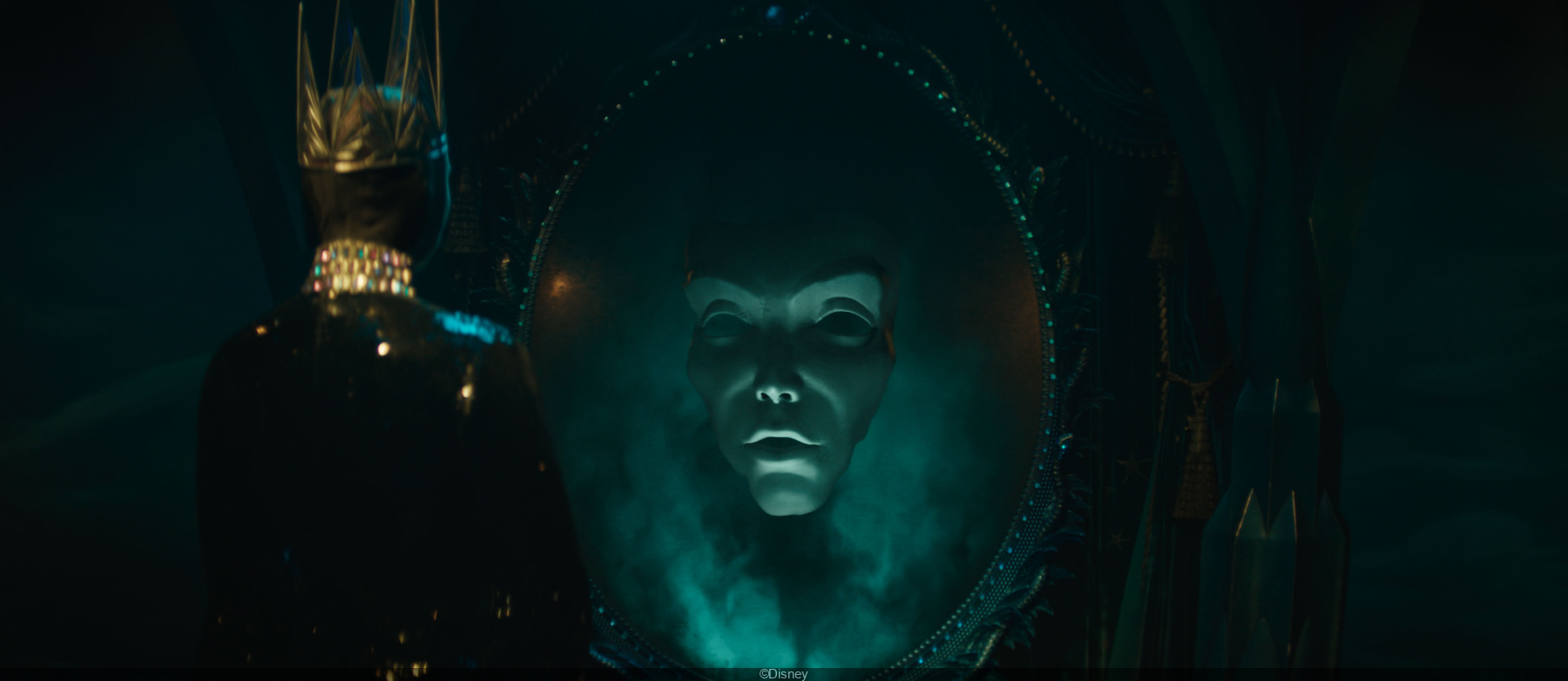
Beyond escape and survival, the story highlights the journey of a heroine learning to define herself, torn between her royal heritage and her desire for independence. The film revisits iconic scenes and motifs—the magic mirror, the poisoned apple, the dwarfs' cottage—while incorporating new songs and situations designed to pay homage to the animated film and offer a more contemporary take on power, leadership, and the place of young women in fairy tales.
The Snow White trailer
Written by Erin Cressida Wilson, the script is part of a series of reinterpretations initiated by Disney after Cinderella, Beauty and the Beast, and The Little Mermaid. The film asserts a desire to modernize the character: this Snow White, destined to become a leader, is no longer defined by her wait for the prince, but by her ability to make decisions for her kingdom. Several writing choices—the characterization of the heroine, the evolution of the dwarfs, the relationship to violence—are part of this repositioning, while sparking debate and criticism among some of the audience attached to the 1937 version.
The staging relies on extensive set design and visual world-building. Filmed mainly at Pinewood Studios and in the wooded reserve of Burnham Beeches, the film presents a kingdom inspired by Germanic and Alpine architecture, with a castle whose artistic direction draws on references such as Albrechtsburg Castle and Chillon Castle. On the musical side, Benj Pasek and Justin Paul, already award-winning for La La Land, have written new original songs, alongside rearranged covers of classics such as " Heigh-Ho " and " Whistle While You Work."
In terms of performances, Gal Gadot plays a Queen who fully embraces her cruelty and theatricality, while Rachel Zegler lends her voice and presence to a heroine who is somewhere between homage and rewriting. The dwarfs, designed here as digital creatures voiced by actors, reflect recent debates about the representation of little people on screen. The film's release has also been accompanied by discussions about its overall tone, the balance between fidelity and modernization, and how Disney is repositioning its early classics for new generations.
Our review of Snow White:
Mirror, mirror on the wall... Magic rediscovered or failure...? We're leaning towards the second option, your majesty... Unfortunately, Snow White is not a success, for several reasons. Starting with its extremely shaky narrative, the film is more of a rewriting of the fairy tale than an adaptation. The further the film progresses, the more we get the impression that Disney has taken bits and pieces from the animated film (and the fairy tale) here and there and forced them into what the studio is offering in order to make something modern and in tune with the times, responding to social issues... In principle, why not? The cult animated film is somewhat dated in terms of the image it conveys, but there's a problem: the film loses coherence throughout, as it struggles to break away from the homage it wants to pay while offering something modern. This results in scenes that sometimes follow on from each other without transition and without explaining how we move from one situation to another (the Queen decides to go in search of Snow White and prepares her potion without us knowing why, whereas the cartoon explains it clearly...). For those who know the animated film, it's okay even if it's strange, but for younger viewers who are discovering it for the first time, it's completely incomprehensible.
A message that misses the mark?
The same goes for tying the message to current social issues... The film seems to proclaim this loud and clear (at least in its statements prior to the film), so let's take it to its logical conclusion. The problem is that the message in question (namely, that kindness solves all problems... We're simplifying, but that's the idea), although it works perfectly in a fairy tale, is extremely naive, even counterproductive, in real life. Imagine resolving an armed conflict with good intentions... OK, we're exaggerating a little, it's a children's story and it encourages them to be kind to each other, but the reality of life, and especially its violence, at their age, is clearly not a fairy tale.
Let's stick with the violence of life... The film doesn't even prepare viewers for this, as it is watered down to the extreme, avoiding upsetting as many people as possible in order to please everyone. The doe's heart in the Queen's box is replaced by an apple, there is no Prince Charming, but a bandit instead, etc. Developing the characters to avoid the pitfalls of harassment or stigmatization is obviously the right thing to do, but unfortunately, it is not done in the right way. Not showing the heart in question, for example (remember that in the story, it is the heart and liver of a wild boar), is possible, and the cartoon does it very well... So why replace it with an apple and show it? This is just one example among many.
In addition to this, the film is full of completely absurd details (spoiler alert: the seven dwarfs have magical powers, Dopey talks, there is no glass coffin for Snow White, etc.) that add absolutely nothing to the story. One wonders why...
An interesting cast, however
The casting is a little better: Gal Gadot shines as the Evil Queen, particularly convincing in her attitude, and even saves the film. She is the only character who comes closest to the cartoon version (even if her performance does have some flaws). She gives a good performance, helped by particularly sumptuous costumes that are very similar to those in the animated film.
As for Rachel Zegler, she IS Snow White, and no one can ever take that away from her. But her character, torn between a tribute to the 1938 film and a more modern vision, is rather poorly written and never really makes any choices. The poor actress does what she can with the limited resources she is given, but still manages to make her mark and leave a lasting impression, especially in the singing parts. An absolutely divine voice for such a cult character... What more could you ask for!
As for the seven dwarfs, we would have preferred real actors instead of CGI characters, but we understand this choice, especially in the representation of their faces and expressions. Dopey is particularly touching, with the film restoring his reputation by giving him more depth... But it ends up ruining everything by making him talk (Dopey doesn't talk, that's his condition, that's what gives him his name). It's a shame, but it's a conscious choice and we accept it. The rest of the cast, on the other hand, is dispensable.
A story that mixes everything up and trips itself up
Even the story is confusing. Snow White, who is supposed to stay with the seven dwarfs for just one night, spends her time running back and forth, sometimes fleeing from the Queen, sometimes helping the bandits... It's like a vaudeville show. The big cleaning scene at the seven dwarfs' house takes place with them, not before they discover that she has moved in with them... So OK, we get the message behind it, but there's a reason why events unfold this way.
The same goes for the yodeling party scene that takes place after her visit to the bandits, who are welcomed here by the dwarfs. Let's continue: after biting the apple, Snow White is awakened well before the Queen's death, and then they confront each other... This goes against both the cartoon and the fairy tale. Changing things is fine, but it has to be consistent with the story being told. And here, it's complicated. In short, everything gets mixed up, and not for the better.
Mirror, mirror on the wall... luckily, it's not all doom and gloom!
So far, the picture isn't very bright... But that doesn't mean it's all bad. The first fifteen minutes are particularly good, full of references to the animated film, and set the scene much better than the cartoon by broadening the spectrum of Snow White's origins. This is a real bonus, even a breath of fresh air with the first song, a new one, which should go down well with younger viewers.
Some of the lines are also particularly well written. One example that springs to mind is Grumpy who, at one point, in English in the text (we're translating, as we don't know what the French version says, since we saw the film in the original version with French subtitles), says to one of his companions, " Talk to me about that brush again and I'll shove it where the sun doesn't shine, " all while singing, of course. Delicious...
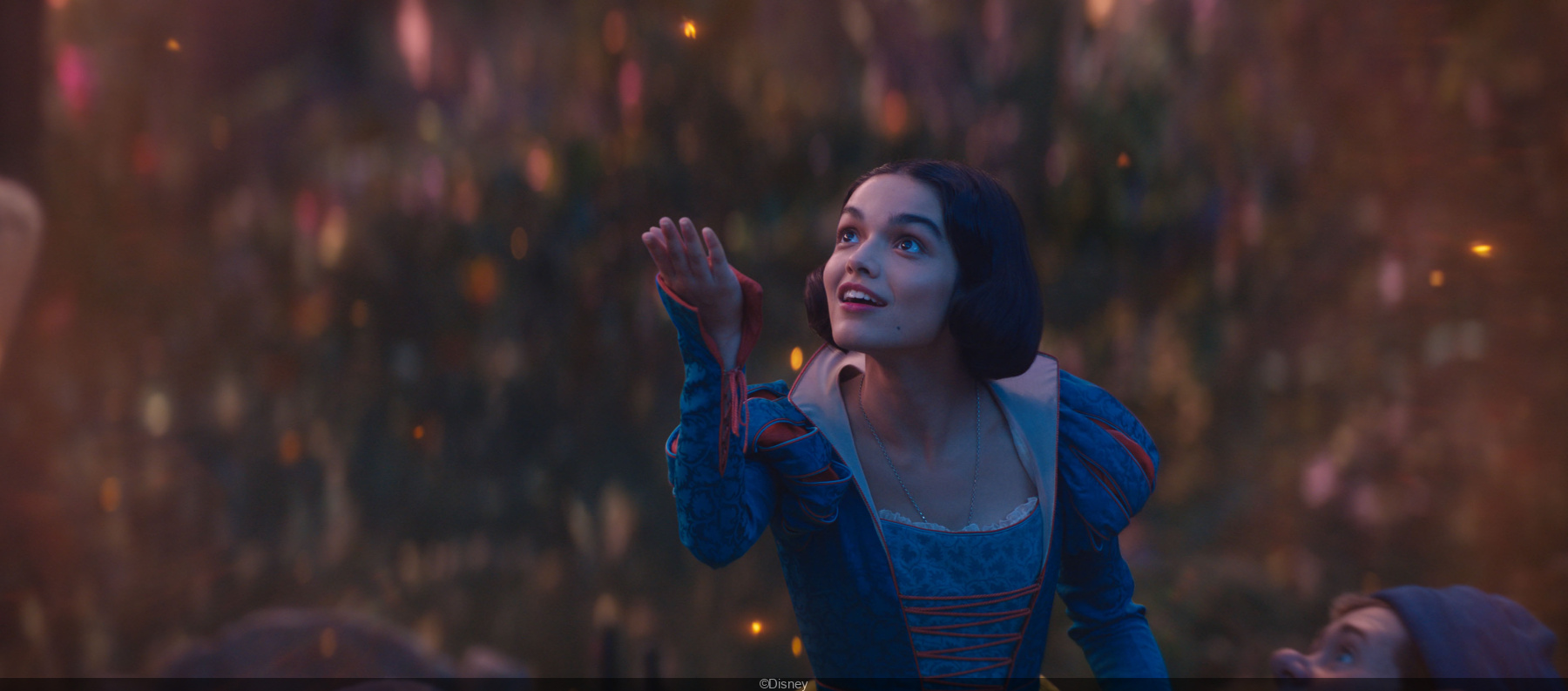
The special effects, meanwhile, are quite successful. We love the scene where Snow White flees into the forest after being attacked by the hunter. Aesthetically, it's really beautiful, with the scene playing well with colors and respecting the scary side of the cartoon. It's a polished aesthetic that can be found throughout the film.
Some changes to the story, although debatable, are ultimately good ideas, upon reflection. We're thinking of the Queen's death, for example, which makes more sense here. It's a very symbolic death, finely thought out in the end. In short, a good point.
The songs, a sensitive point in this "adaptation"?
When it comes to the songs, there's something for everyone: on the one hand, Disney tramples on its heritage by removing most of the original songs, not to mention the best known ones, and on the other hand, it offers new songs that are relevant or intelligently expand on the old ones. Thus, the song " Some Day My Prince Will Come... " disappears completely (no prince, so no song). This is a shame, given that the song is perhaps the best known in the entire Disney repertoire (not counting Frozen, as the film is much more recent).
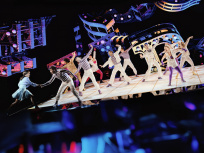
The Dwarfs' Tyrolean song (you know, with the yodel) is whistled through in 30 seconds. On the other hand, Heigh-Ho (the other ultra-famous song from the animated film) is brilliantly revamped, introducing each dwarf one by one. The scene in question is also very pretty, with the architecture of the mine combining an enchanted cave worthy of a good fairy tale with "dwarf" architecture straight out of The Lord of the Rings, in touches. A surprising and welcome artistic choice.
A messy film, in the end...
But all these good points are not enough to save a film that has too many flaws and inaccuracies. It's a shame, because it's dynamic and well-paced. A film that will certainly appeal to die-hard fans, but not to moviegoers looking for consistency in the narrative and other strict adherents to the original story.
On the other hand, here's a suggestion: if you want to see a truly modern Snow White that respects the original Disney character, go watch the series Once Upon a Time...An ABC and Disney series, available on Disney+, starring Ginnifer Goodwin as Snow White/Mary Margaret Blanchard, rises to the challenge brilliantly. Otherwise, we'll settle for the cult animated film, also available on Disney+. And if you want to make up your own mind, the doors to the movie theaters are open to you.
Snow White Film | 2025 Theatrical release: March 19, 2025 On Disney+December 19, 2025 Adventure, Musical, Fantasy | Running time: 1 hour 49 minutes Directed by Marc Webb | Starring Rachel Zegler, Gal Gadot, Andrew Burnap Original title: Disney’s Snow White Country: United States Suitable for all audiences
By tackling the studio's very first animated classic, Snow White version 2025 finds itself at the crossroads of several expectations: fidelity to the 1937 material, the demand for modernization, and the logic of grand musical spectacle. Between confident reinterpretations, controversial choices, and a polished aesthetic, its arrival on Disney+ is sure to fuel further discussion about how Disney is reinventing its own foundations today.