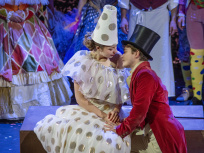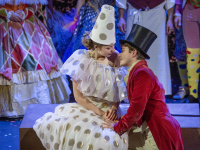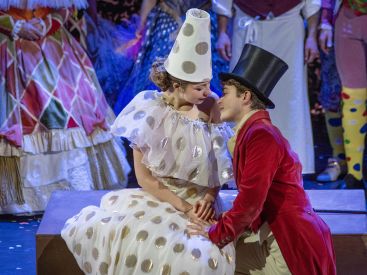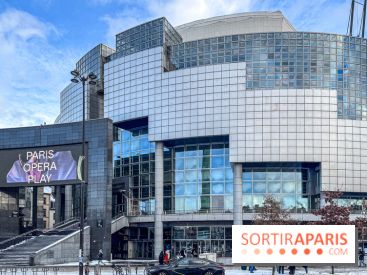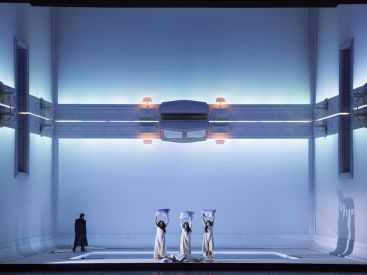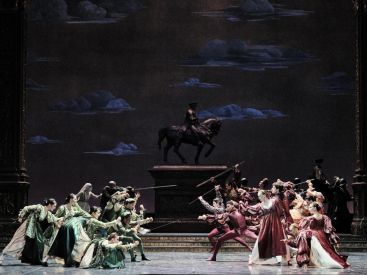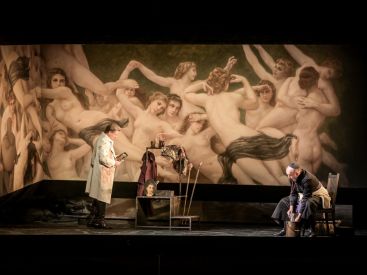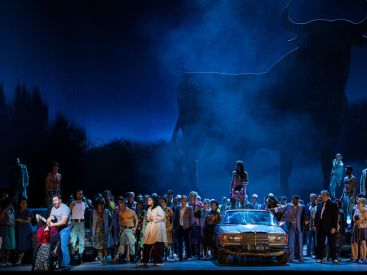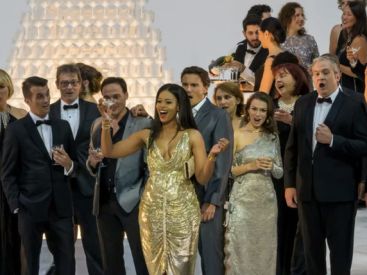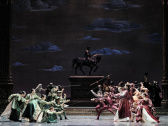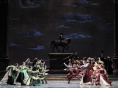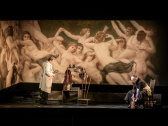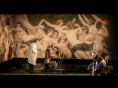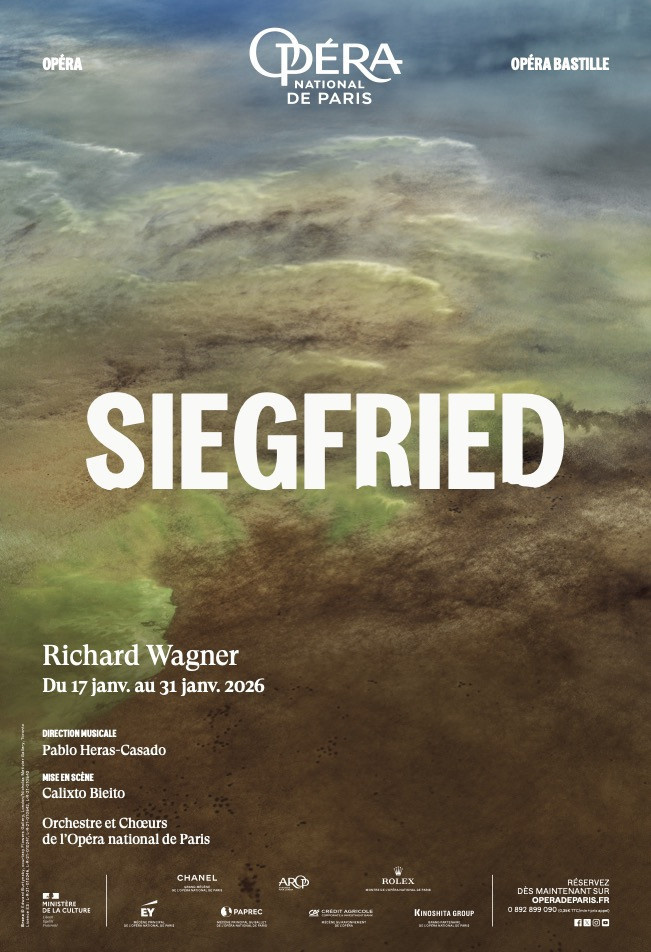
A fearless hero facing a collapsing world... The Opéra Bastille invites you to experience Siegfried, a Richard Wagner opera crafted in a new production directed by Calixto Bieito, running from January 17 to 31, 2026. As the third installment of the Ring Cycle, this vital work of the opera repertoire is part of a complete cycle dedicated to Wagner’s Ring of the Nibelung. The opera follows Siegfried, the son of Sieglinde and Siegmund, a daring young man fearless in the pursuit of his destiny. Through this fearless and instinctive hero, Wagner explores the end of an era ruled by gods and the rise of a new order—an enduring theme brought into today’s context through Calixto Bieito’s contemporary staging, which provokes reflection on power and destruction.
In Siegfried, the hero takes control of his own destiny. Equipped with the mighty Notung sword, he battles the dragon Fafner, claims the legendary ring of power without fully understanding its significance, and then crosses the fiery ring to awaken Brünnhilde. Their fateful meeting ignites a mutual love that will ultimately change their lives forever.
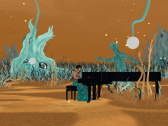
For Calixto Bieito, Siegfried reflects a vision where nature reclaims its domain following the destruction wrought by humans. The director explains: "Wotan is a force of destruction. In Siegfried, nature has taken back the devastated world. […] Due to human interference, nature is now uncontrollable. It’s a revolution of nature—forests and jungles go wild. But we must survive." This perspective situates the opera within a contemporary dialogue on the relationship between humanity, power, and the environment.
The chosen dramaturgy is built around a deliberately fragmented narrative, where the past and the future echo each other. Following The Rhinegold and The Valkyrie, which respectively depicted a universe under constant surveillance and a world at war, Siegfried continues this exploration of a cosmos in turmoil. Calixto Bieito emphasizes that "the rules of the cosmos are not moral", highlighting humanity’s inability to fully control the forces at play—whether gods, nature, or history.
Musically, Siegfried also marks a pivotal shift in Richard Wagner's compositional style. The score unfolds with expansive, building orchestration that evokes everything from the whispers of the forest to heroic calls from the horn, culminating in the final duet between Siegfried and Brünnhilde, widely regarded as one of the masterpieces of the Ring cycle. This rich musical palette underscores the emergence of the "free hero," a central figure in Wagner’s envisioned utopia.
The story behind the composition of the work sheds light on its distinctiveness. Wagner halted the writing of Siegfried in 1857, after the second act, only to pick it back up twelve years later—by which time he had composed Tristan and Isolde and The Mastersingers of Nuremberg. This extended hiatus gives the opera a special place within The Ring of the Nibelung, serving as both a tribute to a medieval legend and a laboratory for musical and theatrical innovation that continues to fuel contemporary interpretations.
This page may contain AI-assisted elements, more information here.
Dates and Opening Time
From January 17, 2026 to January 31, 2026
Location
Opera Bastille
Place de la Bastille
75012 Paris 12
Access
Metro lines 1, 5 and 8, "Bastille" station
Prices
Tarif par Catégories: €75 - €220
Average duration
5 h
10 min
Official website
www.operadeparis.fr