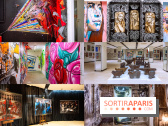
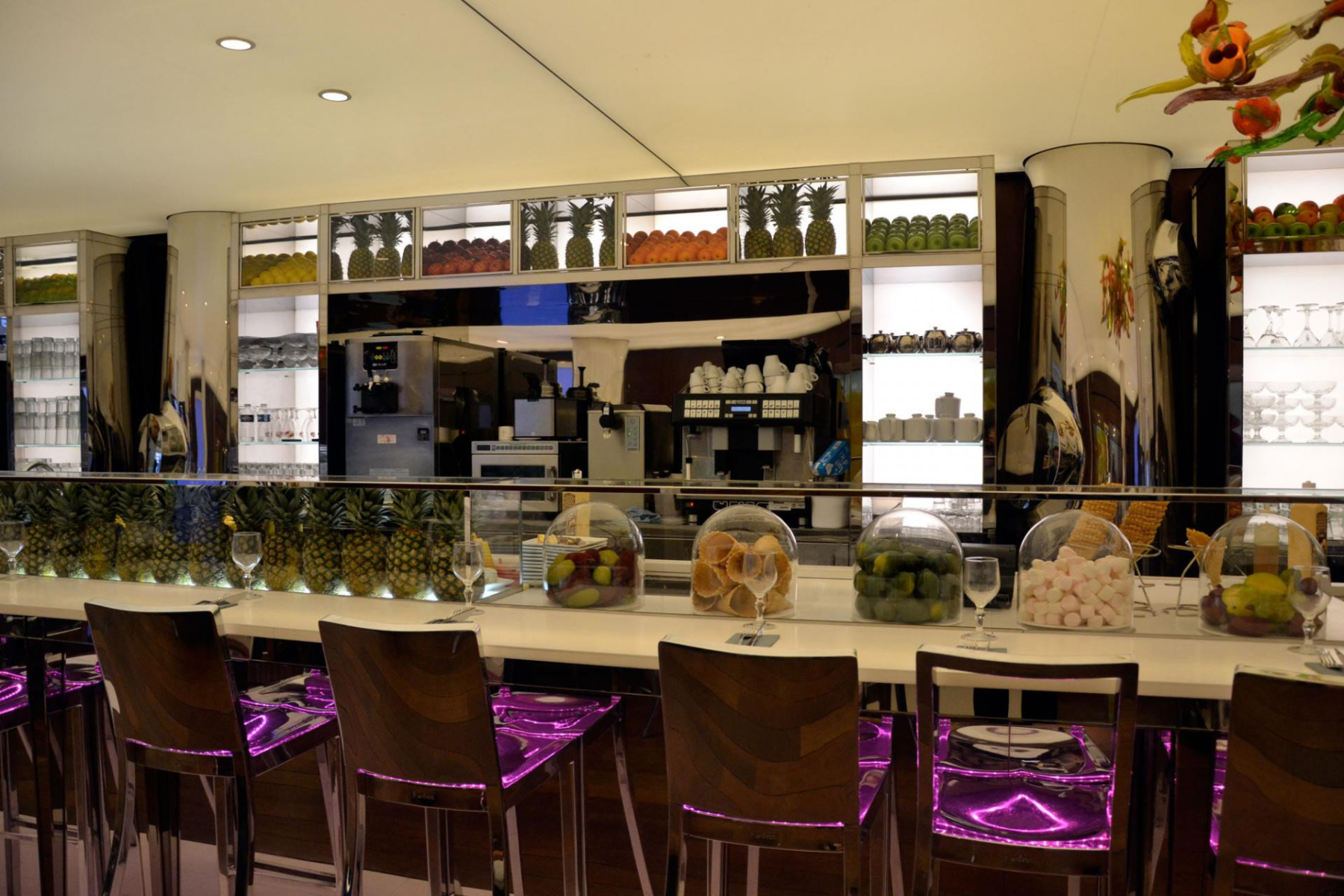
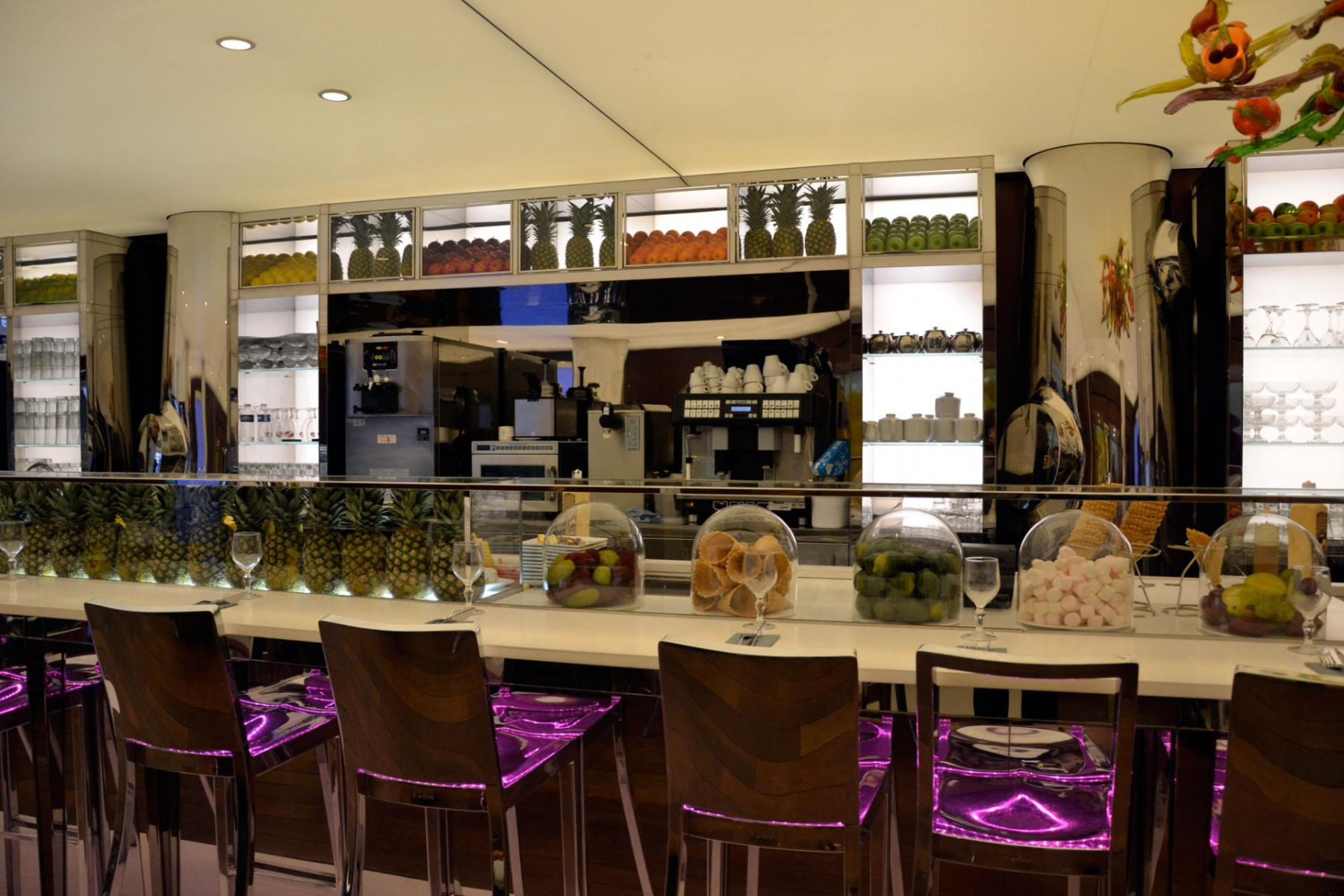
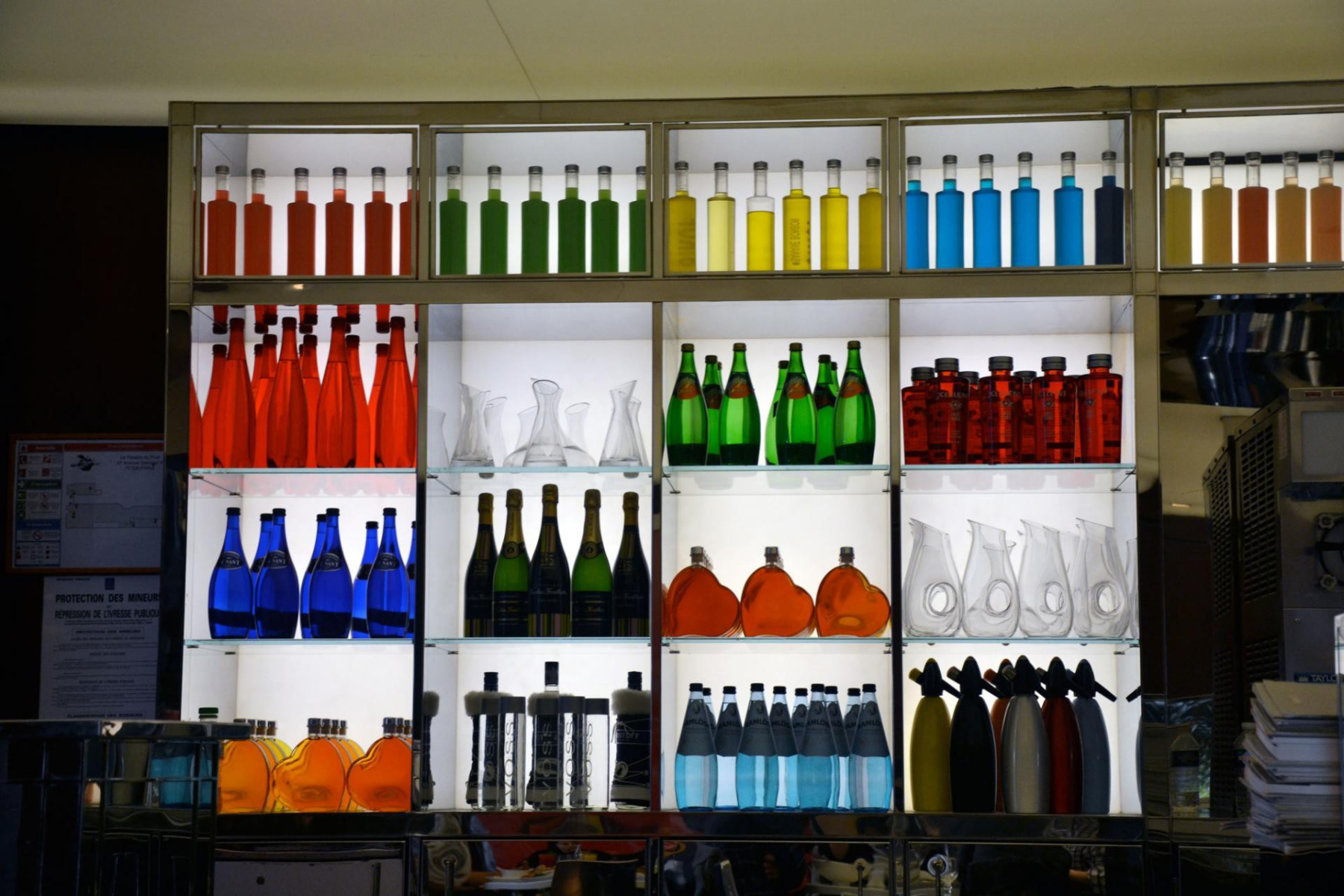
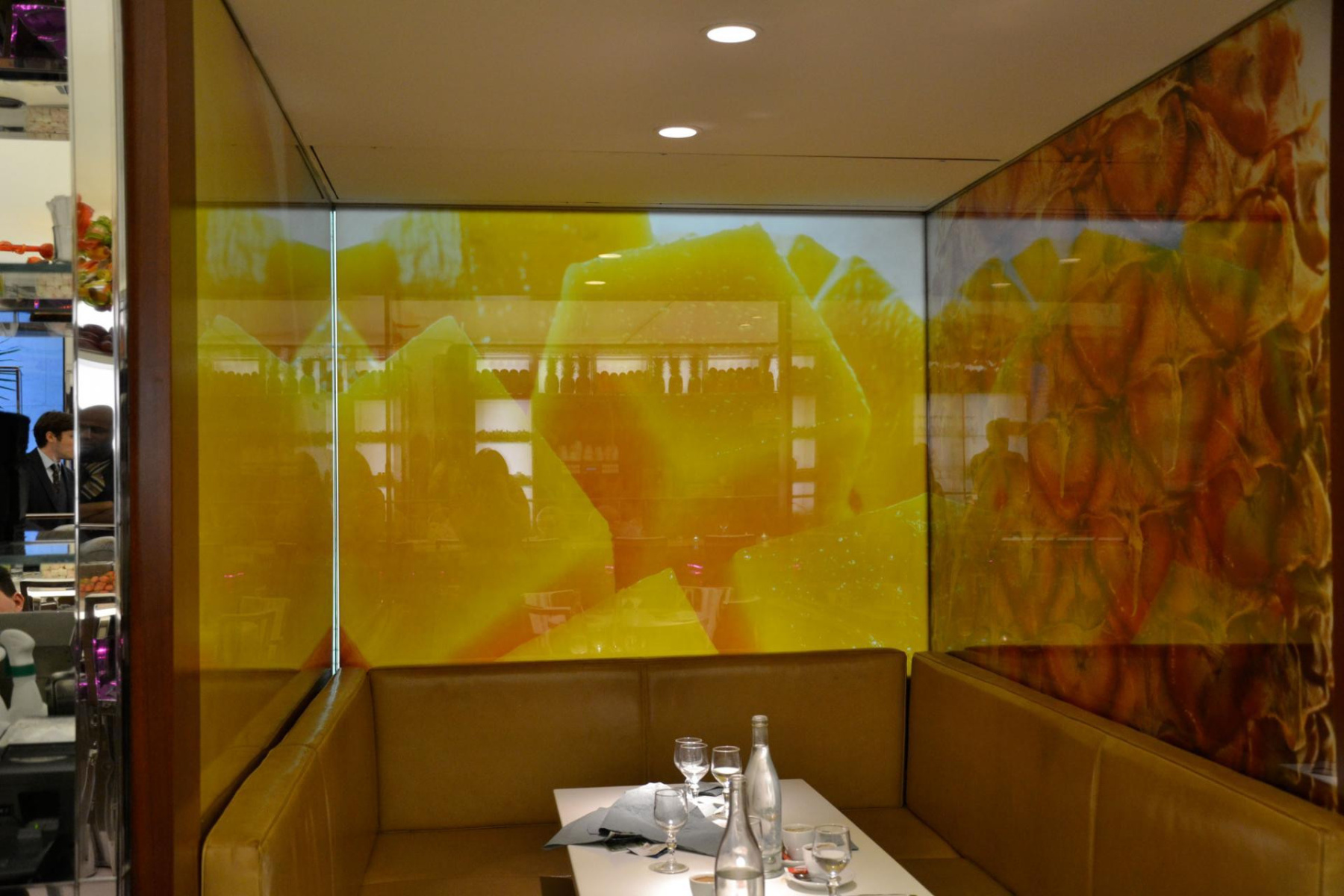
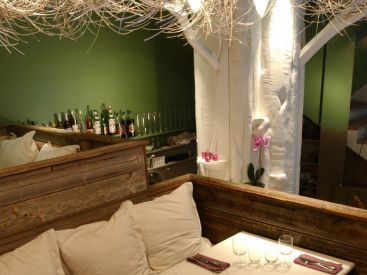
The restaurant at the Hôtel Meurice, Mama Shelter, the Royal Monceau, Kong, Maison Baccarat, the fruit paradise on Avenue George V... All these establishments bear the designer's mark, yet they are all almost radically different. His designs oscillate between proud modernity and French tradition, botanical and artistic, Venetian inspirations and the reinjection of pop culture symbols.
Starck has worked in the fields of architecture, everyday object design, and furniture, often staying ahead of fashion trends. In particular, he was the first to work with La Redoute on special collections and to take a keen interest in organic food. His designs for places such as the Royal Monceau are the result of these very different works.
French tradition and modernity
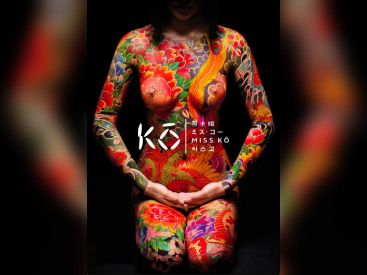
Starck is often associated with a certain idea of modernity, almost a futuristic coldness, as seen in his work for the terrace of the Kong restaurant in Paris. And yet, he is also the representative of a French architectural tradition, which he reuses and distills in his creations. When you listen to Starck talk about his work on Parisian hotels, you discover his particular attraction to French intellectual and artistic tradition. In his answers, he quotes Jean-Jacques Rousseau, Jeanneret, Romanticism, the 1920s and 1930s, and more. He says he is inspired by the interiors of writers' apartments, which are both practical and artistic. Philippe Starck is interested and curious about everything, as evidenced by his work with his daughter Ara Starck on the decoration of the restaurant atthe Meurice hotel. The decor combines white and silver tones, the perfect marriage of design and baroque tradition. He has managed to retain the grand style of the century while adding subtle touches of a decidedly modern atmosphere. The idea for the Meurice's restaurant, Le Dali, was to pay homage to the famous surrealist painter Salvator Dalí. The Royal Monceau, another hotel designed by Starck, also displays this offbeat blend of modernity and tradition. The Royal Monceau is designed as a palace, with unique rooms that respond to the present but do not hesitate to mix styles and eras. It is inspired both by the tradition of a large library (there are nearly 700 titles) and the modernity of a dynamic cultural crossroads (guitars in the rooms, tickets available for exhibitions, photo competitions, etc.).). For his carte blanche at Maison Baccarat in Paris, Starck also played on this fine line between the present and the past: he played with the imagination surrounding crystal palaces while working with chandeliers that remain slightly traditional.
An invitation to travel
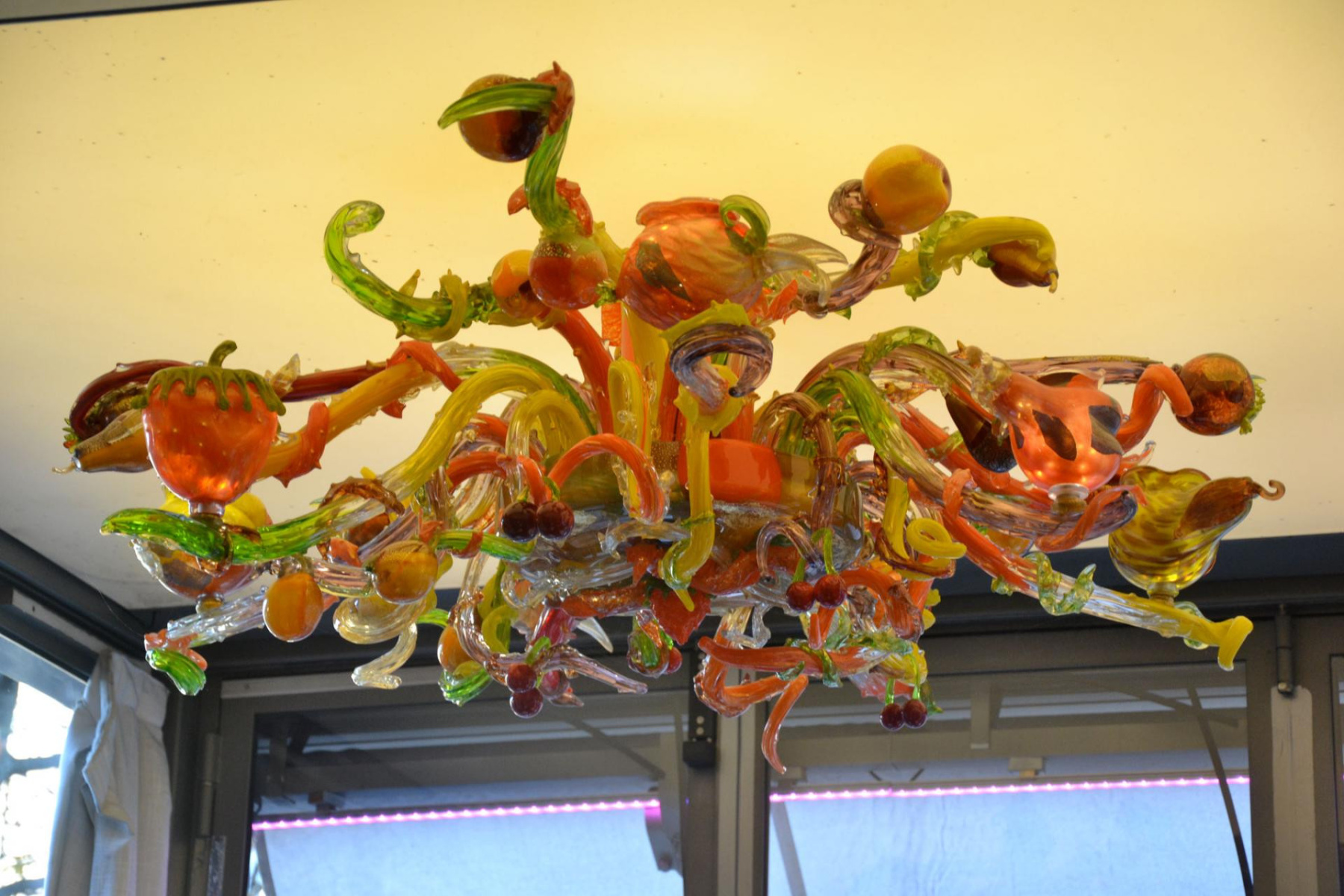
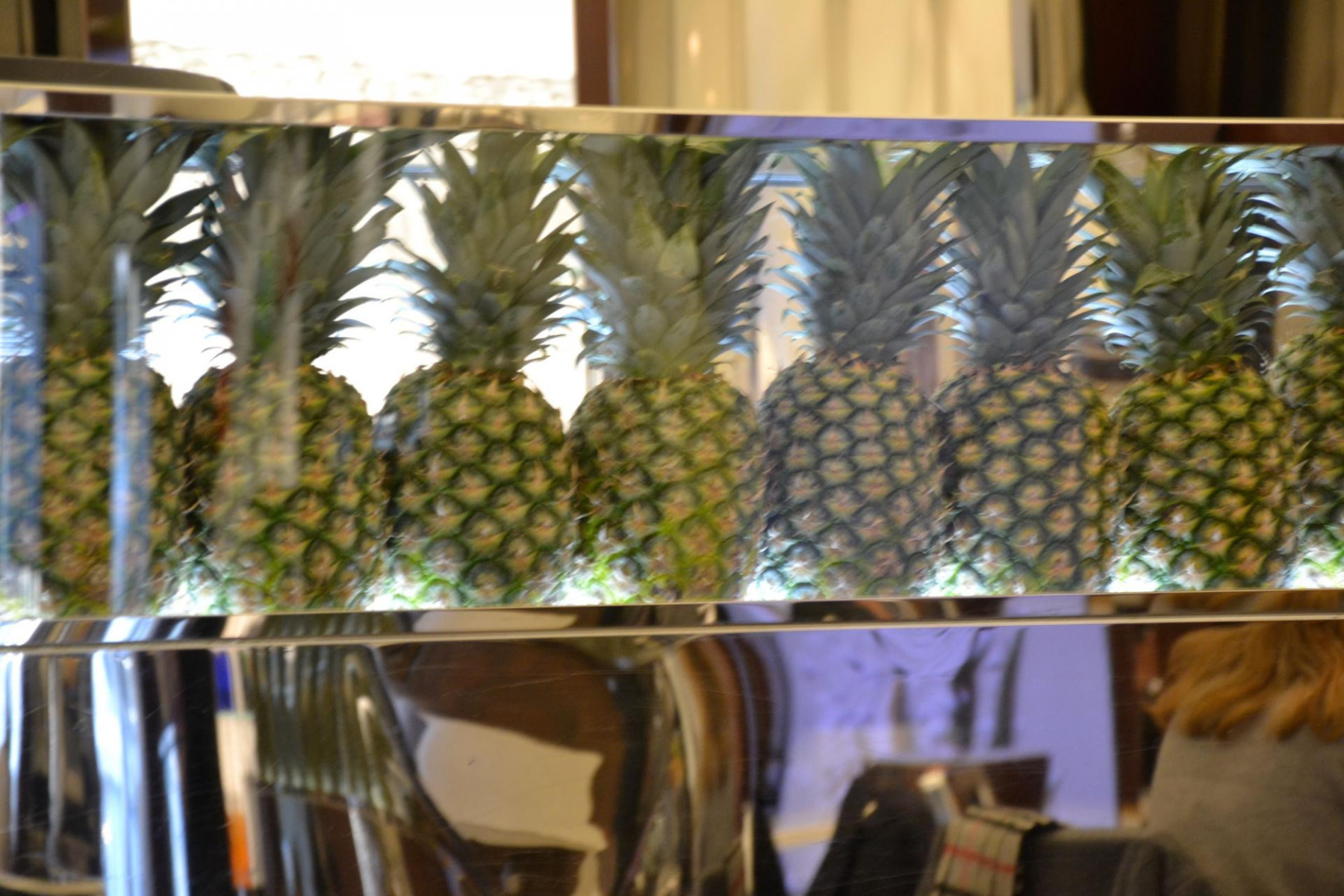
Starck's creations often revolve around the theme of travel, with certain touches unique to the designer inviting escape. His inspirations are sometimes Eastern, sometimes European, and reminiscent of the incredible beauty of Venetian palaces. Here and there, at the Royal Monceau, which he designed, we find touches of Murano glass, a type of glass typical of the island of Murano, south of Venice. Very early on, Starck became interested in concepts that are now very fashionable. He has incorporated a respect for plants and a sensitivity to nature and flora into his work. One thinks here of his creations for the Paradis du Fruit on Avenue Georges V. Starck endlessly recreates a kind of modern Garden of Eden, incorporating highly sophisticated design elements. At Kong, another restaurant he worked on, which serves Asian food, there is a Japanese-inspired, exotic atmosphere that invites you to travel while keeping both feet firmly in the future. Starck's work in Parisian restaurants is above all a temporal fluctuation between an imagined Orient, a dreamlike Venice, and playful futurism. These invitations to travel are surrounded by details dear to Starck: ecology, plants, fruit, and healthy, balanced food.
Pop culture symbols
For Mama Shelter, Starck wanted a highly urban location. The idea: a very modern hotel in the heart of the 20th arrondissement, with 172 rooms equipped with a 24-inch iMac and Wi-Fi. An office, reasonable prices, trendy and practical decor: everything is designed to appeal to a young urban crowd. It's a place that aims to be popular and uses playful details, reminiscent of a certain idea of the use of pop culture in design: flashy colors, a classy bar, and Batman lamps straight out of American comic books. The Kong is also very pop, with its translucent chairs decorated with female characters and its colorful ceiling. Starck is definitely part of the duality, the mixing of genres, and above all, he plays on his curiosity for the past and the future.
Philippe Starck punctuates Parisian establishments with his creations. He is everywhere in Paris, and it is common to come across one or another of his creations. It is through this multiplicity that he has made a name for himself as one of France's most famous designers. He is also one of the most awarded: his most recent prize is that of Designer of the Year at the Maison & Objet trade show in Paris. Until the next one.