Paris has much to fascinate. In addition to its beautiful heritage, the capital also has a mystical side, fueled by popular beliefs that sometimes still survive today. Whether you believe in them or not, they give the capital a more mysterious side that helps to enrich its history. So, what are the popular beliefs and urban legends that mark the City of Light?
A tomb that grants wishes
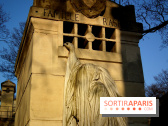
There's nothing ordinary about the most flower-filled tomb in the Père Lachaise cemetery. It's a strange dolmen in the 44th division, beneath which you can discover a bust of Allan Kardec. Known as the founder of spiritualism and author of the Book of Spirits, he has been the subject of a widespread legend since his death.
It is said that, before his death, Allan Kardec revealed a strange instruction: place his hand on the neck of the bust above his tomb, make a wish and return with flowers if it is granted. To this day, this tomb remains much more flowery than those surrounding it, so much so that a disclaimer is now posted on the back of the stone to dissuade visitors from trying the experiment themselves.
A fountain to remain faithful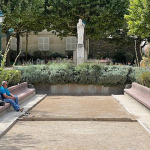
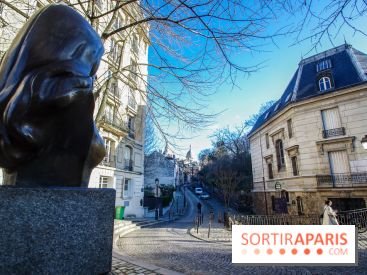
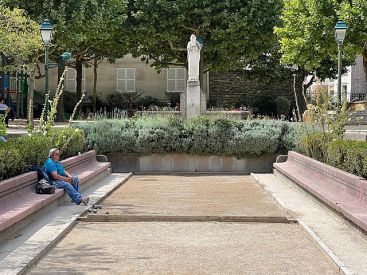
 A fountain that makes people faithful? The history of this ancient popular belief in Montmartre
In Montmartre, the remains of an ancient fountain are the source of a rather unusual popular belief. It is said that this water made one's partner faithful. [Read more]
A recumbent that bestows fertility
Back to Père Lachaise. This time to division 92, in search of the tomb of Victor Noir. His name may mean nothing to you, but he's at the heart of a popular belief that remains tenacious to this day. His tombstone is easily recognizable: it depicts the young journalist, aged 21 at the time of his death, shot dead by Prince Pierre-Napoléon Bonaparte in 1870.
Now take a close look at the recumbent statue. You'll notice that the bronze has been rubbed in places that owe nothing to chance: his lips, the tips of his shoes and... his crotch. The sculptor Jules Dalou, who created this statue, would have portrayed Victor Noir with an apparently protuberant virility. Since the 60s, legend has it that by touching certain parts of this tomb, or even straddling it, women who have difficulty getting pregnant become more fertile. The rubbing marks on the recumbent statue show just how much hope this belief inspired.
An evil rock
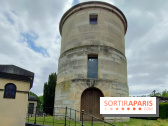
In Montmartre, one of the many unusual places in this picturesque district is a mysterious rock. Known as the witch's rock. This strange rock has been the subject of many legends, generally associating it with a witch who lived nearby. Some accuse it of being cursed, while others attribute more beneficial virtues to it. The idea that the rock is actually a meteorite has even spread to the capital.
In reality, it's a disused fountain. As for its potential powers, you'll be hard-pressed to put this rock to the test: the witch's passage that shelters it is now privatized. The easiest way to discover it would be via theMontmartre townhouse. But be warned: if you are allowed access to this passage, you must be very discreet, so as not to disturb the peace and quiet of the neighborhood.
A mysterious will
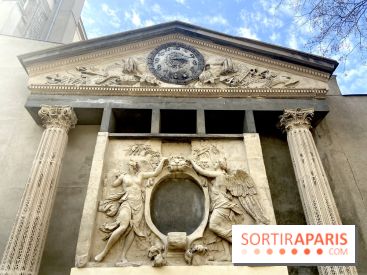
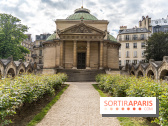
The Père Lachaise cemetery is definitely the scene of many popular beliefs. The rendezvous this time is in the 19th division. Your attention is drawn to an imposing mausoleum surrounded by four columns overlooking the cemetery. This is the final resting place of Elizaveta Alexandrovna Stroganova, also known as Countess Demidoff.
Legend has it that, in her will, Countess Demidoff indicated that she would bequeath her fortune to the person who agreed to watch over her in her mausoleum for 365 days and 366 nights. The reward would be 2 million roubles. That was all it took for applications to be sent to the Père Lachaise cemetery.