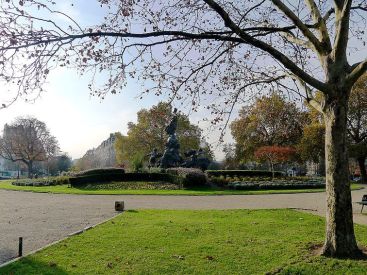
Place de la Bastille is THE symbol of the French Revolution and holds an important place in French history. Discover its history!
In 1370, Charles V, who wanted to protect himself from external attacks, had a large fortress built on the site of a fortified gate and a bastille (a small bastion). It was then called the Bastille fortress. Over the centuries and under various rulers, the fortress changed uses: it became an arms warehouse, a reception hall under Francis I, and then the royal treasury vault under Henry IV. But it was Cardinal Richelieu, during the reign of Louis XIII, who gave it the function we all know: a state prison in which all opponents of the king and the regime were locked up. Among its most famous inmates were Voltaire, Montaigne, Beaumarchais, and the Marquis de Sade!
Fortunately, the French Revolution arrived, and the storming of the Bastille is considered the first revolutionary act. On July 14, 1789, this symbol of the royal power of the Ancien Régime was besieged and destroyed stone by stone. Today, nothing remains of this building. The only traces of this past can be found on the ground, a triple row of cobblestones marking the former site. The stones taken from the rubble of the Bastille were used to build the Pont de la Concorde. The guillotine was installed on the new Place de la Bastille for a few months in 1794, but was quickly moved to Place de la Nationat the request of the people.
On a more cheerful note, did you know that the first Bastille Day ball was held on Place de la Bastille in 1790? A French tradition that continues to this day!
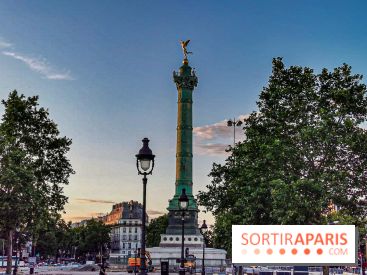
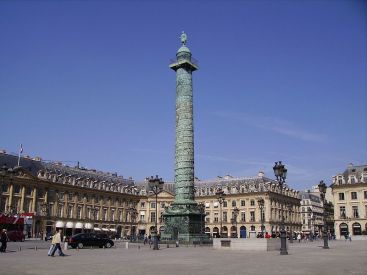
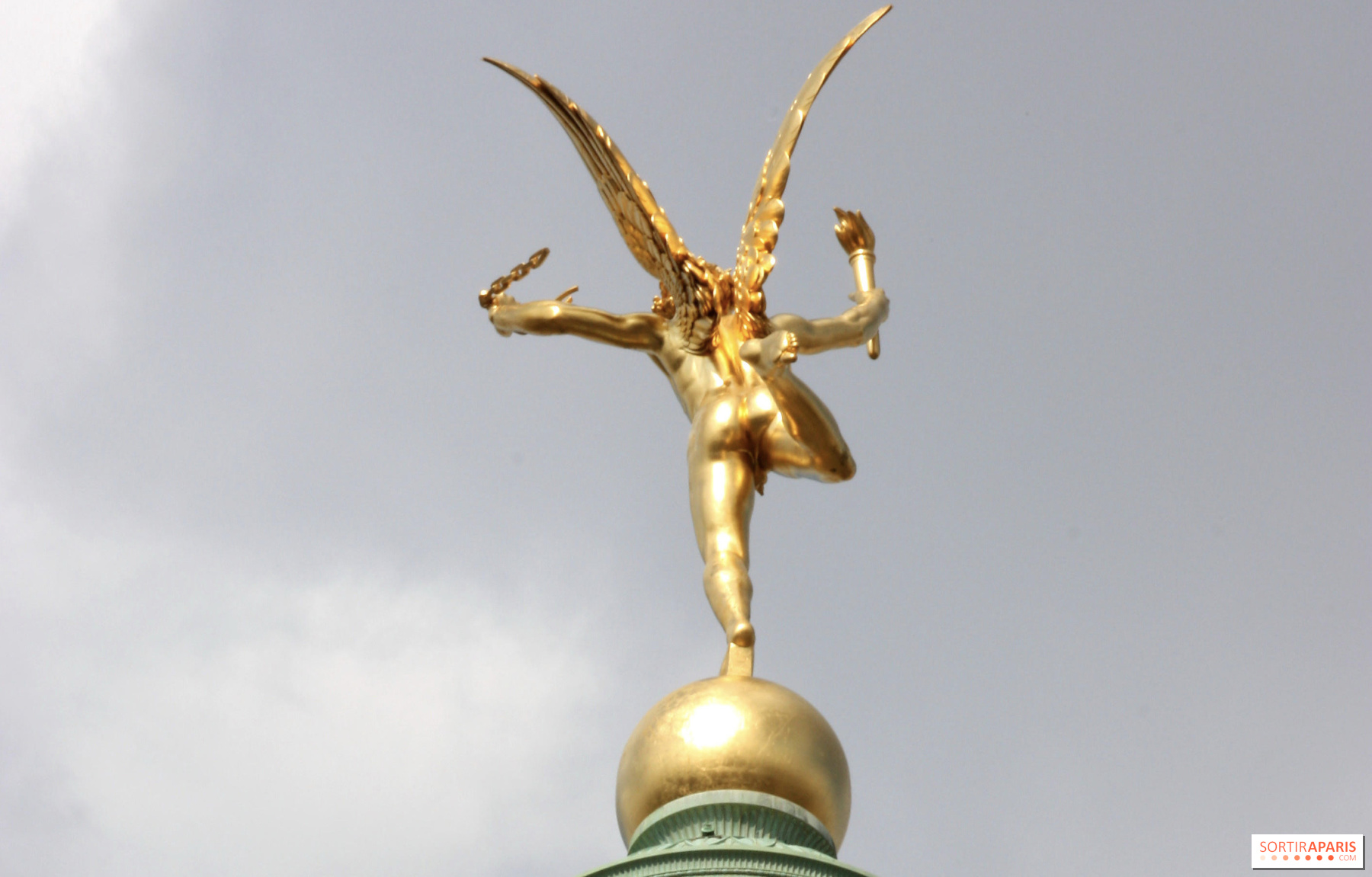
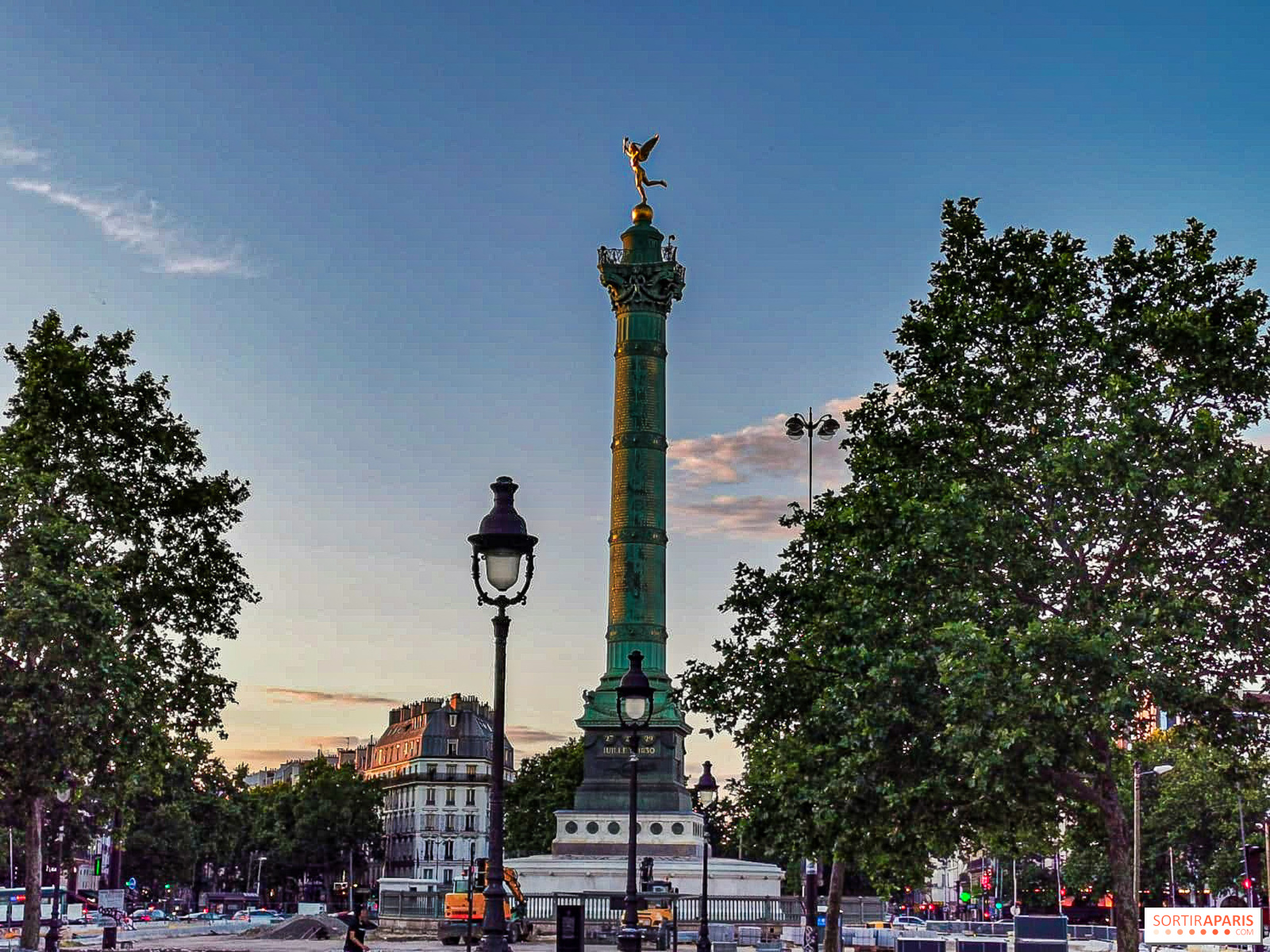
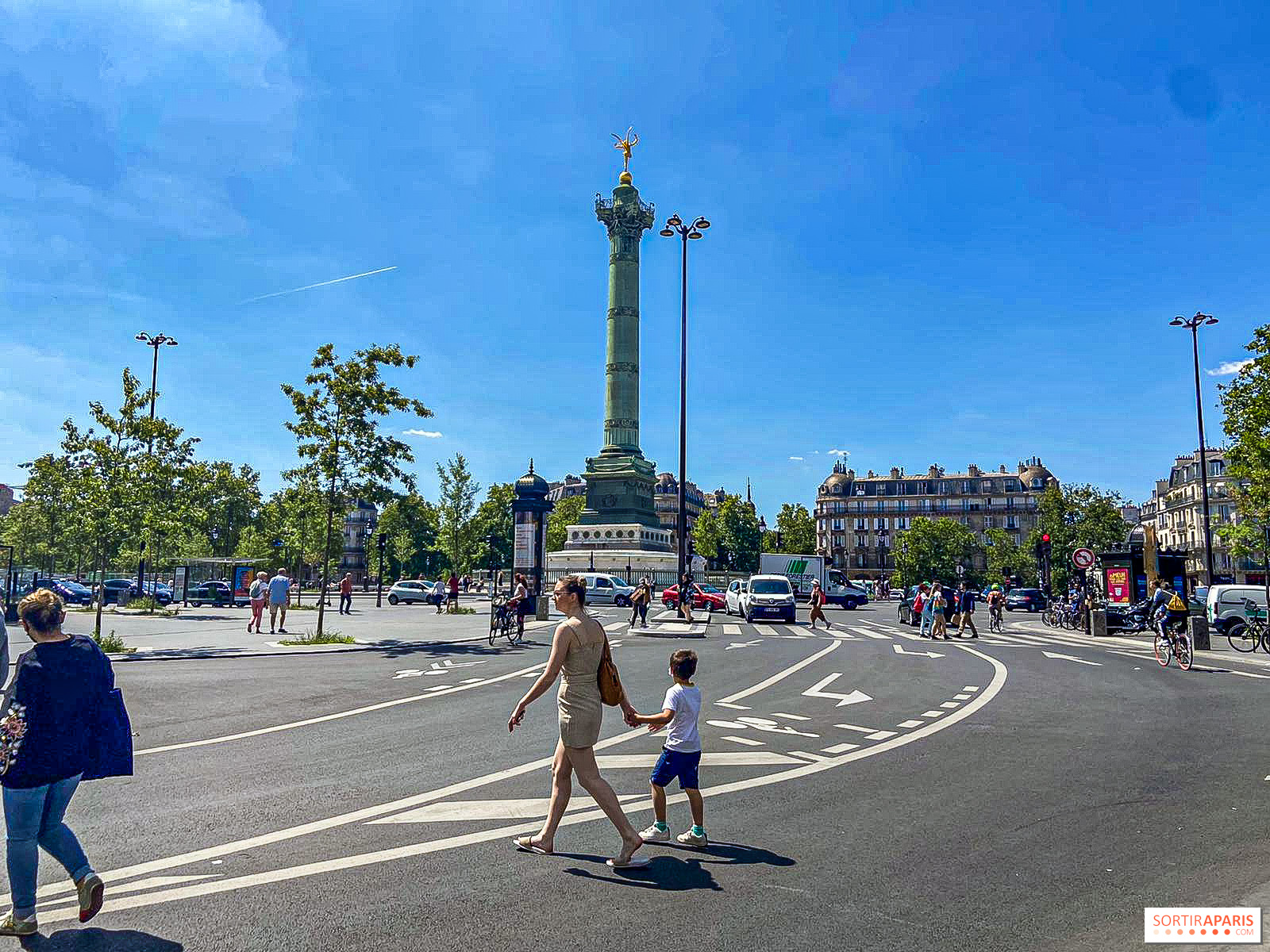
In 1803, the famous 46-meter-high July Column was erected in its center. This beautiful column, crowned with a gilded bronze statue called The Genius of Liberty, was inaugurated in 1840 in commemoration of the victims of the Three Glorious Days. However, Napoleon had another project in mind. He wanted a 24-meter-high bronze elephant to be sculpted and placed in the center of the square. But the project never made it past the model stage. What a shame!
Fun fact: like its counterpart, the Vendôme Column, revolutionaries attempted to destroy the July Column during the Paris Commune. They went under the Place de la Bastille, where the Canal Saint-Martin passes, and set fire to oil. But despite huge flames and shells fired from the Pont d'Austerlitz and the Buttes-Chaumont, the July Column remained intact and standing tall!
Another iconic monument on Place de la Bastille is, of course,the Opéra Bastille. Inaugurated in 1989, this modern building was designed by Carlos Ott and built on the site of the former Bastille train station.
Today, the Place de la Bastille is a popular gathering place for young Parisians in the evening, on the terraces of cafés and brasseries, but also a favorite spot for political meetings, parades, citizen marches, concerts, markets, and more. These festivities are in keeping with those held at the Arènes Nationales, a vast open-air performance venue inaugurated in 1851!
Note that the July Column, closed to visitors since 1985, is set to reopen to the public very soon! While you wait to visit it, you can always try out the 3D Timescope terminal located at the corner of Boulevard Richard Lenoir. For just €2, you can see images of what Place de la Bastille looked like in the 15th century. It's like taking a trip back in time!