For 35 years, the Fête de la Science has brought together scientists, researchers and the general public for full days dedicated to science and its popularization. The perfect opportunity to enjoy hundreds of ateliers, animations, expositions and family-friendly routes across a very wide range of venues in France.
With these ten days of science awareness, the Ministry of Education and Research hopes to spark vocations and, above all, shine a light on the work of scientists. This year, the theme centers on “Savants’ Flavors” and aims to raise broad awareness of the link between this theme and science. In Paris, most of the city’s scientific museums are taking part (Cité des sciences et de l'industrie, Muséum d'Histoire Naturelle), joined by several higher education or research institutions, such as the Collège de France or Sorbonne Université.
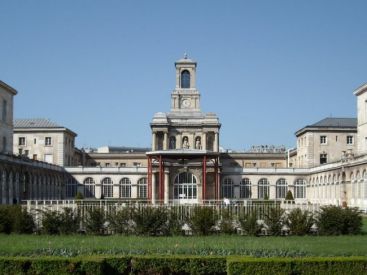
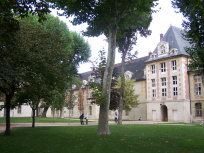
Sorbonne University is one of France's most prestigious academic institutions, with a rich history dating back to the 13th century. It is spread over several campuses in Paris, each specializing in different fields of study. The historic Sorbonne-Clignancourt campus is dedicated to the humanities and social sciences.
The Pierre et Marie Curie campus at Jussieu focuses on science and engineering, while the Pitié-Salpêtrière campus focuses on medicine and health. Finally, the Saint-Antoine campus is home to the Faculty of Medicine of Eastern Paris. These campuses offer a number of internationally renowned academic programs, making the Sorbonne a mecca for higher education and research in France and around the world, much in demand by students from France and abroad!
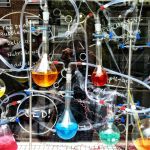
Science Festival 2026: free activities you won’t want to miss in Paris and Île-de-France
From October 2 to 12, 2026, the Fête de la Science returns to Paris and the Île-de-France region for its 35th edition, featuring free activities open to all. Experiments, workshops, performances, tours and open doors invite both children and adults to explore science in all its forms. [Read more]
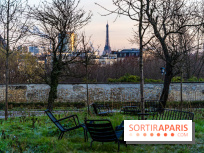
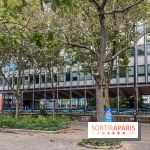
Pierre and Marie Curie Campus
Science trims XX of them
Today, only 30% of researchers and 27% of engineers are women. That share falls
even further in fields like physics, engineering, and mathematics, even though these are often pitched as fields with bright futures. Before they turn 16, most girls have already abandoned the idea of a scientific career. To convince them that research can be a thrilling profession too, we must break down the gender stereotypes still in play and offer more accessible, inspiring role models embodied by today's women scientists.
For this reason, CNRS and the Femmes & Sciences association have chosen to showcase, through imagery and words, the talents
of women in science by launching the program “La Science taille XX elles,” built around a photography exhibition by Vincent Montcorgé that highlights women's place in science and promotes scientific careers among young women, accompanied by meetings and intimate exchanges with the project ambassadors.
Free admission
Participation requirements:
• Target audiences: 11–15 years, 15–18 years, 18–25 years, 25 years and up
• Conditions: Free admission
Hours: Thursday, October 1 — 9:00 AM to 10:00 PM
Friday, October 2 — 9:00 AM to 10:00 PM
Saturday, October 3 — 9:00 AM to 10:00 PM
Monday, October 5 — 9:00 AM to 10:00 PM
Tuesday, October 6 — 9:00 AM to 10:00 PM
Wednesday, October 7 — 9:00 AM to 10:00 PM
Thursday, October 8 — 9:00 AM to 10:00 PM
Friday, October 9 — 9:00 AM to 10:00 PM
Saturday, October 10 — 9:00 AM to 10:00 PM
Monday, October 12 — 9:00 AM to 10:00 PM
Tuesday, October 13 — 9:00 AM to 10:00 PM
Wednesday, October 14 — 9:00 AM to 10:00 PM
Thursday, October 15 — 9:00 AM to 10:00 PM
Friday, October 16 — 9:00 AM to 10:00 PM
Saturday, October 17 — 9:00 AM to 10:00 PM
Monday, October 19 — 9:00 AM to 10:00 PM
Tuesday, October 20 — 9:00 AM to 10:00 PM
Wednesday, October 21 — 9:00 AM to 10:00 PM
Thursday, October 22 — 9:00 AM to 10:00 PM
Friday, October 23 — 9:00 AM to 10:00 PM
Meet the Ambassadors
A privileged opportunity to engage with women scientists photographed by Vincent Moncorgé, who will share their academic and scientific journeys and explain why young women should not give up on their ambitions.
Free admission
Participation requirements:
• Target audiences: 11–15 years, 15–18 years, 18–25 years, 25 years and up
• Admission: Free
Schedule: Friday, October 2 — 1:00 PM to 2:30 PM
An Escape Game called "Operation Gobetout"
By 2030, the Gobetout fish takes over the Mediterranean! The Biological Time Brigade is tasked with solving the issue. Join the scientists of the BBT to investigate and discover ways to halt the spread of the Gobetout fish!
An escape game themed around "Biological Invasions" to understand how to manage the emergence of an invasive exotic species.
Registration on-site at the Biodiversarium stand.
Eligibility:
• Target audiences: 11–15 years, 15–18 years, 18–25 years, 25 years and up
• Requirements: Booking recommended
Hours: Saturday, July 11 — 12:00–18:00
Sunday, July 12 — 12:00–18:00
Creating the Crystal: A Journey Between Art and Science
Crystals have long fascinated humanity — for their perfection, their beauty, their physical or chemical properties, or for the virtues people hoped they would bestow. First found in nature as minerals, inorganic or organic, crystals have spurred extensive research. Today, a wide range of synthetic efforts aims to reproduce nature’s masterpieces, to create new materials, and to unlock unprecedented properties that meet society’s evolving needs and the exploration of new realms.
You will discover how crystals, in all their forms and at various scales, figure in a multitude of everyday tools and objects, and how they help illuminate how living systems work or misfunction. Then, beyond technique and innovation, you will witness a meeting, a sensitive and reflective dialogue between two laboratories: the scientist’s and the artist’s — between research, industrial advances, and artistic creation. You will enter the worlds of several artists inspired by science, matter, growth, and the “control” of chance. The works of Ada Yu (ADA), Léa Barbazanges, Vincent Gontier, and Robin Guittat will weave a poetic and aesthetic dialogue with the long history and current trajectory of research into crystalline synthesis.
Participation guidelines :
• Target audiences : 11–15, 15–18, 18–25, 25 and up
• Requirements : Free admission
Hours: Tuesday, October 6 — 1:00 PM to 6:00 PM
Wednesday, October 7 — 1:00 PM to 6:00 PM
Thursday, October 8 — 1:00 PM to 6:00 PM
Friday, October 9 — 1:00 PM to 6:00 PM
Saturday, October 10 — 1:00 PM to 6:00 PM
Decode, reinterpret, and reinvent film imagery!
Through film imagery, become investigators of representations: observe, discuss, and creatively recreate these images. A participatory workshop to discover how images shape our perceptions, to question norms, and to imagine alternative narratives.
Participation requirements :
• Target audiences : 3 - 6 years old, 6 - 11 years old, 11 - 15 years old, 15 - 18 years old, 18 - 25 years old, 25 years and up
• Conditions : Reservation recommended
Hours: Saturday, October 10 – 12:00 to 18:00
Sunday, October 11 – 12:00 to 18:00
Create your bubble tea pearls with chemistry!
Come craft your own bubble tea pearls! With just a few ingredients, you’ll trigger a chemical reaction that turns a liquid into tiny spheres. Dip a solution into a gel bath, watch the pearls form, and taste them for yourself. Leave with your very own recipe!
Participation requirements :
• Target audiences : 11–15 years, 15–18 years, 18–25 years, 25 years and up
• Conditions : Free admission
Hours: Saturday, 10 October — 9:00 a.m. to 5:00 p.m.
Sunday, 11 October — 9:00 a.m. to 5:00 p.m.
Science without borders.
With “Science Without Borders,” Polytech Without Borders invites you to explore the international dimension of science in a playful, accessible way.
Participants can join a series of quizzes and games focusing on major inventions, famous scientists, and Nobel Prizes. They might, for example, match an invention to its country of origin, trace a scientist’s birthplace or career path, or guess which countries boast the most Nobel laureates.
Activities can be done solo or in teams to foster exchange and participation. The goal is to show that the great scientific breakthroughs come from researchers and cultures from all over the world, while giving students a chance to broaden their knowledge in a friendly atmosphere.
Participation requirements:
• Target audiences: 3–6 years, 6–11 years, 11–15 years, 15–18 years, 18–25 years, 25 years and up
• Terms: Free admission
Hours : Thursday, October 8 — 2:00 PM to 4:00 PM
Immunity: facing the dangers, safeguarding allies
Discover how our immune system protects the body while keeping the gut in balance. Through an animated story, a TV game-show–style quiz, and an immersive Werewolf–style game, explore how it fights off threats, coexists with the helpful microbes that naturally live in the intestine, and keeps inflammation in check.
Participation criteria:
• Eligible age groups: 3 - 6 years, 6 - 11 years, 11 - 15 years, 15 - 18 years, 18 - 25 years, 25 years and up
• Conditions : Reservation recommended
Hours: Saturday, October 10 — 12:00 to 18:00
Sunday, October 11 — 12:00 to 18:00
ExoMars: on the way to the Red Planet
The European Space Agency plans to send a Mars rover named Rosalind Franklin to search for potential traces of life—past or present. How does such an ambitious mission evolve over the years? What scientific instruments are aboard? Will we ever reach the surface of the Red Planet to uncover its secrets? Join scientists involved in the ExoMars mission as they guide you through a Game of the Goose.
Participation conditions:
• Target audiences : 6–11 years, 11–15 years, 15–18 years, 18–25 years
• Conditions : Free admission
Hours: Sunday, October 11 — 12:00–18:00
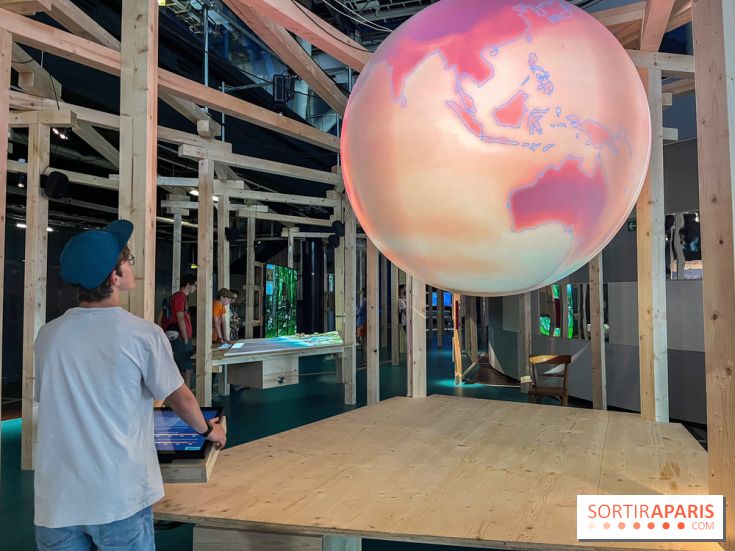
The climate: how does it work?
Researchers and doctoral students at IPSL (Pierre-Simon Laplace Institute) explore, through hands-on experiments, how physical processes shape the climate: the water and carbon cycles, ocean circulation, and ice melt... You’ll discover how these forces drive climate, how they alter it, and what we can do to limit these changes.
Participation conditions:
• Target audiences: 6–11, 11–15, 15–18, 18–25, 25 and up
• Conditions: Booking recommended
Hours : Saturday, October 10 — 12:00 PM to 6:00 PM
Sunday, October 11 — 12:00 PM to 6:00 PM
Relishing the Mechanics
We will present a handful of experiments in fluid mechanics, with a particular focus on bubbles and droplets, alongside numerical simulations of wave propagation—sound waves, surface waves, tsunamis—and the deformation of objects...
Participation requirements:
• Requirements: Free admission
Hours: Saturday, October 10 — 12:00 PM to 5:00 PM
Sunday, October 11 — 12:00 PM to 5:00 PM
How the climate works — the atmospheric side
At the LMD-IPSL (Laboratory of Dynamic Meteorology – Pierre-Simon Laplace Institute), researchers will host engaging demonstrations to explain how clouds form, why the sky is blue, and why clouds look gray from the ground but white from an airplane. In addition, the lineup could tackle major topics such as climate modeling, future projections, and IPCC reports…
Participation requirements:
• Target audiences: 6–11 years, 11–15 years, 15–18 years, 18–25 years, 25 years and up
• Conditions: Reservation recommended
Hours: Saturday, October 10 — 12:00 PM to 6:00 PM
Sunday, October 11 — 12:00 PM to 6:00 PM
Tour of the quantum communication laboratory
A tour of the quantum communication laboratory on the fifth floor of LIP6 (corridor 24-25).
The visit will be organized in small groups for the general public on Saturdays and Sundays and will showcase quantum key distribution experiments that use components also common in conventional optical communications.
Eligibility to participate:
• Target audiences: 11–15 years, 15–18 years, 18–25 years, 25 years and older
• Requirements: Booking is mandatory
Hours: Saturday, October 10 — 10:00 to 16:00
Sunday, October 11 — 10:00 to 16:00
Botanical collection tour
Visit the botany collection room, home to teaching models, resin-embedded specimens, and dried samples of mushrooms, flowers, fruits and seeds, as well as wood, fossils, and herbarium sheets. Take the opportunity to study the plant world under a magnifying glass and a microscope, and marvel at the infinitesimally small.
Also drop in to see the temporary exhibition "The Beauty in Diversity."
To enrich our seed and dried fruit collections, if you have pretty specimens, please feel free to bring them; we will gladly accept them.
This room was conceived and created by Nathalie Laurent, Assistant Engineer; Ewa Watroba, Assistant Engineer; and Elodie Boucheron-Dubuisson, Lecturer at the Faculty of Science and Engineering, Sorbonne University.
Participation conditions:
• Eligible audiences: 6–11 years, 11–15 years, 15–18 years, 18–25 years, 25 years and up
• Conditions: Free admission
Hours: Saturday, October 10 — 12:00–17:00
Sunday, October 11 — 12:00–17:00
Magnetic Resonance in all its forms
Sorbonne University and the CNRS open the doors to the Nuclear Magnetic Resonance (NMR) Platform in Paris‑Center. This facility houses nine NMR spectrometers linked to ultra-strong magnetic fields—up to 300,000 times stronger than the Earth’s field. Such fields are only possible with superconducting materials kept at -269°C using cryogenic fluids. It’s a sophisticated, ultra‑powerful analytical tool at the atomic scale. It enables the study of tiny or large molecules, as well as materials, whether crystallized or disordered, in all states: liquid, solid, or gas. The technique covers a broad range of disciplines: chemistry, biology, physics, ..., and is also employed in industry and for other applications, including medical imaging (MRI) and fraud detection. A guided tour of the platform will be offered, followed by a brief introduction to this analytical method. In a second part, interactive demonstrations using everyday products will illustrate the instrument’s performance.
This event will take place at Tower 32-33 on Sorbonne University’s Pierre and Marie Curie campus. Find us on the Platform site: http://rmn.sorbonne-universite.fr
Participation requirements:
• Target audiences: 11–15, 15–18, 18–25, 25 and up
• Conditions: Reservation recommended
Hours: Saturday, October 10 — 12:00–13:00
Saturday, October 10 — 13:30–14:30
Saturday, October 10 — 15:00–16:00
Saturday, October 10 — 16:30–17:30
Sunday, October 11 — 12:00–13:00
Sunday, October 11 — 13:30–14:30
Sunday, October 11 — 15:00–16:00
Sunday, October 11 — 16:30–17:30
The chemistry of solutions in all its forms
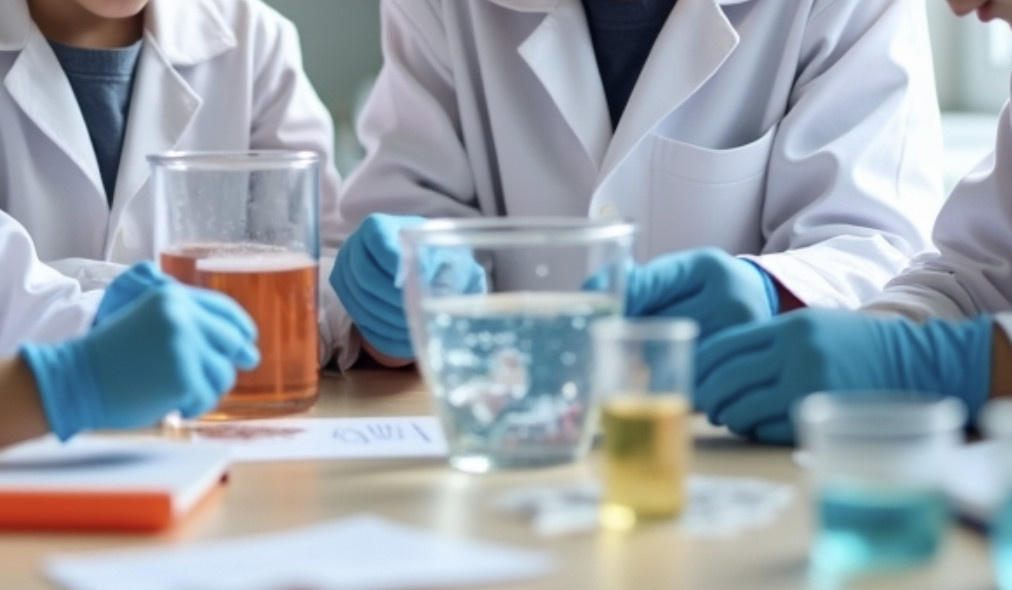
This workshop aims to raise public awareness about solution chemistry by illustrating three major types of reactions: acid-base, complexation, and redox. The goal is to make these phenomena visually engaging through experiments in which participants manipulate and observe color changes, the release of gases, or motion. A striking effect is sought to grab attention, especially from younger audiences. The workshops will be supported by a digital resource to provide explanations and allow more seasoned participants to go deeper.
Thanks to their visual nature, these sessions naturally appeal to elementary and middle school students. However, the richness of the reactions presented can engage a broader audience.
One or more setups will be used to illustrate each type of chemical reaction, sometimes employing different approaches. These workshops have the advantage of requiring little equipment.
- Acid-base reactions: demonstrating CO2 production (vinegar/baking soda) through visual effects (moving droplets in a liquid, balloon inflation) and the use of natural indicators like red cabbage juice to illustrate pH variations. A playful demonstration akin to the Coca-Cola / Mentos effect…
- Complexation reactions: sequences of reactions leading to successive color changes in the same solution (from colorless to varying hues), illustrating complexation phenomena.
- Redox reactions: reactions that produce a color change and significant gas evolution, visualized as foam.
- Other setups: non-Newtonian fluids (water/MAIZENA mix), nonflammable tissues, colored flames, and experiments on liquid density (layering).
Participation requirements:
• Target audiences: 3–6 years, 6–11 years, 11–15 years, 15–18 years, 18–25 years, 25 years and up
• Conditions: Free admission
Hours: Saturday, October 10 — 10:00 a.m. to 5:00 p.m.
Sunday, October 11 — 10:00 a.m. to 5:00 p.m.
Scholarly flavors at Sorbonne Université
School groups are welcomed from October 6 to 9, and the weekend is open to all audiences. The 2026 edition, “Saveurs savantes,” offers two routes: in Paris, across the Pierre and Marie Curie campus, the Cordeliers Research Center, the Pitié-Salpêtrière campus, the Saint-Antoine Research Center, the Maison Poincaré, and the Paris Institute of Astrophysics; and in Saint-Cyr-l'École, Yvelines, on the Saint-Cyr l’École campus.
The program features workshops, laboratory tours, stands, games, and exhibitions. More than 380 scientists from the humanities, health, and the sciences and engineering are ready to welcome you!
Participation criteria:
• Target audiences: 3–6 years, 6–11 years, 11–15 years, 15–18 years, 18–25 years, 25 years and up
• Requirements: Reservations recommended
Hours: Saturday, October 10 — 12:00 PM to 6:00 PM
Sunday, October 11 — 12:00 PM to 6:00 PM
At Pierre and Marie's
Welcome to our restaurant “Chez Pierre et Marie”! Discover cuisine like never before. From foams that rise to aromas and surprising chemical reactions, chemistry steps into the kitchen to reveal the secrets of gastronomy. A treat to share with family or friends!
Participation conditions:
• Target audiences: 3–6 years, 6–11 years, 11–15 years, 15–18 years, 18–25 years, 25 years and up
• Conditions: Free entry
Hours: Saturday, October 10 — 12:00 to 18:00
Sunday, October 11 — 12:00 to 18:00
Monitoring the atmosphere from space
The atmosphere is monitored from space on a daily basis—so how is that done?
How do we track the composition of the atmosphere from space? What links exist between atmospheric chemistry, pollution, and the climate? The IASI instrument lets us observe a range of atmospheric components involved in pollution processes, and it also contributes to climate monitoring.
Participation criteria:
• Eligible audiences: 11 - 15, 15 - 18, 18 - 25, 25 and over
• Conditions: Free admission
Hours: Saturday, October 10 — 12:00 to 18:00
Hiking through the Solar System
Dream of strolling on Mars, piloting a rover on another planet, or watching the geysers of a distant moon? With this virtual reality workshop, you can roam icy worlds without leaving Earth—and stay comfortably warm while you do it. A passport to otherworldly immersion, guaranteed. In addition, there will be scale models of space instruments and missions, plus a few hands-on demonstrations in the spirit of space science (for example, boiling water at room temperature under a vacuum bell).
Participation requirements:
• Target audiences: 11–15, 15–18, 18–25, 25 and up
• Access: Free admission
Hours: Saturday, October 10 — 12:00 PM to 6:00 PM
Ask a scientist
You've always had a thousand questions about space and struggling to find answers? Come chat with real scientists and engineers in the space sector, right at the "Q&A Bar." They'll be delighted to try to answer you, blending rigor with a dash of fun. This exchange will leave you walking away with your head in the stars.
Participation requirements:
• Eligible audiences: 6–11 years, 11–15 years, 15–18 years, 18–25 years
• Entry conditions: Free admission
Hours: Saturday, October 10 — 12:00 to 18:00
Sunday, October 11 — 12:00 to 18:00
Overview of the equipment for sea expeditions
The activity centers on presenting what is known as a mooring line. Mooring lines are long metal cables—potentially several kilometers in length—deployed at sea, with measurement instruments, floats, and weights arranged along them to study the water column (currents, salinity, temperature, pressure, etc.).
Participation criteria:
• Target groups: 6–11 years, 11–15 years, 15–18 years, 18–25 years, 25 years and older
• Conditions: Free admission
Hours: Saturday, October 10 — 12:00 p.m. to 6:00 p.m.
Exploring robotics!
The Institute for Intelligent Systems and Robotics (ISIR) opens its doors to the general public! Come and discover the research underway at ISIR and dive into the world of robotics and its cutting-edge technologies.
Activity description
ISIR opens its doors to give you an inside look at its research. ISIR’s researchers will showcase forward-looking work through live demonstrations and short talks. The lab focuses on machine autonomy and on how machines interact with people. The applications of this research tackle major societal challenges: health, the next era of industry, and services for individuals.
Eligibility:
Target audiences: 6–11 years, 11–15 years, 15–18 years, 18–25 years, 25 years and up
Requirements: Advance booking recommended
Hours: Saturday, October 10 — 1:00 PM to 6:00 PM
Biological invasions: the blue crab as a case study
Biological invasions are today the second leading cause of global biodiversity loss, with major ecological, economic, and social impacts. A Mediterranean example studied at the Banyuls-sur-Mer Oceanological Observatory: the blue crab!
Participation requirements:
• Target audiences: 3–6 years, 6–11 years, 11–15 years, 15–18 years, 18–25 years, 25+
• Conditions: Booking recommended
Hours: Saturday, July 11 — 12:00 to 18:00
Sunday, July 12 — 12:00 to 18:00
Cold Case: The Mystery of the Lost Landscapes Beneath Paris
Become geo-experts at ISTeP and run your own investigation. By analyzing clues hidden in rock and sand, discover how a tropical sea and vanished beaches helped shape our monuments!
Participation requirements:
• Target audiences: 11-15 years, 15-18 years, 18-25 years, 25 years and over
• Conditions: Booking recommended
Hours: Saturday, October 10 — 2:00 PM to 6:00 PM
Sunday, October 11 — 2:00 PM to 6:00 PM
Science put to the test by misinformation
The Office of Arts and Culture (BDAC) invites you to a special lecture led by Antonin Atger, a psychology PhD student and expert on conspiracy theories, exploring the challenges of misinformation in the scientific field.
From 2:00 p.m. to 5:00 p.m., in Amphitheater 44, Atger will share his insights to untangle how false information spreads, examine its impact on research and public trust, and present practical tools to cultivate a critical eye when evaluating scientific content.
Through concrete examples and a Q&A session with the audience, the event will offer key perspectives for understanding the hurdles science faces in a world where information travels faster than ever and conspiracy theories help fuel misinformation.
Participation conditions:
• Target audiences: 11–15 years, 15–18 years, 18–25 years, 25 years and up
• Requirements: Free admission
Hours: Thursday, October 8 — 2:30 PM to 5:00 PM
Light and Atoms
Understanding how atoms interact with light and turning that knowledge into technological advances is one of the defining aims of quantum physics. It sits at the core of the research conducted at the Kastler Brossel Laboratory. We will present several demonstration experiments: the open-transition laser; rubidium optical resonance; photon interference; and laser radar.
Participation requirements :
• Target audiences: 6–11 years, 11–15 years, 15–18 years, 18–25 years, 25 years and up
• Conditions: Free admission
Hours: Saturday, October 10 — 12:00 PM to 6:00 PM
Sunday, October 11 — 12:00 PM to 6:00 PM
Views and scents of Egypt: a photographic expedition in 1851. Félix Teynard’s calotypes.
Through multidisciplinary, hands-on workshops, journey to the banks of the Nile in the heart of the 19th century. An Egyptologist and a chemist are waiting for you at their booth.
From extraordinary views traced back to the origins of photography, watch, touch, experiment, and recreate an Egypt and Nubia that have vanished. Savor the delights of science.
As a keepsake, leave with your own reconstruction of an antique photograph.
Participation conditions:
• Target audiences: 6–11 years, 11–15 years, 15–18 years, 18–25 years, 25 years and up
• Requirements: Booking recommended
Hours: Saturday, 10 October — 12:00 to 18:00
RoMarin: mini-drones for exploring the seafloor
The Romarin project invites you to discover the robots of the RoMarin fleet designed by the mechanical engineering students at Sorbonne University. These prototypes are meant to probe the seabed and shed new light on marine environments that are still little known but full of promise.
In this booth, you’ll learn how these mini-drones operate and about the sensors they carry (a crucial step toward earning a pilot’s license) and you’ll get to admire the original designs put forward by the Class of 2026!
At the end of this introductory tour, a hands-on piloting session will be offered to the bravest scientists.
Participation requirements:
Target audiences: 3–6 years, 6–11 years, 11–15 years, 15–18 years, 18–25 years, 25 years and up
Conditions: Free admission
Hours: Saturday, October 10 — 12:00–18:00
Sunday, October 11 — 12:00–18:00
Quantum exploration: behind the scenes at the Kastler Brossel Laboratory!
The Kastler Brossel Laboratory is one of the leading players in quantum physics. Its research spans a broad range of topics, from fundamental tests of quantum theory to practical applications. For Science Festival, we invite you to tour our laboratories. Four themes will be explored: What is light? How can we detect gravitational waves? How far can we cool matter? High-precision measurements in quantum physics
For each topic, a researcher will present an overview followed by a tour of their manipulation room. A visit to the laboratory's mechanical workshop will also be offered.
Participation terms:
• Target audiences: 11–15, 15–18, 18–25, 25 and up
• Requirements: Free admission
Hours: Saturday, October 10 — 12:00 to 18:00
Sunday, October 11 — 12:00 to 18:00
Mom Scientist: science told through stories and illustrations
Is research too complicated? Are the sciences reserved for men? Maman Chercheuse proves otherwise! Through engaging, visually appealing videos, explore scientific topics led by women researchers. In the format of a mother-daughter dialogue, these episodes make science accessible to everyone. Come and discover their stories!
https://www.youtube.com/@MamanChercheuse
Participation criteria :
• Target audiences : 11–15 years old, 15–18 years old
• Conditions : Reservation recommended
Hours: Saturday, October 10 — 10:00 AM to 6:00 PM
Sunday, October 11 — 10:00 AM to 4:00 PM
SCIENCE PATHWAYS: EXPLORE, PLAY, LEARN!
Join a playful, interactive journey to discover how innovations come to life! Grab your scientific passport and tackle the challenges at our workshops. Questions, experiments and discoveries await at every turn. Complete your route to win a goodie!
Discover the TRL hopscotch, an original game that helps you grasp the key stages that turn a lab idea into an innovation ready to change the world.
Awaken your senses with the “Savants’ Flavors” workshops: colors, tastes, smells and perceptions will hold no secrets for you!
Learn, experiment, play… and head home with plenty of memories!
Participation requirements :
• Target audiences : ages 3–6, 6–11, 11–15, 15–18, 18–25, 25 and up
• Conditions : Free admission
Hours: Friday, October 9 — 12:00 to 18:00
Saturday, October 10 — 12:00 to 18:00
Sunday, October 11 — 12:00 to 18:00
SOCIETY: INNOVATIONS SHAPING EVERYDAY LIFE
When technology takes care of us!
Discover astonishing innovations to live better, move more freely, and protect our planet.
Breathe freely, without breaking the bank
An active respiratory protection visor, light, easy to produce and affordable. A small jewel of ingenuity to protect yourself… without encumbering you.
A crutch like no other
Walk with a free hand? It's possible thanks to this innovative crutch designed to simplify daily life.
Miniature sensors to monitor the air
How to measure the gases warming our planet? Ultra-sensitive, small and portable sensors help researchers better understand pollution and imagine more pleasant cities to live in.
Participation requirements:
• Target audiences: 3–6 years, 6–11 years, 11–15 years, 15–18 years, 18–25 years, 25 years and older
• Conditions: Free admission
Hours: Friday, 9 October – 12:00 to 6:00 PM
Saturday, 10 October – 12:00 to 6:00 PM
Sunday, 11 October – 12:00 to 6:00 PM
How tastes have evolved over time
Reactions change with age!
Whether through the diversification of a child's diet in the early years or through experience… taste isn’t fixed: it depends on many factors you’ll discover with us. That’s why we can grow to enjoy foods like vegetables over time!
What feelings do you associate with sweetness? With bitterness? Come and explore at our stand and discuss which evolutionary biases may have steered these preferences. A child’s eating habits are the primary driver of these complex adaptations… but in the end, our perceptions explain it all! So we can finally answer the most famous question: How do you get a child to eat green vegetables?
If you stop by, you’ll also be able to take part in our other workshops “Colors, attraction and toxicity in food” and “Which organs are in the digestive system”!
Participation requirements:
• Target audiences: 6–11, 11–15, 15–18, 18–25, 25 and up
• Conditions: Reservations recommended
Hours: Friday, October 9 — 9:00 a.m. to 4:00 p.m.
Saturday, October 10 — 12:00 p.m. to 6:00 p.m.
Sunday, October 11 — 12:00 p.m. to 6:00 p.m.
Molière's Lemonade
Discover excerpts from plays, sources, and recipes from Molière’s era, as well as the surprising links between food and the theatre. Try your hand at acting, pronunciation, and the flavors of the 17th century, alongside the actors of the Théâtre Molière Sorbonne troupe and researchers who are bringing the era’s stage practices back to life.
Participation conditions:
• Target audiences: 15–18, 18–25, 25 and over
• Conditions: Booking recommended
Hours: Sunday, October 11 — 12:00 p.m. to 6:00 p.m.
SATT Lutech: a deep dive into innovation
SATT LUTECH serves as a bridge between researchers and the business world.
Its mission is to help turn discoveries from public laboratories into concrete innovations that benefit society. SATT LUTECH brings researchers' ideas to life, in any field, so they become innovative solutions for our daily lives.
Participation requirements:
• Target audiences: 3 - 6 years, 6 - 11 years, 11 - 15 years, 15 - 18 years, 18 - 25 years, 25 years and up
• Admission: Free admission
Hours: Friday 9 October — 12:00–18:00
Saturday 10 October — 12:00–18:00
Sunday 11 October — 12:00–18:00
Alliance 4EU+
Sorbonne University is part of 4EU+—and so are you. The eight partner universities behind the 4EU+ Alliance are opening up innovative opportunities for students at every level and in every discipline, for researchers and administrative staff, across Europe. Through an exhibition and interactive games, discover the scientific themes at the heart of the 4EU+ Alliance. These themes address major societal challenges: urban health, European identity, the digital realm, climate, and the environment.
Participation requirements :
• Target audiences : 18–25 years old, 25 and up
• Requirements : Free admission
Hours: Friday, October 9 — 9:00 AM to 5:00 PM
Which organs are part of the digestive system?
Digestion starts the moment you lay eyes on food… It’s then guided by the brain, often without you noticing. In fact, you might be surprised to learn that you don’t know even half of the organs actually involved in digestion. As hinted, the digestive system is complex, and digestion is the coordinated action of many organs you’ll discover with us. In this workshop you’ll learn the positions and roles of the different digestive organs and the various stages of how food is assimilated. No matter your age or prior knowledge, you’re guaranteed to learn something! The session is easily approachable for everyone, with multiple reading levels. If you visit us, you can also take part in our other workshops “Colors, attraction and toxicity in food” and “The evolution of tastes over time.”
Participation requirements:
• Target audiences: 6-11 years, 11-15 years, 15-18 years, 18-25 years, 25+ years
• Requirements: Booking recommended
Hours: Friday, 9 October — 09:00 to 16:00
Saturday, 10 October — 12:00 to 18:00
Sunday, 11 October — 12:00 to 18:00
The Art of Gourmet Advertising: Imagery and the Food Industry in the Belle Époque
From the 1870s onward, both big names and smaller players in the food industry rode the wave of chromolithography, a printing method that made large-scale color imagery possible and fueled new forms of advertising. Among them, the "cartes réclames" — small collectible cards, often educational or playful in content, distributed to children and now the subject of this exhibition.
Participation requirements:
• Target audiences: 11–15 years, 15–18 years, 18–25 years, 25 and up
• Conditions: Reservation recommended
Hours: Friday, October 9 — 9:00 AM to 5:00 PM
Saturday, October 10 — 12:00 PM to 6:00 PM
Sunday, October 11 — 12:00 PM to 6:00 PM
INNOVATION WALL: FROM LABS TO START-UPS
Meet the startups born out of academic labs and backed by SATT Lutech. This wall shines a light on projects that have crossed the line into commercialization to become innovative startups across multiple sectors (BodyCap, Alifert, Abimed...), illustrating how research can deliver tangible benefits for our society and economy.
Participation requirements:
• Eligible age groups: 3–6 years, 6–11 years, 11–15 years, 15–18 years, 18–25 years, 25 years and up
• Conditions: Free admission
Hours: Friday, October 9 — 12:00 PM to 6:00 PM
Saturday, October 10 — 12:00 PM to 6:00 PM
Sunday, October 11 — 12:00 PM to 6:00 PM
Environment: ecological transition underway as science puts theory into action
Welcome to the future of useful science! Come discover five game-changing innovations for the environment, agriculture, and everyday life.
On display at our booth:
Leeks against fungi!
Yes, you read that right — a natural antifungal solution based on leek extract to protect crops without polluting.
Insects doing the cleaning!
By using pheromones, we guide soil-dwelling collembolans to cluster together and feast on harmful fungi. Natural and effective!
Listening to bees to better protect nature
What if bees could tell us about their day? A software analyzes their sounds, movements and activity, letting scientists monitor these precious pollinators and safeguard biodiversity.
Water under close supervision
Meet our automated systems that can monitor water quality in real time. A technology dedicated to the health of our rivers and taps.
A paint that protects boats… and the oceans!
Mussels, algae and other organisms love to cling to hulls. This project is developing an innovative coating that prevents their attachment without releasing harmful substances into the marine environment.
Microalgae to replace plastic
Turning tiny algae into biodegradable plastic: that’s the aim of this innovative project! A greener alternative to cut our petroleum dependence and curb plastic pollution.
A GPS for the energy transition
Are you a municipality or a business? Our software helps you make the right choices to reduce your environmental footprint.
Participation criteria:
• Target audiences: 3–6 years old, 6–11, 11–15, 15–18, 18–25, 25 years and up
• Conditions: Free admission
Hours: Friday, October 9 — 12:00 PM to 6:00 PM
Saturday, October 10 — 12:00 PM to 6:00 PM
Sunday, October 11 — 12:00 PM to 6:00 PM
Color, Appeal and Toxicity in Our Food
Some colorful foods carry a “message” for the consumer: they attract us or repel us. Our color-based eating choices vary widely depending on what we’re looking at or what we know—they’re tied to our experiences! During this workshop you’ll explore the evolutionary mechanisms behind this learning and the selection of such colors in nature. We’ll introduce the notions of aposémantism and episémantism, that is, using vivid colors to deter or entice consumption. The goal is to test your knowledge! Will you fall for the lure of an appealing color? If you come to visit, you can also take part in our other workshops “The Evolution of Tastes Over Time” and “Which Organs Are in the Digestive System”!
Participation conditions:
• Target audiences: 6–11 years, 11–15 years, 15–18 years, 18–25 years, 25 years and up
• Conditions: Reservation recommended
Hours: Friday, October 9 — 9:00 AM to 4:00 PM
Saturday, October 10 — 12:00 PM to 6:00 PM
Sunday, October 11 — 12:00 PM to 6:00 PM
Heart Disease: From Genetics to Diet
On the Pierre and Marie Curie campus, come discover our booth, in the human body section, between Towers 53 and 54, to observe the heart and understand its diseases.
We’ll explain our research on acquired or hereditary heart conditions, the biology of the heart, and the links between the heart and nutrition.
We invite you to explore how your heart works, how diseases develop, and how to take care of it by crafting tailored menus.
Come touch, observe, and open a real heart and wander inside it in virtual reality.
Learn, in a playful way, the rules of hereditary trait transmission and expand your knowledge of nutrition.
As a bonus: come prepare your own DNA!
Participation eligibility:
• Target audiences: 6–11 years, 11–15 years, 15–18 years, 18–25 years, 25 years and up
• Conditions: Free admission
Hours: Saturday, October 10 — 12:00 to 18:00
Sunday, October 11 — 12:00 to 18:00
Understanding nature: exploring the systems that sustain life on our planet
Four workshops to explore insect ecology: how they sense the world (smell and taste), the social organization of ant colonies, the relationships between pollinators and flowering plants, and the methods scientists use to monitor populations. A hands-on scientific immersion to understand biodiversity, ecological interactions, and the impacts of climate change.
Participation conditions:
• Target audiences: ages 6–11, 11–15, 15–18, 18–25, 25 and up
• Requirements: Booking recommended
Hours: Saturday, October 10, 1:00 PM to 6:00 PM
Sunday, October 11, 1:00 PM to 6:00 PM
Health: Innovative Solutions for a Better Life
Welcome to the health of tomorrow!
What if artificial intelligence could help doctors save lives? If new treatments could better tackle obesity, addictions, or depression? Explore the innovations shaping tomorrow's medicine!
An AI that plays detective
During a colonoscopy, some polyps can go unnoticed. With artificial intelligence, our tools help physicians spot them more easily to better prevent colorectal cancer.
Depression, addictions: new paths to better care
Researchers are developing small, innovative molecules to treat conditions that affect millions. See how tomorrow’s medicines are born.
Obesity: could our microbiome hold part of the solution?
Bacteria naturally present in our bodies could help fight obesity and metabolic diseases more effectively. A promising new therapeutic avenue!
When images speak to researchers
Automatically counting tiny aquatic organisms or analyzing the shape of zebrafish embryos: AI becomes a powerful new tool to accelerate biomedical research.
An alarm to detect respiratory distress
Our technologies monitor patients’ vital signs in real time and can alert caregivers quickly when a situation turns critical.
A robot to ease workers’ loads
Lifting heavy objects all day can wear down the body. Meet a mechanical exoskeleton designed to reduce effort and prevent musculoskeletal disorders.
Participation requirements:
• Target audiences: 3–6 years, 6–11, 11–15, 15–18, 18–25, 25 and up
• Conditions: Free admission
Hours: Friday, October 9 — 12:00 p.m. to 6:00 p.m.
Saturday, October 10 — 12:00 p.m. to 6:00 p.m.
Sunday, October 11 — 12:00 p.m. to 6:00 p.m.
Microbes and Humans
Discover the world of microbes.
The medical research teams at the Paris Center for Immunology and Infectious Diseases (Cimi-Paris) invite you to join a series of interactive workshops.
Microscope observations of bacteria, fungi and parasites, mosquito breeding, hands-on experiments, exhibitions and games.
Public workshops shared across four independent yet complementary modules.
The world of microbes: exploring viruses, fungi and bacteria, microscope observations, growth on agar
Mosquitoes and parasites: their life cycle, microscope observations
The body's defenses: Exhibition on vaccination and the science game "Clash Antibodies" (Cimi©) ·
Hands-on activities: DNA extraction, pH testing, chromatography, blood groups
Participation conditions:
• Target audiences: 6 - 11 years, 11 - 15 years, 15 - 18 years, 18 - 25 years, 25 years and up
• Conditions: Free admission
Hours: Saturday, October 10 — 1:00 PM to 6:00 PM
Sunday, October 11 — 1:00 PM to 6:00 PM
Redox in all its forms
Discover redox chemistry through visually striking — and even audible — experiments such as:
Cleaning silver without rubbing—it's aluminum!!
Powdered sugar
Schrtoumpfen fenêtre
The sound of corrosion
Participation requirements :
• Target audiences : 11–15, 15–18, 18–25, 25 and up
• Conditions : Free admission
Hours: Saturday, October 10 — 12:00–18:00
Sunday, October 11 — 12:00–18:00
The neuroscience of flavors
How do we perceive food? Why does it often taste bland when our nose is blocked? Through a series of fun, hands-on experiments, you’ll discover that what we call “flavor” is actually the blend of several senses processed by our brain.
Participation requirements:
• Requirements: Reservation recommended
Hours: Saturday, 10 October – 12:00 to 18:00
Sunday, 11 October – 12:00 to 18:00
When Art Meets Science
Participants dive into astronomy and mathematics by manipulating, observing, and experimenting. They create and decorate planets, then assemble them into a solar system while uncovering the unique traits of each planet. Next, they test their knowledge with a constellation game: pressing a switch lights up dots to reveal a constellation to identify. Finally, they study nature images to spot fractals, the Fibonacci sequence, and other regular patterns. They come away with the realization that the patterns we find harmonious often follow mathematical rules. This activity invites learning through play, connecting observation, astronomy, and science.
Participation requirements:
• Target audiences: 3–6 years, 6–11 years, 11–15 years, 15–18 years, 18–25 years, 25 years and up
• Conditions: Free admission
Hours: Saturday, October 10 — 10:00 AM to 5:00 PM
Light and matter: unveiling the mysteries of quantum physics
What is quantum physics? How does it work? The QuanTiP research network in Île-de-France invites you to meet, play with and experiment alongside PhD students and researchers to grasp the inner workings of quantum technologies. Hands-on experiments and collaborative games will be on the agenda!
Participation requirements:
• Target audiences: 6–11 years, 11–15 years, 15–18 years, 18–25 years, 25 years and up
• Conditions: Reservation recommended
Hours: Saturday, October 10 – 12:00 to 18:00
Sunday, October 11 – 12:00 to 18:00
The forgotten women of science
He For She will present, as part of the science festival, an interactive activity designed to be accessible to all, spotlighting the great women scientists who have been forgotten throughout history.
Our aim is to raise public awareness about the role of women in science, the gaps in recognition, and the substantial body of work by women that has long been overlooked or attributed to others.
The main feature will be a playful, participatory quiz titled “Who Really Shouldered This Discovery?” Participants will match various discoveries, inventions, or scientific breakthroughs to the rightful female researchers. Through this engaging format, we want to highlight how many major advances were achieved or co-authored by women scientists who are frequently missing from traditional historical narratives.
To keep the activity dynamic and accessible to diverse audiences, we will offer several supports: game cards, explanatory posters, scientific anecdotes, discussions with association members, and potentially mini-challenges or symbolic rewards for participants. We also aim to showcase scientists from a variety of fields to illustrate the breadth of women’s contributions across the sciences.
The He For She association will run this activity on Thursday afternoon for visiting school groups on the campus as part of the science festival. This format will enable direct engagement with students and provide a playful way to raise awareness about equality and representation in scientific environments.
Participation requirements:
• Target audiences: 3–6 years, 6–11 years, 11–15 years, 15–18 years, 18–25 years, 25 years and up
• Conditions: Free admission
Hours: Saturday, October 10 — 12:00 to 16:00
Sunday, October 11 — 12:00 to 16:00
Introduction to Computing
Introduction to Programming
All Levels
With an increasingly connected world, teaching youngsters how devices around them work is becoming essential. In this activity, ALIAS offers beginner-friendly programming exercises that can be adapted for any audience. The aim is to learn the basics of Python through fun, engaging tasks. Scratch programming for younger participants.
Turing Test
All Levels
The Turing test, proposed by Alan Turing—the grandfather of computing—in 1950, imagines a blind verbal exchange between a human and a computer (versus another person), with the evaluator trying to tell which is which. We will recount the test’s history and its impact on AI research, then have students try it themselves using open-source AI tools, with increasing challenge tailored to their abilities.
Logic Exercises
All Levels
Activities that translate natural language into mathematical expressions (and back into French), adaptable to different media and skill levels.
Cryptography Exercises
All Levels
Tasks focused on deciphering phrases using various schemes and techniques used in the cybersecurity field.
Introduction to AI Biases and Flaws
All Levels
A series of playful exercises that spotlight the biases and vulnerabilities currently found in generative artificial intelligences.
Introduction to Large Language Models
All Levels
As the world increasingly relies on AI, many people still don’t know how these systems work. This module demystifies the mechanisms behind LLMs and explores their impacts. ALIAS offers an accessible introduction to how these AIs operate, suitable for all audiences.
Introduction to Cybersecurity
All Levels
Hands-on exploration of common attack techniques and defense mechanisms.
Cooklang
All Levels
Introducing a programming language for recipes, plus tools to automate grocery lists and timers. A platform with its own app and a lively community of home cooks.
Participation guidelines:
• Eligible audiences: 3 - 6 years, 6 - 11 years, 11 - 15 years, 15 - 18 years, 18 - 25 years, 25 years and up
• Conditions: Reservation recommended
Hours: Saturday, October 10 — 12:00 to 18:00
Sunday, October 11 — 12:00 to 18:00
Your body, your lab
Heart rate, sweat, reflexes, balance... your body is a true laboratory! In this workshop, you’ll run simple experiments on yourself to grasp what happens inside your body when you work out. Open to everyone, with no prior knowledge required.
Participation requirements:
• Target audiences: 11–15, 15–18, 18–25, 25 and up
• Requirements: Free admission
Hours: Saturday, October 10 — 2:00 PM to 4:00 PM
Sunday, October 11 — 12:00 PM to 2:00 PM
Science and the eyes of children
We invite you to view artworks—paintings drawn by the students of the Square des artistes—inspired by scientific studies and images. The scientific theme this year is: "From the infinitely large to the infinitely small." The scientific images that inspired the students will also be presented. Students from the workshop will be on hand to explain their work and their interpretation of the scientific images, alongside a researcher and the art teacher.
Participation conditions:
• Target audiences: 3–6 years, 6–11 years, 11–15 years
• Conditions: Free admission
Hours: Saturday, 10 October — 09:00–18:00
Science and Video Games
Discover a range of video games created by the national consortium Ikigai - Games for Citizens.
Learning while having fun, effectively, thanks to varied and original gameplay mechanics developed by multidisciplinary teams—that is the ambition of ikigai.games.
Ikigai Games for Citizens brings together universities, grandes écoles, research laboratories, associations, and professionals in the video-game sector. Together, we are developing a new generation of educational video games, designed by teachers, for teachers and students, but also for culture, scientific outreach, public education, citizen science... and above all for your greatest pleasure.
Participation guidelines:
• Target audiences: 6–11, 11–15, 15–18, 18–25, and 25 and up
• Requirements: Reservations recommended
Hours: Saturday, October 10 — 12:00 to 18:00
Sunday, October 11 — 12:00 to 18:00
Using physics to explain crowd movements: from cells to birds
Have you ever been swept along by a crowd, even though you didn’t intend to move in any particular direction? If that happens to people (without any communication!), what about flocks of birds or collections of cells? We’ll show how a physicist can study different kinds of collective motion using digital tools.
Participation requirements:
Target audiences: 6–11 years, 11–15 years, 15–18 years, 18–25 years, 25 years and up
Notes: Booking recommended
Hours: Saturday, October 10 — 12:00 PM to 6:00 PM
Rummaging pays off!
Plemo 3D, PRETROP and a new generation of researchers invite you to a specially crafted archaeological journey.
Discover the new excavation trays to uncover traces of the kitchens of the past and try 3D modeling by photogrammetry of the remains!
This year, explore three aspects of the craft:
• The main stages of an excavation
• Methods for reconstructing ancient kitchens
• 3D modeling by photogrammetry of the remains
Reservations will be taken directly at the booth on the day.
Participation conditions:
• Target audiences: 6–11 years, 11–15 years, 15–18 years, 18–25 years, 25 years and up
• Conditions: Booking recommended
Hours: Sunday, October 11 — 12:00 to 17:30
Guided tour of the exhibition "Creating the Crystal: A Journey Between Art and Science"
Crystal has long captivated humanity. For its perfection, its beauty, its physical and chemical traits, or the benefits people hoped it would offer. Once found in nature as minerals with inorganic or organic origins, crystals have been the subject of extensive research. Today they stand at the center of numerous synthesis efforts aimed at reproducing nature’s masterpieces, creating new materials, and unlocking properties never before seen—properties that meet society’s growing needs and pave the way to new frontiers.
Participation requirements:
• Target audiences: 11–15, 15–18, 18–25, 25 and up
• Conditions: Booking required
Times: Thursday, October 8 — 1:00 PM to 2:00 PM
Saturday, October 10 — 1:00 PM to 2:00 PM
The Chemical Gardens
How to make a crystal?
After a brief tour of the exhibition "Creating the Crystal, a Journey Between Art and Science," you’ll conduct a few experiments, make some observations, and learn several crystal-making recipes!
Participation requirements:
• Target audience: children aged 6 to 11
• Conditions: advance booking required
Schedule: Saturday, October 10 — 2:00 PM to 3:00 PM
Penrose tiling
Try to reproduce the geometric shapes that arise from the five-fold symmetric tiling drawn by mathematician Roger Penrose.
Participation requirements :
• Target audiences: 6–11 years, 11–15 years, 15–18 years
• Conditions: Registration required
Schedule: Saturday, October 10 — 4:00 PM to 5:00 PM
Have fun with science!
Science may look inaccessible from the outside. But don’t judge it that way… Come play, experiment, and stretch your thinking to discover the world around you, all while having fun.
Embark on an unforgettable journey where understanding becomes a pleasure!
Participation conditions :
• Target audiences : 6–11 years, 11–15 years, 15–18 years, 18–25 years, 25 years and above
• Conditions : Free admission
Hours: Saturday, October 10 — 4:00 PM to 6:00 PM
The 2026 Science Festival runs from October 2 to 12 at Sorbonne University, with a series of events on the Pierre-and-Marie-Curie campus in Jussieu. Lectures, hands-on activities, experiments, and chats with scientists help shape the Science Village. [Read more]
This page may contain AI-assisted elements, more information here.



















 Science Festival 2026: free activities you won’t want to miss in Paris and Île-de-France
 Science Festival 2026 at Jussieu: the program for the Pierre-and-Marie-Curie campus