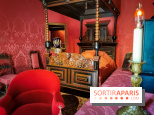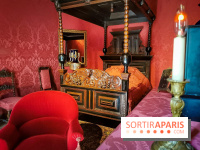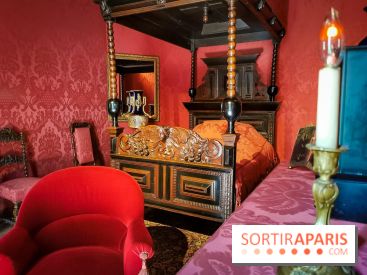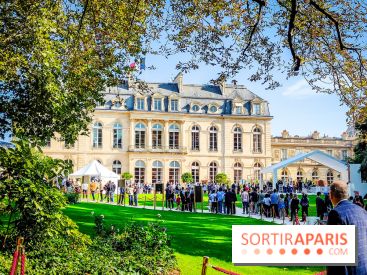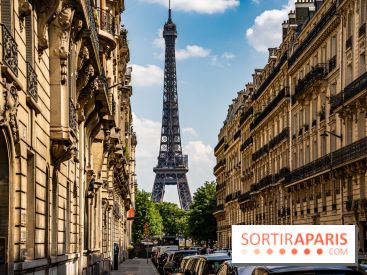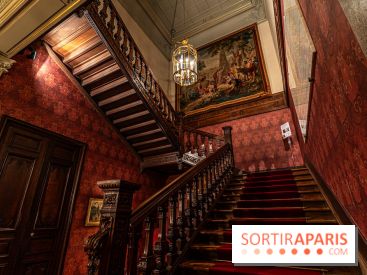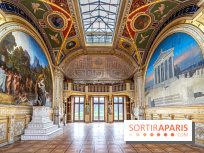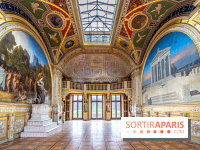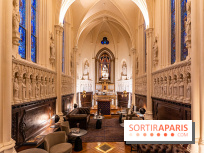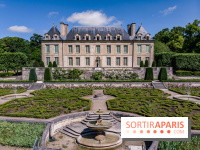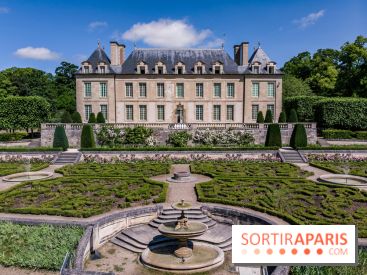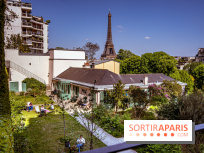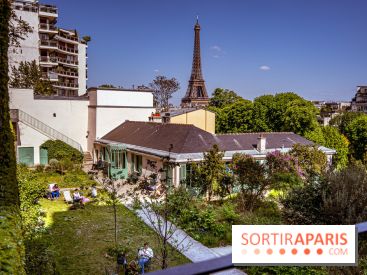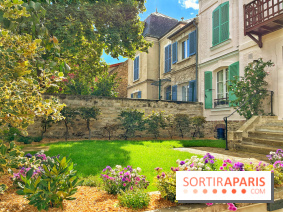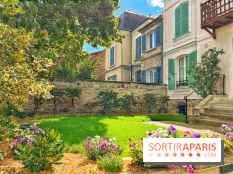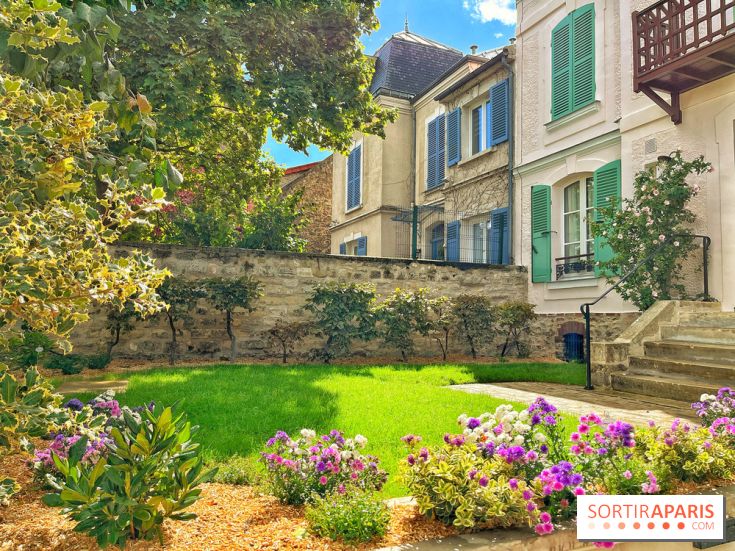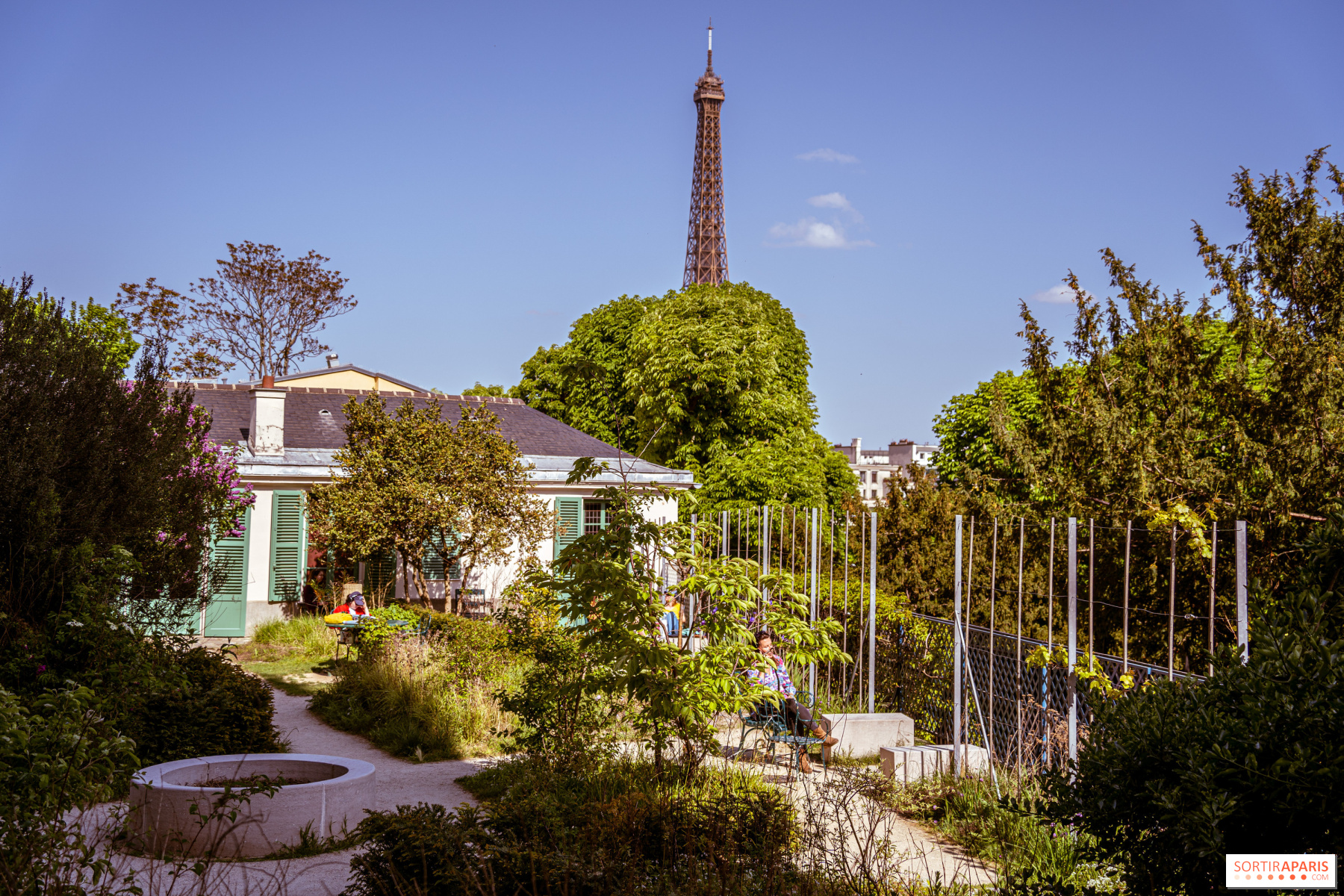
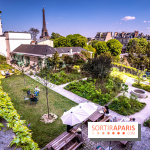
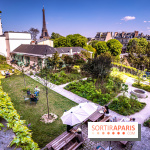
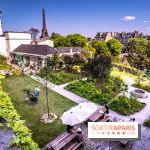
The Journées du Patrimoine (Heritage Days) are the perfect opportunity to discover or rediscover the capital's most legendary and hidden spots! This Saturday, September 20 and Sunday, September 21, 2025, the Maison de Balzac opens its doors to you in Paris for a unique experience, in the heart of an astonishing green setting with a view of the Eiffel Tower. Recently renovated, the French writer's house museum is open free of charge for this extraordinary cultural weekend.
The Maison de Balzac, home of the famous writer, and its secret garden overlooking the Eiffel Tower
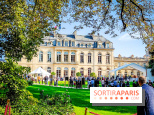
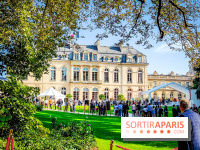
The Maison de Balzac, one of the famous writer's homes, is one of the capital's literary gems, located in the 16th arrondissement of Paris. This house-museum also boasts an incredible garden overlooking the Eiffel Tower, as well as a café. [Read more]
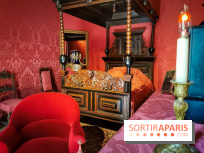
This bucolic place, which also houses an English café with delicious pastries, is one of the few homes of Honoré de Balzac that can still be discovered today. The three-storey museum retraces the life of the famous French writer, through manuscripts and unusual objects, as well as the study in which he corrected all his major works, La Comédie Humaine. A favorite address for lovers of French literature, is listed as a historic monument.
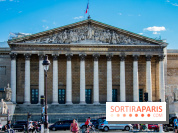
The Journées du Patrimoine are back in Paris and the Île-de-France region this weekend, September 20-21, 2025. What do you say to a visit to one of the many artists' homes in the Paris region? We reveal the program for this 42nd edition. [Read more]
For the Journées du Patrimoine 2025 in Paris, the capital's historic and artistic monuments and landmarks are opening their doors (often free of charge) to let us in on their secrets. Don't miss this not-to-be-missed event, scheduled for the weekend of September 20 and 21, 2025, on the theme of "Architectural Heritage". [Read more]
The Maison de Balzac welcomes Adeline Wrona for her biography of Emile de Girardin, whom the museum is particularly fond of, as the founder of La Presse was a friend of Balzac's and the latter published in his daily newspaper. Last year, we paid tribute to his wife, journalist and novelist Delphine de Girardin. They will now be reunited under the Balzacian roof, with an affectionate and scientific eye.
Long forgotten, Émile de Girardin was nonetheless a major figure in the literary and media world of the 19th century, "the Napoleon of the press" as we used to say in those days when newspapers made their owners millionaires, when a daily could blackmail governments and its director could bargain for political influence. Émile de Girardin, the illegitimate son of an Empire general, raised far from the bright lights of the capital, was the precocious creator of the extraordinary figure he was to become, a man of power, a member of parliament, a prolific author and, above all, the creator of dozens of newspapers: he was the inventor of an entire system, the "Girardin model", which financed newspapers as much from readers as from advertisers, and indexed advertising rates to the number of buyers. A revolution. This gifted entrepreneur did everything in his power to conceal his existence from posterity. Adeline Wrona has tracked down and found a wealth of testimonies - letters, memoirs, confidences of contemporaries, snitch reports. With this harvest, she reconstructs the itinerary of this man in a hurry, evokes his rather self-serving relations with successive regimes, recounts the glamorous couple he formed with his wife, Delphine, a prolific novelist and popular newspaper columnist, traces their sometimes stormy friendships with the greats of the day - Lamartine, Balzac, George Sand, Théophile Gautier, Alexandre Dumas, Thiers - and recreates the splendors of their salon, open to the whole of Paris. The entire century revolves around this Citizen Kane, and this book brings it to life: not only the world of the press, but also the world of letters, artistic creation, business networks, the giants of nascent industry, ministers, diplomats, not forgetting the princes of the demi-monde.
Atthe end of the meeting, the author will sign her book.
Adeline Wrona is University Professor at the Faculty of Letters, Sorbonne University.
The Pension Vauquer, which "smells musty, moldy, rancid", is a perfect example of how Balzac associates interior odors with social significance, while reflecting a growing sensitivity to the olfactory environment. Sensory notations enrich the descriptive dimension of his novels, providing valuable material for social analysis. They also bear witness to the material culture of the 19th century.
Whether we're talking about ordinary scents - those of heating, lighting, fresh linen, polished parquet or cut flowers - or exceptional nuisances, such as the whiff of fresh paint or the emptying of cesspits, odors set the pace for daily life.
Drawing on a wide range of sources, this talk will compare the scents evoked in La Comédie humaine with those actually inhaled in the interiors of the time. It will highlight Balzac's essential contribution to the history of olfactory culture under the July monarchy.
The meeting will be enriched by olfactory interventions imagined by designer Carole Calvez (Iris & Morphée), who will propose compositions inspired by the ambiences evoked.
Érika Wicky is a junior professor holding the "Olfactions" chair in art history at Grenoble-Alpes University (ARSH/LARHRA). For the past fifteen years, she has been researching the history of olfactory culture in the 18th and 19th centuries. Her work has been published in journals such as Romantisme and Littérature, sociétés et représentations.
Dates and Opening Time
From September 20, 2025 to September 21, 2025
Location
House of Balzac
47, rue Raynouard
75116 Paris 16
Prices
Free
Official website
www.maisondebalzac.paris.fr




 The Maison de Balzac, home of the famous writer, and its secret garden overlooking the Eiffel Tower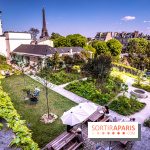
 Journées du Patrimoine 2025: visit artists' homes in Paris and the Île-de-France region

 Journées du Patrimoine 2025 in Paris (75): full schedule of visits by arrondissement