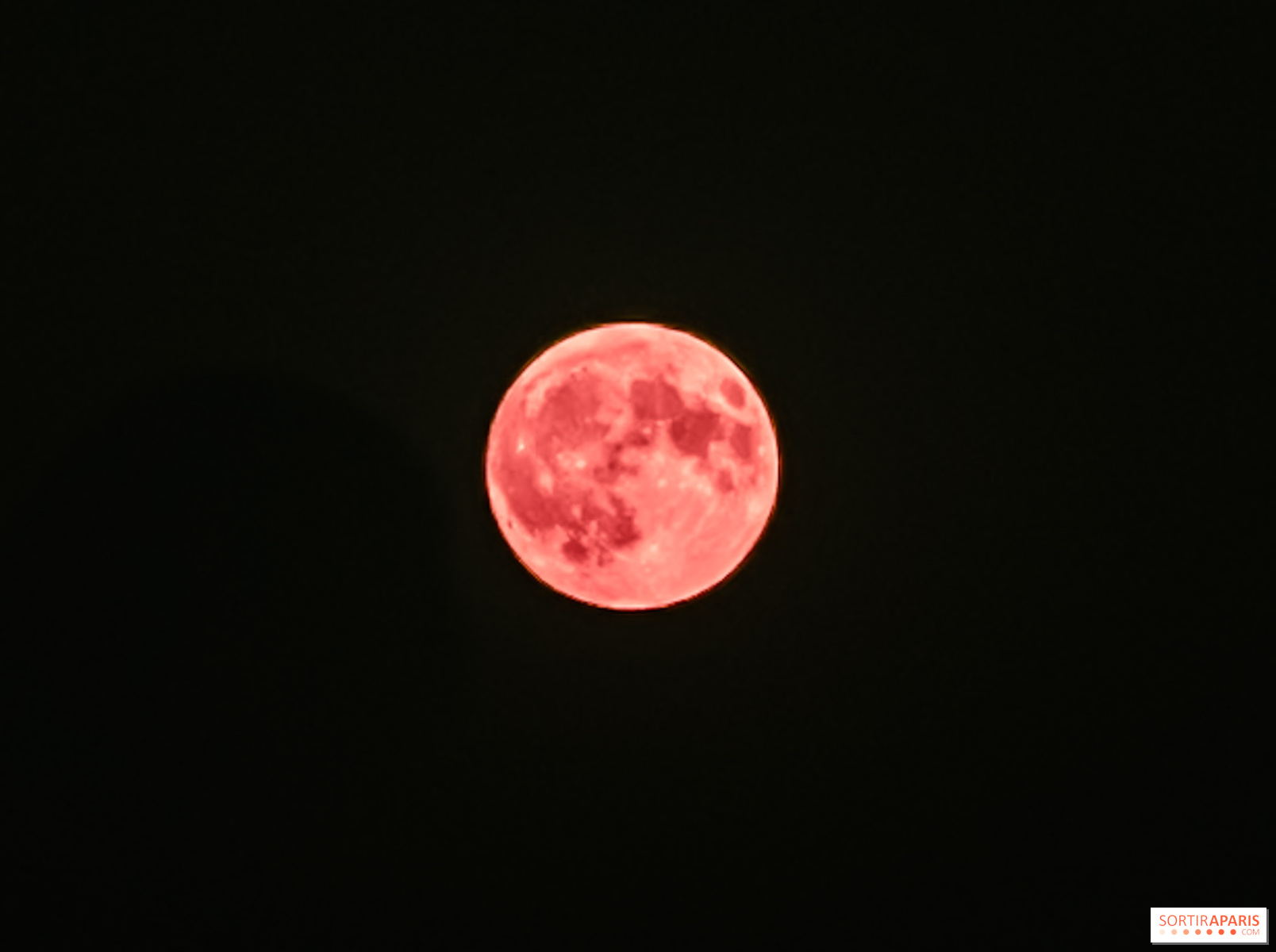
The April 2026 pink full moon is a must-see for night-sky enthusiasts. On the night from Wednesday, April 1 to Thursday, April 2, the Moon reaches full phase at 4:11 a.m. (Paris time), under the sign of Libra. Bonus for 2026: this pink full moon is also a supermoon, as the Moon will be at its closest point to Earth, making it appear up to 14% larger and up to 30% brighter than a typical full moon, according to the Observatoire de Paris. A spectacle visible from Paris and all of Île-de-France, as long as the sky is clear.
Contrary to what its name might suggest, the Moon does not turn pink. The name originates from Native American traditions and was later popularized in Europe. It refers to the spring bloom of the moss phlox (Phlox subulata), a small pink flower that carpets North American meadows in April. This creeping plant, whose rosy petals cover the plains as early as spring, is one of the first signs that sunny days are returning. Other names vary by culture: “Moon of Germination,” “Moon of the Growing Grass,” or even “Easter Moon,” as it helps fix the date of the holiday according to the lunar calendar detailed by Star Walk.
The April full moon arrives at a moment in the calendar that is already symbolically packed, between the vernal equinox and the Easter celebration. For 2026, this alignment is particularly clear: the vernal equinox falls on March 20, then the full moon occurs on the night of April 1–2, ahead of Easter Sunday on April 5. It is, indeed, the canonical rule: Easter falls on the first Sunday after the first full moon following the vernal equinox. This role as the “Easter full moon” is what sets this celestial body apart from all the other full moons of the year.
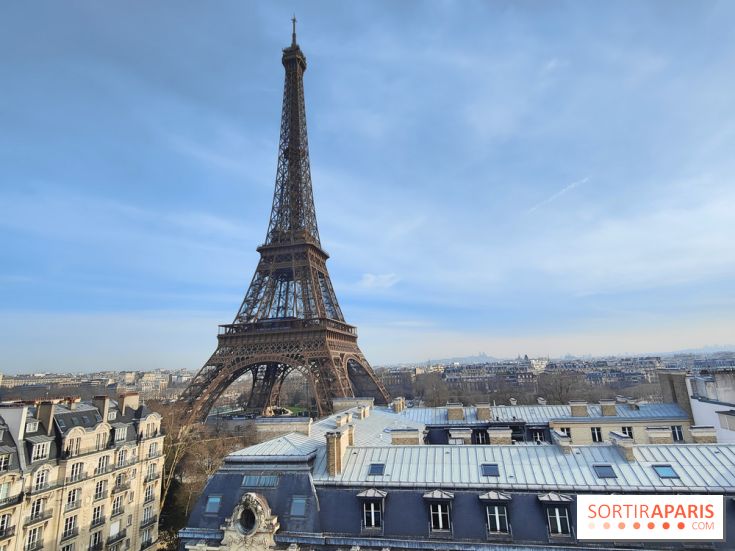
To make the most of it, catch the Moon just after it rises, to the East, as it brushes the horizon. It’s, in fact, a favorite trick of photographers: thanks to a well-known optical illusion, our brain reads the Moon as gigantic when it sits near ground-level objects. Trees, rooftops, a church steeple, or a bridge can all serve as foregrounds to deliver a striking sense of depth.
From Paris, several spots offer a clear eastern horizon: the Buttes-Chaumont Park in the 19th arrondissement, the Belvedere at Belleville Park in the 20th, or the heights of Montmartre in the 18th. To escape light pollution, head for the great forests of Île-de-France, such as the Chevreuse Valley in the Yvelines, where the Parc naturel régional de la Haute Vallée de Chevreuse regularly hosts astronomy groups for outdoor stargazing evenings. No gear is essential, but binoculars let you discern crater details with fine sharpness. For photographers, a tripod and a long focal length yield the best results. At moonrise, the Moon can take on a warm orange or copper hue, thanks to how light scatters in the atmosphere.
One caveat to keep in mind: its brighter-than-usual glow could disrupt sleep by suppressing melatonin production. If your sleep is fragile, consider drawing the curtains. To plan your observation and follow the weather forecast, the French Astronomy Association offers resources and regular public events, and the Sky Tonight app lets you locate the Moon in real time from your location.
The year 2026 features 13 lunar cycles, with a calendar blue moon on Sunday, May 31, 2026—the second full moon of that month and the smallest of the year, according to the 2026 full moon calendar. Here are the upcoming lunar dates:
And for fans of spring celestial phenomena, don’t miss the Lyrids, the April meteor shower whose peak activity is expected on the night of April 21–22, 2026. This piece speaks to both sky enthusiasts and photographers seeking a striking nocturnal subject, ideal for a couple, family, or friends, with a thermos and a blanket.
To go a step further, the Meudon Observatory (Hauts-de-Seine), affiliated with the Paris Observatory, occasionally opens its doors to the public for observation evenings.
This page may contain AI-assisted elements, more information here.
Dates and Opening Time
From April 1, 2026 to April 2, 2026
Prices
Free
Recommended age
For all