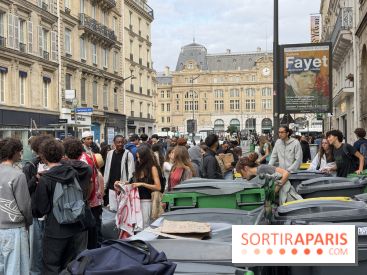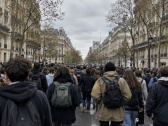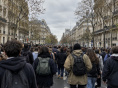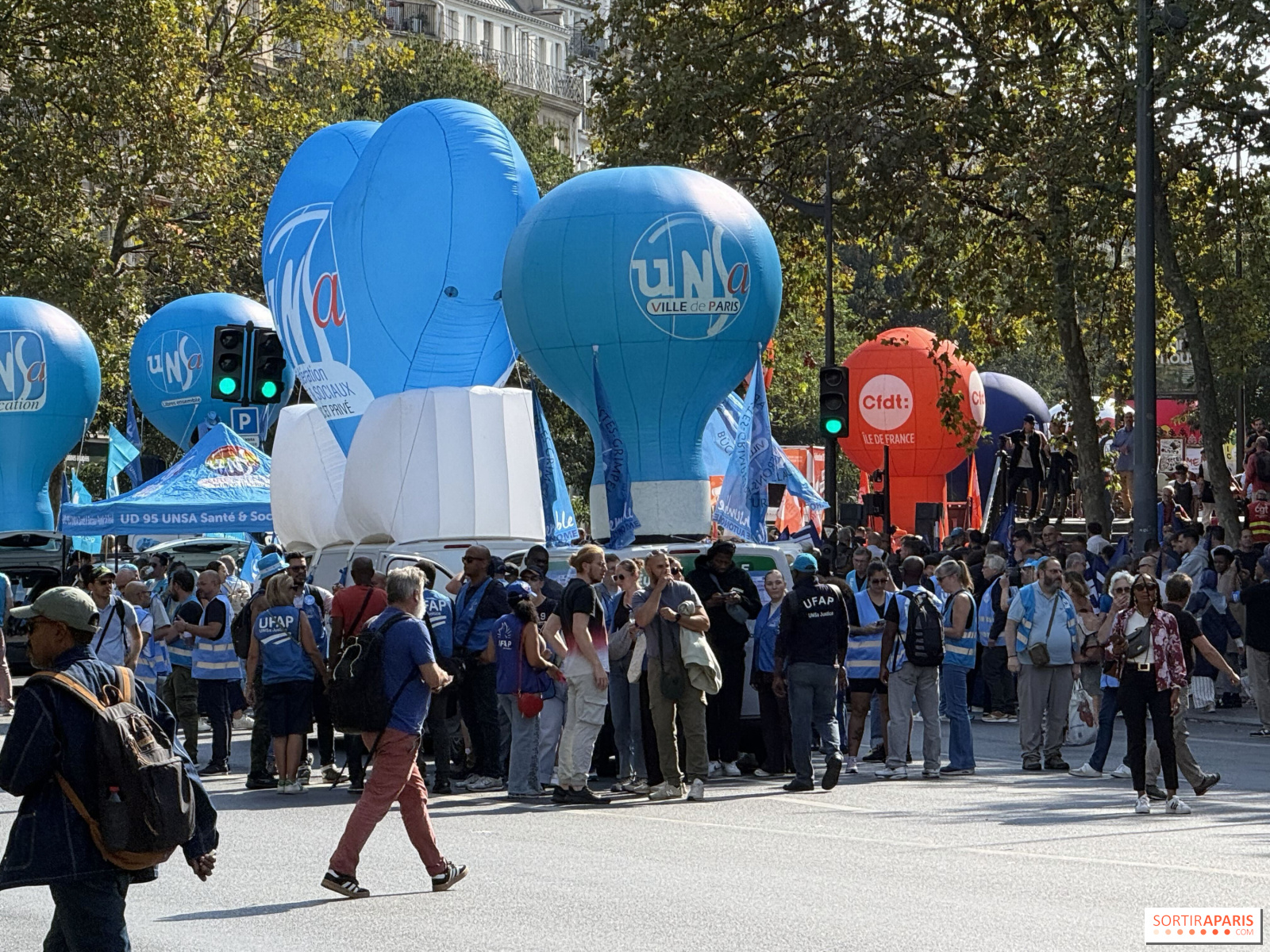
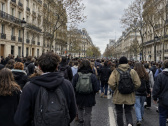
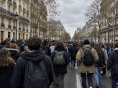
The strike on September 29, 2026 is set for tomorrow, and the picture is taking shape across Paris and the Île-de-France. Teachers, health workers, firefighters, police officers and France Travail staff are being urged to halt work and march. In the capital, the demonstration is slated to start at 2:00 PM, according to the CGT, from Place de la République (3rd, 10th and 11th arrondissements) and proceed to Place de la Nation (11th, 12th and 20th), via the Bastille.
Good news for commuters: today’s travel should be easier than expected. Transit providers say the metro and the RER network run by RATP should operate normally, with only a handful of SNCF lines affected. As for schools, though, it’s worth checking tonight whether your institution is impacted.
Everything starts from a touchy topic: the index-point freeze, the figure that underpins how public-sector salaries are calculated. In mid-September, Prime Minister Sébastien Lecornu told Le Figaro that he planned to freeze it again in 2027. The move was deemed provocative by unions, as inflation continues to eat into paychecks.
The timing is no accident. The mobilization comes two days before the presentation of the 2027 public finance bill. The eight representative unions (CGT, FO, CFDT, UNSA, FSU, Solidaires, CFE-CGC and FA-FP) are uniting to make their voices heard before the budget decisions are made. The CFDT has filed a strike notice covering the three branches of the public sector (state, local authorities, and hospitals).
According to the joint unions, 862,000 public servants are now earning a base salary below the legal minimum. On Monday on France 2, CFDT general secretary Marylise Léon summed up the mood by demanding raises for all workers. The CGT, for its part, tallies more than 150 demonstrations in 91 departments and is promising a "black day".
The Île-de-France protest march departs at 2 p.m. from Place de la République, according to messages circulated by SE-UNSA and Solidaires 93. It then heads down to Place de la Bastille, before concluding at Place de la Nation. The route remains subject to approval by the police prefecture and could still change.
A small quirk of the day: two processions are set to converge on Nation, one of them made up entirely of firefighters (more on that later).
If you’re not affected by the parade, we advise avoiding the République–Bastille–Nation axis in the afternoon. Several metro stations along the route are likely to close, and bus services are expected to be diverted. To plan your journeys, here are our articles to consult:
September 29 demonstration: Paris metro stations closed along the route
The public service demonstration winds through eastern Paris on Tuesday, September 29, 2026, between République and Nation. Eight metro stations along the route will close at the prefecture’s request; we take stock station by station. [Read more]
The firefighters are among the standout faces of this mobilization. In Paris, they are expected to have their own march, separate from that of the inter-union. According to Natacha Pommet, secretary-general of the CGT Public Services Federation, they wanted to stand out while making clear their allegiance to the civil service. They are set to join the rest of the demonstrators a little later in the afternoon. Their exact starting point has not been disclosed at this stage.
Their anger predates this back-to-school period. After a summer marked by fires on an unprecedented scale, firefighters are denouncing a shortfall of manpower and equipment to handle them. They are, moreover, on strike for several weeks, with a national notice running from September 8 to October 20, 2026, filed by the inter-union bringing together the nine representative unions of fire and rescue services.
A useful clarification for Parisians: in Paris and the inner suburbs, emergency services are provided by the Brigade de sapeurs-pompiers de Paris. This military unit is not allowed to strike. The movement therefore mainly concerns firefighters from the departmental fire and rescue services, in the outer suburbs and throughout the rest of France.
The prospect of a transport day going off the rails is fading. The CGT-RATP has indeed launched an unlimited strike starting this Monday, September 28 at 7 p.m., but the other unions at the Régie are not joining in. As a result, the RATP says traffic is normal on the metro and the RER lines it operates, according to Le Parisien.
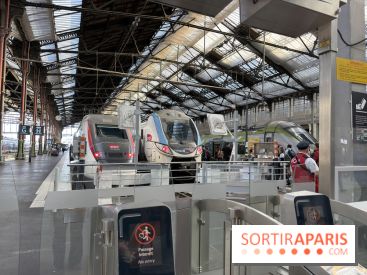
On the SNCF front, TGV and Intercités are running normally, and TER almost so. In the Île-de-France network, a few lines remain troubled: the RER C, D and E, as well as the R and V lines. If you’re taking one of them, be sure to check the detailed forecasts on the Île-de-France Mobilités site before you head out.
Due to the national interprofessional strike planned for September 29, 2026, several disruptions are expected on the Paris and Île-de-France public transport network. This Tuesday, plan ahead if you’ll be using the RER C, the RER D, or Transilien Line R. Here are the traffic forecasts. [Read more]
That's where the day is likely to be felt the most. To put it in perspective, during the last major public-sector mobilization in December 2024, nearly one in three teachers went on strike, according to the ministry. The figure rose to 40% in preschools and primary schools, compared with about 23% in middle and high schools.
Asked this Monday on RMC, the Education Minister Édouard Geffray reminded listeners of the existence of the "minimum service" for school attendance. It is triggered in primary schools as soon as at least 25% of the teachers declare themselves on strike, and it is organized by the town hall. The situation is different in secondary education: families of middle and high school students must check directly with the school or on paris.fr for Parisian schools.
The minister also urged calm, after the violence that has flared in recent days amid the blocus lycéens in several Île-de-France departments, notably in Seine-Saint-Denis.
At the hospital, urgent care remains available, but some non-urgent services may operate at a slower pace. In town halls, tax offices, and other counters, opening hours are also likely to be shortened. It’s wiser to postpone any procedure that can wait.
France Travail agencies could also operate with a reduced headcount. A first since 2018, all of its unions are calling for a strike. Beyond pay, they denounce repeated reorganizations and fear further cuts, as unemployment rises to 8.3% of the labor force.
Another sign of the movement's breadth, police officers will also be stepping in. The unions Alliance, Un1té and Unsa are joining the mobilization, disappointed by their meeting on September 24 with the Interior Minister. They are demanding higher pay, a boosted risk allowance, more reinforcements, and better working conditions.
And the days ahead already look set to be turbulent. In a previous large-scale protest in 2024, authorities put the turnout at around 130,000 across France, while the CGT claimed 200,000, including 30,000 in Paris. Another call is circulating for a mobilization on October 17 against fuel price hikes. To follow upcoming social movements, check out our guide to strikes in Paris, and to plan your day despite it all, our ideas for things to do in Paris this Tuesday.
This page may contain AI-assisted elements, more information here.


































 September 29 demonstration: Paris metro stations closed along the route


 Strike this Tuesday: three RER lines and two Transilien lines disrupted, traffic forecasts