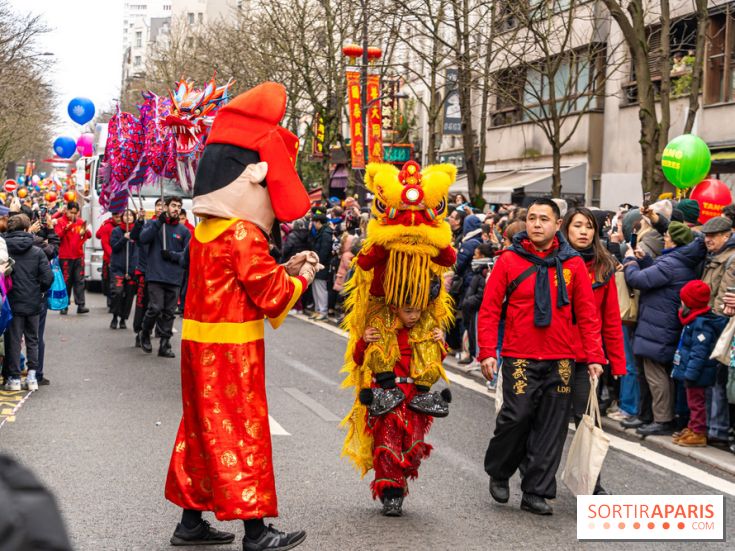
Like the Western New Year, the Chinese Lunar New Year is one of the most important events in the Asian calendar, if not the most important. Each year, its date varies within the Gregorian calendar. However, Lunar New Year is always celebrated between January 21 and February 20, on the second new moon since the winter solstice.
Also known as the Spring Festival, the Chinese New Year was originally an agricultural festival, allowing peasants to observe the rhythm of the seasons and see the arrival of the long-awaited spring.
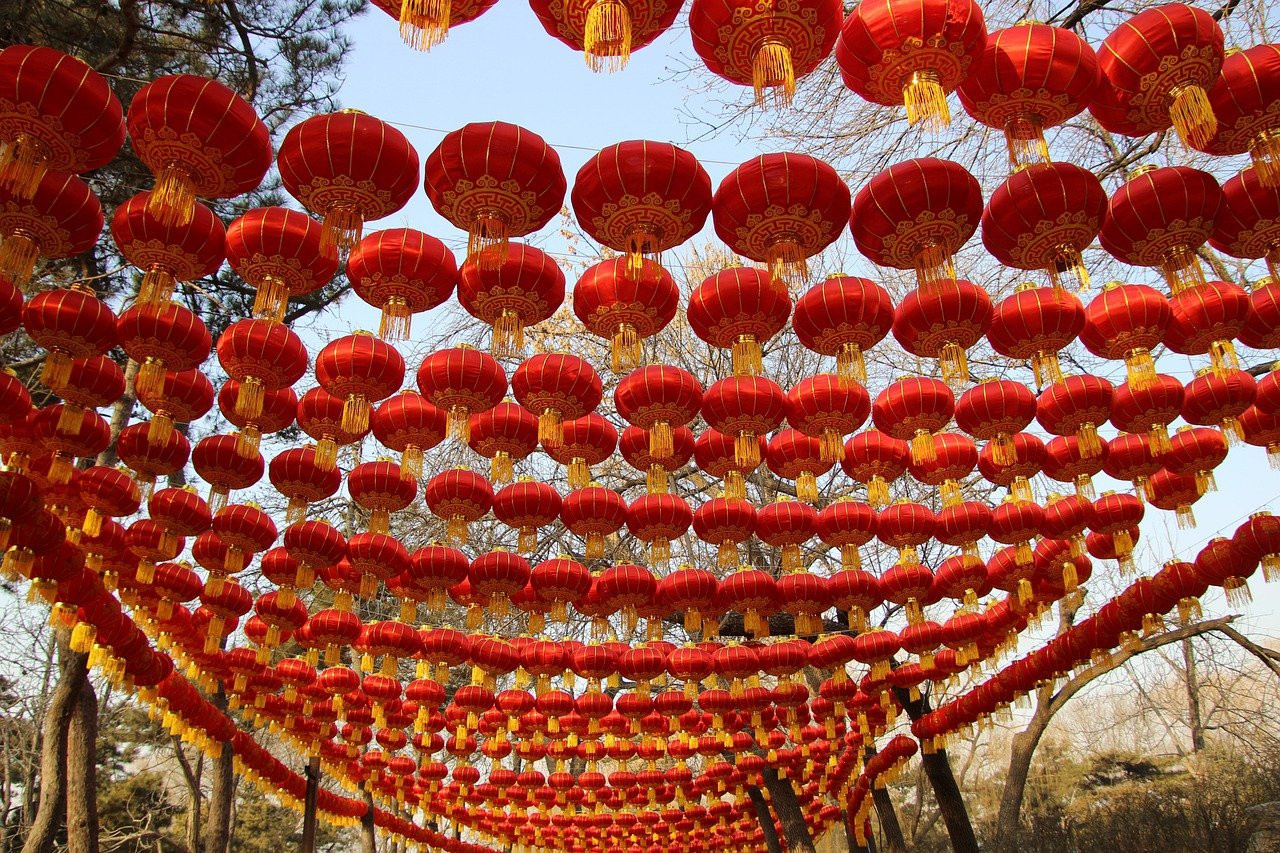
The origins of the Lunar New Year also refer to Nian, a monster who, according to legend, attacked and devoured villagers on New Year's Eve. According to legend, one evening, the Nian was frightened by the color red. Since then, the Chinese have taken to decorating their homes at this time by hanging strips of red paper from their doors and windows. They also light torches and set off firecrackers to scare off the Nian.
In China, there are many celebrations around this festival. They begin on New Year's Eve. On this day, the Chinese gather as a family and cook traditional dishes, using ingredients with very special meanings. For example, there's always fish on the table, for abundance, but also ravioli, symbolizing family reunion and happiness, or noodles, referring to longevity. It's also customary to eat glutinous rice cakes (Niangao), a sign of prosperity for the coming year.
The tradition continues after dinner, when the youngest members of the family present their best wishes. For their part, the adults give them hong-bao, red envelopes containing a small amount of money. At midnight, it's time for the famous firecrackers.
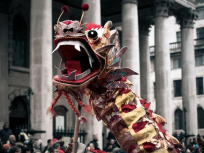
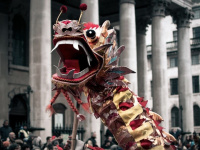
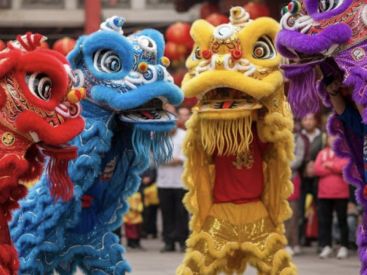
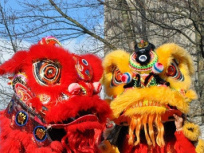
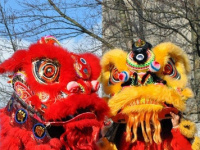
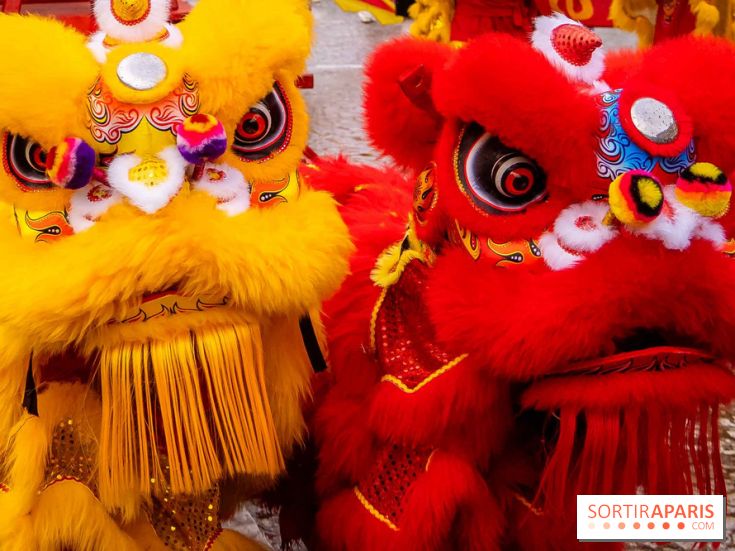
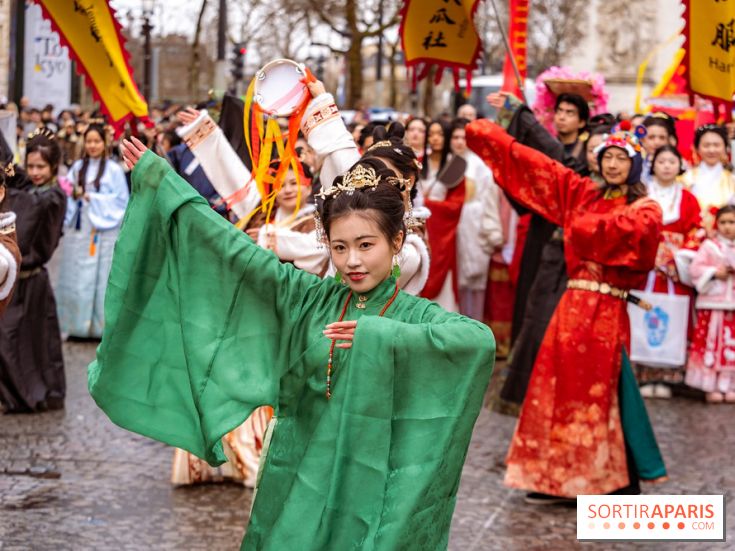
The New Year celebrations continue on the following days. On the third day of the New Year, in the morning, the house is hushed so as not to disturb any mice that may be living there. The family even drops them some food. The end of the Lunar New Year celebrations is marked by the famous Lantern Festival, featuring the impressive Dragon Dance.
Each new year of the calendar is represented by an animal and its element. In all, there are 12 animals, referring to the twelve-year cycle of Chinese astrology. In 2025, the Lunar New Year begins on January 25 for 15 days, and the Wooden Dragon gives way to the Wooden Snake !
Lunar New Year – Chinese New Year celebrations in Paris and Île-de-France 2026: parades and festivities
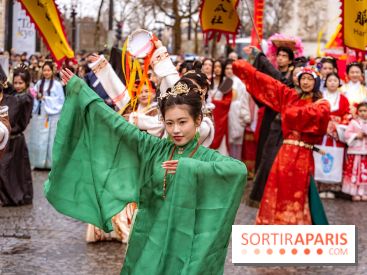
The Lunar New Year, celebrated in Vietnam (Tết Festival), South Korea, Singapore, Malaysia, Indonesia, and the Philippines — commonly known as Chinese New Year — falls on Tuesday, February 17, 2026. However, festivities kick off before and continue after that date. This year, we welcome the Year of the Fire Horse. Looking for tips to make the most of the celebrations? From parades and performances to top dining spots, here’s a roundup of the best ideas for honoring this vibrant holiday. [Read more]
Dates and Opening Time
Starts January 25, 2025







 Lunar New Year – Chinese New Year celebrations in Paris and Île-de-France 2026: parades and festivities