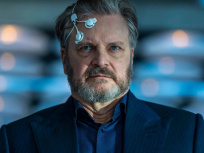
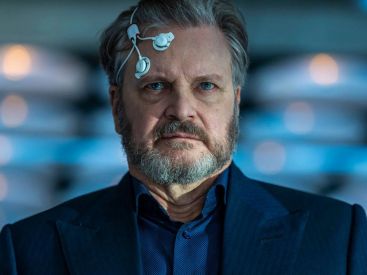
Directed by Timur Bekmambetov,Mercy stars Chris Pratt, Rebecca Ferguson, and Annabelle Wallis in a sci-fi thriller scheduled for release on January 28, 2026. Written by Marco van Belle, the film follows a detective confronted with an automated justice system he helped create, in a near future dominated by AI.
In this ultra-connected society, a detective is accused of murdering his wife and finds himself on trial before a "perfect" artificial intelligence, played by Rebecca Ferguson. As the algorithm gathers evidence, the accused must prove his innocence in 90 minutes, under the watchful eye of a system he knows intimately, having designed part of it himself. The story explores the shift between human investigation, widespread suspicion, and comprehensive surveillance mechanisms.
The AI tasked with judging him becomes the central figure of suspense, both adversary and mirror of a man confronted with his professional mistakes. The film focuses on the excesses of an environment where justice is based on predictive models, while the protagonist struggles against a system he helped legitimize. The plot remains centered on the countdown and the tension between human intuition and algorithmic coldness.
The feature film is a continuation of Timur Bekmambetov's visual work, marked by extensive use of digital interfaces and immersive devices. Shot on location and enhanced with technological environments, the film depicts a futuristic architecture where control is exercised through data flows. The trailer reveals a world dominated by automated justice, a theme that extends the reflections begun in works such as Minority Report and I, Robot.
The tone shifts between fast-paced action, psychological tension, and observation of the excesses of an algorithmic system, in line with other futuristic action films. Chris Pratt plays a cornered man seeking to regain control of a device he thought he had mastered, while Rebecca Ferguson gives the AI an ambiguous character, somewhere between pure rationality and vague unease. The film is aimed at fans of science fiction and dystopian stories focused on the boundaries of automated justice.
Our Review of Guilty as Charged:
Guilty as Charged unfolds in 2029, in a near-future world only slightly different from our own, where the criminal justice system has crossed a critical threshold: the severest verdicts are now issued by artificial intelligence. Eighteen defendants have already faced the automated system — eighteen convictions, eighteen executions. When a detective finds himself accused of murdering his wife, he has only ninety minutes to clear his name against an unyielding AI. The film takes on a radical challenge: an unfolding story in real-time, with no escape, turning the trial into a race against death itself.
Guilty as Charged primarily appeals to fans of conceptual thrillers and stories constrained by strict rules, especially those intrigued by radical devices like real-time narration and dystopian worlds closely mirroring our own. Viewers who enjoy tense, fast-paced films driven by countdowns and layered with gradual revelations will find an immersive experience, crafted as a high-stakes race where each piece of information could change the outcome.
The film also suits those who love thrillers built around plot twists, provided they’re comfortable with a highly structured narrative that prioritizes the device’s dynamism over deep psychological development. However, audiences seeking more expansive science fiction, profound reflections on AI, or richly developed secondary characters might find themselves distanced. Guilty as Charged opts for immediacy, efficiency, and a powerful impact — sometimes at the expense of nuance.
Despite overwhelmingly negative reviews from critics, Guilty as Charged emerges as a surprisingly intense cinematic experience. While many dismissed it as a gimmicky concept, the film embraces its structure fully, using it as a driving force for drama. Real-time is not just a stylistic choice—it maintains constant tension, with a relentless tempo that leaves no room for respite. Every minute counts, every decision weighs heavily, and each fragment of information can be the evidence that tips the scales. The film charges ahead at a breakneck pace, with remarkable efficacy.
The direction, often criticized as cold, actually aligns perfectly with the film’s themes. Interfaces, screens, data streams, holographic projections: the deliberately clinical aesthetic enhances the feeling of a world where human elements are gradually dissolved into cold statistics. The decision to adopt a screen-life style intensifies this suffocating atmosphere, making the main character feel already trapped within the algorithmic logic that judges him. This absence of lyrical flourishes isn’t a flaw but a stylistic choice that echoes the dehumanization central to the justice system depicted.
The film’s strength also lies in its compelling antagonist, portrayed by Rebecca Ferguson. Her intentionally distant, almost emotionless performance lends a chilling presence to the AI judge. It’s not a hysterical robot or a villainous caricature, but a calm, logical, and undeniable voice — and that’s what makes it terrifying. The AI doesn’t hate, doubt, or forgive; it calculates. In this universe, pure calculation is enough to condemn.
What truly sets Guilty as Charged apart is its underlying message. The film doesn’t merely criticize technology but probes our collective relationship with moral delegation. What are the implications of handing over the death penalty to an algorithm? Can justice exist without conscience, intuition, or human fallibility? The final revelation — that these convicted individuals aren’t fundamentally different from others — hits like a brutal warning. This future isn’t distant dystopia; it’s a grim extrapolation of our current compromises.
While the plot doesn’t lean heavily on twists and some secondary characters remain on the sidelines, the film compensates with its mastery of pacing, conceptual clarity, and unwavering commitment to its premise. Unlike other sci-fi courtroom dramas that chase complexity at the expense of clarity, Guilty as Charged opts for honesty and urgency — embracing its straightforwardness as a weapon.
Guilty as Charged establishes itself as a tense, gripping, and deeply unsettling sci-fi thriller. It’s a film that doesn’t aim to entertain lightly but to confront the audience with an uncomfortable question: when did we accept that justice could cease to be human? Flawed, perhaps, but strikingly effective and relevant in today’s science-fiction landscape.
Guilty as Charged
Film | 2026
Release in theaters: January 28, 2026
Thriller, science fiction | Duration: TBC
Directed by Timur Bekmambetov | Starring Chris Pratt, Rebecca Ferguson, Annabelle Wallis
Original title: Mercy
Country: United States
Recognized as Guilty is part of the current trend of futuristic stories that question the place of humans in relation to machines and the legitimacy of automated decision-making systems. Combining narrative tension and ethical reflection, the film offers a dark vision of a future where human error risks being excluded in favor of inflexible algorithmic justice.
To keep the cinema experience going, check out the January movie releases, discover the must-see films of the moment, and browse our latest science fiction picks of the year.
This page may contain AI-assisted elements, more information here.