Premiered in competition at the Venice Film Festival 2025, Orphan is a historical drama directed by László Nemes, co-written with Clara Royer. Following Son of Saul and Sunset, the Hungarian filmmaker continues his deep dive into 20th-century European history with this story set in post-war Hungary. Led by young actor Bojtorján Barabás, alongside Andrea Waskovics and Grégory Gadebois, the film hits French theaters on March 11, 2026.
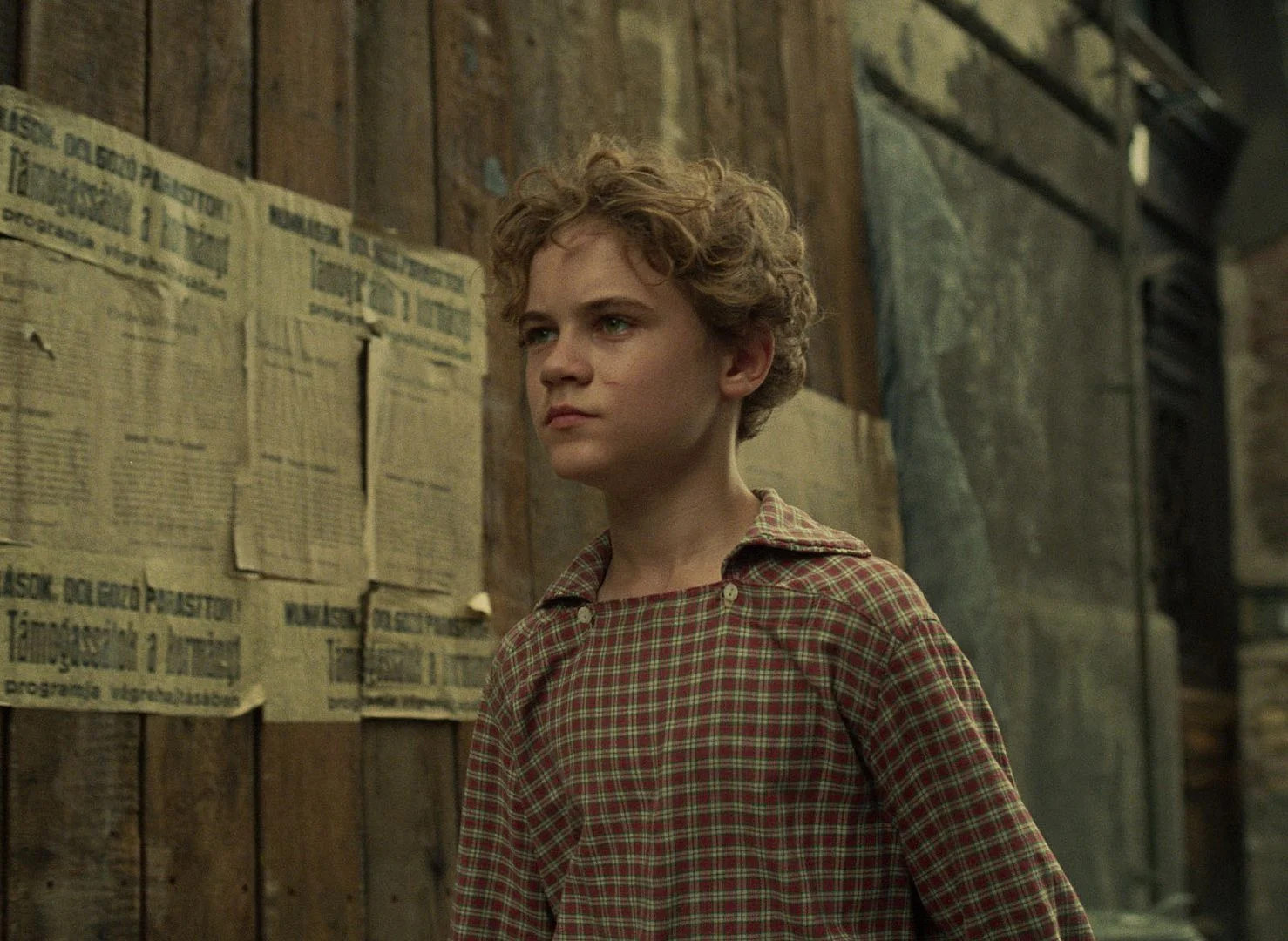
Budapest, 1957. In a city still haunted by the failure of its anti-communist uprising, young Andor grows up alone with his mother, Klara. She raises him amid the memory of his father, who disappeared in Nazi concentration camps—an absent figure that shapes the family’s identity. The boy’s sense of self is rooted in this story and a transmitted history, in a country still scarred by war and political repression.
The sudden arrival of a man from the countryside shakes up this fragile balance. Claiming to be the true father of Andor, he challenges everything his mother has told him. Faced with this revelation, the young man finds himself caught in a haunting quest for identity, where familial certainties crack and the truth remains elusive. Amidst this upheaval, the question of paternity becomes intertwined with a nation striving to rebuild itself after a tumultuous century of tragedy.
The film draws from a personal family story of the director. László Nemes explains that he based the narrative on the experiences of his father and grandmother to tell the story of a child who learns his true name only in adulthood. Rather than a strictly autobiographical account, the filmmaker describes a story rooted in memories, projections, and fantasies intertwined with the traumas of the 20th century.
The historical backdrop is central to the story. Set in 1957, a year after the crushing of the Hungarian Uprising of 1956 by Soviet forces, the film situates its narrative in a tense and uncertain time. For the director, this period marks a moment when Hungary becomes symbolically an "orphaned nation," left behind by Western powers and plunged into a new wave of repression. This political landscape profoundly influences the young protagonist's personal journey.
To portray Andor, László Nemes cast Bojtorján Barabás following an open casting call. The film is told from his perspective, deliberately limiting what the audience perceives to that of the child's view. The director continues to push formal boundaries with director of photography Mátyás Erdély, experimenting with film stock, altered lenses, and emphasizing off-screen space and sound to craft a sensory experience focused on the character’s subjective world.
The influences cited range from Alan J. Pakula’s paranoia-driven cinema — notably Klute and The Parallax View — to the surreal universe of David Lynch, whose Blue Velvet inspires a style that explores the margins of the frame and shadowy areas of the narrative. This approach invites the viewer to an active role, confronting a story conceived as an internal labyrinth.
Orphelin
Film | 2026
Release in theaters: March 11, 2026
Drama | Runtime: 2h13
Directed by László Nemes | Starring Bojtorján Barabás, Andrea Waskovics, Grégory Gadebois
Original title: Árva
Country: Hungary
With Orphan, László Nemes continues his cinematic exploration of delicate memories and identities shaken by European history. Seen through the eyes of a child facing uncertain family secrets, the film delves into the intersections of personal heritage, collective trauma, and individual rebuilding.
To make your cinema experience last even longer, check out the March movie releases, discover the must-see films right now, and browse our top historical films of the year.
This page may contain AI-assisted elements, more information here.