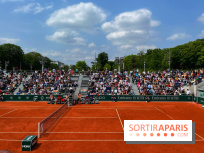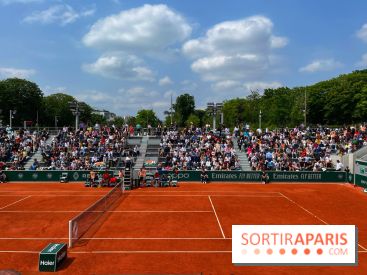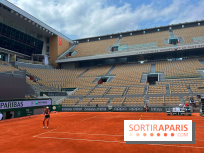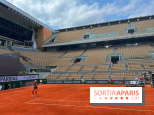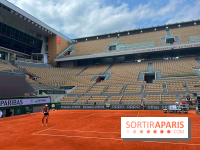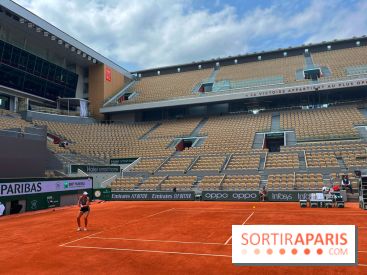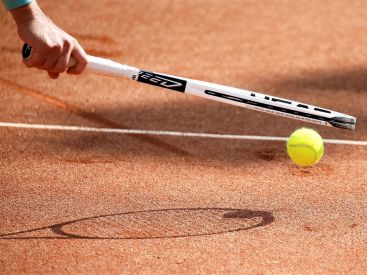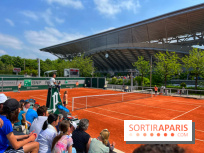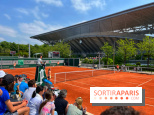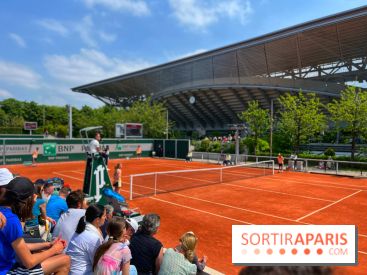
What could be more iconic than the clay courts at Roland-Garros? These tennis courts have seen careers made and lost, and have welcomed the sport's greatest champions. This international tournament takes place every year between the last week of May and the first week of June. 15 days of intense competition to thrill sports fans.
You may be following this new edition assiduously, hoping to see Les Bleus triumph, or supporting the competition favourites. These intense weeks are fascinating, as are the little and big stories that have made Roland-Garros famous. How would you like to learn more about this world-famous competition?
The Roland-Garros tournament, also known as theFrench Open, was founded in 1925. It has been held in Paris since 1928, at the Roland-Garros stadium in the 16th arrondissement.
It is one of the four Grand Slam tournaments - also comprising the Australian Open, Wimbledon and the US Open. The French competition takes its name fromFrench aviator Roland Garros, who died in aerial combat in 1918, during the First World War. The pilot was a fellow HEC graduate ofEmile Lesieur, president of Stade français. To pay tribute to his friend, Emile Lesieur named the newly-built stadium in his honor when it was inaugurated in 1928.
The stadium was built between 1927 and 1928. It was created to host the final of the Davis Cup, which at the time was largely dominated by the French tennis team. They were known as the Four Musketeers: Jean Borotra, Jacques Brugnon, Henri Cochet and René Lacoste monopolized the podiums between 1926 and 1932. The Roland-Garros stadium was gradually extended and modernized, and today boasts 17 courts, with capacity for up to 15,000 spectators on a single court.
The stadium is also home to the Tennis Museum. Created in 2003, this unusual museum houses some 14,000 collectors' items and documents, recounting the history of the Roland-Garros stadium, as well as that of the French sport. You can admire the different outfits worn by athletes through the ages, discover the evolution of rackets and sports equipment, and above all contemplate the various cups awarded to the tournament winners.
There are five of them, described on the Roland-Garros website:
In addition to these cups, the most deserving participants receive a handsome bonus, up to 2.2 million euros!
Roland-Garros: how much do participants earn in 2025?
Tennis players at the French Open have the opportunity to win the title at every stage they pass, but also a bigger and bigger check. How much are these amounts? [Read more]
Over the years, there have been many award-winning athletes, and the French have no reason to be ashamed of their achievements. Before the Open era, which symbolizes the modern era of tennis, during which professional players are finally allowed to take part in Grand Slam tournaments, the French were racking up all the records: most singles and doubles titles, most consecutive victories, longest match...
For several years now, these rankings and podiums have been monopolized by an international trio in the men's category: Rafael Nadal, Roger Federer and Novak Djokovic seem to be indestructible.
The last French players to triumph at Roland-Garros were Yannick Noah in 1983, and Mary Pierce in 2000. Does 2022 hold any surprises in store?
Location
Roland-Garros Stadium
2 Avenue Gordon Bennett
75116 Paris 16
Official website
www.rolandgarros.com






























 Roland-Garros: how much do participants earn in 2025?