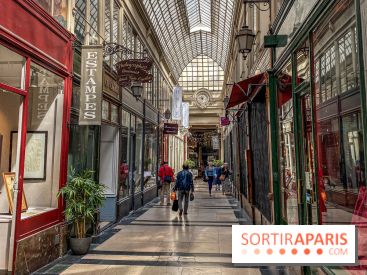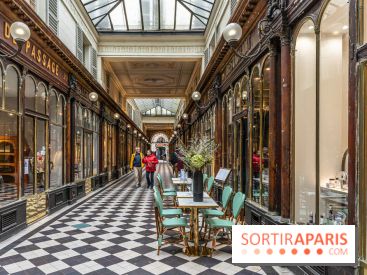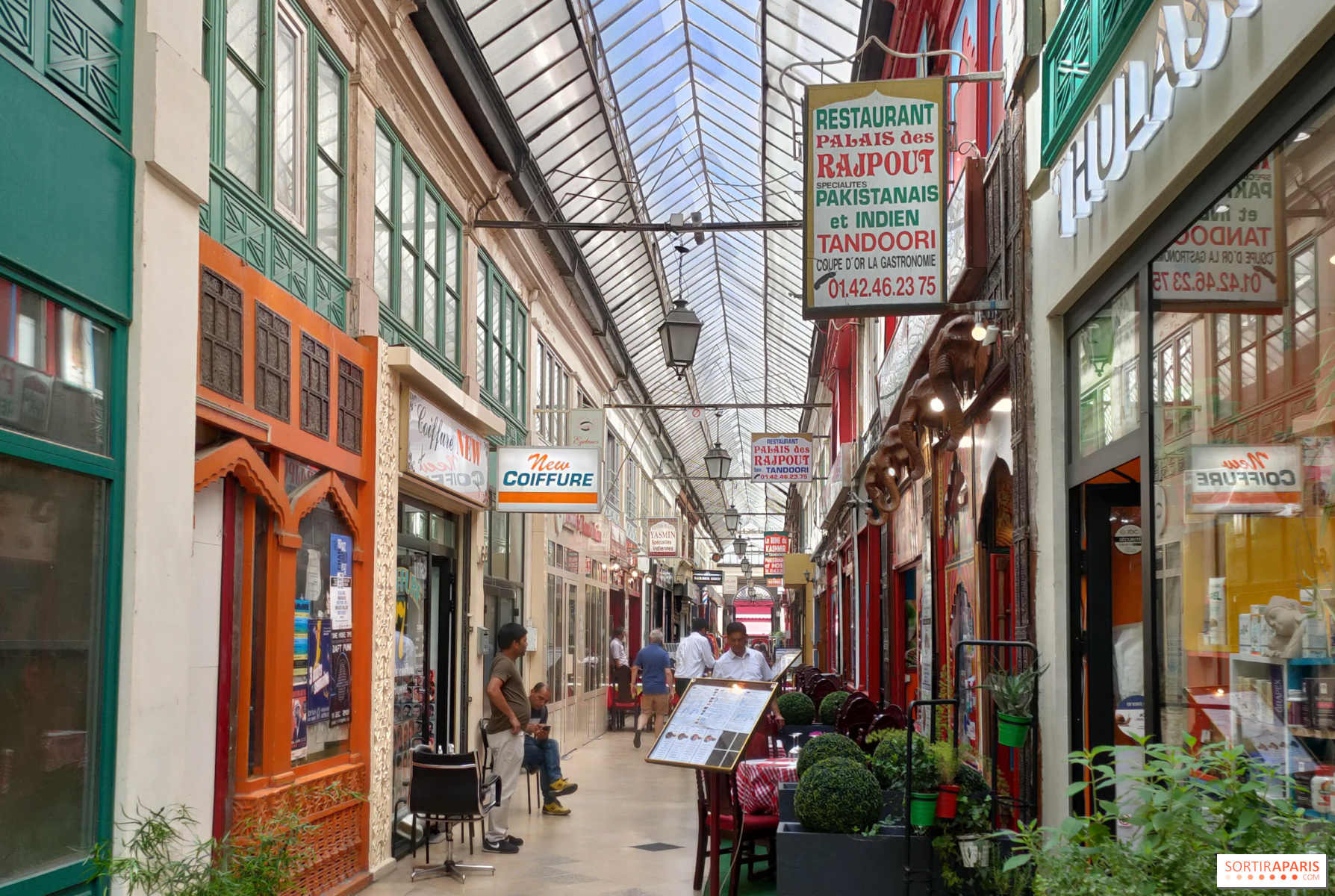
The Passage Brady is worth a detour for a reason beyond the mosaics of the Galerie Vivienne and the gilded facades of Véro-Dodat. This historic passage, which today links rue du Faubourg-Saint-Denis to Boulevard de Strasbourg, has become one of the emblematic addresses of multicultural Paris.
To understand its current face, you have to go back two centuries. The merchant Monsieur Brady, in partnership with Monsieur Briavoine, launched construction in 1825. The passage opened its doors on 15 April 1828, with an ambitious project including 113 shops and workshops, topped by residences.
The place at that time gathered clothing shops, retailers, reading rooms, and even a bathhouse. But the hoped-for success took longer to come. By the 1830s, thrift shops were taking a prominent place in the gallery. The Brady Passage still boasted at that time an architectural feature now vanished: a rotunda located midway along its length.
The history of the Bascule Passage dates to 1854. The carving of Strasbourg Boulevard cuts across its route, erasing its central section and its rotunda. Since then, Brady presents a configuration quite rare in Paris: the passage is divided into two pieces by the boulevard. To the west, between 46 Rue du Faubourg-Saint-Denis and 33 Boulevard de Strasbourg, one still travels beneath a glass roof. On the other side, heading toward 43 Rue du Faubourg-Saint-Martin, the second section is now open to the sky!
At the end of the 19th century, the area drew in several Nabi artists. Pierre Bonnard, Édouard Vuillard, Maurice Denis, Paul Sérusier, René Piot, and Henri-Gabriel Ibels were among the regulars at the Passage’s restaurants in the 1890s. An artistic past that's quite surprising in light of the identity Brady would develop a century later.
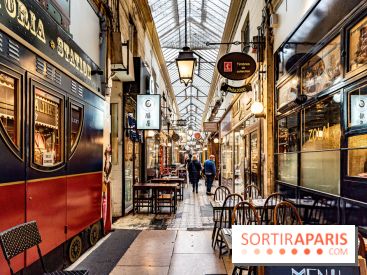
Because from the 1970s and 1980s, the scene truly shifts. Merchants and restaurateurs, notably from the India, Pakistan, and the Indian Ocean region, gradually move into the passage and its surroundings. Restaurants, grocery stores and specialized shops slowly shape an identity that earns it today the nickname "Little India". The phenomenon extends far beyond the Brady Passage, as nearby streets have become one of the capital’s major Indian, Pakistani and Sri Lankan quarters of Paris.
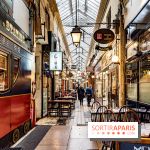
Today, the covered section remains the most recognizable. Under the glass roof, restaurants and shops line up, while the Brady name still appears in a blue mosaic on a yellow background on the ground. On the other side of the boulevard, the mood shifts with the discovery section, more closely tied to costume and disguise shops.
Discover Paris' most beautiful covered passageways
Maybe you didn't know it, but Paris is home to many covered passageways. Discover the 12 most beautiful covered passageways in Paris! [Read more]
Location
Brady Passage
Passage Brady
75010 Paris 10
Route planner























 Discover Paris' most beautiful covered passageways