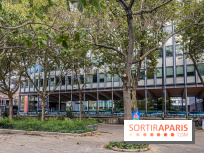
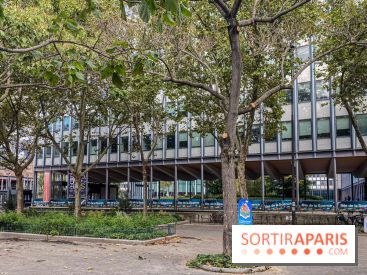
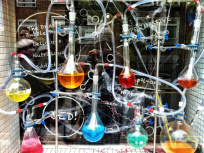
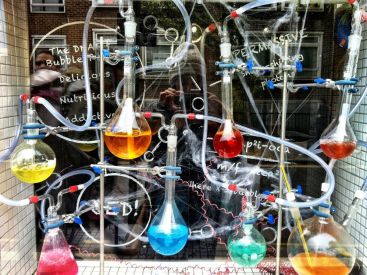
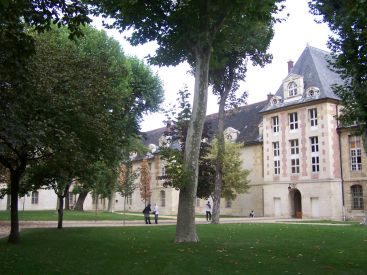
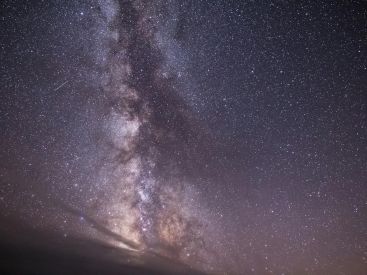
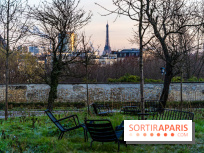
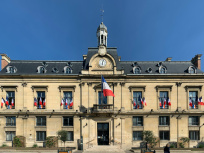
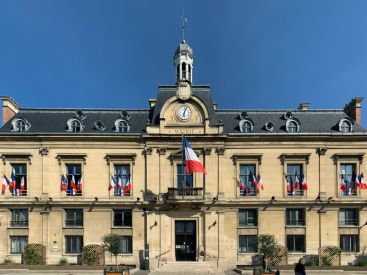
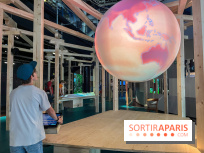
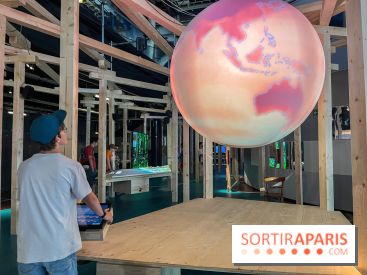
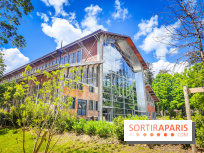
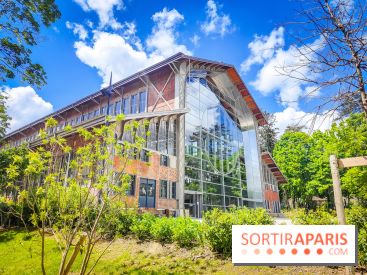
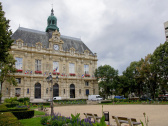
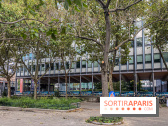
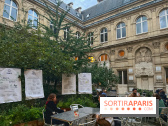
The Science Festival is the ultimate national event to explore the wonders around us. Nature, space, the human body—local scientists are eager to answer your questions and share their extensive knowledge. For those curious to unveil the mysteries of our vast universe, head over to the Paris Institute of Astrophysics on October 15, 2023.
This institute, part of Sorbonne University and the CNRS, is a joint research unit and an Observatory of Earth and Universe Sciences (OSU). It brings together experts in astrophysics and theoretical physics. Their research focuses on a range of topics, including the formation of planetary systems, the search for and study of exoplanets, galaxy evolution, both observational and theoretical cosmology, theories of gravity and the physics of the early Universe, and high-energy astrophysics. This year, embark on a celestial adventure—spot stars, enjoy spectacular film screenings, attend engaging lectures, and explore our Solar System firsthand!
Science Festival 2026 in Paris and Île-de-France: the lineup of free events
La fête de la Science is back from October 2 to 12, 2026 for its 35th edition! The idea? A week dedicated to science culture you can experience through a wealth of free events across France. Experiments, shows, open days, tours and a multitude of workshops—open to all and suitable for children—await you on the four corners of Paris and the Île-de-France region! [Read more]
“From the roots of artificial intelligence: the knowledge formula and the tool that nearly predicts everything”
How can a machine guess the next word in your sentence, beat the Go champions, or map the universe? It all rests on two mathematical ideas far older than computers: an 18th-century formula about how to change your mind when you learn something new, and a tool born from a dispute between two Russian mathematicians over free will. These ideas today forecast and explain almost everything: your Google results, the text produced by AI, the invisible matter that fills the cosmos. By tracing the origins of artificial intelligence, we’ll see what “knowing” really means for a machine, and we’ll ask the question buzzing through laboratories: will a machine soon be able to make discoveries on its own?
Participation requirements:
• Target audiences: 11–15, 15–18, 18–25, 25 and up
• Conditions: Free admission
Schedule: Sunday, October 11 — 3:30 p.m. to 4:30 p.m.
Screening of the film "Voyage to the Heart of a Black Hole"
Using groundbreaking numerical simulations, astrophysicist Alain Riazuelo offers a hair-raising adventure that propels you almost at the speed of light toward a black hole. After inspecting it from every angle and skimming its surface, you take the Grand Plunge: a voyage straight to the heart of the black hole. Built on the bedrock of physical laws, this virtual experience upends intuition and confronts viewers with strange phenomena, which the film explains clearly: a cosmic rearview mirror, ghost images, stars changing color, a celestial vault condensed into a glowing orb. A journey as educational as it is aesthetically striking.
This screening will be followed by a Q&A with Alain Riazuelo.
A film produced by Science et Avenir
Participation requirements:
• Target audiences: 6–11 years, 11–15 years, 15–18 years, 18–25 years, 25 years and up
• Eligibility: Free admission
Schedules: Sunday, October 11 — 2:15 p.m. to 3:15 p.m.
Screening of the film "75 Years of the Paris Institute of Astrophysics"
Created in 1938 under the Popular Front and attached to the CNRS from its inception in October 1939, the Paris Institute of Astrophysics (IAP) celebrated its 75th anniversary on October 11, 2013. French and foreign researchers appear throughout the film, discussing their work and the notable figures who helped shape the IAP, such as Jean Perrin and Evry Schatzman (CNRS Gold Medal in 1983).
A film produced by CNRS Images
Participation conditions :
• Target audiences : 11–15 years, 15–18 years, 18–25 years, 25 years and up
• Eligibility : Free admission
Schedule: Sunday, October 11 — 12:15 to 12:45
Experience the Northern Lights in 3D
A multidisciplinary team comprising a photographer, a researcher, and an astrophotographer, united under the banner of the Institute of Astrophysics of Paris (IAP), has achieved a first: filming the aurora borealis in 3D, in a format compatible with hemispherical screens used in planetariums. The live-video presentation in our auditorium—showing sequences shot in real time on a standard screen but viewed with 3D glasses—will begin with a brief primer on binocular vision and the aurora. The project received financial support in 2019 from Labex Plas@Par at Sorbonne University.
For more details, read the IAP article “They’re not afraid of the cold and they’re filming the aurora in 3D”: http://www.iap.fr/actualites/avoir/2018/Juin/aurora3d-fr.html
Registration required.
Participation requirements:
• Target audiences: 6–11 years, 11–15 years, 15–18 years, 18–25 years, 25 years and up
• Booking: Booking required
Schedule: Sunday, October 11 — 11:00 AM to 12:00 PM
The Solar System
It’s hard to truly grasp distances across the Universe, and as you move through the solar system the numbers quickly become astronomical and hard to picture. This year, a new temporary exterior display for the IAP is unveiled to mark the Science Festival, featuring a two-scale model of our solar system: one scale for distance and another for the diameters of the objects. Visitors will be able to explore the solar system and grasp the immense scale of the Universe.
Participation requirements :
• Target audiences : 3 - 6 years, 6 - 11 years, 11 - 15 years, 15 - 18 years, 18 - 25 years, 25 years and up
• Conditions : Free admission
Hours: Sunday, October 11 — 11:00 AM to 1:00 PM
Sunday, October 11 — 2:00 PM to 6:00 PM
Workshop “A Homemade Comet”
With everyday ingredients, we whip up a comet live, then watch it warm up and release gas, just like real comets when they approach the Sun. It’s a chance to discover what these small icy bodies are made of, witnesses to the birth of the Solar System.
Participation rules :
• Target audiences : 6–11 years, 11–15 years, 15–18 years, 18–25 years, 25 years and up
• Conditions : Free admission
Hours: Sunday, October 11 — 2:00 PM to 6:00 PM
Workshop: Spacetime Simulator
The participants use a spacetime simulator to explore gravity. They watch how the distance between two points changes as masses are added, and they grasp that the bending of the fabric mirrors the warping of space and time.
Participation requirements:
• Target audiences: 6–11 years, 11–15 years, 15–18 years, 18–25 years, 25 years and up
• Admission: Free
Schedule: Sunday, October 11 — 2:00 PM to 6:00 PM
Workshop on the history of the Universe and the cosmic microwave background.
We often hear that we only know 5% of the Universe’s contents, but how is that possible? Embark on a journey into the cosmic microwave background, the oldest image of the universe we can observe, which reveals its structure both in the early days and today.
Participation requirements:
• Target audiences: 11–15, 15–18, 18–25, 25 and up
• Conditions: Free admission
Hours: Sunday, October 11 — 2:00 PM to 6:00 PM
Spectroscopy Workshop
François Sèvre, an astrophysicist at the IAP, is offering a series of hands-on light experiments that lie at the heart of modern astronomy. You’ll be able to look through a real spectroscope to observe emission and absorption spectra. You can also explore how images are formed—from reflection and refraction to gravitational lensing. Finally, you’ll get a glimpse of the optical payload aboard the Euclid satellite.
Participation requirements:
• Target audiences: 11–15 years, 15–18 years, 18–25 years, 25 years and over
• Conditions: Free admission
Hours: Sunday, October 11 — 10:30 a.m. to 6:00 p.m.
The Euclid Space Mission
On July 1, 2023, the European satellite Euclid left Earth for an extraordinary mission: to chart a vast swath of the Universe in order to understand why its expansion is accelerating. The mission involves no fewer than ten French laboratories, including the Institut d'Astrophysique de Paris. A series of educational displays (models, posters, banners—and a few surprises!) will be shown in the hall. Learn more: https://euclid.cnes.fr/
Participation requirements :
• Target audiences : 6–11 years, 11–15 years, 15–18 years, 18–25 years, 25 years and up
• Conditions : Free admission
Hours: Sunday, October 11 – 10:30 AM to 6:00 PM
Budding astrophysicists
“Astrophysics for Little Ones,” from 2:30 to 3:30 pm: Damien Leborgne, an astrophysicist at the IAP, walks young listeners through the sky—its planets, the birth, life, and death of stars—in a mini-lecture designed for the very young, with parents in tow. Recommended age: 3 to 7. “The Universe Explained to Children,” from 3:45 to 5:15 pm: Alain Riazuelo, an astrophysicist at the IAP, invites children on a journey through the Universe, exploring the solar system, stars, galaxies, and beyond. Recommended age: 7 to 11.
Participation conditions:
• Target audiences: 3 - 6 years, 6 - 11 years
• Conditions: Free admission
Schedule: Sunday, October 11 — 2:30 PM to 3:30 PM
Sunday, October 11 — 3:45 PM to 5:15 PM
A Star-Chasing Scavenger Hunt!
Treasure hunt (ages 12 and up) crafted by the doctoral students at the Institute of Astrophysics of Paris. What is Euclid? Are gravitational waves a form of light? How can we detect ultra-high-energy neutrinos? The answers are tucked among the institute’s walls. Track them down and you could win a keepsake with an astrophysical twist.
Eligibility:
• Target audiences: 6–11 years, 11–15, 15–18, 18–25, 25 and up
• Conditions: Free admission
Hours: Sunday, October 11 — 10:30 AM to 6:00 PM
Exoplanet Workshop
We now know nearly 8,000 planets orbiting stars beyond the Sun. What surprises us most? Their extraordinary diversity in size, mass, composition, and atmosphere. Come and see an exhibit that reveals how today’s satellites are able to study the atmospheres of exoplanets!
Participation requirements:
• Target audiences: 6–11, 11–15, 15–18, 18–25, 25 and up
• Conditions: Free admission
Schedule: Sunday, October 11 — 2:00 p.m. to 6:00 p.m.
Research at the Paris Institute of Astrophysics
Introduction of educational panels, including one on the history of the IAP; encounters with early-career researchers at the Institute of Astrophysics, whose work spans cosmology, high-energy astrophysics, and exoplanets.
Participation conditions:
• Target audiences: 6 - 11 years, 11 - 15 years, 15 - 18 years, 18 - 25 years, 25 years and up
• Conditions: Free admission
Hours: Sunday, October 11 — 10:30 AM to 6:00 PM
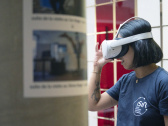
VR visualizations of simulated black-hole environments
Even when Alain Riazuelo slides a virtual reality headset onto you and walks you through his latest simulations?
20-minute sessions, limited to seven participants (sign up at the reception).
Running continuously from 10:30 a.m. to 1:30 p.m.
Participation requirements:
• Target audiences: 6–11 years, 11–15 years, 15–18 years, 18–25 years, 25 years and up
• Conditions: Free admission
Hours: Sunday, October 11 — 10:30 a.m. to 1:30 p.m.
“The origin of gravitational waves: the whisper of black holes or the echo of the Big Bang?”
More than a century ago, Einstein used his theory of gravitation to make a dizzying prediction: spacetime can ripple. These gravitational waves were first detected by LIGO in 2015, during the merger of two black holes, each weighing about thirty solar masses. The waves vibrate hundreds of times per second, so the signal comes across as a brief whistle.
In 2023, a dramatic twist. By timing pulsars—dead stars as regular as atomic clocks—astronomers detected tiny drifts in their ticking. It isn’t the pulsars that drift; space itself is vibrating. These shifts reveal a persistent gravitational-wave background, arriving from every direction in the cosmos. Its frequency is far lower than LIGO’s whistle, because a single oscillation can stretch on for years.
Where does this low, rumbling come from? From the slow waltz of supermassive black-hole pairs—monsters weighing billions of solar masses at the centers of galaxies—or from an event that unfolded in the first second after the Big Bang, when the quantum vacuum might have boiled over? Join us to see how tomorrow’s science could help settle the question.
Participation requirements:
• Target audiences: 11–15, 15–18, 18–25, 25 and up
• Conditions: Free admission
Schedule: Sunday, October 11 — 4:45 p.m. to 5:45 p.m.
« Multi-messenger astronomy, or how to decipher the messages the Universe is sending »
For centuries we have studied the Universe with light. About a decade ago, we began listening to the messages it whispers through gravitational waves and detecting the particles it sends our way. Multi-messenger astronomy brings together these distinct signals, like pieces of a puzzle, to reveal the true nature of the cosmos’s most violent phenomena. From neutron-star mergers to the birth of heavy elements, we’ll see how this new way of probing astrophysical sources is transforming our understanding of the Universe. Finally, we’ll discover how the Vera C. Rubin Observatory and its LSST survey, newly up and running, will play a major role in this new era of multi-messenger astronomy.
Participation requirements :
• Target audiences : 11 - 15 years, 15 - 18 years, 18 - 25 years, 25 years and older
• Conditions : Free admission
Schedule: Sunday, October 11 — 1:00 PM to 2:00 PM
Dates and Opening Time
On October 15, 2023
Location
Paris Institute of Astrophysics
98bis Boulevard Arago
75014 Paris 14
Route planner
Prices
Free
Official website
www.iap.fr



















 Science Festival 2026 in Paris and Île-de-France: the lineup of free events