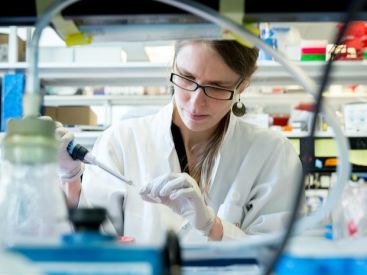
It's the long-awaited event for many budding scientists: the Fête de la Science! From October 3 to 13, 2025, the capital and its surrounding region will be opening the doors of its institutions, laboratories and museums to learn more about what shapes our world, through workshops, conferences, guided tours and a whole host offree events open to the whole family.
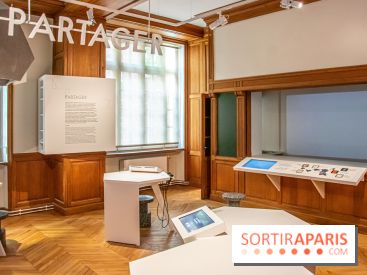
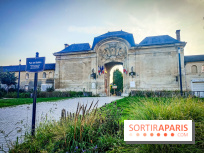
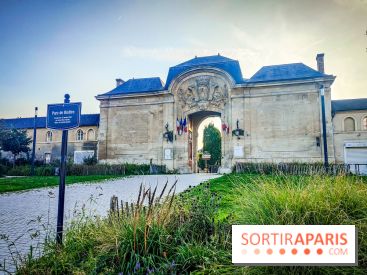
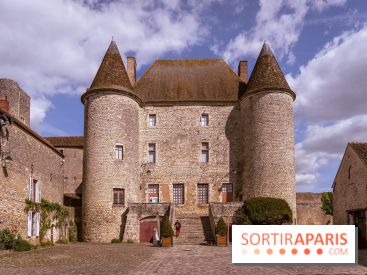
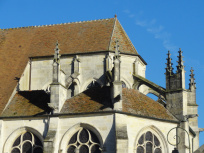
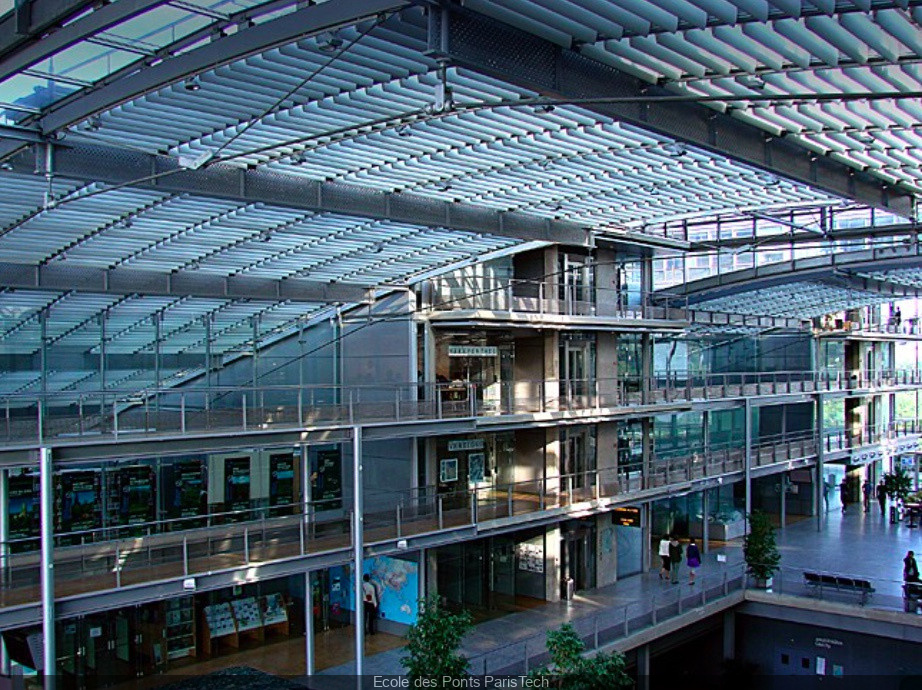
A major French engineering school founded in 1747 by royal decree of King Louis XV,Ecole des Ponts ParisTech, formerly known asÉcole Nationale des Ponts et Chaussées, has been training top-level engineers, researchers and future leaders ever since it was founded. In addition to societal challenges, civil engineering and regional planning, Ecole des Ponts ParisTech also focuses on the challenges of energy and ecological transition.
Science Festival 2026: Free activities program in Paris and Île-de-France
The Science Festival is back from October 2 to 12, 2026 for its 35th edition! A week dedicated to science culture through numerous free events across France, featuring experiments, performances, open days, guided tours, and a multitude of workshops. An event open to everyone, especially family-friendly, to be discovered across the four corners of Paris and the Île-de-France region! [Read more]
Wood That Drinks: How Water Travels Beneath the Bark
Oak, pine, beech, poplar… not all woods look the same once you take a closer look. Behind their surface lies an invisible structure to the naked eye: porosity. It’s these tiny channels, once used by the tree to move sap, that determine how well the wood can absorb water, swell, or endure the test of time. At this stand, handle several tree species and watch in real time how they react to water: which one absorbs it the fastest? Which swells the most? Delve into the anatomy of wood and discover why picking a species is never a trivial choice, whether you’re building a house, making a piece of furniture, or even carving a musical instrument.
Participation requirements :
• Target audiences : 3–6 years, 6–11 years, 11–15 years, 15–18 years, 18–25 years, 25 years and up
• Conditions : Free admission
Hours: Saturday, October 10 — 2:00 PM to 6:00 PM
Bike-sharing: can pricing steer how people travel?
Bike-share makes city travel easier, but the bikes aren’t always where users need them. Some stations go empty quickly, while others overflow with bikes. How do you nudge riders to drop them off in the right places without making the service unfair or too expensive?
Through a strategy game, step into the shoes of a bike-network manager. By adjusting the pricing at each station, try to steer user flows to keep the network balanced. See how math, computer science and social science can help design transportation systems that are both more efficient and more equitable.
Participation requirements:
• Target audiences: 6 - 11 years, 11 - 15 years, 15 - 18 years, 18 - 25 years, 25 years and up
• Conditions: Free entry
Hours: Saturday, October 10 — 2:00 PM to 6:00 PM
Edible gardens
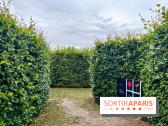
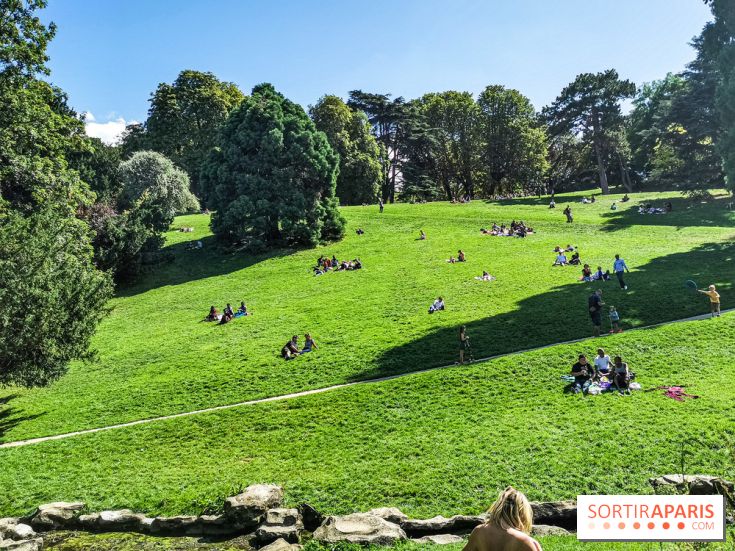
Along the paths of the campus gardens, a discreet orchard brings together pear trees, apple trees, plum trees and cherry trees of heirloom varieties, as well as many berries suited to our region. This space was conceived within a teaching framework with the aim of a greener campus.
On this stroll, discover the campus arboretum and its orchards. Learn how these spaces are designed, tested and transformed to imagine landscapes that are both useful, sustainable... and delicious.
Places are limited. Registration on site on 10/10 from 2 p.m.
Participation requirements:
• Target audiences: 3–6 years, 6–11, 11–15, 15–18, 18–25, 25 years and up
• Admission: Free
Schedule: Saturday, October 10 — 2:30 PM to 3:00 PM
Saturday, October 10 — 3:15 PM to 3:45 PM
Saturday, October 10 — 4:00 PM to 4:30 PM
Saturday, October 10 — 4:45 PM to 5:15 PM
Warning: fragile ground!
A frozen mass that freezes, thaws, refreezes… and finally gives way. It’s also what happens beneath our feet in the world’s cold regions. As climate change intensifies, frozen soils are subjected to more frequent freeze–thaw cycles. The ice melts, the ground weakens, and the infrastructures built on it—roads, buildings, foundations—are at risk. Understanding and forecasting these processes is a major challenge for engineers worldwide.
Limited seats. On-site registration on 10/10 from 2 p.m.
Participation requirements :
Target audiences : 6 - 11 years, 11 - 15 years, 15 - 18 years, 18 - 25 years, 25 years and up
Conditions : Free admission
Schedule: Saturday, October 10 — 2:30 PM to 3:00 PM
Saturday, October 10 — 3:15 PM to 3:45 PM
Saturday, October 10 — 4:00 PM to 4:30 PM
Saturday, October 10 — 4:45 PM to 5:15 PM
A Curious Walk and a Rainy Snack
Have you ever paused to watch the rain—not just endure it or wait for it, but observe it—from under the clouds, along wet paths, or on the surface of rivers or the sea? This scientific stroll invites you to rediscover a daily phenomenon often overlooked, through a photographic exhibit drawn from ordinary scenes.
Extend the experience with a “rainy-tasting” session. In the form of short, interactive food-related activities, you’ll explore, in practical and accessible terms, the size of raindrops, their distribution, and how rainfall varies over time.
A sensitive, interactive encounter between science, observation, and pleasure, to better understand rain… and savor it.
> Limited places. On-site registration on 10/10 from 2 p.m.
Participation requirements:
• Target audiences: 6–11 years, 11–15 years, 15–18 years, 18–25 years, 25 years and up
• Conditions: Free admission
Schedule: Saturday, October 10 — 2:30 p.m. to 3:00 p.m.
Saturday, October 10 — 3:15 p.m. to 3:45 p.m.
Saturday, October 10 — 4:00 p.m. to 4:30 p.m.
Saturday, October 10 — 4:45 p.m. to 5:15 p.m.
Things are frothing in the kitchen!
What do a chocolate mousse, beer foam, and cappuccino foam have in common? Behind these airy textures lies a complex physics of bubbles, air, liquids, and evolving structures. Through hands-on demonstrations, this lab tour invites you to plunge into the world of foams: how they form, how they “mature” over time, and how you can steer them.
> Places are limited. On-site registration on 10/10 from 2:00 PM.
Participation requirements:
• Target audiences: 6–11 years, 11–15 years, 15–18 years, 18–25 years, 25 years and up
• Conditions: Free admission
Schedule: Saturday, October 10 — 2:30 PM to 3:00 PM
Saturday, October 10 — 3:15 PM to 3:45 PM
Saturday, October 10 — 4:00 PM to 4:30 PM
Saturday, October 10 — 4:45 PM to 5:15 PM
Levitation over the Fermi Sea: a superconductivity experiment
Superconductivity is a fascinating phenomenon discovered more than a century ago. Superconducting materials carry electric current with zero loss and float above magnets. Scientists study them to unlock their mysteries, and engineers use them to build some of the world’s fastest magnetic-llevitation trains (Maglev) and medical imaging devices (MRI). This workshop will showcase a tiny levitating train and a nearly perpetual-motion balance, inviting you into the captivating realm of quantum mechanics.
Participation requirements:
• Target audiences: 3-6 years, 6-11 years, 11-15 years, 15-18 years, 18-25 years, 25 years and up
• Conditions: Free admission
Hours: Saturday, October 10 — 2:00 p.m. to 6:00 p.m.
Between Two Waters
With climate change, an increasing number of weather events can make river levels unpredictable. How do you stay in control? Welcome to a strategic game where every decision counts. Your goal: keep the river in balance. It must neither overflow nor dry up!
Take command of your hydro dam and adapt to Nature’s disturbances. Turn by turn, test your strategies, adjust your decisions, and score points by making the right choices grounded in mathematics. Can you keep the river under control? Your move—and beware of floods.
Participation requirements :
• Target audiences : 6–11 years, 11–15 years, 15–18 years, 18–25 years, 25 years and up
• Conditions : Free admission
Hours: Saturday, October 10 — 2:00 p.m. to 6:00 p.m.
When the ground shakes our homes!
Some clay soils hide a striking quirk: they swell as they soak up water and shrink during dry spells. These invisible cycles, driven by moisture swings, can nonetheless leave obvious marks on the buildings perched above them. In France, more than half of homes are affected by this phenomenon!
Through samples and simple experiments, this workshop invites you to uncover the surprising behavior of clays: how they react to water, why their volume changes, and how that can undermine structures. Come observe, handle, and grasp the scientific challenges behind protecting our homes from the impacts of drought and climate change.
Participation requirements :
• Target audiences : 3–6 years, 6–11 years, 11–15 years, 15–18 years, 18–25 years, 25 years and up
• Conditions : Free admission
Hours: Saturday, October 10 — 2:00 PM to 6:00 PM
Print to Eat
Discover the basics of 3D printing, now in a food-friendly version. The difference? Instead of plastic, food printers work with edible substances in paste or puree form. Before dreaming of culinary printing, come to this stand to understand how a 3D printer operates. Then the experimentation begins: just like a food printer, everyone mimics the machine’s movements by depositing material layer by layer. A playful, delicious approach.
Participation requirements :
• Target audiences : 3–6 years, 6–11 years, 11–15 years, 15–18 years, 18–25 years, 25 years and up
• Conditions : Free admission
Hours: Saturday, October 10 — 2:00 PM to 6:00 PM
In the shadow of the signs
Alert! An extreme heat wave is threatening the crops of Champs-sur-Marne... The sun is scorching everything in its path, and if we do nothing, famine could follow. We need your help to secure our survival. Your mission, should you choose to accept it: save the harvest before it’s too late. To beat the sun, steer the smart solar panels to shield your plants. Can you strike the right balance between shade and light?
At this stand dedicated to agrivoltaics, discover the solutions of tomorrow for farming differently and fighting climate change.
Participation guidelines:
• Target audiences: 3–6 years, 6–11 years, 11–15 years, 15–18 years, 18–25 years, 25 years and up
• Conditions: Free admission
Schedule: Saturday, October 10 — 2:00 PM to 6:00 PM
When the mayonnaise comes together… or not!
Whisk the egg yolk with a pinch of salt, pepper, mustard and vinegar. Beat in the oil gradually to build a mayonnaise. Mayonnaise is a perfect example of an emulsion, that is, a mixture of two substances that normally don’t mix. Its formation and stability depend on many physical and chemical parameters. Used since Antiquity, it was only at the beginning of the 20th century that scientists began to study them in depth. Since then, understanding and applications have expanded greatly. Through this workshop, you’ll explore the mechanisms that drive emulsion formation, as well as their stability, characterization and control. You’ll also encounter less ordinary emulsions, such as transparent emulsions, which open interesting prospects in formulation and research.
> Places limited. On-site registration on 10/10 from 2:00 p.m.
Participation requirements:
• Target audiences: 6–11 years, 11–15 years, 15–18 years, 18–25 years, 25 years and up
• Conditions: Free admission
Schedule: Saturday, October 10 — 2:30 PM to 3:00 PM
Saturday, October 10 — 3:15 PM to 3:45 PM
Saturday, October 10 — 4:00 PM to 4:30 PM
Offshore wind: can you keep the momentum?
Offshore wind turbines generate valuable renewable energy, but they operate under extreme conditions: storms, heavy seas, breakdowns. Repairing them isn’t always possible, and every failure can mean a significant dip in power output.
How do you select reliable installations without blowing the budget? Should you invest more up front or accept a higher risk of downtime? Where should maintenance bases be located? These are the kinds of decisions researchers are trying to optimize.
In this workshop, step into the shoes of an offshore wind farm manager. By making smart investment and maintenance choices, aim to maximize electricity production despite the uncertainties. A playful way to discover how mathematics and optimization help meet the challenges of the energy transition.
Participation conditions :
• Target audiences : 6–11 years, 11–15 years, 15–18 years, 18–25 years, 25+ years
• Requirements : Free admission
Schedule: Saturday, October 10 — 2:00 PM to 6:00 PM
Diving into the heart of the waves: exploring the swell channel.
Studying waves in the lab is possible! To do this, scientists use a wave flume, inviting the public to explore it in this workshop. With this setup, visitors will learn how researchers design and test different coastal-structure options to reduce wave overtopping. By watching how waves interact with various wall types in the wave channel, they can compare their effectiveness and gain a better understanding of the solutions being considered to protect shorelines.
Participation requirements:
• Eligible audiences: 6 - 11 years, 11 - 15 years, 15 - 18 years, 18 - 25 years, 25 years and up
• Conditions: Free admission
Schedule: Saturday, October 10 — 2:30 PM to 3:00 PM
Saturday, October 10 — 3:15 PM to 3:45 PM
Saturday, October 10 — 4:00 PM to 4:30 PM
Saturday, October 10 — 4:45 PM to 5:15 PM
From the sewers to the fields: turning human waste into fertilizer.
In the 19th century, with the urban explosion of the Paris metropolitan area, a major question emerges: what to do with human waste? At that time, to address both public health and the feeding of city dwellers, some engineers proposed turning it into fertilizer useful for agriculture. It was the golden age of excrement recycling, both in the form of waste products and sewage spread on fields downstream from the capital. In the 20th century, these practices evolved: the expansion of sewers and the development of artificial fertilizers made these recycling forms obsolete and increasingly difficult. Gradually, they tended to disappear.
Today, through the lens of the environmental crisis, these issues are being reconsidered by researchers like those in the OCAPI program, who work on recycling materials from domestic use and their agronomic valorization.
Through archival school documents and newer research objects, discover how ideas circulate across eras. From early engineers’ projects to current research: how can we transform our organic waste into resources?
Places are limited. On-site registration on 10/10 from 2 p.m.
Participation requirements:
• Target audiences: 6–11 years, 11–15 years, 15–18 years, 18–25 years, 25 years and up
• Conditions: Free admission
Schedule: Saturday, October 10 — 2:30 PM to 3:00 PM
Saturday, October 10 — 3:15 PM to 3:45 PM
Saturday, October 10 — 4:00 PM to 4:30 PM
Saturday, October 10 — 4:45 PM to 5:15 PM
Under Pressure: The Secrets Behind Stone Bridges
Stone bridges, so common in our landscapes, look solid, but they are also highly sensitive to their surroundings. A flood, ground movement, or settlement of the foundations can upset their balance and, at times, compromise their integrity.
In this workshop, scale models inspired by real structures are put to the test. The real-world constraints these structures face are reproduced: shifting supports, increasing loads, and progressive imbalances. It becomes possible to observe how the bridge responds, how the stresses distribute, and how the structure deforms. How far can it go before giving way?
To complement these observations, sensors and imaging tools track movements invisible to the naked eye. All of these findings feed into numerical models—computer simulations—that allow these scenarios to be replayed and enable better predictions of how bridges will behave under extreme conditions.
Participation requirements:
• Target audiences: 6–11 years, 11–15 years, 15–18 years, 18–25 years, 25 years and up
• Conditions: Free admission
Hours: Saturday, October 10 — 2:00 PM to 6:00 PM
On the same wavelength
Talk, move, listen… and observe in a different way. Under your feet, the ground shakes. All around you, everything resonates. Behind every sound and every movement lie the same physical laws as the waves generated by earthquakes. At this exhibit, visualize these vibrations by triggering them yourself through a series of playful, hands-on experiments. All these sensations will help you understand how researchers and engineers harness these principles to detect damage in structures and safeguard our buildings against earthquakes.
Participation requirements:
• Target audiences: 6–11, 11–15, 15–18, 18–25, 25 and up
• Conditions: Free admission
Hours: Saturday, October 10 — 2:00 PM to 6:00 PM
The optimal tour
Every morning, the cafés across Champs-sur-Marne await their delivery of pain au chocolat. Eager to delight their customers, they source them from the town’s bakeries. No extra delivery fees allowed. To trim their travel time, help them find the shortest route. And to make matters more complicated, a thief has been disrupting deliveries in recent days. How can you forecast his trajectory and intercept him to enjoy your breakfast? These everyday scenarios lie at the heart of many scientific and technological challenges. At this stand, have fun solving optimization problems using advanced numerical methods.
Participation requirements:
• Intended audiences: 3–6 years, 6–11 years, 11–15 years, 15–18 years, 18–25 years, 25 years and up
• Conditions: Free admission
Hours: Saturday, October 10 — 2:00 PM to 6:00 PM
These 'beads' that melt or burst in your mouth
Behind these small, light spheres lies an astonishing structure: a gas trapped inside a thin liquid shell studded with solid particles like cocoa powder or cinnamon. These gas marbles boast surprising stability thanks to the cohesive effect of their envelope. Through demonstrations, this stand invites you to discover these fascinating objects: how they form, how they can endure the test of time or handling, and the new sensations they can offer on the palate.
Participation requirements:
• Target audiences: 3 - 6 years, 6 - 11 years, 11 - 15 years, 15 - 18 years, 18 - 25 years, 25 years and up
• Conditions: Free admission
Hours: Saturday, October 10 — 2:00 p.m. to 6:00 p.m.
Musical Tale: The Greatest Wealth in the World
Through an original musical tale imagined by La Cour des Contes for the National School of Bridges and Roads, children will follow the astonishing journey of phosphorus, nitrogen and other elements essential to life. Inspired by the OCAPI program's research, this poetic show, accessible from age 6, blends storytelling, music and imagination to shed light on how materials we often deem waste can, through natural cycles, become valuable resources for soils, crops and ecosystems. A touching journey designed to spark scientific and ecological curiosity in the youngest audiences.
Free admission, subject to availability.
Participation criteria:
• Target audience: 6–11 years, 11–15 years, 15–18 years, 18–25 years, 25 years and over
• Conditions: Free admission
Schedule: Saturday, October 10 — 3:10 p.m. to 3:45 p.m.
Crops and solar panels: a winning duo?
What if solar panels could also shield our crops? That’s the premise of agrivoltaics: merging farming with solar power on the same footprint. The idea is to generate electricity while creating a protective microclimate for plants against heat, drought, or strong winds. But not all pairings are created equal! The layout of the panels, the crop type, the soil, the climate… so many variables to weigh in order to strike the right balance. Your move: put together the right crops with the right panel configurations. Can you find the winning combination?
Participation requirements:
• Target audiences: 3–6 years, 6–11 years, 11–15 years, 15–18 years, 18–25 years, 25 years and up
• Entry: Free admission
Hours: Saturday, October 10 — 2:00 PM to 6:00 PM
Dates and Opening Time
On October 11, 2025
Location
Ecole des Ponts Paristech
8 Avenue Blaise Pascal
77420 Champs sur Marne
Route planner
Prices
Free
Official website
ecoledesponts.fr




 Science Festival 2026: Free activities program in Paris and Île-de-France