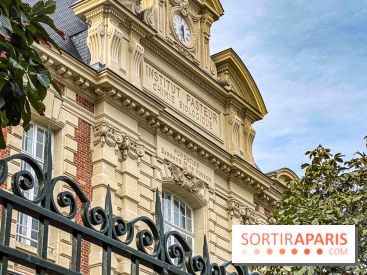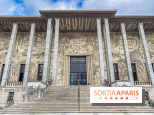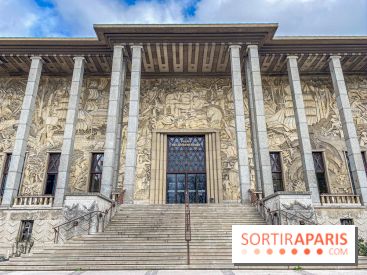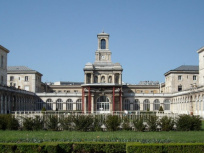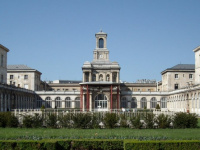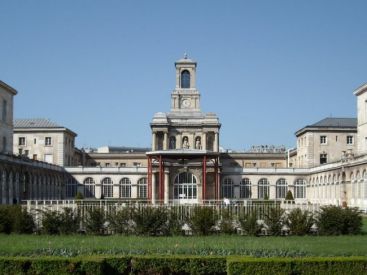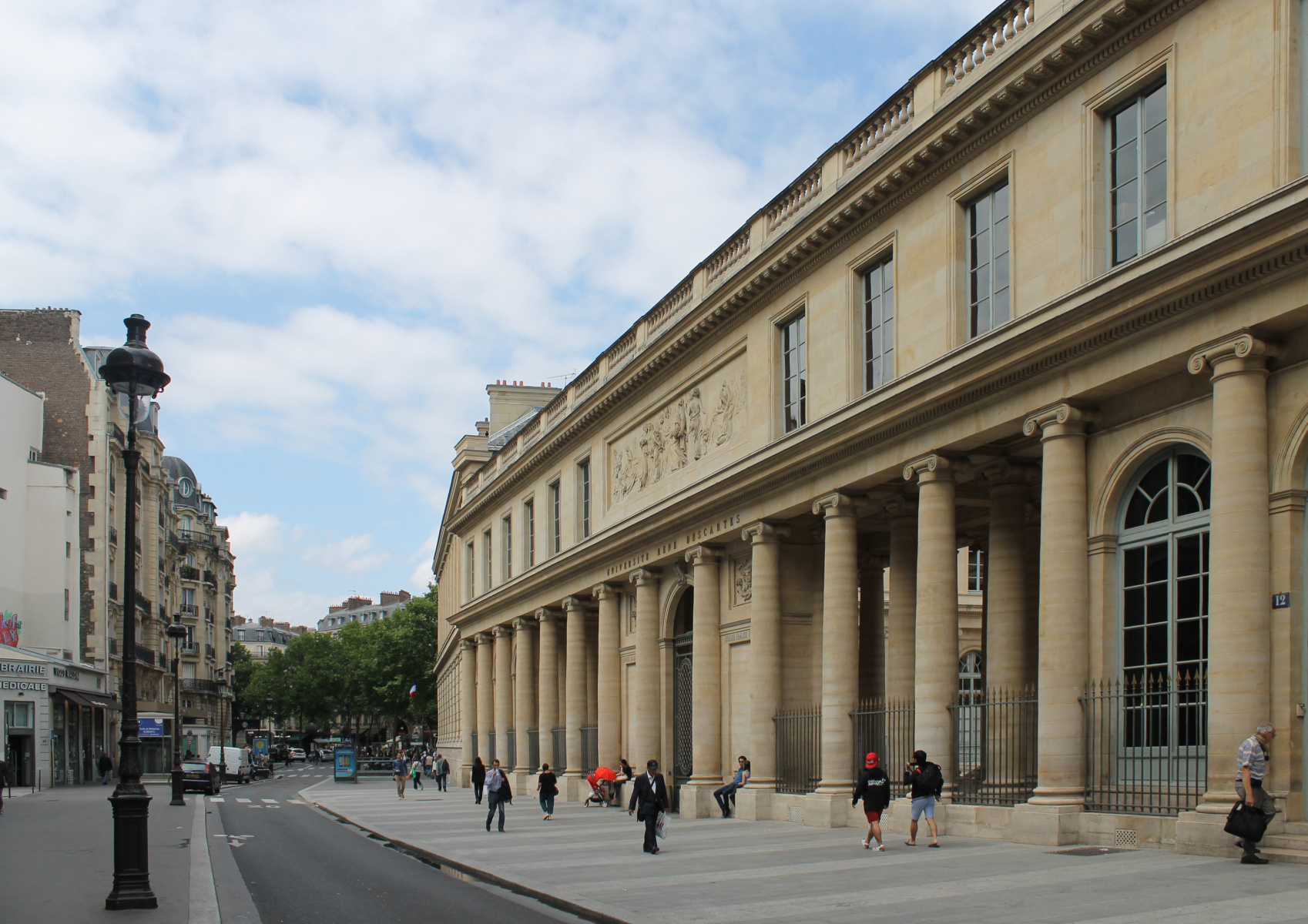
Every year, the Science Festival gives the public a chance to meet the players in research and to better understand today’s major scientific issues. In Paris, Paris Cité University teams up with this national event by opening the doors of the Institute of Geophysics of Paris (IPGP), in the 5th arrondissement.
The 2026 edition runs from Thursday, October 8 to Saturday, October 10. The 8 and 9 October are mainly devoted to welcoming school groups by reservation, while Saturday, October 10, from 10 a.m. to 6 p.m., the site is open to the general public.
This year’s theme spotlights the geosciences, with a program devoted to the Earth, the planets, the environment and natural phenomena. Visitors will get a front-row look at researchers’ work through interactive workshops, hands-on experiments, lectures, meet-and-greets, and science demonstrations tailored to different ages.
The aim of this day is to make science accessible to as many people as possible. Families, children, students and adults will have the chance to talk directly with the IPGP research teams and gain a clearer understanding of how scientists study earthquakes, volcanoes, the oceans, the climate, or the origins of the solar system.
One of France's leading geoscience research centers, the Paris Institute of Geophysics (IPG) is a component of Université Paris Cité and affiliated with the CNRS. It brings together over 500 researchers, engineers, educators and technical staff. Its research covers the Earth’s interior and planetary bodies, natural hazards, the functioning of the Earth system, and the origins of our planet. The institute also monitors France’s active volcanoes overseas and participates in numerous international scientific missions.
All the activities on offer as part of the Science Festival 2026 are free.
Dating
Step into Marie Curie’s shoes, and visitors discover isotopic dating and characterization techniques that place the bone in time. The second act of the investigation, at the crossroads of physics and geology.
This workshop is the second in a series of three workshops, “Tracing the mysterious bone: a playful science investigation.”
Participants must complete all three workshops in sequence.
Participation requirements :
• Eligible audiences : 6 - 11 years, 11 - 15 years, 15 - 18 years
• Entry : Free admission
Hours: Saturday, October 10 – 10:00 AM to 6:00 PM
Tracing the origins of the planets through meteorites
How did the planets come into being more than 4.5 billion years ago? Through the discovery of meteorites, the oldest rocks in the Solar System, and lunar fragments, this workshop invites you to piece together our cosmic history and the origins of the Earth.
Participation criteria:
• Target audiences: 6–11 years, 11–15 years
• Admission: Free
Hours: Saturday, October 10 — 10:00 to 18:00
Oceans of magma hovering in midair!
60 million years after the start of its formation, the proto-Earth endures such a violent impact that it ends up partially molten. As the debris gradually coalesces under gravity to give birth to the Moon, Earth falls into a phase of extreme turbulence, a time when a colossal ocean of magma blankets its surface. Yet it is precisely during this phase that Earth differentiates, forming a metallic core at its center, surrounded by a silicate mantle.
This workshop reproduces in the lab a tiny magma ocean using an experimental setup that keeps a small molten bead, representing the primitive Earth's composition, levitating via coupling with a laser heating system. You’ll also encounter the suite of high-pressure, high-temperature experimental devices developed by the team, which allow researchers to simulate in the laboratory the conditions under which planets form.
Participation requirements:
• Target audiences: 6–11 years, 11–15 years, 15–18 years, 18–25 years
• Conditions: Free admission
Hours: Saturday, October 10 — 10:00 AM to 5:00 PM
When citizens lend a hand in investigating tap water
Interactive stand on the nanoTAP project (CNRS Innovation). Visitors explore nanoparticles in tap water via a Paris map, a true/false quiz, a hands-on filter activity, and a wheel of elements (Fe, Cu, Pb, …). The workshop also offers the option to sign up as a volunteer for the sampling campaign.
Participation criteria:
• Target audiences: 6–11 years, 11–15 years, 15–18 years
• Conditions: Free admission
Hours: Saturday, October 10 — 10:00 a.m. to 6:00 p.m.
The mountains have a hold on you!
Using a clever setup made from boxes and sand, you’ll learn how mountain ranges form—and the different stages of their evolution.
Participation conditions :
• Target audiences : 6–11 years, 11–15 years, 15–18 years
• Requirements : Booking recommended
Hours: Saturday, October 10 — 10:00 AM to 6:00 PM
Science Festival at the Paris Institute of Geophysics — 2026
The Institute of Geophysics of Paris (IPGP) is a world-renowned geoscience research center, founded in 1921. Affiliated with CNRS and a constituent institution of Université Paris Cité, it brings together more than 500 staff and covers all Earth, planetary, and environmental science disciplines.
Research themes are organized around four unifying pillars: the interiors of the Earth and the planets, natural hazards, the Earth system, and origins.
IPGP runs officially certified observation services in volcanology, seismology, magnetism, gravimetry, and erosion. Its permanent observatories monitor the four active French overseas volcanoes (Guadeloupe, Martinique, La Réunion, Mayotte).
EDITION 2026
Dates: 8 – 10 October 2026
School days: Thursday 8 and Friday 9 October — by reservation
Public day: Saturday 10 October — free entry, 10 a.m. – 6 p.m.
Location: IPGP — 1 rue Jussieu, 75005 Paris
Target number of workshops: 10 to 15
Expected audience: around 1,000 visitors
Participation requirements:
Target audiences: 6–11, 11–15, 15–18, 18–25, 25 and up
Admission: Free admission
Hours: Saturday, October 10 — 9:00 am to 6:00 pm
Paleomagnetism & Paleoenvironments
Frederic Fluteau guides visitors in interpreting paleomagnetic and palaeoenvironmental data that help reconstruct the geological context of the bone. The third and final act, rooted in contemporary geology.
This workshop is the third in the series of three workshops "In the Footsteps of the Mysterious Bone: a playful-scientific inquiry."
The three workshops must be completed in sequence.
Participation criteria:
• Target audiences: 6–11 years, 11–15 years, 15–18 years
• Requirements: Free admission
Hours: Saturday, 10 October — 10:00 to 18:00
Comparative Anatomy
Through the lens of Georges Cuvier, visitors delve into comparative anatomy and 18th-century naturalist methods to identify a mysterious bone. The opening act of an inquiry spanning two centuries of geology.
This workshop kicks off a trilogy of sessions titled "In the Footsteps of the Mysterious Bone: A Playful-Scientific Investigation."
All three workshops must be completed back-to-back.
Participation requirements:
• Target audiences: 6–11 years, 11–15 years, 15–18 years
• Conditions: Free admission
Hours: Saturday, October 10 — 10:00 a.m. to 6:00 p.m.
The primordial oceans and the earliest traces of life on Earth
Conference on the origins of life in Earth's primordial oceans and the geochemical and isotopic tools used to study them. An additional workshop with the Stable Isotopes team will give visitors hands-on access to manipulate and directly observe traces of these vanished environments.
Participation requirements:
• Target audiences: 6–11 years, 11–15 years, 15–18 years
• Conditions: Free admission
Hours: Saturday, October 10 — 10:00 a.m. to 6:00 p.m.
Small and big earthquakes, from the oceans to the great fault lines
In this workshop, you’ll discover how scientists collect data from around the world to study earthquakes. You’ll watch a simulation of an earthquake, and explore other captivating mysteries, such as the oceans’ seismic hum.
Participation requirements:
• Target audiences: 6–11, 11–15, 15–18
• Conditions: Free admission
Hours: Saturday, October 10 — 9:00 AM to 6:00 PM
Exploring the Solar System in Virtual Reality
Glide over Titan's hydrocarbon lakes, roam its dunes, and watch Saturn rise in the sky… Glide over Mars' dunes, take control of Curiosity, or come listen to Mars tremble with the SEIS seismometer from the InSight mission!
Participation requirements:
• Target audiences: 11–15, 15–18, 18–25, 25 and over
• Conditions: Free admission
Opening hours: Saturday, October 10 — 10:00 AM to 6:00 PM
This page may contain AI-assisted elements, more information here.
Dates and Opening Time
From October 8, 2026 to October 10, 2026
Location
Université Paris Cité
45 Rue des Saints-Pères
75006 Paris 6
Route planner
Accessibility info
Access
Metro line 4 "Saint-Germaine-des-Prés" station
Prices
Free
Official website
u-paris.fr