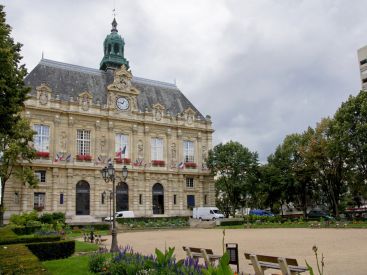
Want to explore the mysteries of science right in the heart of Essonne? From October 2 to 12, 2026, the Fête de la Science is sweeping across France, including Orsay in Essonne, under the theme "Smart Flavors". This free, open-to-all event combines interactive workshops, exhibitions, talks, lab tours and encounters with researchers.
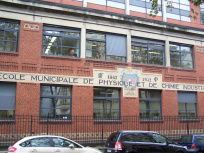
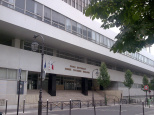
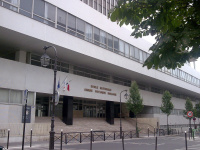
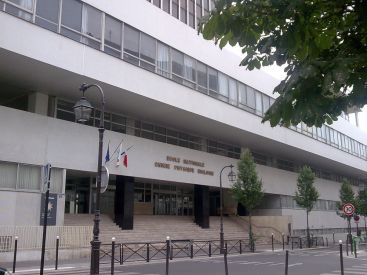
Orsay isn’t a place chosen at random: it’s a historic cradle of research in France. The Faculty of Sciences of Orsay (Université Paris-Saclay) has, for decades, covered the major disciplines—mathematics, computer science, physics, chemistry, biology, and Earth sciences—and now hosts about 8,000 students from undergraduate to doctoral levels. The Launay Campus, the Laboratory for Linear Accelerator (LAL), the Institute of Nuclear Physics of Orsay (IPN), the Aimé-CCotton Laboratory, and the Institute of Space Astrophysics all stand as markers of cutting-edge research programs. Since the 1950s-60s, a portion of the teaching and laboratories of the Faculty of Sciences of Paris shifted to the southern edge of Paris, giving birth to a dense, innovative scientific city.
Joining the Science Festival in Orsay means immersing yourself in a world where heritage, research and innovation come together in an exceptional setting. Visitors will have a unique opportunity to explore renowned laboratories, chat with scientists advancing the frontiers of knowledge, and try hands-on experiences with family or friends on the big questions of tomorrow, notably artificial intelligence and multiple intelligences.
With free and varied activities (workshops, an escape room, astronomical observations, public talks), the experience is playful, educational, and inspiring. Moreover, Orsay embodies the history of science in France: its buildings, institutions, and researchers tell a scientific saga that remains very much alive. In short, if you’re curious, the Fête de la Science in Orsay is a date to mark on your calendar!
ICP
Escape room "Mission Fébétron"
You find yourself in the 1980s, in the radiation physico-chemical laboratory. Jacqueline Belloni’s team, renowned for radiolysis techniques, operates an electron accelerator known as the Febetron. Their work has dramatically boosted the sensitivity of photographic emulsions, a breakthrough that has caught the eye of AGFA-Gevaert. Their representatives are set to attend a demonstration. They arrive in an hour, but the team is nowhere to be found… the Febetron must be fired up immediately! Can you rise to the challenge and salvage this demonstration that’s already off to a rocky start?
Participation requirements:
• Target audiences: 11–15 years, 15–18 years, 18–25 years, 25 and older
• Conditions: Prior reservation required
Schedule: Sunday, October 4 — 12:00–13:15
Sunday, October 4 — 13:40–14:55
Sunday, October 4 — 15:15–16:30
IDRIS
Meet one of Europe’s most powerful supercomputers
The unusual tour will begin with an introductory briefing, followed by a closer look at the Jean Zay supercomputer. Jean Zay is a key tool for French scientific research. Interactive activities will let the public discover the capabilities of a supercomputer and its concrete applications in high-performance computing (HPC) and AI.
Participation terms:
• Target audiences : 11–15, 15–18, 18–25, 25 and up
• Requirements : Booking required
Hours: Friday, October 9 — 5:30 PM to 7:30 PM
Saturday, October 10 — 10:00 AM to 12:00 PM
Take a behind-the-scenes look at a state-of-the-art supercomputer
With the IDRIS teams and hands-on activities, you’ll discover how a supercomputer works and its real-world applications. This unusual tour will plunge you into the world of Jean Zay, a supercomputer dedicated to high-performance computing and AI. The program includes an overview, a behind-the-scenes look at the machine room, and its cooling system.
Participation requirements:
• Target audiences: 11–15 years, 15–18 years, 18–25 years, 25 years and up
• Conditions: Reservation required
Hours: Saturday, October 10 — 2:00 PM to 4:30 PM
Saturday, October 10 — 3:15 PM to 5:45 PM
Institute of Space Astrophysics
Explore the world of space astrophysics
Attend public lectures on current scientific topics that illustrate how research shapes our understanding of the world: 14:30-15:00 – The dynamics of the Sun and stars 15:10-15:40 – Mars exploration: what challenges lie ahead in the coming decades? 15:50-16:20 – Studying extraterrestrial matter in the lab: a window into the history of our Solar System 16:30-17:00 – The birth of stars and planets viewed through JWST 17:10 – 17:40 – Cosmology: Euclid era
Science mediation games – astrophysics made playful:
Students and researchers unveil playful creations to help explore concepts related to planets, stars, and interactions in Space. A unique opportunity to test these prototypes and share your feedback with their creators.
For example, a card game illustrating surprising links between astrophysics and food will show how scientists juggle with culinary metaphors.
Workshops: Make your own spectroscope to analyze light Observations of the Sun: what mood is our Sun in today! (free access) Pilot Perseverance, the Martian rover. For younger participants, groups of 6 children at 14:00, 14:30, 15:00, 15:30, 16:00, 16:30, 17:00, 17:30 Virtual voyages in the Solar System to Mars, a comet, or Jupiter (starting at reception, in front of Building 121). In groups of 5 people at 14:00, 14:30, 15:00, 15:30, 16:00, 16:30, 17:00, 17:30 Virtual trip to the Sun. In groups of 6 people at 14:00, 14:30, 15:00, 15:30, 16:00, 16:30, 17:00, 17:30
Visit to the calibration station
(departure at the reception, in front of Building 121)
Presentation of the main experimental hall (space-environment calibration of instruments before they are launched) – by groups of 15 people at 14:30, 15:00, 16:00, 16:30, 17:00, 17:30
Presentation of entertaining experiments: the misadventures of Mr. Balloon, the cryogenic still, the plutonian ice cube. By groups of 15 people at 14:30, 15:30, 16:30
Participation conditions:
• Target audiences: 6–11 years, 11–15 years, 15–18 years, 18–25 years, 25 years and older
• Conditions: Free admission
Hours: Sunday, October 4 — 2:00 PM to 6:00 PM
Institute of Molecular Chemistry
Fun Chemistry
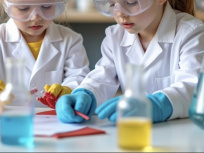
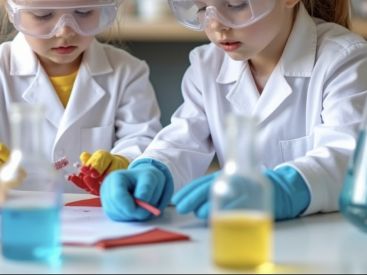
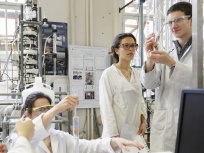
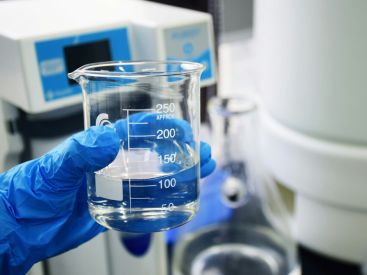
Discover chemistry through a series of surprising, colorful experiments. You can carry out chemistry right at home using everyday items.
Small, striking experiments in color:
– Red cabbage juice (an acid/base demonstration)
– Sweet and salty (modeling a crystal with candies)
– Invisible ink (making ink disappear and reappear in water)
– Separating marker colors (the paper chromatography principle)
Participation requirements:
• Target audiences: 3–6 years, 6–11 years, 11–15 years, 15–18 years, 18–25 years, 25+ years
• Admission: Free
Hours: Sunday, October 4 — 1:30 PM to 5:30 PM
Escape room at ICMMO
During the open house at the local high school, the physics–chemistry teacher left you alone in his lab. But the door slammed shut and got stuck!
You’ve got nothing: no phone. Shouting won’t help—no one will hear you! »
Come solve the puzzles… time is running out…
5 children maximum + 1 to 3 parents per session
Participation requirements:
• Target audiences: 11–15 years, 15–18 years, 18–25 years, 25 years and up
• Conditions: Booking required
Schedule: Sunday, October 4 — 1:45 PM to 2:45 PM
Sunday, October 4 — 3:00 PM to 4:00 PM
Sunday, October 4 — 3:15 PM to 4:15 PM
Sunday, October 4 — 4:30 PM to 5:30 PM
Galien Institute
Pharma in all its guises!
Hidden in the everyday foods we eat are a host of chemical and biological phenomena that also drive drug development.
Scientists at the Galien Paris-Saclay Institute study these mechanisms to design new pharmaceutical forms that are more effective and better suited to patients.
During this session, discover, through four hands-on workshops inspired by both food science and pharmaceutical research, how chemistry and biology illuminate everyday phenomena. Workshop 1: When chemistry bubbles: the secret of effervescent tablets Workshop 2: When algae turn into pearls Workshop 3: Emulsions and surfactants Workshop 4: Extraction of fruit DNA
Participation criteria:
• Target audiences: 6–11 years, 11–15 years, 15–18 years, 18–25 years, 25 years and older
• Entry requirements: Free admission
Hours: Sunday, October 4 — 2:00 PM to 5:30 PM
Solid-State Physics Laboratory
Seeing atoms with your own eyes
Step into a one-of-a-kind platform and discover how researchers probe the infinitely small. With a cutting-edge microscope, you’ll marvel at astonishing images, learn how we “see” the invisible, and try out the tools that reveal the inner structure of materials.
Participation requirements:
• Target audiences: 11–15 years, 15–18 years, 18–25 years, 25+ years
• Conditions: Booking required
Times: Wednesday, October 14 — 2:30–3:30 PM
Wednesday, October 14 — 3:30–4:30 PM
Dive into research: hands-on workshops and experiments for everyone at the LPS
Experience physics “in real life” through hands-on experiments and visits to science platforms. Explore the research conducted in the lab on condensed matter physics, magnetism, and soft matter.
Join interactive workshops open to all: Create giant bubbles to explore the properties of soft matter. Delve into magnetism with playful experiments. Relive the famous graphene experiment that earned a Nobel Prize.
For the youngest visitors, a dedicated discovery space will let them dive into science in a fun, engaging way.
Exhibition:
Enjoy the interactive scientific exhibition “Voyage into the Invisible – Manipulating Matter.” Discover how solid-state physics works, explore matter at different scales, and manipulate it through experiments and devices designed for both kids and adults.
Participation conditions:
• Target audiences: 6–11, 11–15, 15–18, 18–25, 25 and up
• Conditions: Free admission
Hours: Sunday, October 4 — 2:00 PM to 5:30 PM
The Deck
Eurêkartes - How to Protect Crops?
On Thursday, October 8 at 7:00 p.m., head to the Le Deck game bar for an evening that blends a mini-science talk with board games!
As part of the 2026 Science Festival, Eurêkartes hosts a short lecture by Ivan Le Masson, a research engineer at INRAE. He’ll outline his work on using plants to protect crops on the Saclay plateau from harmful insects. After the talk, enjoy a curated selection of board games to keep the conversation going.
A great opportunity to chat with a scientist and explore science through play!
Registration recommended.
Purchases of food and drinks required.
Participation requirements:
• Target audiences: 18–25 years old, 25+
• Conditions: Free admission
Schedules: Thursday, October 8 — 7:00 p.m. to 8:30 p.m.
Science education and outreach center
House for Science Initiation and Awareness (MISS)
Workshops at the House for Initiation and Awareness of Science:
1-2-3 Calculate: Discover the history of mechanical calculating machines; Learn to count with an abacus; Perform operations on crank- or lever-operated machines; Understand how the slide rule works; Use systems with grooves or gears with a variable number of teeth
The Smartwatch:
Carry out small, simple, hands-on experiments to illustrate some features of a connected watch, such as GPS, movement analysis, heart rate, ... This activity was designed by students from Université Paris-Saclay, who will be on site to welcome the public.
Participation conditions:
• Target audiences: 6–11 years, 11–15 years, 15–18 years, 18–25 years, 25 years and up
• Conditions: Free admission
Hours: Sunday, October 4 — 2:00 PM to 5:08 PM
Mondetour Media Library
Chocolate: pleasures and health benefits
Do you love chocolate? Discover its origins, the varieties out there, and, above all, its health benefits. Learn how to include it in a balanced diet without overdoing it, and how to spot quality chocolate.
Participation conditions:
• Target audiences: 6 to 11 years
• Requirements: Booking required
Hours: Wednesday, September 30 — 3:00 PM to 4:00 PM
Georges Brassens Media Library
Exploring artificial intelligences
Challenge yourself to separate what counts as AI from what doesn’t. The workshop also questions whether an AI can truly “understand” what it does, inviting a critical perspective on digital technologies and prompting an initial reflection on how AI is used and where its limitations lie.
Participation requirements:
• Target audience: 6–11 years old
• Conditions: Reservation required
Schedule: Wednesday, October 7 - 2:00 PM to 3:00 PM
Wednesday, October 7 - 4:00 PM to 5:00 PM
The Environmental Footprint of Artificial Intelligence
Digital technology is frequently heralded as a route to cutting our greenhouse gas emissions. During this conference, weigh this notion by examining the environmental impacts of digital tech, including generative AI.
Participation requirements:
• Target audiences: 18–25, 25 and up
• Entry: Free admission
Schedule: Saturday, October 10 — 4:00 PM to 5:30 PM
Mineralogy Museum
The beauty of the mineral world!
Minerals like you've never seen them before! Minerals are mined by humans and are an integral part of our daily lives. Yet the mineral world and mineralogy remain a fairly unfamiliar scientific field. The Department of Earth Sciences and the Géosciences Paris-Saclay laboratory (GEOPS) present the exhibition “The Beauty of the Mineral World,” offering visitors a spectacular display of numerous mineral and rock samples. Explore this collection on your own or with a guided tour.
Participation requirements:
• Target audiences: 3–6 years, 6–11 years, 11–15 years, 15–18 years, 18–25 years, 25+ years
• Conditions: Free admission
Schedule: Sunday, October 4 — 2:00 PM to 6:00 PM
Universe Science Observatory
The Universe at Your Fingertips
On the agenda for this day:
Conferences: 2:30-3:00 PM: "The role of observation in our scientific fields" with Marc Ollivier (astronomer at the Space Astrophysics Institute) 3:10-3:40 PM: "How to observe the invisible in astronomy: application to microquasars" with Jérôme Rodriguez (director of OSUPS) 3:50-4:20 PM: "What’s the weather like in space?" with Sacha Brun (research director at AIM) 4:30-5:00 PM: "Ice in the Solar System: from Mercury to Mars and beyond ..." with Frédéric Schmidt (professor at Geosciences Paris-Saclay) 5:10-5:40 PM: "Seeing the colors of the cosmos with the Euclid mission" with Jean-Charles Cuillandre (astronomer at AIM)
Workshops: Craters of impact: build your own space landscape!
Armed with marbles, flour and cocoa, come reproduce live the spectacular impact craters that shape the Moon and the planets. In groups of 5 every 30 minutes. Destination Mars: a journey into the heart of space data!
A unique visual immersion to explore the surface of the red planet through the eyes of space probes. In groups of 10 at 2:00 PM, 3:00 PM, 4:00 PM, 5:00 PM. ARIEL mission: exoplanet inquiry
From its current construction to its future voyage into space, discover how scientists are preparing a major space exploration mission. In groups of 10 at 2:00 PM, 3:00 PM, 4:00 PM, 5:00 PM. Under the Sun’s gaze: an immersive journey to the heart of our star
Discover Helioviewer to study the Sun’s surface and experience a spectacular solar eruption through virtual reality. In groups of 10 at 2:00 PM, 3:00 PM, 4:00 PM, 5:00 PM. Onward to Jupiter with MAJIS: the JUICE journey
Explore the MAJIS instrument model and embark on an immersive virtual reality voyage to Jupiter and its icy moons. In groups of 10 at 2:00 PM, 3:00 PM, 4:00 PM.
Participation requirements:
• Target audiences: 6–11 years, 11–15 years, 15–18 years, 18–25 years, 25 years and up
• Conditions: Free admission
Hours: Sunday, October 4 — 2:00 PM to 6:00 PM
Preparation for the agrégation in Life Sciences, Earth and Space Sciences
Paris-Saclay University's naturalist collections
Born of decades of teaching, these rich and varied collections – naturalia, minerals, fossils, herbaria, microscope slides – sit at the heart of SV-STU teacher-training. Showcasing them helps illuminate the close links between pedagogy and the university’s scientific heritage.
Workshops around the collections in the Hall of the Henri Moissan building:
Each workshop lasts 40 to 45 minutes What is a fruit?
We all think we know what a fruit is… but are you sure you won’t confuse fruits, vegetables, seeds or flowers? A playful workshop for all ages, where science and everyday life meet! 6-8 participants Missing: stuffed animals have vanished!
Will you find them and place the animals back in their proper spot on a phylogenetic tree? 4-6 participants Timeline: the appearance of species over time:
Set off to discover the major milestones in the history of life on Earth, by handling fossils, placing them at the right time on the time scale, and observing how biodiversity has evolved through the geological eras. 6-8 participants Living ecosystems: at the crossroads of biology and geology:
At the interface between biology and geology, discover a few habitats. From forest to sea, uncover the secrets of these places and their inhabitants. Between war and peace, countless species interact! Timeline: History of Life and Earth Sciences: Can you date and chronologically classify major events and discoveries in the Life and Earth Sciences? 6-8 participants
Visit of the naturalist collections at the heart of SV-STU teacher-training
Usually closed to the public, the collections reserve opens its doors on this occasion! Fossils, minerals, mounted animals, herbaria, etc. Discover a rare yet living scientific heritage, serving teacher training and the transmission of knowledge. A dive into the secrets of a truly exceptional place!
Departures: 14:00 -14:45 - 15:30 - 16:15 -17:00 (12 people per slot)
Booking advised at:
Chrystelle.duhem@universite-paris-saclay.fr
Participation requirements:
• Target audiences: 6–11 years, 11–15 years, 15–18 years, 18–25 years, 25+ years
• Requirements: Booking recommended
Schedule: Sunday, October 4 — 2:00 PM to 5:30 PM
Climate and biodiversity tour
Climate and Biodiversity Tour
The Tour is part of mobilizing events around the transition, aiming to give the public a comprehensive experience—from raising awareness to highlighting local solutions. Throughout this exhibition, you’ll be guided by a scientist you can ask anything of and chat with: every visit is unique!
Guided tours every 30 minutes.
Eligibility:
• Target audiences: 6–11 years, 11–15 years, 15–18 years, 18–25 years, 25 years and up
• Admission: Free admission
Hours: Sunday, October 4 — 2:00 PM to 6:00 PM
Paris-Saclay University, Orsay Campus
Labs come alive as the Science Festival kicks off!
On the occasion of Science Festival, Paris-Saclay University makes science accessible to everyone. Visitors will be able to engage directly with research on one of the largest campuses in France, exploring current themes through a variety of activities.
This year, guests can, for example, journey across the Martian surface aboard a comet at the Orsay Institute of Astrophysics; carry out experiments on vacuum and magnets with the Irène Joliot-Curie Laboratory of Physics of the Two Infinites; explore earthworms in a playful way with the Ecology, Systematics and Evolution Laboratory; observe insects at the nanometer scale at the Center for Nanoscience and Nanotechnology; conduct chemistry experiments using everyday products at the Institute of Molecular Chemistry and Materials of Orsay; try out old calculating instruments with the House for Initiation and Awareness of Science; dive into the olfactory world of bees with the Institute for Diversity, Ecology and Evolution of Living Beings and Plant Sciences of Saclay; uncover the mysteries of light with the Institute of Molecular Sciences of Orsay; or venture as a family into a scientific escape room! Many more surprises await you during this immersive foray into the heart of the laboratories.
Participation requirements:
• Target audiences: 6–11 years, 11–15 years, 15–18 years, 18–25 years, 25 years and up
• Entry: Free admission
Schedule: Sunday, October 4 — 1:30 PM to 6:00 PM
René Nozeran Orchard
A Tour of the René Nozeran Orchard
The Bures-Orsay Nature Association invites you to a tour of the René Nozeran Conservatory Orchard. An introduction to fruit trees, with a focus on apples: varieties, their life cycle, fruiting, and the animals that help or hinder them.
Participation conditions:
• Target audiences: 3–6 years, 6–11 years, 11–15 years, 15–18 years, 18–25 years, 25+ years
• Requirements: Free admission
Schedule: Sunday, October 4 — 2:00 PM to 6:00 PM
A rich program of exciting discoveries ahead!
This page may contain AI-assisted elements, more information here.
Dates and Opening Time
From October 2, 2026 to October 12, 2026