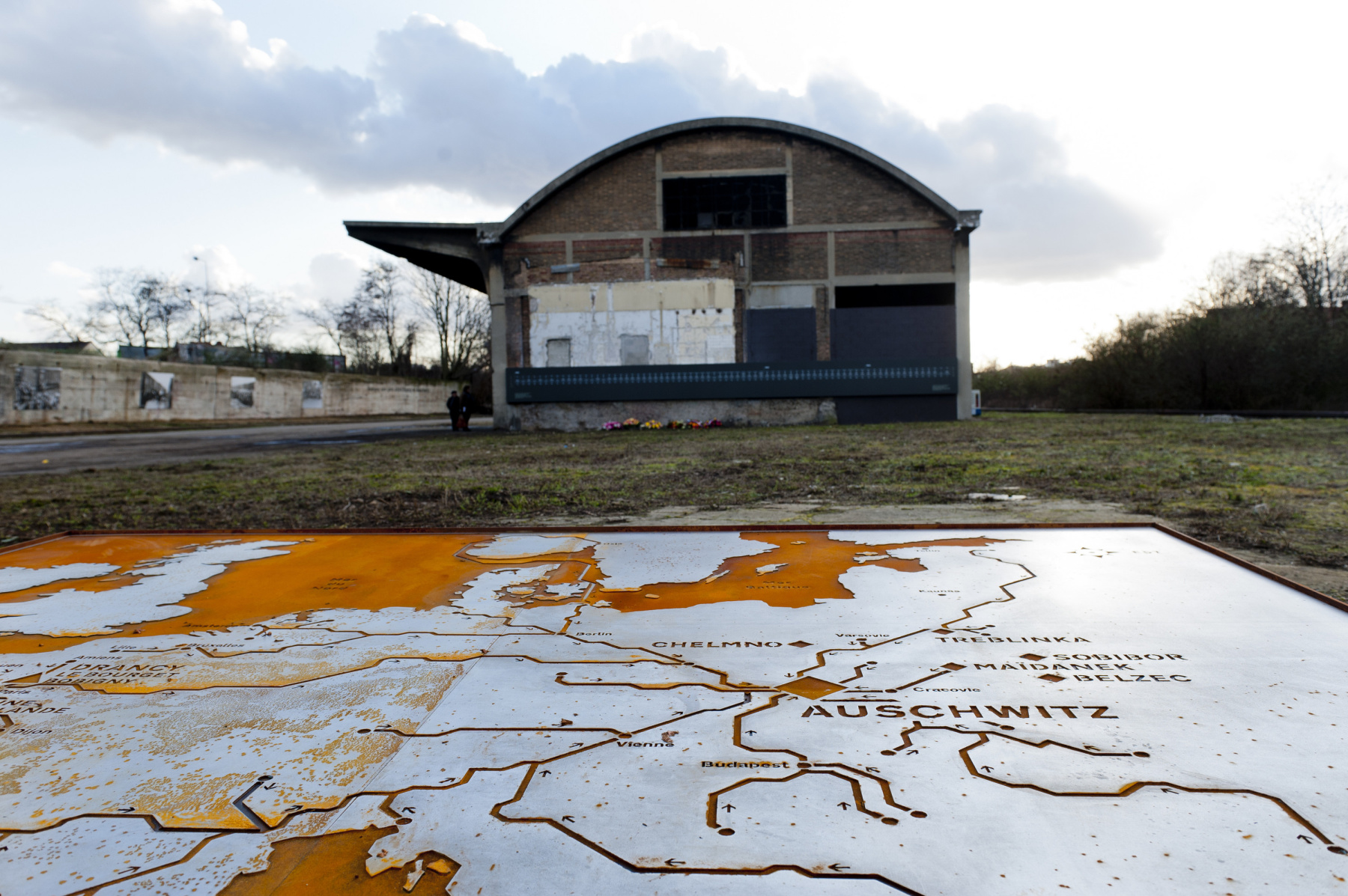
Take advantage of the Journées du Patrimoine 2025 to visit Bobigny's former deportation station on the weekend of September 20 and 21. Immerse yourself in the darkest pages of French history by discovering this station, which deported many victims to the Auschwitz camps.
If you were born in Bobigny, you've probably heard the chilling story of the Bobigny train station, used by the Nazis to transfer men, women and children to Auschwitz. In 13 months, from the summer of 1943 to the summer of 1944, 22,407 men, women and children of all ages were loaded into lead-lined wagons and taken to the Auschwitz extermination camp.
After the Second World War, this 3.5-hectare site belonging to the SNCF was leased to a scrap dealer, who moved out in 2005. The SNCF wanted to demolish the buildings several times, but the Fonds Mémoire d'Auschwitz (AFMA) association and Georges Valbon (mayor of Bobigny) raised the issue with the French government in 1987, and demolition was narrowly avoided.
It wasn't until 2005 that this place of remembrance was listed on the supplementary inventory of historic monuments, and recognized as one of Hauts Lieux du Souvenir de la déportation de Seine-Saint-Denis (the Muette camp at Drancy, the Bourget and Bobigny railway stations, the quai aux bestiaux, the military cemetery at Cimetière Musulman, the Fort de Romainville).
Because, despite everything, it's important to remember these dark times, the city of Bobigny is offering a guided tour of the former deportation station. Visit a historic site that bears witness to the Shoah, and discover its future landscaping and scenography, to ensure that the memory lives on through new generations.
Aucun événement annoncé à ce jour, le programme est mis à jour en fonction des annonces officielles.
Come and discover this historic site!
Dates and Opening Time
From September 20, 2025 to September 21, 2025
Location
Former Bobigny deportation station
151 Avenue Henri Barbusse
93000 Bobigny
Prices
Free
Official website
garedeportation.bobigny.fr