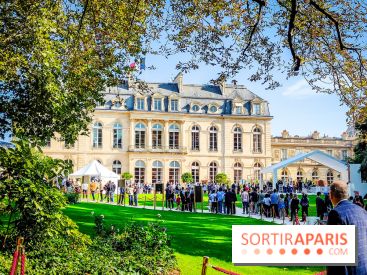
The Journées du Patrimoine (Heritage Days) is the big event that awaits you every September in Paris and throughout the Île-de-France region. This event, synonymous with cultural highlights, invites you to explore our heritage from every angle, thanks to an exciting and often free program of events in our heritage treasures.
For the occasion, a wide range of sites are taking part, including museums, monuments, castles, churches and libraries, as well as major institutions, ministries, hospitals, fashion houses and other fascinating and surprising spots. From must-see masterpieces to the capital's best-hidden secrets, the Paris region reveals itself like never before during the Journées du Patrimoine. The next event is scheduled for the weekend of September 20 and 21, 2025 , for a 42nd edition that promises to be more than promising.
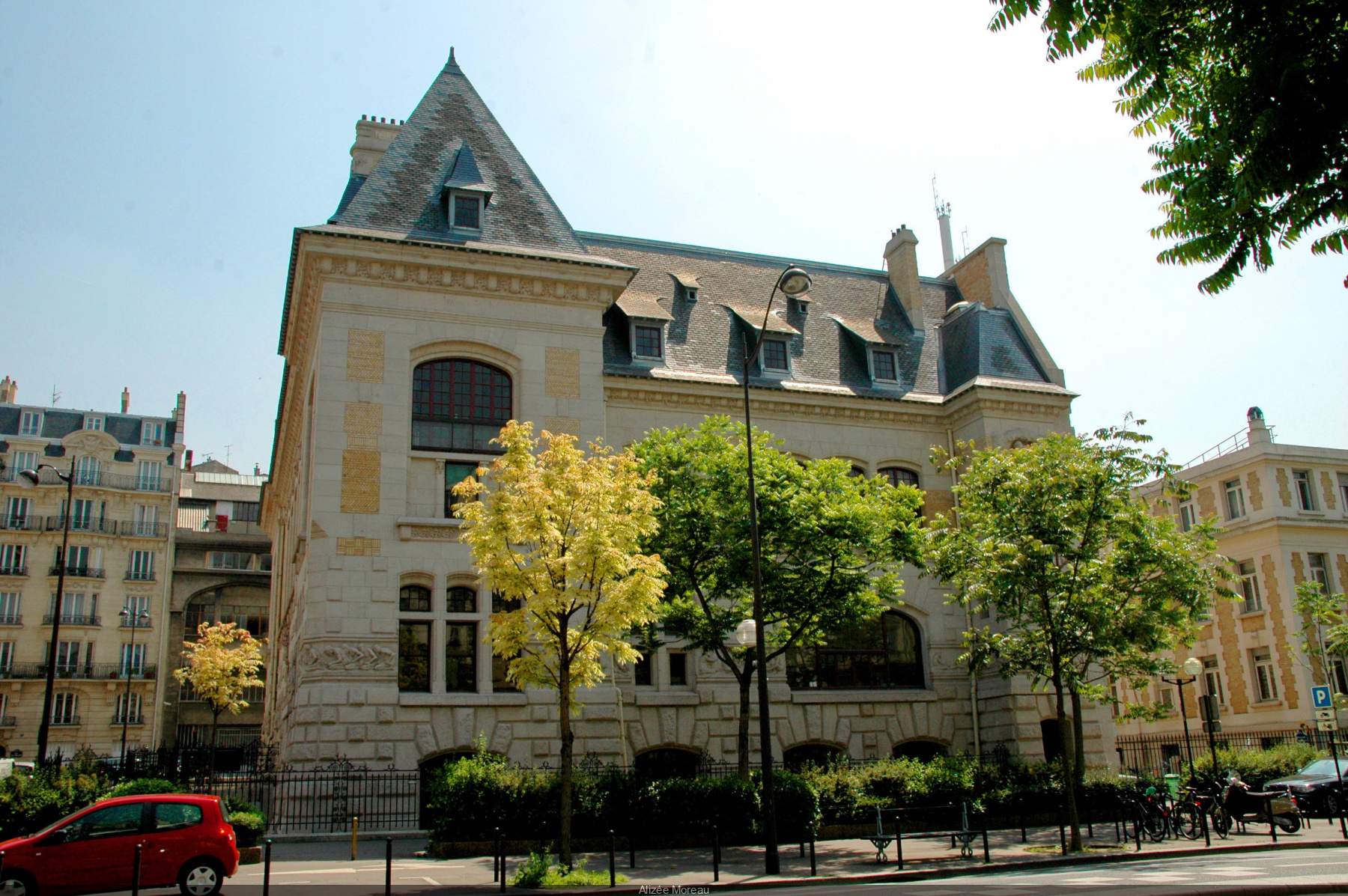
Would you like to take advantage of the exceptional openings during the Journées du Patrimoine ? If you're passionate about fossilization, prehistory or geology, you won't want to miss a visit to theInstitut de Paléontologie Humaine. Founded by Prince Albert 1st of Monaco in 1910, this scientific foundation is waiting to welcome you to its special program in the 13th arrondissement of Paris!
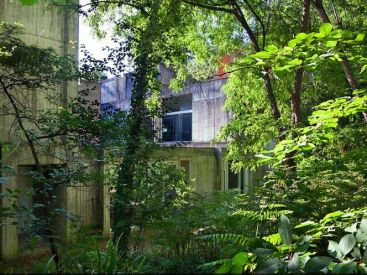
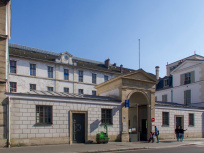
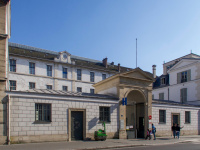
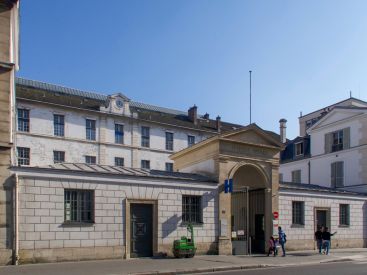
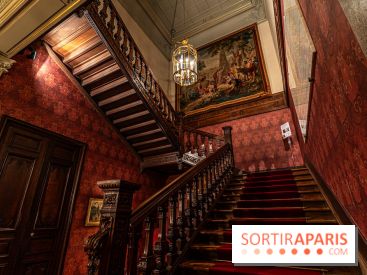
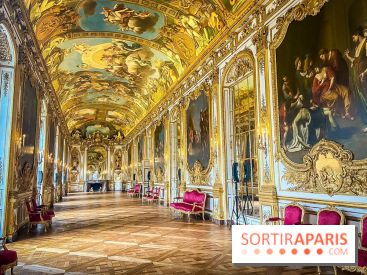
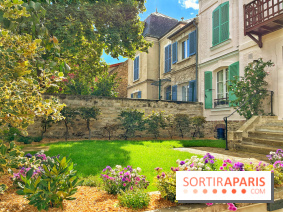
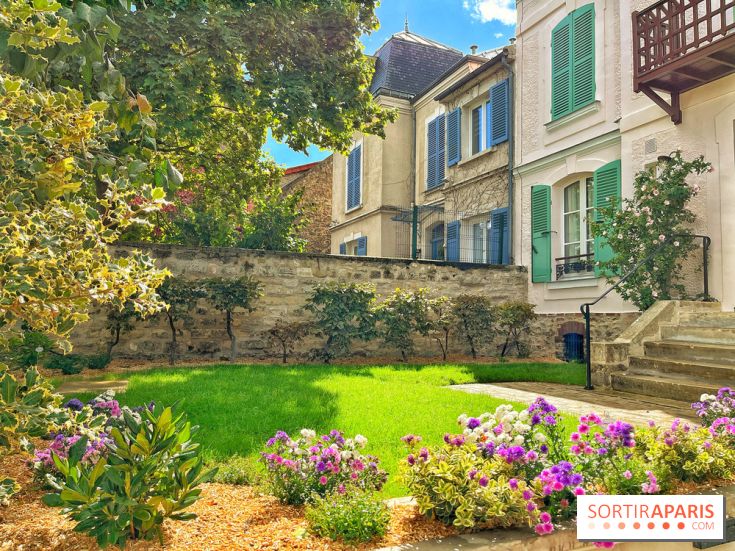
Located in the heart of Paris' 13th arrondissement, the Institut de Paléontologie Humaine (IPH) was built between 1912 and 1914 to meet the needs of a research facility concerned with human origins and evolution. Still fulfilling this function under an agreement between the Muséum national d'Histoire naturelle and the Fondation du Prince Albert Ie de Monaco, the IPH is opening its doors for the European Heritage Days to showcase its architectural and scientific heritage.
Thomas Ingicco is a paleoanthropologist and specialist in non-human primate fossils. His recent research focuses on the fauna associated with the first settlements of insular Southeast Asia, dating back 800,000 years. One of his research topics, the early settlements of the Philippine archipelago, resonates with the thesis of the second speaker, Jean-Baptiste Lambard. The latter is analyzing the archipelago's geological composition at the time of these first settlements.
Both seek to reconstruct the environmental state and survival conditions of the first humans in a South Asian island context. However, their working methods differ in terms of their object of study: fossil remains for one, geological archives for the other. Their discussion will provide an insight into prehistory through two of its disciplines, helping us to better understand the need for plural approaches.
The lecture will be followed by a tour of the building.
Amélie Vialet is a paleoanthropologist specializing in early humans, in particular Homo erectus, Homo heidelbergensis and Homo neanderthalensis (Neanderthal). Her recent research focuses on human evolution in Europe and Asia, and addresses epistemological issues through contemporary representations of prehistoric humans. She has also worked on research programs linked to cultural anthropology collections, such as "Moulin-Quignon - Toute une préhistoire en Somme" (2012-2019).
Flavien Gomez is starting a PhD on the diversity and kinship relationships of hominins from the end of the Lower Pleistocene (c. 1 million years ago), and particularly on the definition of the taxon Homo erectus.
Their research is part of the discipline of paleoanthropology, the study of human fossil remains, with a particular focus on the diversity of prehistoric humans and the defining characteristics and kinship links between them.
The lecture will be followed by a tour of the building.
Arnaud Hurel is a science historian. His research focuses on the history of prehistory, and in particular on the personalities who contributed to the recognition of this discipline in the French context in the nineteenth century, such as Abbé Breuil, Gabriel de Mortillet and Jacques Crèvecoeur Boucher de Perthes.
Caroline Bousquet is a doctoral student in the epistemology of archaeological sciences. She is interested in the use of the notion of "transition" in archaeology. Essential to the construction of a succession of periods, transitions represent ruptures, but also areas of uncertainty for the history of collections.
Both of them are interested in the history of prehistoric archaeology, and their research overlaps in that they seek to analyze the political and socio-cultural conditions of the discipline's emergence, and question the impact of this history on contemporary practices.
The lecture will be followed by a tour of the building.
Anne-Marie Semah is a prehistorian specializing in palynology, geology and sedimentology in Southeast Asia and Oceania. Her research has focused on the palynological (pollen) study of hominid sites on the island of Java (Indonesia).
Corentin Biets recently defended his thesis on preventive archaeology, excavation and prospecting of prehistoric heritage in Southeast Asia. His approach is participatory, as he has worked with local communities who hold important knowledge of the land and sites.
Both are interested in Asia's earliest settlements in context, and integrate both environmental and social studies into their research. It's an interdisciplinary approach that enables us to understand the landscapes of yesterday, while integrating the views of contemporary local communities into our research and reflection.
The lecture will be followed by a tour of the building.
Dates and Opening Time
From September 20, 2025 to September 21, 2025
Location
Institute of Human Paleonthology
1 rue René Panhard
75013 Paris 13
Official website
www.fondationiph.org