The cultural kickoff of the season is back for another edition, dedicated to delightful discoveries. Over a full weekend, the Journées du Patrimoine allow, on September 19 and 20, 2026, to push open the doors of little-known venues, private residences, and hidden treasures that rarely reveal themselves to the general public, through activities and programs for the whole family.
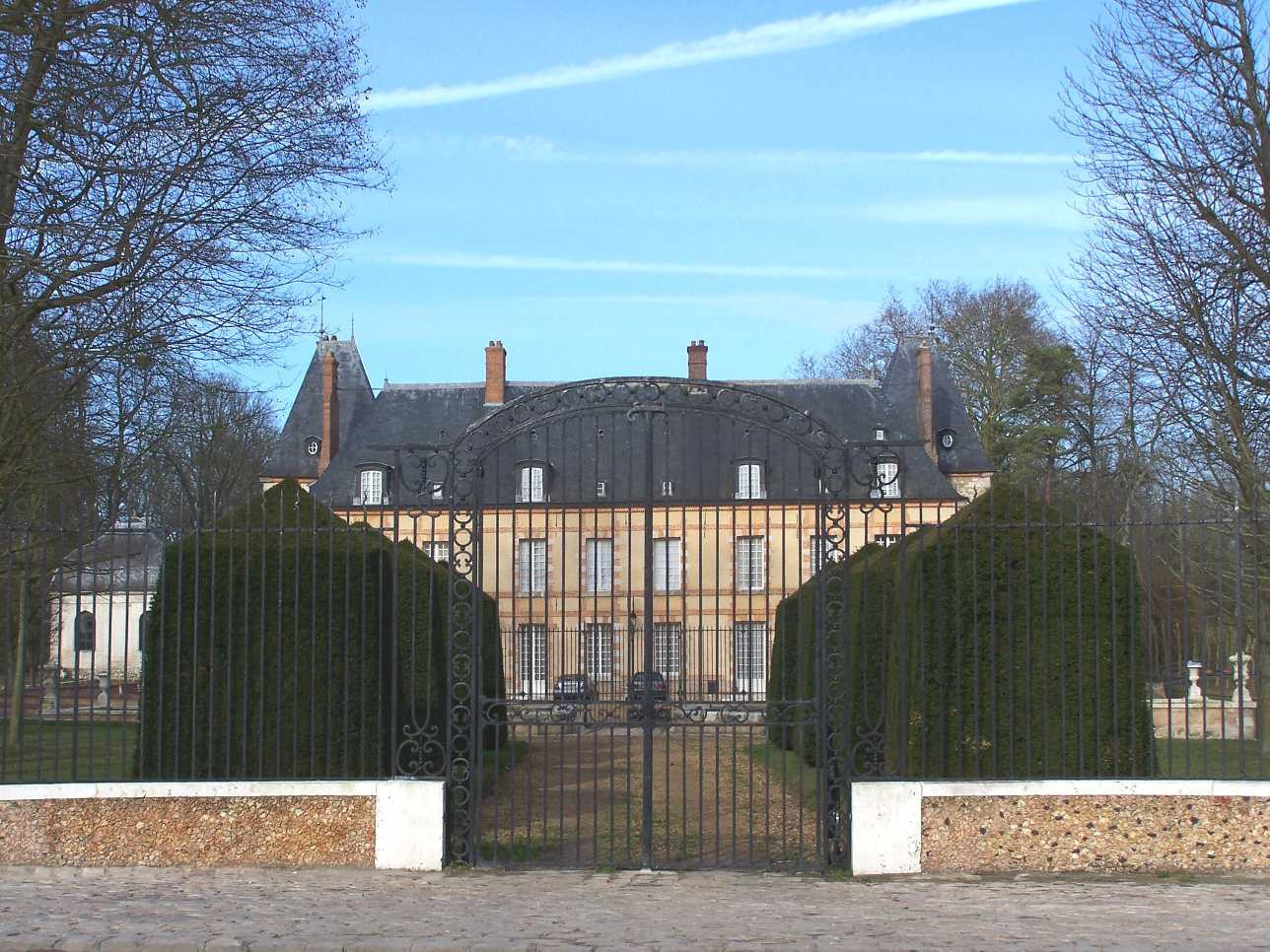
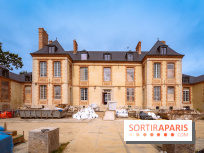
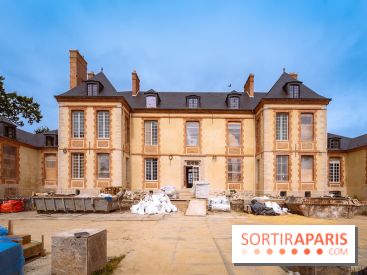
In Yvelines, the Château de Bourdonné stands out among these hidden gems. Built in the 17th century for Charles I de Cocherel, royal advisor and seneschal of Montfort-l'Amaury, this seigneurial estate impresses with its Louis XIII-era architecture, pairing pink brick with stone, all crowned by tall slate roofs.
Listed as a Historic Monument, the site stands out for its charming chapel rebuilt in 1733, its historic outbuildings, its moats and the ponds in which the residence is reflected. Over the centuries, the castle has hosted the poet José-Maria de Heredia, who came to spend the last weeks of his life there in 1905.
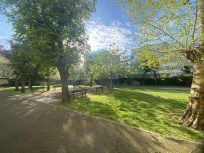
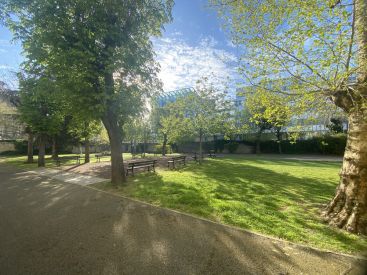
Although the main house remains a private residence not open to tours, the Journées du Patrimoine offer a privileged chance to wander through its vast, 14-hectare wooded park. Strollers can thus admire from the outside the façade’s elegance, the grand entrance gate, and the preserved natural surroundings that envelop this estate rich in history.
A tour of the grounds at Bourdonné Castle
The Château de Bourdonné is a private residence that remains inhabited and is not open for tours. Only the park is accessible to the public during this event.
To preserve the historic character of the estate, its wildlife, flora, and the peace of the site, visitors are asked to follow these guidelines:
Picnics are not permitted.
Ball games, bicycles, scooters, and other sports activities are forbidden.
* Please do not feed the birds or other animals in the park.
Drones are prohibited.
Photography is allowed for strictly personal use.
* Filming, press coverage, audiovisual recordings, and professional photo sessions are forbidden.
* No public restrooms are available on the site.
* No parking is available within the estate. Since parking in the village of Bourdonné is limited, visitors are asked to mind traffic, respect neighboring properties, and maintain the quiet for local residents.
* Children remain under the supervision of their guardians.
* Some parts of the park feature natural irregularities in the terrain; visitors are advised to move about with caution.
Access to the estate may be limited or interrupted in case of high turnout or for safety reasons.
Please contribute to preserving this heritage, its natural surroundings, and its tranquility by behaving respectfully on site.
Enjoy a pleasant stroll through the park and a wonderful discovery of this exceptional heritage!
History of Bourdonné
Pepin the Short, by charter of the year 768, granted the Abbey of Saint Denis a quarter of the village of Bourdonné, known as BURDONIACIUN, part of the wooded region of the Yvelines.
Bourdonné became in 998 the property of Guillaume le Hainaut, forester of the forest, entering the domain of the lords of MONTFORT. In 1179 a Raoul Galopin took the title of lord of Bourdonné and donated in 1229 to the abbey of GRANCHAMP his possessions at Epernon.
In 1743, the land of Bourdonné belonged to Jehan Guespin and subsequently passed to Memay du Lit in 1533, Yves de Montanguibert in 1547, and Jean de Languedouce in 1556.
The Château de Bourdonné, built on the banks of the Vègre and surrounded by moats fed by the river, was entered via three wooden bridges. Its 14-hectare park, cut by the stream, features a fine body of water, a canal, and groves; very agreeable.
In the gardens, tradition says that a gifted woman once lived here, who foretold the future, dispelled evil spirits, and protected the surrounding countryside.
This pretty residence, once the dwelling of the lords of Bourdonné, was built in 1610 by Cocherel on the site of an older castle demolished in 1559. It was restored in 1730 by Lord Du Tratre.
Since 1759, its owners have included:
- 1610: Charles COCHEREL, lieutenant general of the armies, Marquis of Bourdonné in 1668;
- 1789: Geneviève DU TARTRE, widow DELALEU, who died at Bourdonné on 15/07/1808;
- 1808: Maximilien, Charles, Pharamond, PANDIN, Baron de Narcillac;
- 1870: Mr. BROOKS;
- 1892: Count de NATTES, owner of the château;
- 1903: Mr. and Mrs. ITASSE purchase the château for 105,000 francs;
- 1957: Madame DE RESTEPO;
- 1968: Mr. and Mrs. Georges GARVARENTZ;
- 2020: Mr. and Mrs. Serge WEINBERG.
The Christianity established in the Yveline
Eglises in Rambouillet, Montpinson (Montfort), and Bourdonné
Together with the Franks, Christianity also penetrated deep into Yveline.
Earlier on, several holy men—Potentien, Savinien, and Altin—had scattered the light of the Gospel around Chartres. Saint Martin himself visited in 368.
Nevertheless, it was only after the apostasy at Saint-Chéron in the 5th century that many Christians settled in the region.
At Saint Souleine, bishop of Chartres in 490, succeeded two men whose popularity greatly aided the conversion of the Chartrains: Saint Adventin (511) and Saint Lubin. The latter was held in high esteem—son of a farmer, a farmer himself, and he easily earned the trust of the countryside, bringing many to the Christian faith. So renowned was his reputation that after his death (556), sixteen Chartrain churches, founded in those times, dedicated themselves to Saint Lubin. Among them, the church at Rambouillet stands out.
Around the same period (late 6th century), Montpinson received its first church dedicated to Saint Peter; Bourdonné its own church, to Saint Martin.
But how did the faith spread amid such difficulties? After gaining the people's trust and fighting indifference, and after a thousand efforts seemed to secure success, everything could collapse as old habits returned. All the pines of the forest had to be felled, and the druidic monuments hidden.
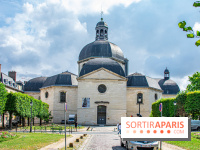
The chapel was restored around 1732 by the lords of Du Tartre. It sits at the far end of the château, separated by a moat several meters wide.
On August 25, 1733, the parish priest of Bourdonné, Pierre Bumel, assisted by the priests and seigneurs from the surrounding area and the entire Du Tartre family, solemnly blessed our chapel dedicated to the Holy Virgin.
By virtue of the authority granted to us by the Bishop of Chartres, the blessing was performed after finding it suitably adorned and equipped with all necessary ornaments, in the presence of the priest of Bourdonné and the surrounding area and in the presence of Jean Du Tartre, squire and royal counselor, Notary at the Châtelet, lord of Bourdonné, Goussainville and other places; Etienne Nicolas Du Tartre, squire, lord of Bourdonné; Antoine Jean Baptiste du Tartre, squire; Jacques Dupont, Bailiff of Misseinville; Thimonté de Vautier, lord of Vetitmont and other places; Joseph Claude Le Bossel, knight of the tailles for that election; Herter, Bermard Bomel, former alderman of Paris and rent payer; Jacques Roussel, squire, royal counselor and Notary in Paris. They all signed with us.
We have noted “restored” because in 1684 there was already a chaplain of the château chapel at Bourdonné.
Etymology of Bourdonné
Formation in ACUN, on BURDON
Burdoniacun, 768: my history p. 52
Burdinium. 1004: N.D. de Paris I 96
Burdineuin. 1124. Petit cartulaire de Saint Magloire
Burdinetun. Around 1250. Pouillé de Set P 118
Bordanetun. 1269. Vaux de Cernay
Bourdenetun. 1367. Set P 118
Bourdonnetun. End of 15th century
Bordeniacun. 1512
Boudonnay. 1617
Bourdonné. Casini map and itinerary
Bourdonné, near the edge (of the river or forest) Bour-Bord
Participation terms: Free | No reservation required
Schedule : Saturday, September 19, 2026 — 9:00 AM to 5:00 PM | Sunday, September 20, 2026 — 9:00 AM to 5:00 PM
A visit to Bourdonné Church
Self-guided visit of the church, built in two stages—at the end of the 11th century and in the second half of the 15th century. This church contains elements protected as historic monuments.
Participation requirements: Free entry for everyone - Free | No reservation required
Hours: Saturday, September 19, 2026 — 9:00 AM to 6:00 PM | Sunday, September 20, 2026 — 9:00 AM to 6:00 PM
This page may contain AI-assisted elements, more information here.
Dates and Opening Time
From September 19, 2026 to September 20, 2026
Location
Bourdonné Castle
château de bourdonné
78113 Bourdonne
Route planner
Prices
Free
Official website
journeesdupatrimoine.culture.gouv.fr