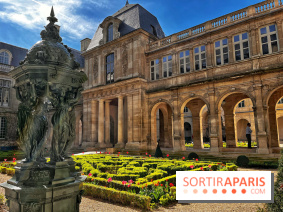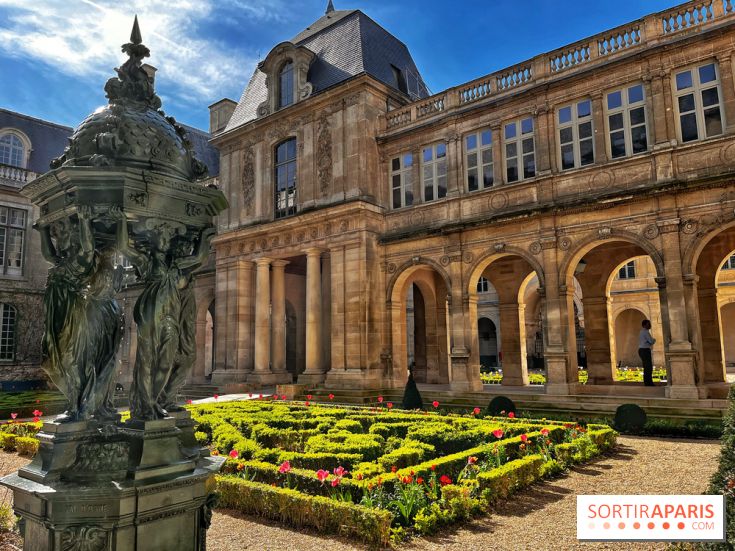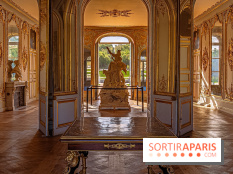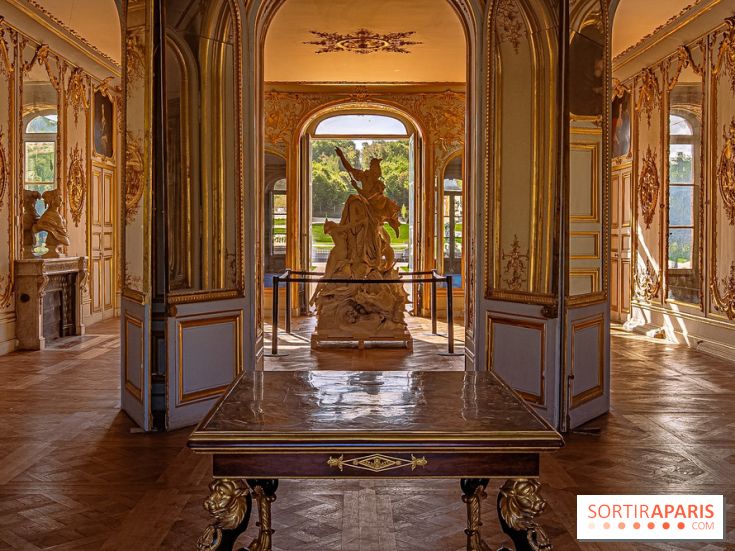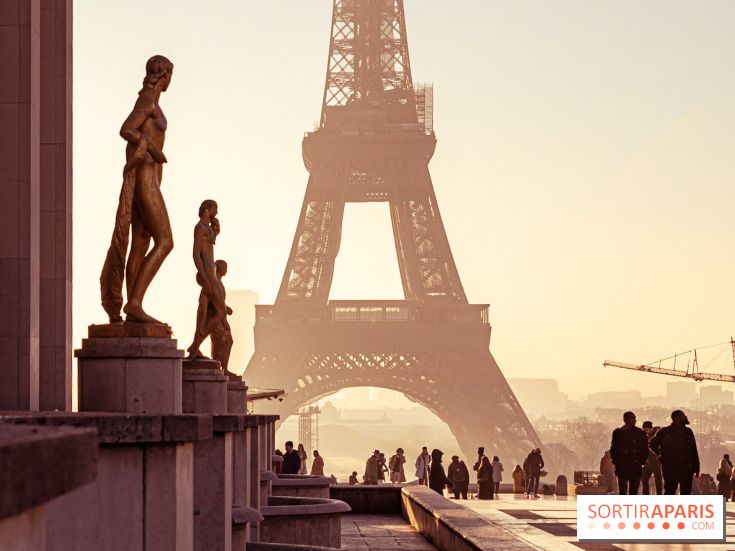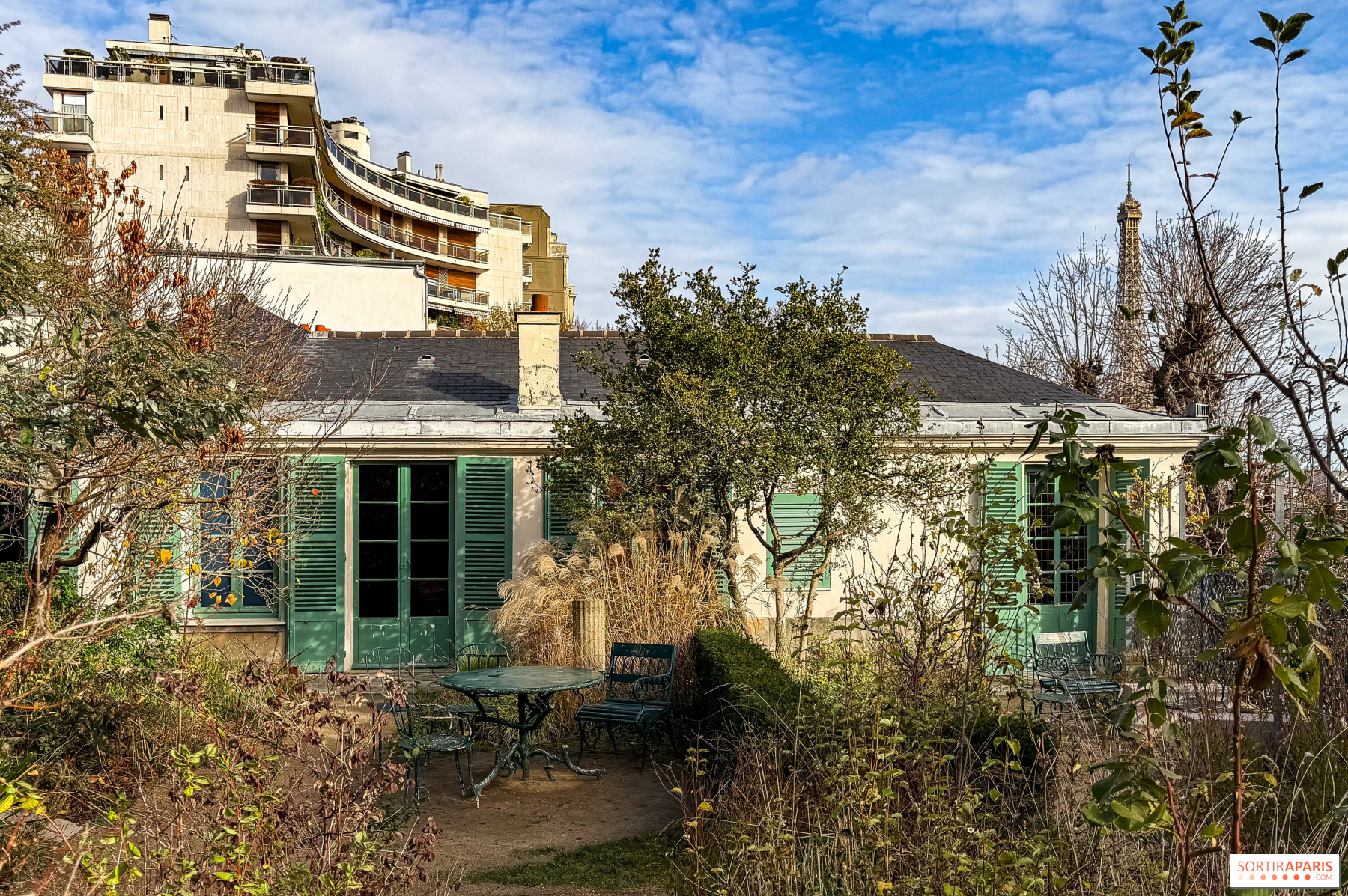
The Journées du Patrimoine is the perfect moment to uncover, or rediscover, Paris's most legendary spots—and to find a few hidden gems as well. This Saturday, September 19, and Sunday, September 20, 2026, the Maison de Balzac opens its doors in Paris for a refreshing escape, set in a surprising green haven with a view of the Eiffel Tower. Freshly renovated, the writer’s house-museum is free to visit for this extraordinary cultural weekend.
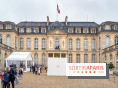
The Maison de Balzac, home of the famous writer, and its secret garden overlooking the Eiffel Tower
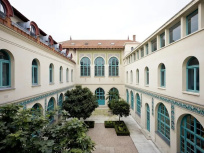
The Maison de Balzac, one of the famous writer's homes, is one of the capital's literary gems, located in the 16th arrondissement of Paris. This house-museum also boasts an incredible garden overlooking the Eiffel Tower, as well as a café. [Read more]
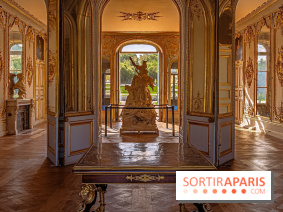
This bucolic place, which also houses an English café with delicious pastries, is one of the few homes of Honoré de Balzac that can still be discovered today. The three-storey museum retraces the life of the famous French writer, through manuscripts and unusual objects, as well as the study in which he corrected all his major works, La Comédie Humaine. A favorite address for lovers of French literature, is listed as a historic monument.
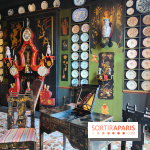
Heritage Days are back in Paris and the Île-de-France region this weekend of September 19–20, 2026. How about discovering the tours and activities waiting for you at artists’ houses across the Paris area? We’re unveiling the program for this latest edition. [Read more]
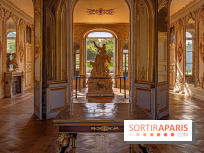
Heritage Days are back in Paris in 2026. The capital’s monuments and historic landmarks open their doors (often free of charge) to reveal their secrets to us. Don’t miss this must-attend event, slated for the weekend of September 19–20, 2026, with the themes: “Heritage in Peril” and “The Heritage of Photography.” [Read more]
Lightning talk “Enter The Human Comedy”
With “Enter into La Comédie humaine,” you’ll spend 45 minutes exploring the many ways to approach this sprawling literary universe, a work that, while rooted in the 19th century, still speaks to our society—and which, in the end, has not fundamentally changed.
Our speaker will bring to life a vivid lineup of characters—charismatic or off-putting, yet unmistakably human—for you to connect with.
Participation rules: Limited to 18 participants - Free | No reservation required
Schedule : Saturday, September 19, 2026 — 11:00–11:45, 14:30–15:15, 16:00–16:45 | Sunday, September 20, 2026 — 11:00–11:45, 14:30–15:15, 16:00–16:45
Interview with historian Judith Lyon-Caen
The European Heritage Days 2026 are devoted to the literary current surrounding La Comédie humaine.
The day after Balzac’s death, on September 2, 1850, Saint-Beuve wrote in Le Constitutionnel, “the author of Eugénie Grandet will live on.” That says it all. One fact stands out: Balzac, maligned by critics in his time, is now part of literary heritage, and his legacy is secure.
To deepen our understanding of this phenomenon, we invite historian Judith Lyon-Caen, who has just published, Balzac Is Ours: A Political History of Literary Transmission (CNRS Editions).
A fascinating work that examines how the writer is claimed by everyone, for better or worse, because above all Balzac is polymorphic. Realist, visionary, mystic, positivist… Balzac, the revolutionary writer, Balzac, the conservative writer, the one you see in Victor Hugo or in Barbey d’Aurevilly…
“Reading Balzac,” “Entering Balzac,” “Loving Balzac,” “Speaking of Balzac” — his book also evokes the thousand ways to adore and transmit Balzac.
The author of La Comédie humaine has been appropriated by all parties, every political tendency: from the red Balzac of the Marxists to Maurice Bardèche’s “ancestor of fascism,” via a whole spectrum of Balzacs—reactionary, conservative, or progressive. Judith Lyon-Caen guides us through the 20th century and its upheavals and rifts. It was a pleasure to welcome the historian in 2018 for her work La lecture et la vie. The Uses of the Novel in Balzac’s Time.
With Judith Lyon-Caen we will also hear the voices of post-war readings, the somber readings of Jean-Louis Bory or that of Jean Cayrol, who, after returning from deportation, turned the “Balzac house” into a space to reconnect with humanity.
Judith Lyon-Caen is a historian, director of studies at EHESS. Her work focuses on the social uses of literature in the 19th and 20th centuries and on the history of Holocaust testimony. She has notably published The Historian and Literature (with Dinah Ribard, Éditions La Découverte, 2010) and The Mark of Time: What History Can Tell Us About Literature (Gallimard, 2019).
Participation terms: Limited to 50 people - Free | No RSVP required
Schedule: Saturday, September 19, 2026 - 3:30 PM ⤏ 5:00 PM
Interview with Jean-Claude Caron, Balzac’s Nose
The Balzacian oeuvre, rich with scents and aromas, leaves a strong impression. For anyone with a keen nose, one detects a plurality of fragrances—here, the “odorant principle of various substances of plant origin”; there, “chemical essence”; or again the “characteristic perfume of dishes,” to distinguish the three senses of the term (Trésor de la langue française).
The literary news of 2026 gives the Maison de Balzac a fine opportunity to celebrate and illustrate one of its favorite themes: the smells and perfumes in Balzac’s world.
With the publication of the work The Nose of Balzac, followed by Odorama balzacien, Jean-Claude Caron invites us to keep digging, again and again.
On the occasion of European Heritage Days, the historian agreed to present his richly sourced book, drawing on La Comédie humaine but also Balzac’s correspondence and accounts from those around him. He also touches on the odors of Balzac’s own body. In short, Balzac’s nose has a place here, and Caron also explores the noses of his characters in parallel. After all, we say he “has a nose”—a telling metaphor. Lavater and physiognomy are never far away.
Let us recall that fragrance functions as a social marker in Balzac: it can be good or ill, from the balm of Henriette de Mortsauf’s chamber to the Vauquer pension, steeped in the odor of frying, or to Valérie Marneffe’s death-chamber, and its pestilential perfume.
Read and listen this Sunday, September 20, without moderation.
The Nose of Balzac, followed by Odorama balzacien, Champ Vallon edition
Jean-Claude Caron is an emeritus professor of contemporary history at Clermont Auvergne University and an honorary member of the Institute of France. Among his Champ Vallon publications are Simon Deutz, a Romantic Judas (2019) and Van Gogh in Letters: A Man in His Century (2022).
Participation criteria: Limited to 50 attendees - Free | No reservation required
Schedule: Sunday, September 20, 2026 — 3:30 PM to 5:00 PM
Dates and Opening Time
From September 19, 2026 to September 20, 2026
Location
House of Balzac
47, rue Raynouard
75116 Paris 16
Route planner
Accessibility info
Prices
Free
Official website
www.maisondebalzac.paris.fr
















 The Maison de Balzac, home of the famous writer, and its secret garden overlooking the Eiffel Tower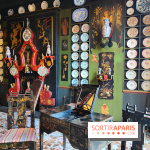

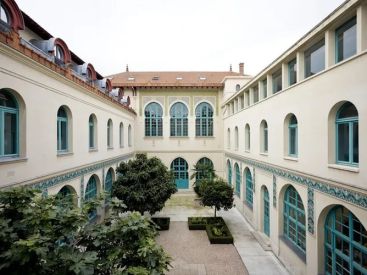
 European Heritage Days 2026: discover artists' homes in Paris and Île-de-France


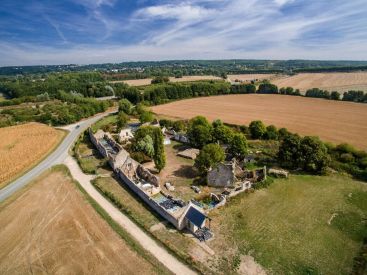
 Heritage Days 2026 in Paris (75): the program of visits to explore by arrondissement
























![[Série] Stranger Things saison 4 : bande-annonce](https://cdn.sortiraparis.com/images/1021/66131/641538-stranger-things-saison-4-bande-annonce.jpg)
![[Série] Stranger Things saison 4 : bande-annonce](https://cdn.sortiraparis.com/images/1022/66131/641538-stranger-things-saison-4-bande-annonce.jpg)
![[Série] Stranger Things saison 4 : bande-annonce](https://cdn.sortiraparis.com/images/1023/66131/641538-stranger-things-saison-4-bande-annonce.jpg)
![[Série] Stranger Things saison 4 : bande-annonce](https://cdn.sortiraparis.com/images/1024/66131/641538-stranger-things-saison-4-bande-annonce.jpg)