The countdown is on. The Orionids, this autumn meteor shower active since October 2, are approaching their peak moment: the peak is expected in the night of Wednesday 21 to Thursday 22 October 2026. The phenomenon can be enjoyed for free and with the naked eye from Paris and the entire Île-de-France, with a clear preference for the rural pockets of Val-d'Oise (95) or Seine-et-Marne (77).
Since the beginning of the month, activity has been creeping up, like a concert venue filling up before the curtain goes up. There’s about a week left to scout your spot, check the weather, and set the alarm.
NASA says the Orionids will stay active through November 7, 2026. The peak is expected on the night of October 21–22, but the shower offers a fairly broad maximum. The nights of October 20–21 and October 22–23 are also worth watching, providing a bit of leeway if clouds block the peak night.
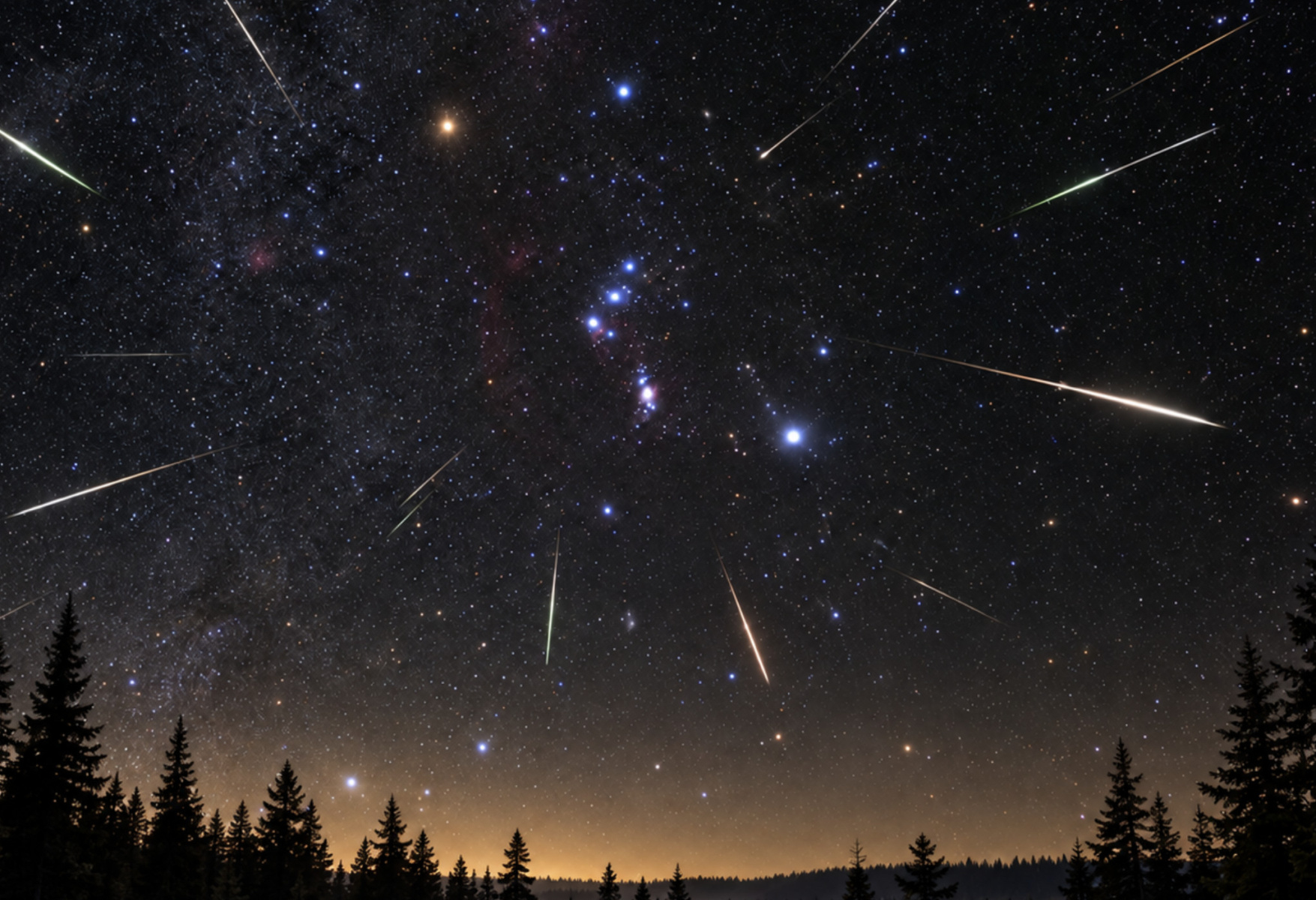
Under a sky that’s almost pitch black, the International Meteor Organization expects about twenty meteors per hour at the peak. We’re not in the August Perseids’ fireworks league, but the Orionids have a real showstopper: speed. They streak across at around 66 km/s, sometimes leaving trails that linger for a few seconds, or even pretty fireballs.
The Orionids are late risers—or early-to-bed folk—depending on your camp. Their radiant, the patch of the sky from which they seem to emanate, lies in the Orion constellation, just near Betelgeuse, that orange-tinted star easy to spot. Orion doesn’t rise until late in the evening and climbs higher as the night goes on.
The best viewing window is in the final hours of the night, before dawn, ideally facing southeast. There’s no need to fix your gaze on Orion: meteors streak across the entire sky. It’s better to lie back and let your eyes sweep a wide swath of the heavens.
That's the minor downside of this 2026 edition. The peak coincides with a waxing gibbous Moon, illuminated between 70 and 80% according to estimates from the IMO and Star Walk. In the early hours of the night, it acts like a giant streetlamp, washing out the faint meteors.
The good news is that the Moon sets in the dead of night. A darker window opens then, just before the first light of day, right when Orion is high in the sky. Under those conditions, expect about ten meteor showers per hour in a truly dark corner. Quick tip: put a tree or a building between you and the Moon while it’s still up. The Full Moon, by the way, arrives on October 26, 2026.
In the heart of Paris, the light pollution is clearly working against us. Parks and high vantage points can offer a respite, but only the brightest shooting stars can be seen there.
To truly enjoy the night sky, it’s best to get some distance from the capital—toward the Vexin Français Regional Natural Park in Val-d’Oise (95) or near the Fontainebleau Forest in Seine-et-Marne (77). We’ve even gathered our best spots to admire shooting stars in Paris and Île-de-France, a ready-made guide to plan your outing right away.
Observing is free and requires neither a telescope nor binoculars. A few days before the peak night, checking the cloud cover forecast from Météo-France is essential, as a cloudy ceiling can ruin everything. To go further, the Association française d'astronomie and the Société astronomique de France regularly share tips and observing evenings.
Every autumn, Earth travels through the dust trail left by the famed Halley's Comet. These grains, often smaller than a grain of sand, streak into the atmosphere at high speed and light up: our shooting stars.
The comet itself hasn’t passed close to the Sun since 1986 and won’t return until 2061. In the meantime, it leaves us two annual reminders: the Orionids in October and the Eta Aquarids in the spring. A way to catch a glimpse of Halley’s Comet without waiting thirty-five years.
This gathering speaks to sky enthusiasts, families eager to rise before dawn during the All Saints’ Day holidays kicking off Saturday, October 17, and to anyone who’s got a wish waiting in the wings. You don’t need to be an astronomer—just a touch of patience and a warm coat will do.
A few tips to tilt the odds in your favor:
If the weather plays tricks, the autumn sky still has other cards up its sleeve. The Leonids take the stage in mid-November, with a peak expected around November 17 and 18, 2026, and a relatively faint Moon this time. In December, the Geminids bring a steadier pace to end the year in style. To make sure you don’t miss a thing, keep an eye on our astronomy and Paris sky pages.
The best spots to admire shooting stars and the sky in Paris and the Ile-de-France region
Numerous shooting star nights punctuate the year, as do astronomical events, which can be admired weather permitting, in places with less pollution. But where can you find these rare gems in Paris and the Ile-de-France region? [Read more]
This page may contain AI-assisted elements, more information here.
Dates and Opening Time
From October 2, 2026 to November 7, 2026


































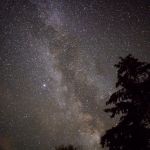 The best spots to admire shooting stars and the sky in Paris and the Ile-de-France region