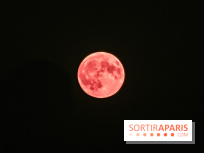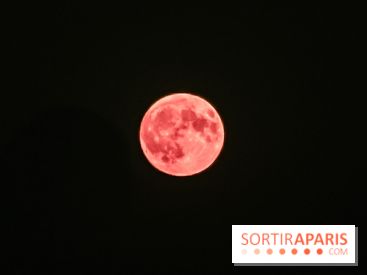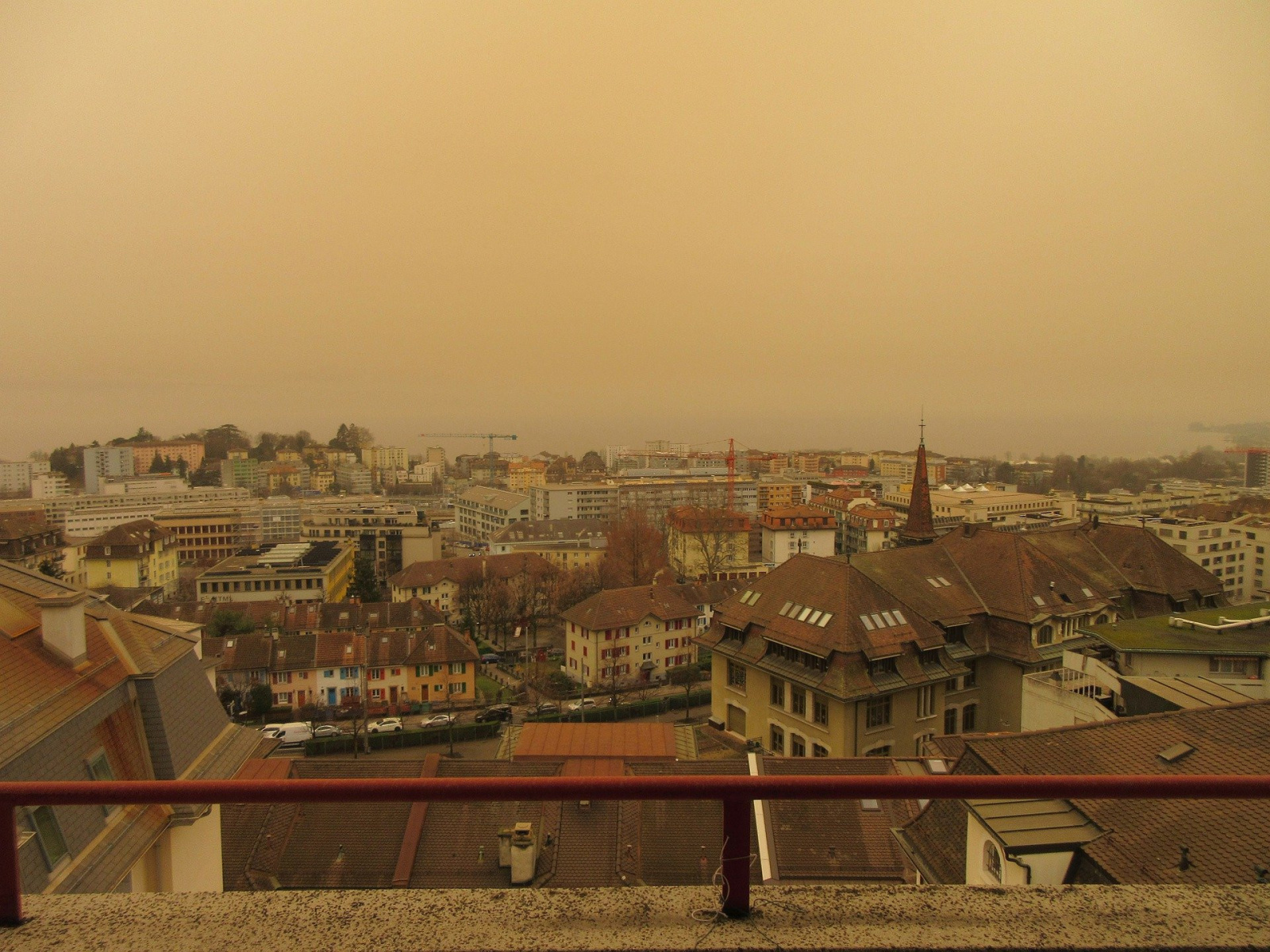
A Saharan dust cloud is heading towards France. Since mid-February 2026, a plume of desert dust has been making its way north from North Africa towards Europe, as evidenced by data from the Copernicus Atmosphere Monitoring Service (CAMS), the European atmospheric monitoring agency. Having crossed over the Cape Verde Islands, the Canary Islands, and Madeira, this dust plume is expected to reach Spain on February 23, before advancing into France starting February 24, 2026, including Paris and the Île-de-France region. This warm southerly airflow from Morocco and Algeria will bring with it unseasonably mild temperatures—thesort usually seen in early May—causing the capital to experience surprisingly spring-like weather.
This phenomenon is quite typical for this time of year. The first months of the year often see dust clouds carried over from the deserts of North Africa. Paris is no stranger to these events: in March 2022, a massive sandstorm blanketed the sky in yellow-orange hues, leaving a fine layer of dust on rooftops, terraces, and parked cars. Similar episodes have also affected Île-de-France, such as in February 2021, when air quality monitors by Airparif recorded particulate matter levels exceeding pollution thresholds for PM10 particles.
Ultimately, it all comes down to how high the plume travels and the local weather conditions when it arrives. If the dust remains aloft, the impact is mostly visual: a hazy, milky sky, sometimes tinged with yellow or orange, along with slightly disrupted weather forecasts, as fine particles act as condensation nuclei and promote the formation of thick clouds. On the other hand, if the plume descends closer to the ground in dry, stable air, the air quality in Île-de-France can deteriorate noticeably. Rain, conversely, helps clear out the atmosphere and settle particles, but it can leave noticeable traces of sand on surfaces.
Historical data from Airparif indicate that during similar episodes, at least one-third of the PM10 particles measured in Île-de-France can be directly linked to Saharan dust. This often results in a concentration increase of around 10 micrograms per cubic meter, enough to surpass the alert and advisory threshold set at 50 µg/m³.
The situation is nuanced. PM10 fine particles, smaller than 10 micrometers, can reach the respiratory system and cause irritation, potentially triggering asthma attacks or worsening existing cardiovascular and respiratory conditions. However, Atmo Auvergne-Rhône-Alpes points out that desert-origin particles are generally considered less harmful than those emitted by traffic or wood-burning heating. The most vulnerable groups include children, the elderly, asthma sufferers, and individuals with chronic heart or lung diseases. For these populations, the High Council for Public Health advises limiting intense outdoor physical activities during air quality episodes.
For the majority of healthy individuals, there's no need to sound the alarm. Just keep an eye on real-time air quality updates at airparif.fr or on the Atmo France website. It's also advisable to avoid wiping dry sandy cars to prevent scratching the paint. The episode is expected to gradually diminish over the coming days, as the initial rains typically help cleanse the atmosphere and restore normal pollution levels.