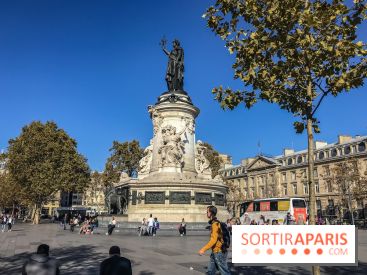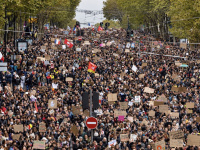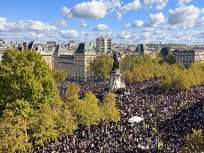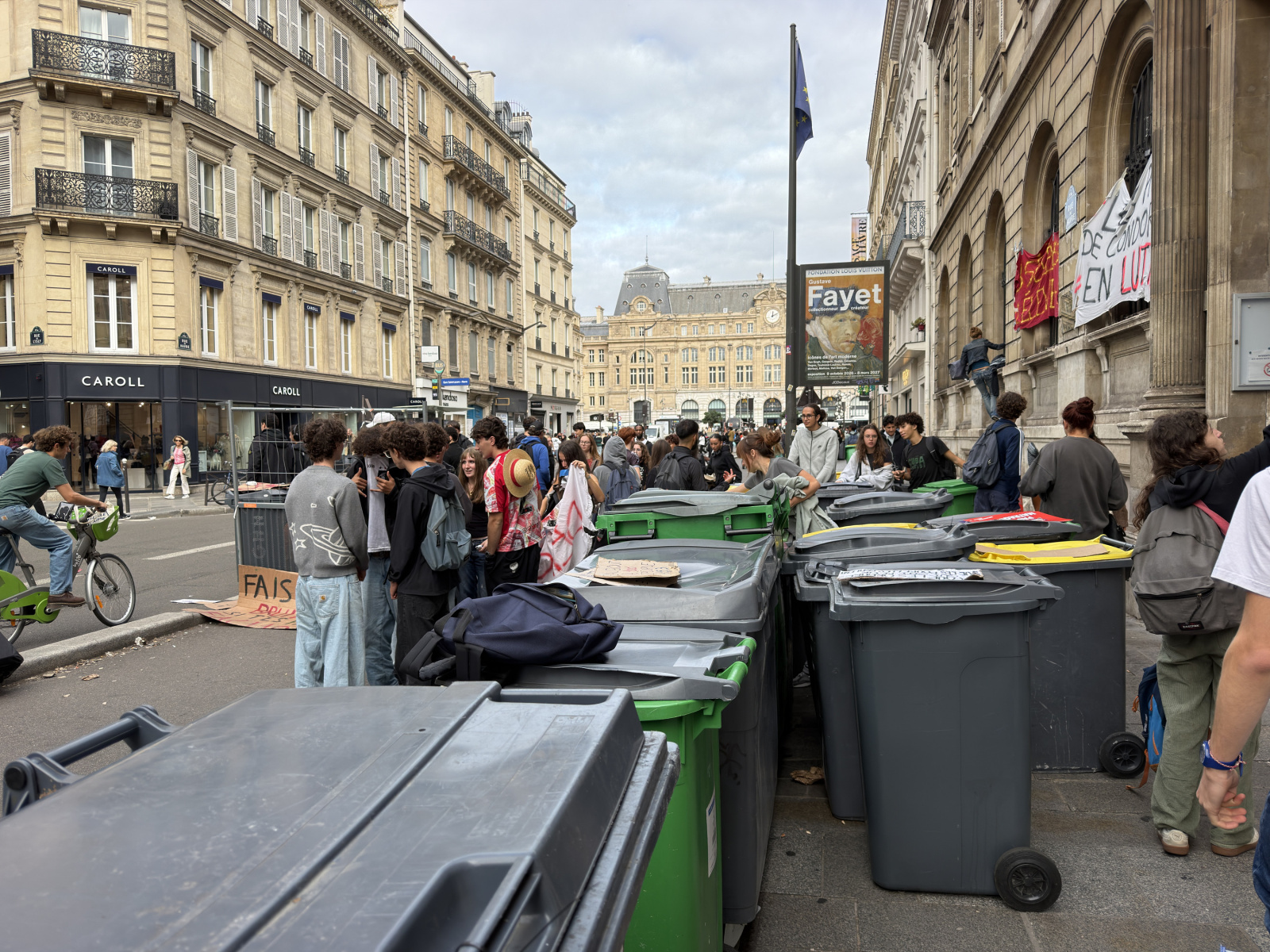
The end of Parcoursup is no longer just a slogan painted on banners. On Monday, October 26, 2026, Sébastien Lecornu’s government confirmed that the higher education admissions platform will be replaced by a new system in 2028, with a revamped version already in place for the 2027 admissions cycle. It is a direct response to the student movement that began at Lycée Saint-Exupéry in Créteil, in Val-de-Marne (94), before spreading to Paris, the Île-de-France region and then the rest of the country.
The news first emerged from two influencers specializing in education, Anna Baldy and Mathilde Fouqué, who met at the prime minister’s office with other youth representatives. It was later confirmed to AFP by a government source and then detailed by the prime minister, alongside Édouard Geffray, minister of national education, and Philippe Baptiste, minister of higher education.
The shift is clear. At the beginning of October, the government was still ruling out any abolition and speaking only of a simple change to the system. Five weeks of blockades, marches and tensions later, its position has changed.
Yes, but not overnight. The government has opted for a two-stage exit to avoid adding further anxiety for students who are already making decisions about their future studies. Sébastien Lecornu explained in an interview with Thotis that changing platforms without knowing what will replace it could create more concern than solutions.
It will also have to go through Parliament. Launched in 2018 to replace APB, the platform is based on the Law on Student Guidance and Success (ORE). A bill is due to be presented to the Council of Ministers in the coming weeks, and a debate without a vote on the future of Parcoursup is scheduled for this Wednesday, October 28, in the National Assembly. The government itself acknowledges that final adoption before the end of the five-year term remains uncertain.
Students currently in their final year of high school, who will sit the baccalauréat in 2027, will still use Parcoursup, in a revised version. Students in the year below, who are due to graduate in 2028, are expected to be the first to discover the new system.
Why not change everything now? Nearly a million young people use the platform each year, and training programs will start configuring their campaign in a few weeks. Philippe Baptiste has warned that it is out of the question to find ourselves in June unable to assign candidates.
For this final season, the platform is gradually transforming. Here are the announced changes:
The planned end of the mandatory cover letter is likely to come as a relief to many families. This winter ritual turned 17-year-olds into application writers, often relying on copy-and-paste templates, with results many considered uncertain.
The successor has yet to be named. A reform committee bringing together high school students, teachers and ministers is due to present its findings by the end of November 2026. Several proposals are already on the table: a career guidance tool enhanced by artificial intelligence, drawing on the results of previous rounds, guidance support starting in the 10th grade, and a review of the weighting given to continuous assessment.
First-year grades are particularly in the spotlight. Édouard Geffray makes no secret of his preference for scrapping continuous assessment in the first year, with a decision expected by early January and implementation planned for the start of the 2027 school year.
One point needs to be made clear: replacing Parcoursup does not mean the end of selection. Places remain limited, and that is precisely the other part of the announcements.
For the prime minister, changing the tool is pointless without making more places available. Up to 15,000 additional places in higher education have been promised for the start of the 2027 academic year, primarily in the Île-de-France region, where the number of young people is growing fastest: 10,000 in BTS programs, 4,000 in university technology institutes (IUTs) and 1,000 in health programs.
The package of measures goes further. Class sizes in the first year of upper secondary school will be capped at 28 students from the start of the 2027 school year in half of public high schools serving the most disadvantaged students, and everywhere by 2028, with 500 new posts to support the measure. Means-tested grants will be adjusted for inflation from the start of the 2027 school year. One billion euros will go toward renovating universities, while regions and départements will be able to access 4 billion euros in loans through the Banque des Territoires’ Edurenov program for their high schools and middle schools. Every high school will also have to guarantee a lunch break of at least one hour.
Universities are taking a cautious view. France Universités and business school deans argue that the system should be improved rather than scrapped, saying that “scrapping Parcoursup is not a magic solution.”
It remains to be seen whether these announcements will be enough to quell the anger. High school student organizations, which had called for a massive €10 billion investment, have yet to decide what comes next for the movement.
In the meantime, final-year high school students and their parents can follow the progress of the procedure and the 2027 application schedule on the official Parcoursup website. Announcements are also shared by the Ministry of Higher Education and the Ministry of National Education. Scholarship applications can be submitted via messervices.etudiant.gouv.fr.
To retrace the events of these turbulent weeks, we recommend reading why high school and university students are protesting and blocking campuses, then finding out which high schools and universities are mobilizing in Paris and Île-de-France. And for a little perspective, our look back at youth strikes that have already forced the government to back down shows that 2026 is part of a long tradition, from May 1968 to the CPE.
Official website
www.parcoursup.gouv.fr