You’re strolling through Paris when a procession of protesters appears at the end of the street. What should you do? In France, demonstrations are part of public life and can pass through tourist areas, sometimes without visitors having been informed. Most take place peacefully, but some can cause traffic disruptions, crowd surges or heavy-handed police interventions.
For French and foreign tourists who find themselves in the middle of a gathering without intending to take part, the first thing to do is to move away calmly, without trying to cross the crowd at all costs. Foreign authorities, including the British and U.S. governments, advise their citizens to stay alert to their surroundings, avoid demonstrations and follow instructions from law enforcement.
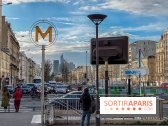
In Paris, as in other French cities, streets may be temporarily closed, metro stations made inaccessible, or security perimeters put in place. The situation can also change quickly, making it useful to know a few precautions before continuing your visit.
If you see a march nearby, it’s better to move away along an accessible street rather than try to cross through it. There’s no need to run or panic: the aim is to keep a certain distance from the gathering and head to a quieter area. If you’re with children or travelling in a group, make sure you stay together and agree on a meeting point in case you get separated.
Also avoid stopping in the middle of the protesters’ flow to take photographs or film the procession. Even when things seem calm, the situation can change, and crowd movements can make it difficult to get around. The presence of a protest obviously does not mean that an entire neighborhood is dangerous or off-limits. Safety measures depend on the route, the circumstances and the decisions made by local authorities.
If incidents occur nearby, the priority is to move away from the area of confrontation if you can do so safely. The U.S. State Department warns that some demonstrations can lead to clashes or property damage, and that law enforcement may use crowd-control measures, including tear gas or water cannons. A few precautions are particularly useful:
U.S. authorities recommend, in particular, finding a safe place to shelter when circumstances prevent people from moving away from a demonstration. The police prefecture also notes in its general safety guidelines that people should limit their movements and follow the instructions of emergency services and law enforcement in the event of danger.

If a situation becomes dangerous and it is no longer safe to leave the street, an open, accessible establishment may provide temporary shelter, subject to instructions from staff and the authorities. A hotel, a business or a building open to the public can thus offer a way to move away temporarily from a troubled area. However, do not force your way into an establishment or assume that it is automatically accessible.
Once you are somewhere safe, keep an eye on official updates before resuming your journey. If you are told to evacuate, follow the instructions given at the scene. Tourists staying near a demonstration may also find it helpful to contact their hotel reception to find out which routes are still accessible and which itineraries are recommended.
Protests may lead to temporary closures of metro or RER stations, as well as bus diversions. These measures are sometimes taken at the request of the Paris police prefecture. If your usual station is inaccessible, do not try to reach another closed entrance or cross the barriers that have been put in place. Instead, check the information published by the RATP and Île-de-France Mobilités to find an alternative route.
A station farther away may remain open, but check that the walk to get there does not pass through a restricted area. Taxis and ride-hailing services may be an alternative, but they do not have blanket authorization to cross police cordons. Their journeys may also be slowed by detours. If you are heading to a train station, airport or booked activity, it is best to notify the transport operator or the establishment concerned if disruptions could delay your arrival.
If you are injured, witness a dangerous situation, or face an emergency requiring intervention, several toll-free numbers are available in France:
These numbers should be used only in situations that genuinely require emergency services. For a simple question about a route or a station closure, it is better to check the transport information services. In an emergency, give your location, the nature of the problem and the number of people involved as precisely as possible.
To avoid accidentally finding yourself in the middle of a procession, it is useful to check local information before setting out to explore a city. In Paris, the police prefecture publishes, among other things, orders relating to traffic bans, security perimeters and restrictions in place during certain demonstrations. Information from the City of Paris, RATP and Île-de-France Mobilités can supplement these announcements.
In other French cities, prefectures and municipal authorities are also providing information on traffic measures and expected disruptions. Foreign visitors can consult their own government’s travel advice; some embassies issue alerts when large gatherings are expected.
A protest can nevertheless form or change route with little notice. Official information should therefore be checked regularly, particularly when travel is planned in busy neighborhoods. For tourists, the key is to keep some flexibility in their plans. By staying alert to official guidance and choosing routes away from areas of tension, it is entirely possible to continue their stay without finding themselves at the center of events.
This page may contain AI-assisted elements, more information here.