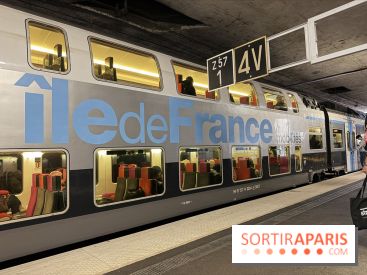
Your train has been cancelled in the middle of the holiday season, throwing your plans into disarray? Whether it’s a TGV between Paris and Lyon, a TER to reach a tourist destination or an Eurostar to get back to London, a rail strike can disrupt a trip in France.
Fortunately, travelers have several options for obtaining a refund, postponing their departure or continuing their journey. European Regulation No. 2021/782 sets out passengers’ rights, although some arrangements vary by operator and rail service.
The first thing to do is check that your train has actually been cancelled before giving up on your trip or buying a new ticket. In the event of a disruption, SNCF Connect recommends checking the service status using your train number and departure date. Operators such as SNCF Voyageurs, OUIGO and Eurostar may also notify customers by email or text message. An announcement of a strike does not necessarily mean that all trains have been cancelled.
Yes, when a cancellation results in a foreseeable delay of at least 60 minutes at your destination, European regulations allow you to choose from three options:
For TGV INOUI and INTERCITÉS trains, SNCF Voyageurs may also introduce exceptional commercial measures allowing passengers to exchange or cancel tickets that are normally non-refundable.
Warning: when a train is canceled, a refund is not necessarily automatic. SNCF Connect notes in particular that you must cancel your ticket in accordance with the conditions specified by the carrier. The rules may differ for TER and certain regional services, which are subject to special provisions. You should therefore check the information provided by the relevant company or region.
The European regulation provides for a right to rerouting under comparable conditions when a cancellation is expected to cause a delay of at least one hour. The railway company must offer a solution for reaching the final destination. If it does not provide any rerouting options within 100 minutes of the scheduled departure time of the cancelled train, passengers may arrange the rest of their journey themselves using another public transport service, including a train, coach or bus. They can then claim a refund of the necessary, appropriate and reasonable costs incurred for this replacement transport.
This provision does not mean that all forms of transport can be booked freely at the carrier’s expense. Reimbursement for a taxi, rental car or plane ticket purchased on one’s own initiative is not automatically guaranteed under this rule. Before incurring significant costs, it is therefore best to ask the company for a solution and keep a record of the correspondence.
If the cancellation means having to wait for another train or spend an extra night there, the carrier must offer assistance in accordance with the conditions set out in European regulations. This may include:
These rights may apply in the event of a railway staff strike. However, having an overnight stay covered because you have to wait for another train should not be confused with being reimbursed for all the tourist bookings you miss. A hotel already booked at your destination, a missed excursion or an unused museum ticket is not automatically refunded by the railway company solely because the train was cancelled. If you pay any expenses upfront, keep the receipts and contact the carrier to find out about the reimbursement arrangements.
In addition to a refund or rerouting, some travelers may be entitled to compensation if their arrival at their destination is delayed. For services covered by the relevant provisions of the European regulation, the minimum amounts are as follows:
This compensation concerns, in particular, passengers who continue their journey or are rerouted, subject to the conditions set out in the regulation. It cannot be combined with a refund for a ticket the passenger has given up. Unlike certain extraordinary circumstances, a strike by the rail operator’s staff is not enough to release the carrier from its obligation to pay compensation. Other external events may, however, justify an exemption. Some companies also offer more favourable commercial guarantees. SNCF Voyageurs notably offers its G30 guarantee for eligible TGV INOUI and INTERCITÉS services, with compensation available for delays of 30 minutes or more.
The procedures are not the same for all tickets purchased in France.
Travelers who have booked several trains separately should be especially careful: the protections available if they miss a connection may not be the same as for a journey booked with a single ticket covering the entire trip.
To request a refund or compensation, start by contacting the relevant carrier, preferably through the channel you used to purchase the ticket. Have your booking reference, ticket, information about the train cancellation and any receipts for additional expenses ready.
European regulations stipulate that complaints concerning passengers’ rights must be submitted to the railway company within three months of the incident. The company must normally provide a reasoned response within one month, a deadline that may be extended to three months in certain justified cases. If the disagreement persists, mediation and appeal procedures are available.
For foreign tourists, the most important thing is to plan ahead: check the status of your train before heading to the station, look at the options offered by the transport operator, and don’t rush into buying a replacement ticket without knowing your rights. A strike can disrupt holiday plans, but it does not automatically deprive passengers of refunds, assistance or rerouting options.
This page may contain AI-assisted elements, more information here.