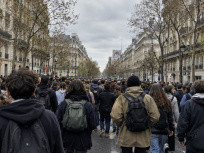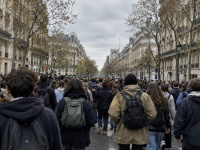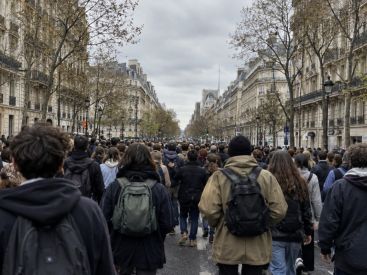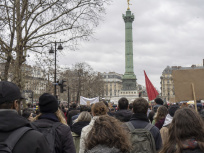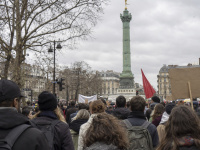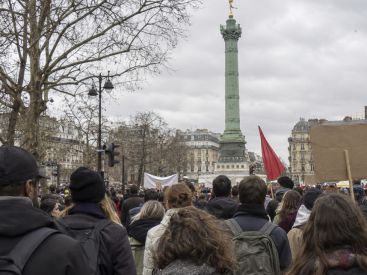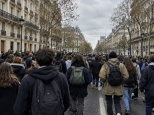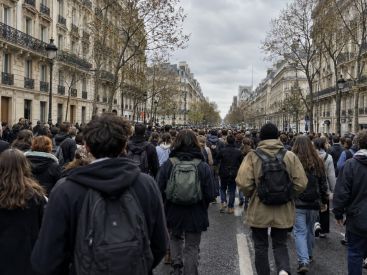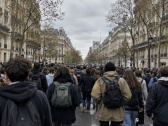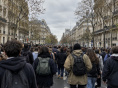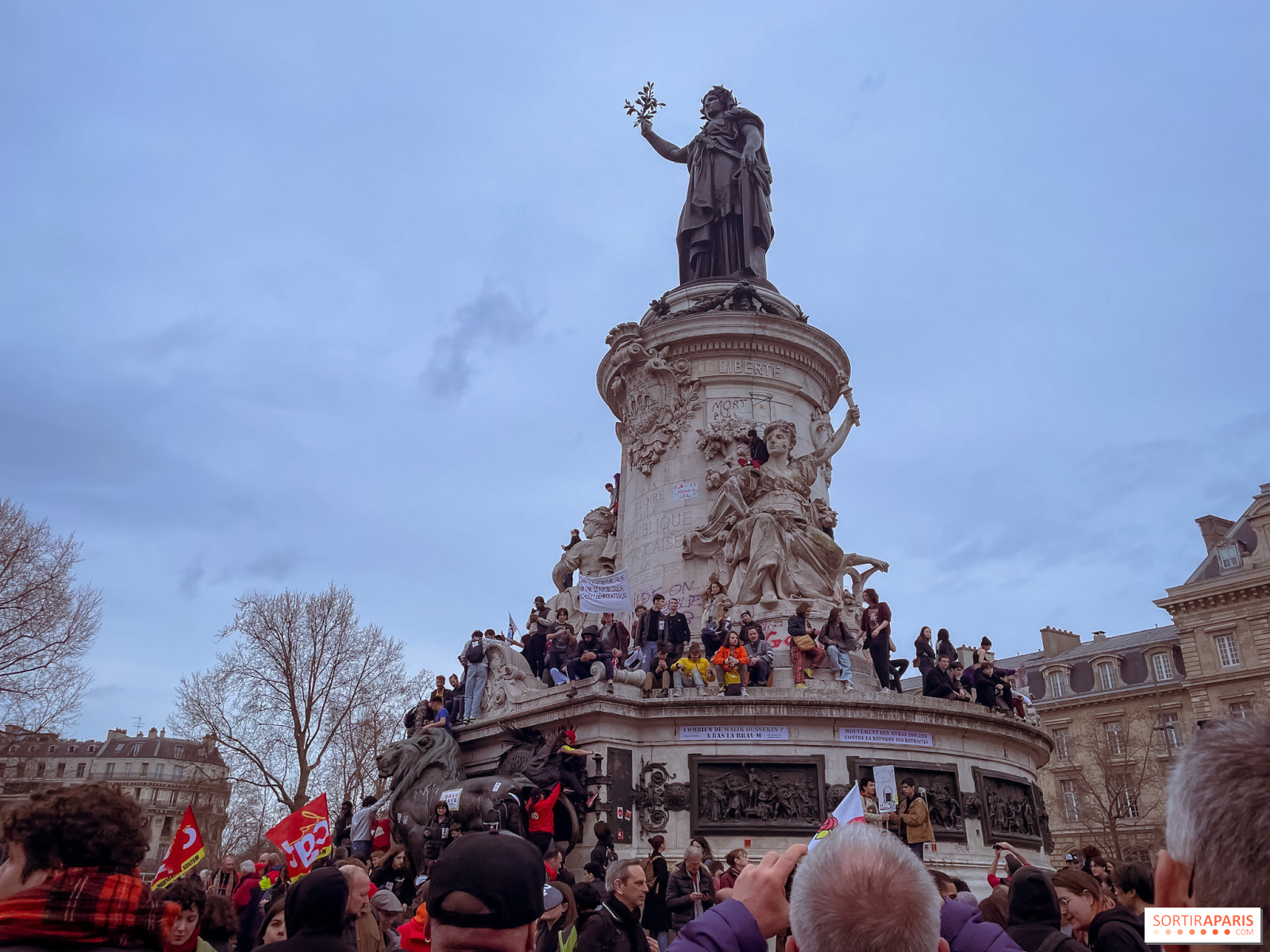
The November 17 strike is gaining further momentum. On Friday, November 13, 2026, after a meeting at Matignon on civil servants’ pay, the CFDT announced that it was joining the call for a strike and mobilization across the public sector. It joins the public-sector inter-union alliance, the CGT—which has extended the call to the private sector—and student and high-school organizations. That same day, CGT, SUD-Rail and CFDT railway workers also called a strike at SNCF. In Paris (75) and throughout the Île-de-France region, Tuesday, November 17 is therefore shaping up to be a major day of strikes and demonstrations, with a Paris march planned between Les Invalides and Place d’Italie.
What sparked the backlash? The announcement on November 9 of an increase in the minimum wage, which is set to bring it to €1,502 net. A symbolic figure for the government, but far too little for the union confederation.
For Sophie Binet, it doesn’t add up. The government is announcing an extra €24 from December 1, even though the minimum wage was already due to rise by around €18 on January 1 under the automatic increase. In other words, the real boost would amount to just a few euros. The head of the CGT calls it “crumbs.”
The union is demanding much more: an increase of around €150 net per month and wages indexed to inflation. Sophie Binet warns that the mobilization will continue until wages rise, and is calling for negotiations to begin at all companies. The full list of demands can be found on the CGT website.
The union confederation does not want to limit the strike to the civil service. In a statement titled “On November 17, in the public and private sectors: let’s make the strike widespread!”, it is calling on workers “in every company and every sector” to meet in general assemblies to decide whether to strike. “On November 5, the country rose up en masse. On November 17, it must go on strike!” the CGT writes.
The CGT is not alone. Even before the social conference had ended, a inter-union group representing public-sector workers had already set a strike day for November 17. It comprises six organizations: the CGT, UNSA, FSU, Solidaires, CFE-CGC and FAFP. They are calling for immediate pay rises, an increase in the value of the index point and its indexation to inflation, as franceinfo reports. The index point, which is used to calculate civil servants’ salaries, has been frozen for the fourth year running, while inflation reached 3.4% in October, the unions note in their joint call. They are also calling for the waiting day before sick-leave benefits begin to be abolished.
The UNSA has also broadened its call. In a statement signed by its general secretary, Laurent Escure, the confederation is calling for “a day of interprofessional action and strikes on November 17” in support of public services and wage negotiations in companies, reports UNSA Éducation. It considers the €23.65 increase in the Smic insufficient, given the €100 to €150 demanded by the unions.
The inter-union front does not stop there. According to the statement shared by CGT État, FSU and Solidaires are also joining the call to action in both the public and private sectors. For civil servants, UFSE-CGT has filed a strike notice covering the period from November 1 to December 31, 2026.
Young people will also be taking part. On Tuesday, November 10, ahead of the Paris march from the Panthéon to Place d'Italie, the youth union coalition (Union étudiante, Union syndicale lycéenne, Unef and Fage) called for another demonstration on Saturday, November 14, and then urged people to join the action on the 17th, franceinfo reports.
The last major public-sector union organization still holding back, the CFDT finally took the plunge on Friday, November 13 (we explain why just below). Force Ouvrière is among the signatories of the Île-de-France inter-union coalition that submitted the route for the Paris march. As for public opinion, the movement continues to enjoy broad support among the French, according to a poll published by HuffPost.
Absent from the social conference on November 9, the eight representative public-sector unions met with Sébastien Lecornu on the morning of Friday, November 13. They came with three demands: raise pay scales, unfreeze the index point and scrap the waiting day. After the meeting, the prime minister announced a month of talks on five areas, including a pay rise for the lowest-paid workers.
Not enough to convince the CFDT. In a statement carried by franceinfo, the public sector’s third-largest union says these proposals “do not represent any real progress,” given that hundreds of thousands of public-sector workers will continue to earn a base salary below the minimum wage. It is therefore joining the call for a strike across public services.
The government, for its part, continues to rule out a general increase in the index point. It argues that a 1% increase would cost the state €2.4 billion, while the public deficit is expected to reach 5.4% of GDP in 2026.
The prime minister is defending a 1.6% increase in the minimum wage on December 1, which he describes as one of the biggest rises in 20 years and says will not threaten jobs. The social conference convened at Matignon also resulted in a series of measures to boost purchasing power, championed by Minister Serge Papin:
For his part, Economy Minister Roland Lescure announced that the fuel bonus would be extended into 2027. This tax-free benefit, which employers can pay to their employees, can amount to up to €1,000.
In a more measured tone, the CFDT also considers the increase in the minimum wage insufficient. However, Marylise Léon welcomes one new development: some business subsidies will now be conditional on sector-level negotiations.
Employers, meanwhile, are unhappy for other reasons. The U2P sees it as yet another burden for businesses already under strain, while Entrepreneurs (formerly CPME) argues that they cannot be expected to do everything in the midst of a crisis. Speaking to franceinfo, Medef president Patrick Martin regrets that “the wrong answer is being given to a real problem” and argues instead for jobs and investment.
Since the call is aimed primarily at the public sector, public services are likely to be most affected: schools, canteens, daycare centers, town halls, government offices and hospitals. In nursery and elementary schools, teachers must declare their intention to strike at least 48 hours in advance, and the City provides a minimum childcare service if at least a quarter of them go on strike. The situation at each school will therefore not be known until the day before November 17.
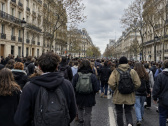
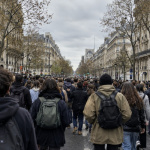
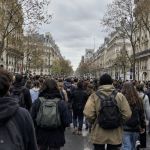
The route requested by the unions is now known. The Île-de-France regional inter-union group (CFDT, CFE-CGC, CGT, FSU, FO, Solidaires, UNSA, Union étudiante, Unef and Fage) has submitted a route between Place des Invalides (7th arrondissement) and Place d'Italie (13th arrondissement) to the police prefecture. This Sunday, November 15, two days before the march, the start time has still not been announced, and the prefecture has yet to approve the route. In recent weeks, it has favored routes along the edge of the city center: the November 5 march ultimately went from République to Nation, as we explained in our article on the route imposed by the prefecture.
In its statement, the inter-union also denounces the numerous closures of metro stations in Paris and SNCF railway stations in the suburbs during previous demonstrations, as well as the late publication of police prefecture orders, which makes it impossible to plan journeys in advance. It promises to use every means at its disposal to uphold the right to demonstrate.
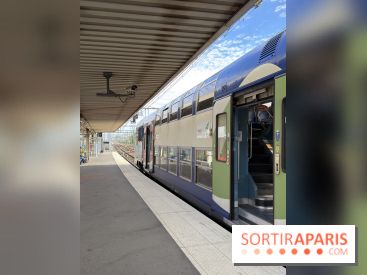
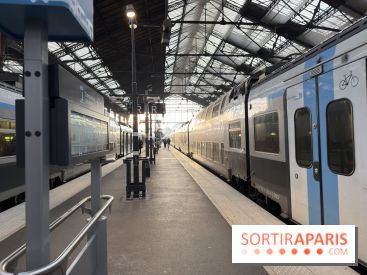
On the transport front, the situation has changed. At SNCF, the CGT-Cheminots, SUD-Rail and CFDT-Cheminots unions are jointly calling a strike for Tuesday, November 17, saying the response following the social conference was inadequate, according to their joint call. The CGT-Cheminots strike notice, which runs until December 15, covers that day. Trains, RER and Transilien services may therefore be disrupted: the service plan is expected on SNCF Connect this Monday, November 16. For all the details, line by line, see our article on the SNCF and RATP strike on November 17. At RATP, no strike notice specifically for November 17 has been announced so far. During previous strike days, the police prefecture also requested the closure of several metro stations along the march route. If that happens again, our article on how to get around despite the demonstrations may come in handy. Follow all the latest information on marches in Paris in our guide to demonstrations in Paris.
SNCF and RATP strike on November 17: what to expect on the RER, Transilien and metro lines
SNCF and RATP strike on Tuesday, November 17, 2026: CGT, SUD-Rail and CFDT rail workers are calling a strike, and RER and Transilien services could be disrupted in Île-de-France. As for the metro, no strike notice specific to the RATP has been announced. Traffic forecasts are expected this Monday, November 16. [Read more]
Strike and demonstration in Paris on November 17: the Île-de-France inter-union coalition has submitted a route between Les Invalides and Place d’Italie for Tuesday, November 17, 2026, but with just two days to go before the march, the police prefecture has yet to give it the green light. [Read more]


































 SNCF and RATP strike on November 17: what to expect on the RER, Transilien and metro lines
 November 17 protest in Paris: What route is planned for Tuesday?