La plus précieuse des marchandises, directed by Michel Hazanavicius, is one of the most eagerly awaited animated films of the year. Adapted from Jean-Claude Grumberg's novel of the same name, the film has already captivated audiences at festivals such as Cannes and Annecy. Tackling the Holocaust through a poetic and moving fable, Hazanavicius succeeds with rare mastery in combining the harshness of history with the beauty of animation.
La plus précieuse des marchandises is broadcast on Canal+ on Tuesday, May 27, 2025 at 9:10 pm.
Synopsis: Once upon a time, in a big wood, there was a poor woodcutter and a poor woodcutter's wife.
Cold, hunger, misery, and war all around them, made their lives very difficult.
One day, the poor woodcutter took in a baby. A baby thrown from one of the many trains that constantly passed through their woods.
Protected at all costs, this baby, this little commodity, will change the lives of this woman, her husband, and all those who will cross her destiny, right up to the man who threw her off the train.
Their story will reveal the worst and the best of human hearts.
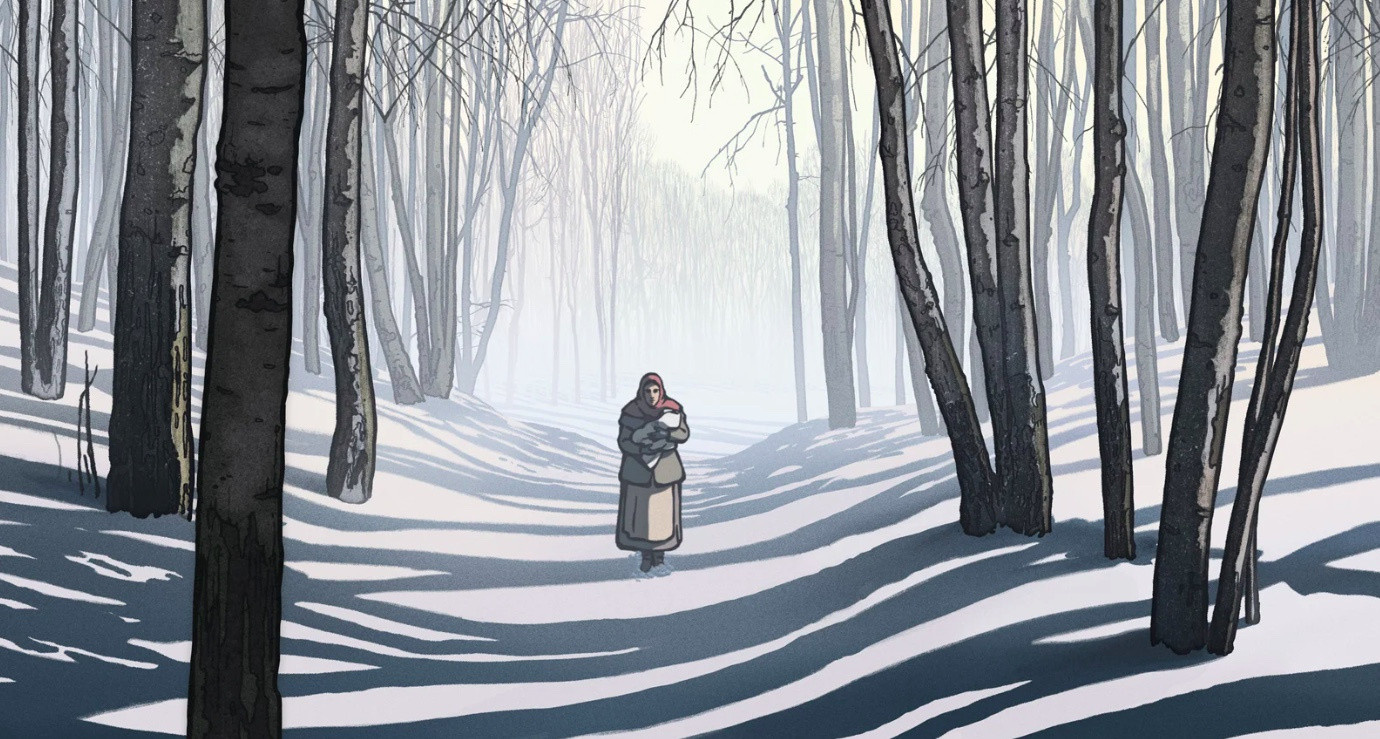
Set during the Second World War, the story tells of a couple of lumberjacks who survive in the forest near the tracks where deportation trains pass. One day, the wife, desperate to have a child, finds a baby thrown from a train carrying Jewish deportees and decides to save it, despite her husband's fierce opposition. Her husband, who describes the deportees as "heartless", initially refuses to share their misery with the child. This poignant tale, which combines the elements of a fairy tale with those of a historical drama, explores universal themes such as hope, compassion and survival in the face of the unspeakable.
The film manages to transform a tragic event - the Holocaust - into an intimate and touching story, accessible even to younger generations thanks to its symbolic visual and narrative approach. Through the child's act of rescue, the film asks viewers about human nature andempathy, even in the most terrible of circumstances. The woodcutter, with her desperate plea to the "train god" to give her "one tiny commodity", embodies this unwavering quest for life, even in a world ravaged by death.
The film is recognized for its exceptional visual quality. Michel Hazanavicius draws inspiration from the great names of European animation, such as Le Sommet des Dieux and La Tortue Rouge, to create a unique style blending realism and poetry. The scenes are imbued with great visual intensity, particularly in the use of light and smoke, which reinforce thedreamlike atmosphere while recalling the harsh reality of historical events.
This contemplative animation allows the film to capture both the icy immensity of the forests where the lumberjacks live, and the silent violence of the trains transporting innocent people to a tragic end. The choice of showing the din of the trains crossing the forest, transporting the "heartless", adds an oppressive dimension of sound, contrasting with the heavy silence that often surrounds the characters.
The Most Valuable Commodity boasts a prestigious voice cast. Michel Hazanavicius has brought together some of the most respected voices in French cinema, who infuse this fable with undeniable emotional power. Jean-Louis Trintignant, in one of his last roles before his death, embodies the voice of the narrator, bringing a unique gravity and wisdom to the story. His voice, soft and imbued with a deep melancholy, envelops the story in a mythical aura. This narration, often tinged with sadness but full of hope, plays a central role in the film's poetic dimension.
Dominique Blanc lends her voice to the woodcutter, intensely embodying the beating heart of the film. In her desperate search for a child, her voice vibrates with infinite tenderness, but also with indomitable strength, as she defies danger to save the baby she has found. Meanwhile, Grégory Gadebois, in the role of the lumberjack, captures the tension between fear and survival instinct with his deep, gruff voice. His character, who initially refuses to become attached to the child, finds a hidden humanity in the modulations of Gadebois' voice, giving this transformation a powerful emotional resonance.
Denis Podalydès, as the baby's father, delivers a performance as understated as it is poignant. His voice, imbued with pain and resignation, resonates in the rare moments when his character speaks, making palpable the desperate love that drives him to throw his child off the train in a final gesture of hope.
What distinguishes The Most Precious Commodity from other films about the Holocaust is his choice to treat the subject as a tale, while remaining respectful of the gravity of the events. Hazanavicius does not seek to minimize the horror of the situation, but to wrap it in a certain poetic distance that allows for a universal reflection on suffering and hope. The film is a tribute to human resilience, exemplified by a pair of lumberjacks confronted with the inhumanity of deportation, but who still find the strength to save a life.
The film's slowness, perceived by some as a hindrance, is in fact a deliberate artistic choice, allowing viewers to absorb the context and ponder each action. This slowness accentuates the weight of silences and unspoken words, essential for tackling such a delicate subject. The parallel between the uninterrupted movement of the trains and the heavy immobility of the forest creates a constant tension that illustrates the absurdity and cruelty of this historical period.
The Most Precious Commodity is a deeply moving work, using the power of animation to tell a story that is both intimate and universal. Thanks to exceptional animation, poignant vocal performances and a poetic approach that respects history, Michel Hazanavicius delivers a memorable film that is both a tribute to hope and a reflection on human nature in wartime.
La plus précieuse des marchandises is a must-see for viewers in search of historical narratives treated with sensitivity and originality, and for animation fans in search of a visually and emotionally striking work.
TV schedule for September 14–20, 2026: our pick of the week
Discover our picks for the TV schedule from September 14 to 20, 2026: the best films, series, and programs airing on television this week. [Read more]
Netflix, Disney+, Prime Video, Apple TV+, HBO Max, Paramount+... Explore the films, series and on-demand releases to watch in September 2026 across streaming platforms. [Read more]
Today's new streaming releases: movies and series added today to Netflix, Prime Video, Disney+, Apple TV+, HBO Max, Paramount+, and VOD. [Read more]










 TV schedule for September 14–20, 2026: our pick of the week


 September 2026 streaming highlights: films and series to watch on Netflix, Disney+, Prime Video


 What to watch today on streaming? Today's new releases