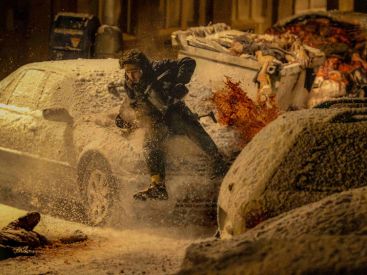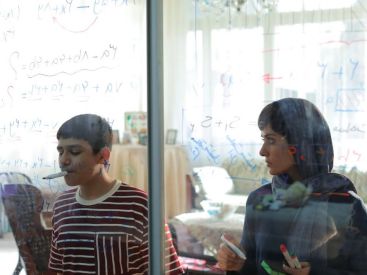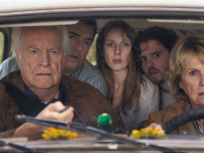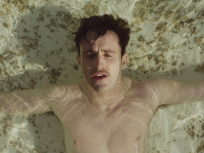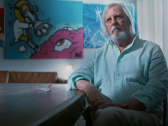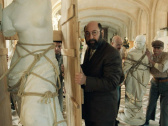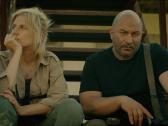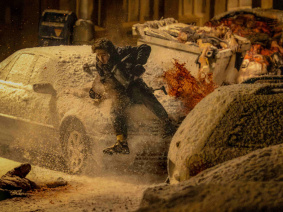
The Ugly, the new thriller from South Korean director Yeon Sang-ho, best known for Last Train to Busan, hits theaters on July 29, 2026. Led by Park Jeong-min, Kwon Hae-hyo, Shin Hyun-been and Han Ji-hyeon, the film unfolds as a dark, family-centered investigation into prejudice, memory, and social violence.
In The Ugly, Yeon Sang-ho keeps probing the gray areas of Korean society, but this time he leaves behind the fantasy and the spectacular. Adapted from his own graphic novel Face, published in 2018, the film leans toward a more intimate approach, structured around testimonies, memories, and reflections on the past.
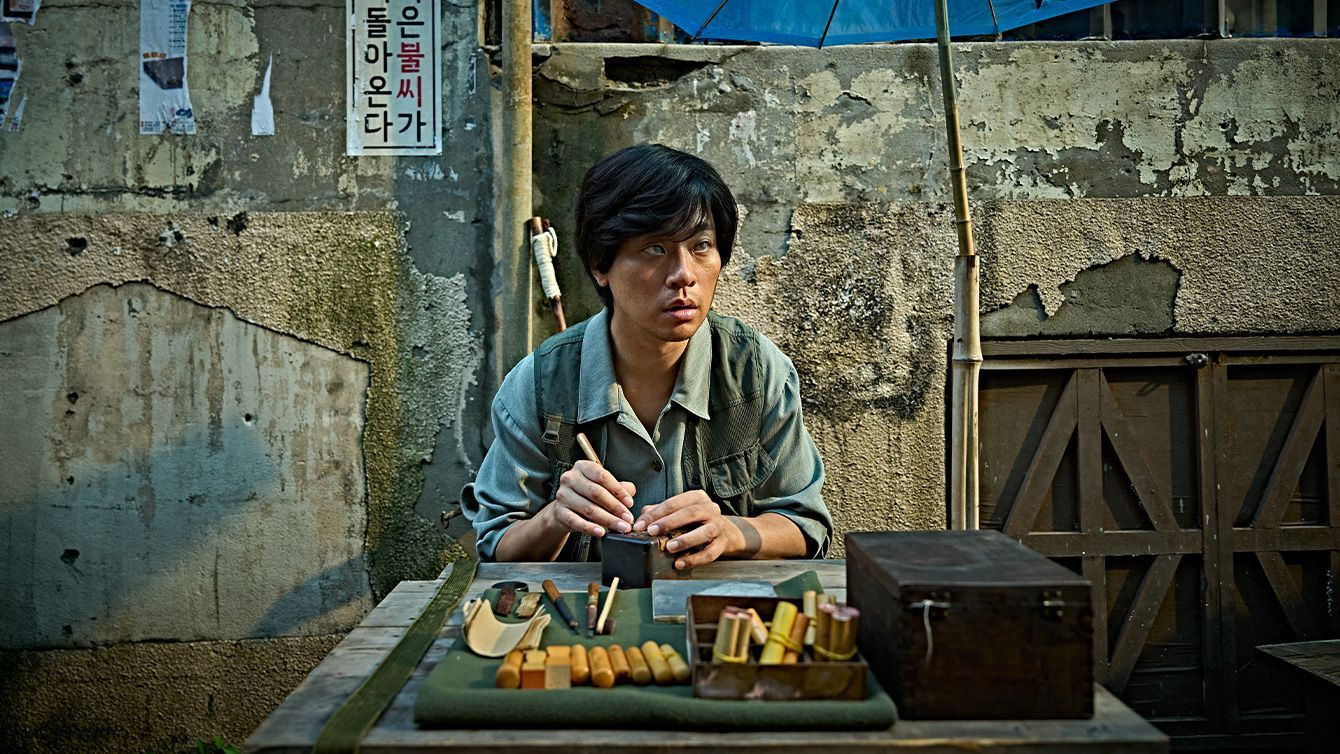
The story follows the son of a blind seal engraver who, after the bones of his mother are found—she vanished forty years ago—teams up with a television producer who had come to profile his father's remarkable work. Together, he strives to reconstruct the life of a woman whose relatives seem to remember only a supposed ugliness.
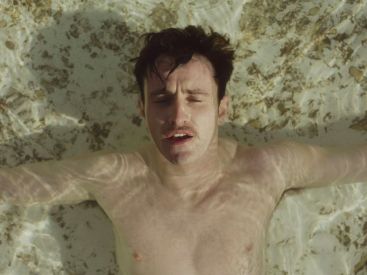
The cast brings together Park Jeong-min, who plays a double role—the son in the present and the father in his youth, Kwon Hae-hyo, Shin Hyun-been, and Han Ji-hyeon. Together, they carry a story where the tension arises less from police twists and more from contradictions, silences, and the violence simmering in the testimonies.
Far from the kinetic energy of Train to Busan, The Ugly comes across more as a family and moral autopsy than a straight crime thriller. A dark, densely dialogued proposition that probes how a society can reduce a person to appearances and turn a collective verdict into official truth.
Our take on The Ugly
In The Ugly, a face stays just out of reach, hidden behind framing, hair, and above all, the words of those who pretend to remember. What these witnesses describe with a cruelty that feels almost mechanical matters less than what their testimonies reveal about themselves. As the investigation unfolds, the supposed ugliness of a woman becomes the mirror not just of her, but of a family—and of a society—much larger than her.
Yeon Sang-ho steps away from crowds, zombies, and big, spectacular gestures to deliver a tightly wound drama focused on people and speech. The director builds his story through a sequence of interviews, each one peeling back a new memory from the past. The information lines up, clashes, and gradually undermines the celebratory narrative built around the father.
The case grips not so much with the puzzle’s complexity as with this accumulation of testimonies. Each new voice adds a layer of violence to the collective portrait. The words used to talk about the missing woman are humiliating, sometimes almost unbearable in their banality. A stripping nickname becomes an identity, as if her personality, desires, and dignity have been permanently replaced by the group’s verdict.
This construction might feel static or repetitive, yet it yields a suffocating atmosphere that matches the subject. Truth isn’t liberated by words at first: they reveal how a society crafts a convenient version of a human being. Witnesses justify themselves, downplay their deeds, or tell the cruelty as if it were an obvious legacy. Each interview thus becomes less a reliable source than a revelation of biases, cowardice, and personal interests.
The film’s great strength lies in the contrast between outward beauty and moral ugliness. The father, blind, is celebrated for the magnificent marks he leaves behind. Around him has grown the flattering image of an artist who has transcended his disability. Yet this public legend gradually exposes his private blind spots.
Those who do not see the faces do not escape social scrutiny or the shame it can provoke. The film starkly shows how the desire for elevation and recognition can lead us to treat the most vulnerable person as a humiliation or an obstacle. The character’s blindness thus isn’t a comforting symbol of indifference to appearances: it reveals how easily prejudice can be internalized without even looking.
This tension also runs through the producer’s character. She arrives to film the engraver’s talent, quickly realizing that a crime-and-family story could attract more attention. Her interest does propel a buried history to the surface, but the camera is never innocent. It retells a voice while selecting what will become a more saleable subject. The Ugly thereby questions the delicate boundary between exposing injustice and turning suffering into spectacle.
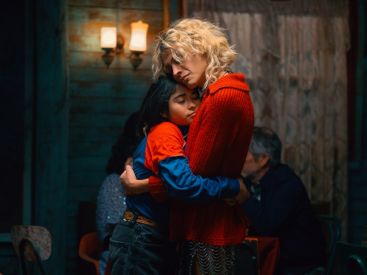
Backdrops of industrial Korea in the 1970s widen the family tragedy into a broader social violence. In the working-class world the film portrays, women bear the brunt of humiliations, blows, assaults, and the authority of men protected by their status. The brutality aimed at the mother isn’t the product of a few exceptionally cruel individuals. It thrives in a system where class, gender, and appearance determine one’s worth.
The film piles up images of ordinary violence: colleagues who humiliate without remorse, a supervisor who abuses power, a family more concerned with lineage than with the deceased, a husband who views his wife as a drag on his own ascent. Everything seems “ugly,” not for looks but for selfishness, opportunism, and a lack of empathy governing human relations.
Park Jeong-min, who plays the son in the present and the father in his youth, effectively guides this dialogue between generations. His double role embodies a lineage that has become uneasy: seeking the truth about his mother also forces the son to re-evaluate the man he once admired as his father. With restrained performance, the actor distinguishes the two characters while hinting at what can be transmitted from one era to the next.
Yet the setup isn’t without limits. Some characters embody a form of violence, cowardice, or hypocrisy so clearly that the dialogue sometimes feels written before they finish speaking. The cascade of revelations leaves little room for ambiguity, and the social demonstration may feel heavy-handed.
The mother remains for a long time trapped within others’ narratives about her. The film aims to give her back an existence, but her choice to conceal her face and continually defer her point of view also sustains the curiosity it seeks to challenge. This contradiction is unsettling: to indict the collective obsession with appearance, the story partly relies on that same obsession as a engine of suspense.
That limitation does not erase the film’s emotional pull. It makes it feel even more uncomfortable. The Ugly is gripping to watch, yet permeated by a almost inescapable sadness. The humiliations pile up until they sketch a world in which almost everyone preys on someone else’s vulnerability: to protect a reputation, to defend a social standing, to secure an inheritance, or to manufacture a more marketable narrative.
The film will likely appeal to fans of psychological thrillers, family investigations, and socially conscious South Korean cinema. It may also resonate with viewers who are sensitive to reflections on physical norms, patriarchy, memory, class violence, and the collective manufacture of prejudice. Curious readers who want a deeper, more intimate side of Yeon Sang-ho will find a work far removed from the energy of Train to Busan.
It may not suit those craving a fast-paced police thriller full of twists and red herrings. Its rhythm relies largely on dialogue, testimonies, and flashbacks. Viewers sensitive to repeated humiliations, sexual violence, beatings, and appearance-based harassment should also know the film treats these subjects with a persistent darkness.
The Ugly ultimately tells not the story of a plain woman, but of a woman whom others have decided to reduce to that word. Despite occasional overstatement, Yeon Sang-ho builds a gripping family-and-societal autopsy whose true mystery isn’t a hidden face but how easily ordinary people learn to stop seeing another person’s humanity.
To extend your cinema experience, check out the July movie releases, the films currently worth seeing, and our pick of the year’s thrillers.
This page may contain AI-assisted elements, more information here.