Visiting Paris while hunted for murder: the worst postcard imaginable for Lara Croft. In Tomb Raider : L’Ange des ténèbres, developed by Core Design and released in 2003 on PS2 and PC, the adventurer touches down in the capital to track down her former mentor, Werner Von Croy. After his death, she becomes a murder suspect. She’s now a fugitive, forced to hunt for answers in a city that doesn’t seem willing to cut her any slack.
For the 30 years of Tomb Raider, in October 2026, this Parisian adventure deserves a second look. It frames Lara as she loses a bit of her usual swagger, running into closed doors, wary interlocutors, and an investigation that slips from her grasp. The tombs can wait: first, she needs to figure out who to talk to.

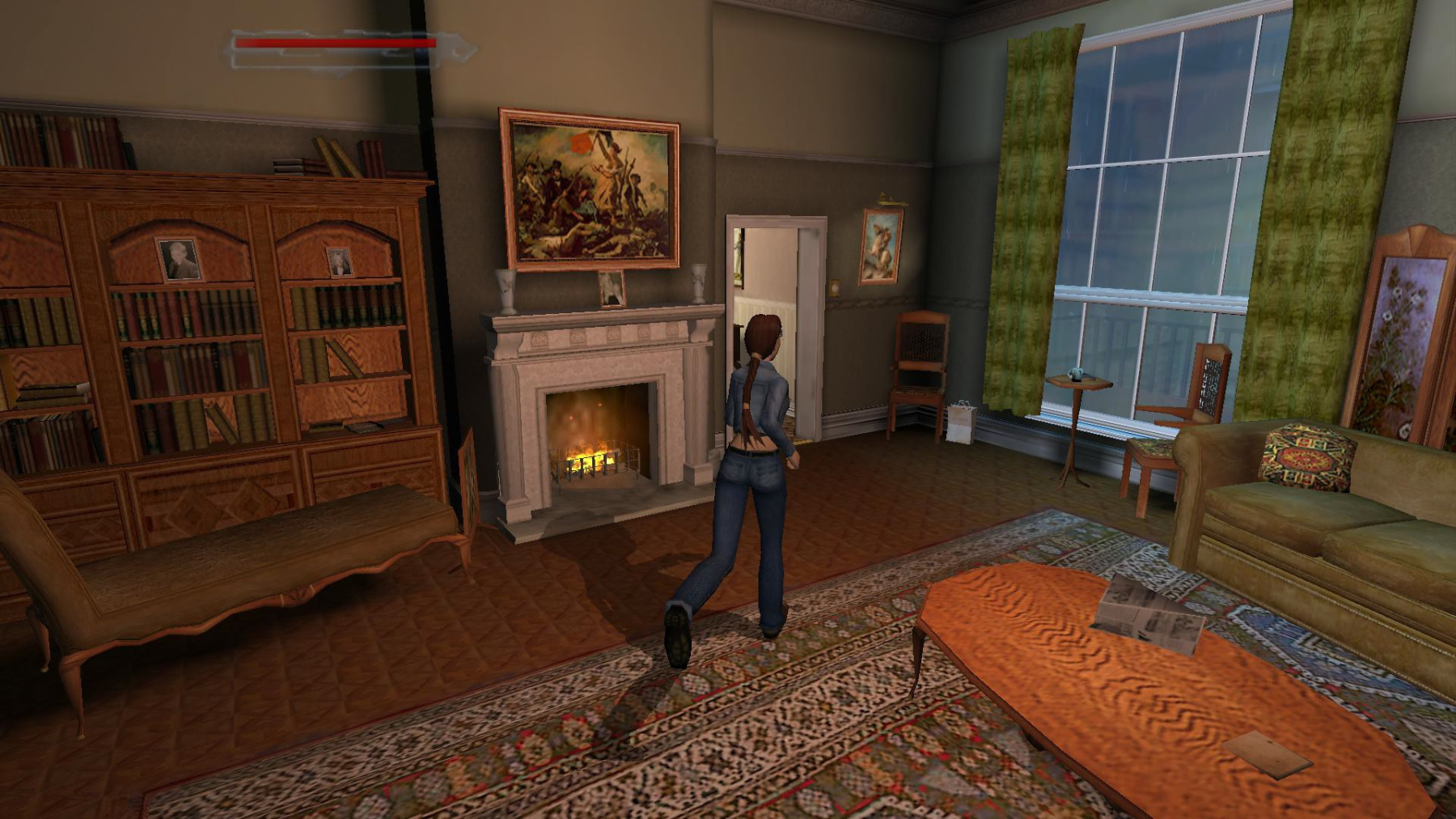
In Café Métro, at the Le Serpent Rouge club, or in the Rennes pawnshop, Lara is after information as much as she is after gear. An old church, Saint-Aicard, even houses a boxing gym. These spots give the adventure an unexpected face: you walk into shops, chat, and listen to other people’s stories. The city has a life of its own, with rules Lara must learn to navigate.
It would be tricky to map out his route with a Paris map. Core Design pieces together streets, courtyards, and buildings to serve its plot. This fictional Paris borrows heavily from noir: tired storefronts, back rooms, and shady encounters. The whole thing leans into clichés, even in the term "Parisian ghetto" used by the game, which says more about the creators’ imagination than about the capital’s geography.
But this setting also reshapes our relationship with the heroine. In the early adventures, Lara enters a location and figures out how to get through. Here, she must sometimes bargain her way through. Information becomes a currency, and the locals offer something she can’t obtain with her acrobatic skills alone.

The move to the Louvre pushes this idea even further. Lara slips inside, dodging guards and security measures. The museum, normally seen as a place of quiet contemplation, becomes a surveillance zone: every room has to be scanned to figure out where to go and when to move.

The adventure then plunges beneath the building, toward the Tomb of the Ancients and the Hall of the Seasons. These spaces are fictional. The real Louvre does indeed preserve the remains of a medieval fortress, but none of these imagined sanctuaries lie waiting beneath its galleries. Yet the game leans into a notion that will resonate with Paris enthusiasts: beneath a familiar place, another story can endure.
Despite its production challenges, The Angel of Darkness leaves a striking portrait of the capital. Lara turns cafés into investigative hubs, rooftops into shortcuts, and the museum into territory to infiltrate. It’s enough to view a Louvre service door with a touch more curiosity—while she keeps moving forward. And a Da Vinci Code before its time, in short...
This page may contain AI-assisted elements, more information here.


![KINGDOM HEARTS Collection [I–III] : la saga arrive sur PS5, Xbox Series et Nintendo Switch 2](https://cdn.sortiraparis.com/images/18/66131/1319970-kingdom-hearts-collection-la-saga-arrive-sur-ps5-xbox-series-et-nintendo-switch-2.jpg)
![KINGDOM HEARTS Collection [I–III] : la saga arrive sur PS5, Xbox Series et Nintendo Switch 2](https://cdn.sortiraparis.com/images/19/66131/1319970-kingdom-hearts-collection-la-saga-arrive-sur-ps5-xbox-series-et-nintendo-switch-2.jpg)
![KINGDOM HEARTS Collection [I–III] : la saga arrive sur PS5, Xbox Series et Nintendo Switch 2](https://cdn.sortiraparis.com/images/20/66131/1319970-kingdom-hearts-collection-la-saga-arrive-sur-ps5-xbox-series-et-nintendo-switch-2.jpg)


























![KINGDOM HEARTS Collection [I–III] : la saga arrive sur PS5, Xbox Series et Nintendo Switch 2](https://cdn.sortiraparis.com/images/1021/66131/1319970-kingdom-hearts-collection-la-saga-arrive-sur-ps5-xbox-series-et-nintendo-switch-2.jpg)
![KINGDOM HEARTS Collection [I–III] : la saga arrive sur PS5, Xbox Series et Nintendo Switch 2](https://cdn.sortiraparis.com/images/1022/66131/1319970-kingdom-hearts-collection-la-saga-arrive-sur-ps5-xbox-series-et-nintendo-switch-2.jpg)
![KINGDOM HEARTS Collection [I–III] : la saga arrive sur PS5, Xbox Series et Nintendo Switch 2](https://cdn.sortiraparis.com/images/1023/66131/1319970-kingdom-hearts-collection-la-saga-arrive-sur-ps5-xbox-series-et-nintendo-switch-2.jpg)
![KINGDOM HEARTS Collection [I–III] : la saga arrive sur PS5, Xbox Series et Nintendo Switch 2](https://cdn.sortiraparis.com/images/1024/66131/1319970-kingdom-hearts-collection-la-saga-arrive-sur-ps5-xbox-series-et-nintendo-switch-2.jpg)