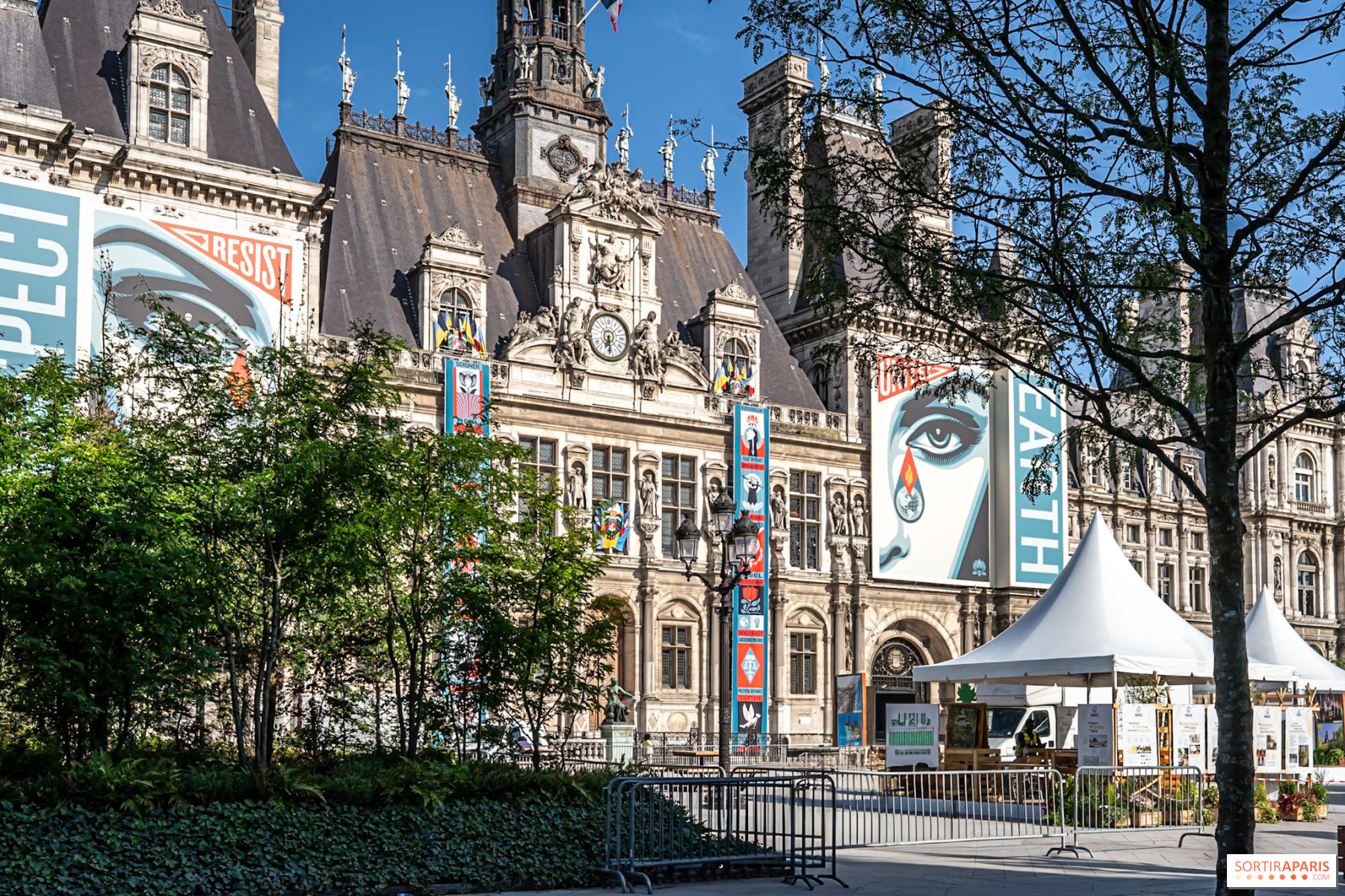
Before it became the symbol of social movements, " la grève" had another meaning. Long before banners and chanted slogans, the expression had a much more down-to-earth meaning. It originated... on the banks of the Seine, in Paris, more precisely in front of the Hôtel de Ville, on a square formerly known as the Place de Grève.
Basically, the word "grève" refers to a stretch of sand or gravel, often located on the water's edge. The Place de Grève, as it came to be known, bordered the Seine and was a vast, open space where unemployed workers gathered as early as the Middle Ages. These workers, hoping to find a daily job, would gather there at dawn, waiting for a craftsman, a foreman or a merchant looking for a hand.
In those days, "going on strike" meant standing in the Place de Grève in the hope of being recruited. It was a form of visible availability. Over the centuries, things evolved. When workers began refusing to work for better conditions, they continued to gather... in the same place. The Place de Grève, already associated with the world of work, naturally became the scene of protest rallies. This is how theexpression "faire la grève" came to be used semantically to designate the act of voluntarily ceasing work in protest. This shift in meaning would have crystallized in the XIXᵉ century, with the rise of the labor movement. It was no longer the waiting for a job, but the refusal to pursue it until rights were respected.
This page may contain AI-assisted elements, more information here.