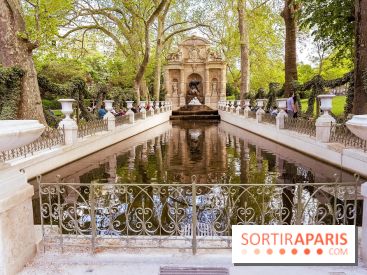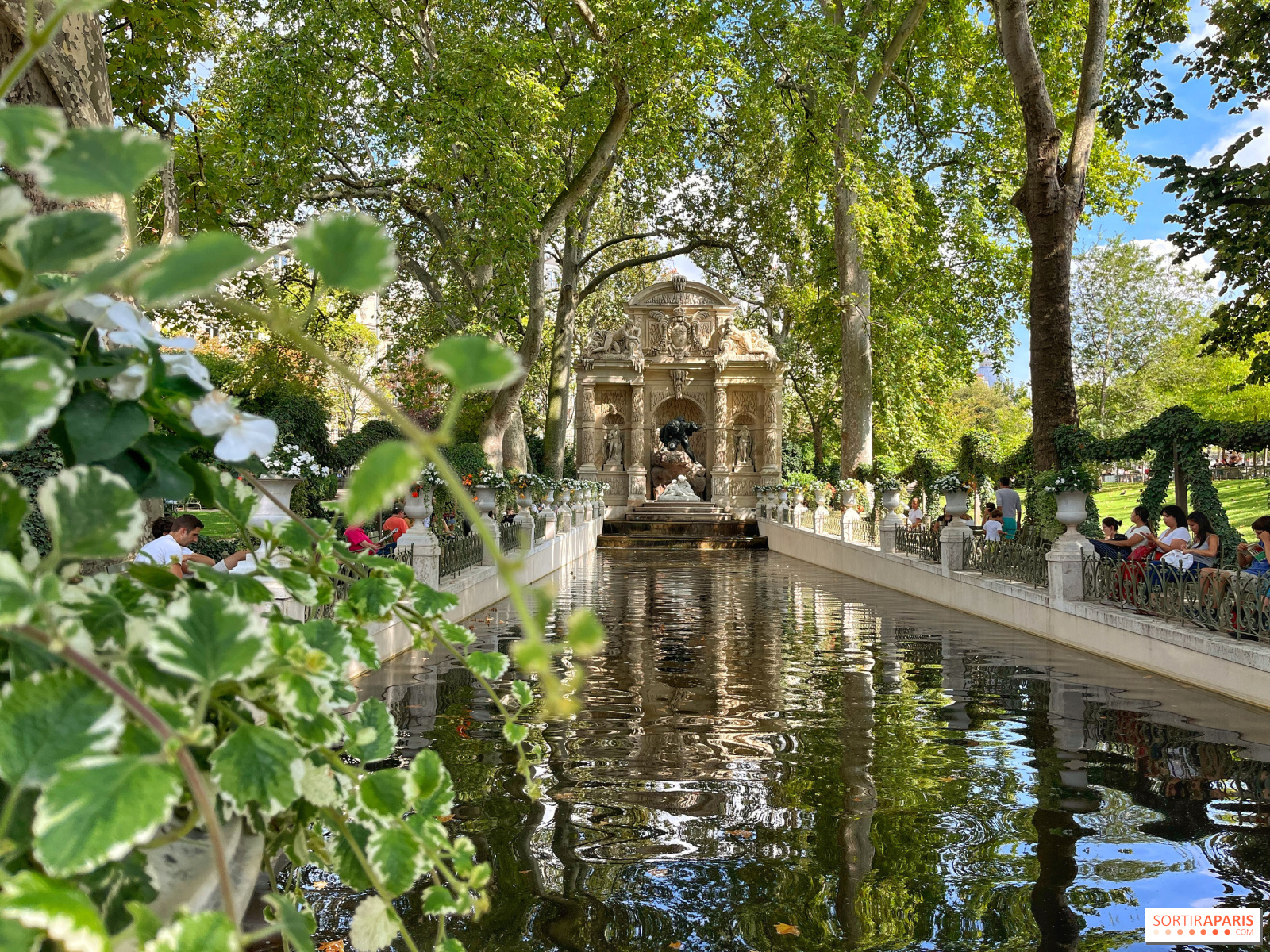
Within the lush setting of the Jardin du Luxembourg, the Fontaine Médicis commands attention with its tritons, its Cyclopes and the mythic couple. But what many people don’t know is the monument’s intricate history and its many transformations. Once a simple intimate grotto, it stands as the silent witness to hidden loves and a tormented destiny, mirroring the figures that dwell within it.
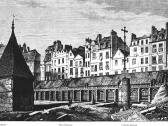
Originally, at the dawn of the seventeenth century, this fountain was merely a grotto built for Queen Marie de' Medici. Nostalgic for the Italian gardens of her childhood (notably the Boboli Gardens in Florence), she commissioned architect Salomon de Brosse to create a a cooling grotto for her new palace. It was an intimate place, designed for discreet meetings and moments of serenity far from the court's pomp. There one imagined whispers and budding loves sheltered from prying eyes.
However, the fountain's current appearance is markedly different from its original form. In the 19th century, the sweeping Haussmannian renovations threatened to destroy it. Miraculously saved, it was relocated and radically transformed by the architect Alphonse de Gisors. It is to him that the central sculptural group owes its existence: Polyphème surprenant Galatée dans les bras d'Acis.
This work, originally conceived for other gardens, is integrated into the fountain. It depicts a tragic love story: Polyphemus the cyclops, jealous of the romance between the nymph Galatea and the shepherd Acis, crushes them beneath a rock. A dramatic twist for what was once an "amorous grotto," which adds a dark and powerful dimension to the monument.
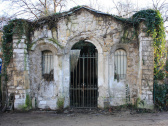
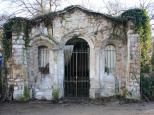
Few passers-by bother to walk around the monument. Yet the mystery lingers behind it! To reinforce the structure during its move, they leaned another fountain against it, rescued from another district: the Fontaine de Léda. This "recto-verso" monument is a unique Parisian case, merging two eras and two styles to save heritage from destruction.
Much newer than its neighbour (dating from 1806), the Leda Fountain was commissioned by Napoleon I. Originally, it adorned the district along Rue du Regard in the 6th arrondissement. This magnificent bas-relief depicts the mythological scene of Leda and the Swan (Zeus transformed). At the time, it stood as a classic street fountain where Parisians drew their drinking water.
The Medici Fountain is thus an architectural palimpsest; next time you walk past its majestic statues and listen to the soft murmur of the water, remember that this place holds a history far richer and more enigmatic than it appears.
This page may contain AI-assisted elements, more information here.
Location
Luxembourg Gardens
19 rue de Vaugirard
75006 Paris 6
Route planner