Victor Hugo, Marie Curie, Voltaire, Alexandre Dumas, Simone Veil... Inside Paris's Panthéon, the crypt holds the tombs of some of France’s most esteemed historical figures. But not every figure honored in the monument is actually buried there. Here are the best-known names laid to rest in the Panthéon and where to find their graves.
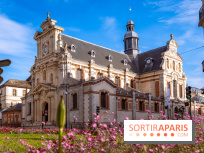
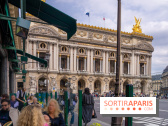
“ To Great Men, a Grateful Fatherland.” The inscription that dominates the façade of the Pantheon, in the 5th arrondissement of Paris, encapsulates the monument’s current purpose. Yet the building imagined by architect Jacques-Germain Soufflot was originally intended to be a church dedicated to Saint Genevieve. It was in 1791, in the midst of the French Revolution, that it became for the first time a necropolis intended to honor the great figures of the Nation.
After several shifts in its function during the 19th century, its status as the Panthéon was sealed in 1885, marked by Victor Hugo’s funeral. To encounter its most famous inhabitants, you must descend into the crypt, which comprises 26 vaults. Philosophers, writers, scientists, political leaders, resistance fighters and the dignitaries of the First Empire rub shoulders there, and today the site records 81 burials, including 42 Empire dignitaries.
One important clarification: être panthéonisé does not necessarily mean being buried in the Panthéon! Thus, Joséphine Baker is honored there by a cenotaph, while her remains lie in Monaco. Geneviève de Gaulle-Anthonioz and Germaine Tillion were also panthéonized without transferring their dépouilles.
The two oldest famous residents are Voltaire, admitted in 1791, and Jean-Jacques Rousseau, transferred in 1794. A small irony of history: the two philosophers, who maintained a decidedly contentious relationship in life, now lie facing each other.




The Panthéon’s most celebrated figures and the locations of their tombs
At the entrance to the crypt
- Voltaire, François-Marie Arouet (1694-1778) – a writer and Enlightenment philosopher, best known for Candide. His imposing tomb sits in the space just outside the galleries of the vaults.
- Jean-Jacques Rousseau (1712-1778) – philosopher and writer of the Enlightenment, author of the Social Contract and the Confessions. His tomb stands opposite Voltaire’s.
Vault VI
- Jean Moulin (1899-1943) – a prefect and a towering figure of the Resistance. An urn containing ashes attributed to him was moved to the Panthéon in 1964.
- André Malraux (1901-1976) – writer, resistance fighter and Minister of Culture under General de Gaulle, inducted into the Panthéon in 1996.
- Jean Monnet (1888-1979) – statesman and one of the chief architects of European integration, entered the Panthéon in 1988.
- Simone Veil (1927-2017) – Holocaust survivor, politician and former president of the European Parliament, renowned for advancing abortion rights. She has rested in the Panthéon since 2018.
- (1926-2013) – senior civil servant and politician, Simone Veil’s husband, transferred to the Panthéon with her in 2018.
Vault VII
- Nicolas de Condorcet (1743-1794) – a philosopher, mathematician and Enlightenment statesman. Note: his coffin is symbolic, as his remains have never been found.
- Henri Grégoire, known as Abbé Grégoire (1750-1831) – clergyman, revolutionary and relentless advocate for the abolition of slavery.
- Gaspard Monge (1746-1818) – mathematician, scientist and one of the founders of the École Polytechnique.
- Robert Badinter (1928-2024) – lawyer, former Keeper of the Seals and a towering figure in France’s abolition of the death penalty. Entered the Panthéon on October 9, 2025, honored there with a cenotaph: his remains were not transferred.
Vault VIII
- Pierre Curie (1859-1906) – a physicist, Nobel Prize in Physics in 1903 shared with Marie Curie and Henri Becquerel.
- Marie Curie (1867-1934) – a physicist and chemist, a double Nobel laureate. In 1995, she became the first woman to be admitted to the Pantheon for her own merits. Pierre and Marie Curie lie together in Vault VIII.
Vault IX
- Jean Zay (1904-1944) – Minister of National Education and Fine Arts under the Popular Front and a Resistance leader, assassinated by the Milice.
- Pierre Brossolette (1903-1944) – journalist and a leading figure of the Resistance.
- Geneviève de Gaulle-Anthonioz (1920-2002) – a Resistant and advocate against poverty. Her body is not in the vault: her coffin contains soil from her burial site.
- Germaine Tillion (1907-2008) – ethnologist and Resistance member, deported to Ravensbrück. Once again, her remains were not moved to the Pantheon.
Crypt XIII
- Maurice Genevoix (1890-1980) – writer and veteran of the First World War, author of Those of 14.
- Missak Manouchian (1906-1944) – poet and resistance fighter, leader of an FTP-MOI group, executed at Mont-Valérien in 1944. He entered the Pantheon in February 2024.
- Mélinée Manouchian (1913-1989) – resistance fighter and wife of Missak Manouchian, inducted into the Pantheon alongside him in 2024.
- Joséphine Baker (1906-1975) – artist, resistance fighter and anti-racist activist. Her cenotaph stands in this sector, but her remains lie in Monaco Cemetery.
Vault XXIV
- Victor Hugo (1802-1885) – towering writer, poet and statesman, author of Les Misérables and The Hunchback of Notre-Dame. His national funeral in 1885 cemented the Pantheon’s status as the nation’s temple of memory.
- Émile Zola (1840-1902) – novelist, creator of the Rougon-Macquart cycle and a central figure in the Dreyfus affair. His ashes were moved to the Pantheon in 1908.
- Alexandre Dumas (1802-1870) – novelist, author of The Three Musketeers and The Count of Monte Cristo, transferred to the Pantheon in 2002. Hugo, Zola and Dumas thus rest in the same vault.
Crypt No. 25
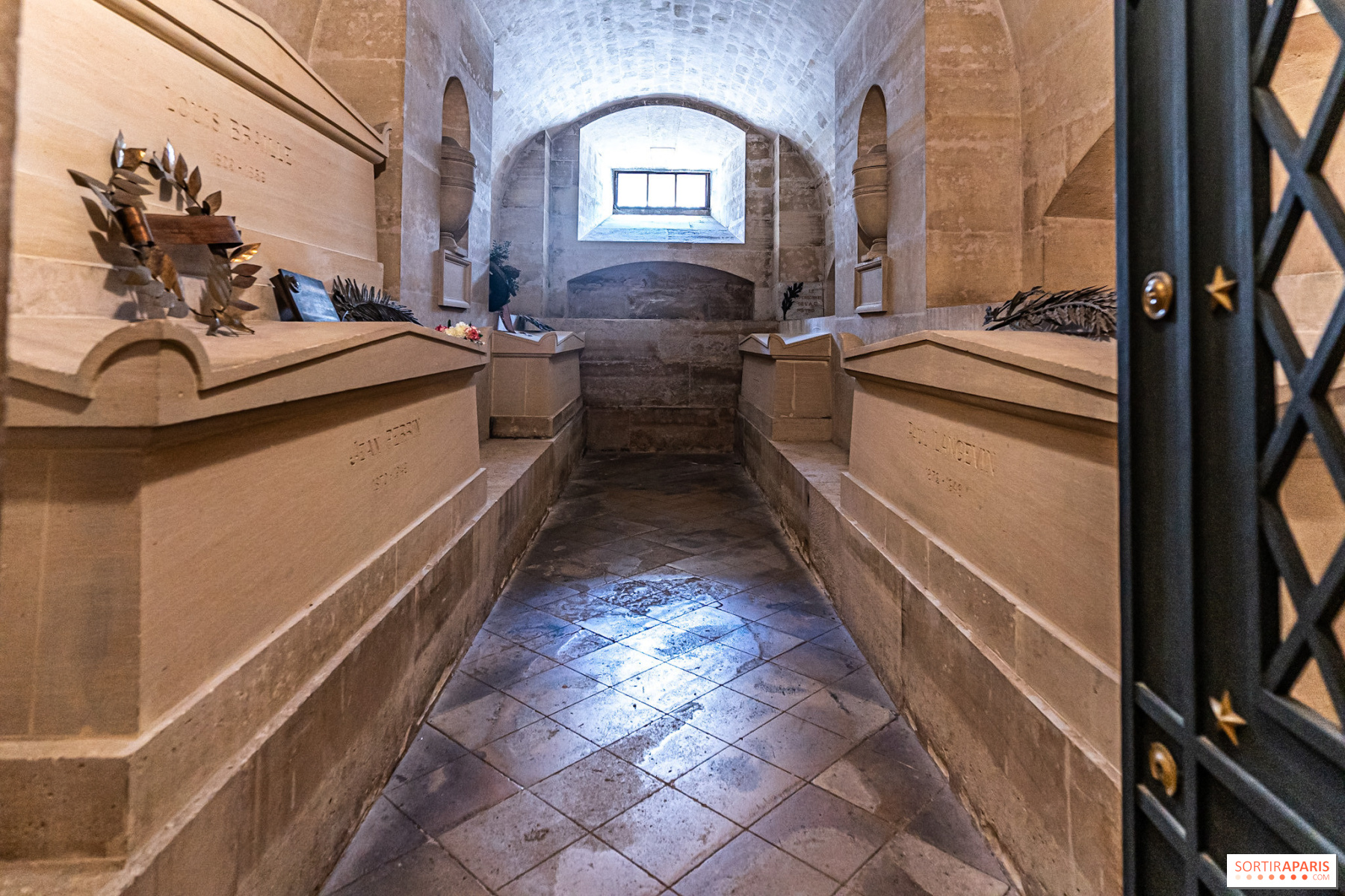
- Paul Langevin (1872–1946) – a physicist, a renowned scientist and public intellectual, inducted into the Pantheon in 1948.
- Jean Perrin (1870–1942) – a physicist and Nobel Prize in Physics laureate in 1926, also inducted into the Pantheon in 1948.
Vault XXVI
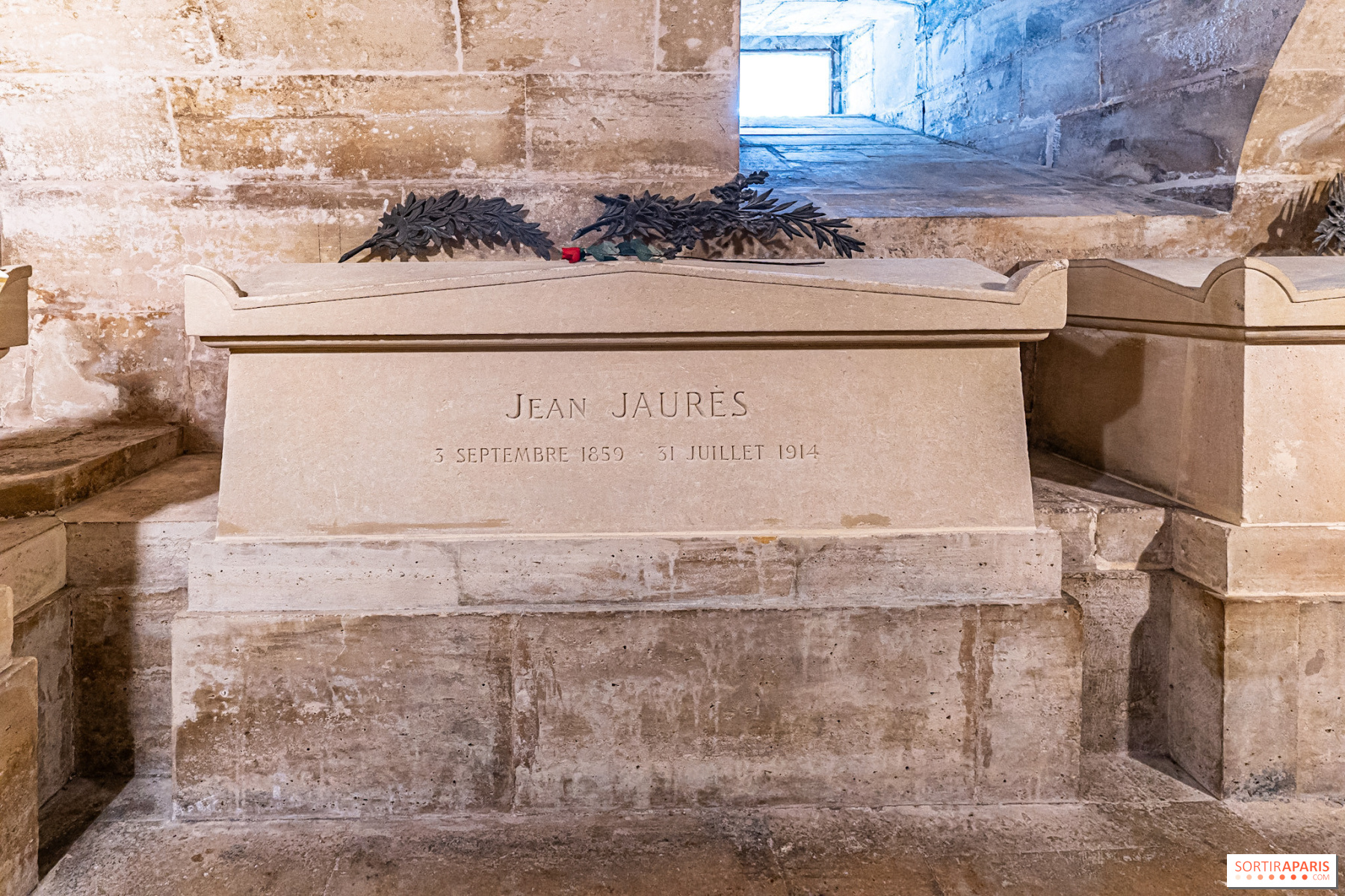
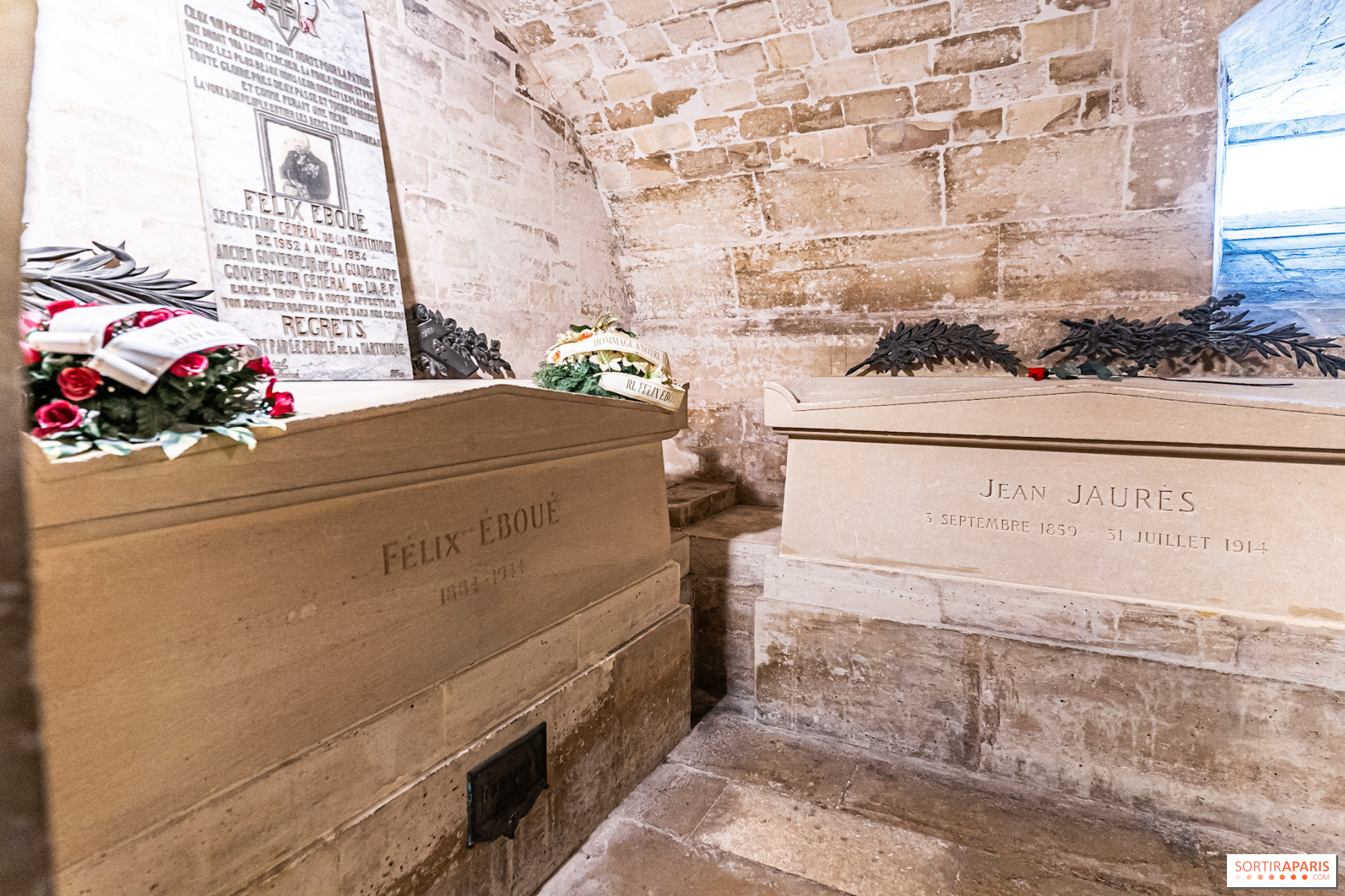
- Jean Jaurès (1859-1914) – a French politician, journalist and a towering figure of French socialism, assassinated in Paris on the eve of World War I. His remains were moved to the Panthéon in 1924.
- Félix Éboué (1884-1944) – colonial administrator and resistance fighter, one of the first senior officials to rally to Free France in 1940.
- Victor Schœlcher (1804-1893) – a politician and a leading figure in the fight to abolish slavery in 1848.
Other notable burials
- Louis Braille (1809-1852) – the inventor of the tactile writing system that bears his name, inducted into the Panthéon in 1952.
- Jacques-Germain Soufflot (1713-1780) – the Panthéon’s chief architect. A delightful tidbit: since 1829 he has rested in the very monument he designed.
- Marcellin Berthelot (1827-1907) – chemist and statesman.
- Sophie Berthelot (1837-1907) – wife of Marcellin Berthelot. She is buried alongside her husband and thus became the first woman interred at the Panthéon, though the honor was not conferred for her own merits.
- Sadi Carnot (1837-1894) – President of the French Republic, assassinated in Lyon in 1894.
- Lazare Carnot (1753-1823) – mathematician, general and politician of the French Revolution.
- Marc Bloch (1886-1944) – historian, cofounder of the École des Annales and Resistance fighter, executed by the Nazis. He entered the Panthéon on June 23, 2026, symbolically joined by his wife Simonne Bloch.



 The most beautiful cemeteries in Paris and Île-de-France, where history meets famous personalities
Between quiet reflection and a dive into history, the cemeteries of Paris and Île-de-France invite you to linger and wander among the graves of notable figures and illustrious unknowns. [Read more]
This page may contain AI-assisted elements, more information here.




















 The most beautiful cemeteries in Paris and Île-de-France, where history meets famous personalities