Overlooking the Montagne Sainte-Geneviève in the 5th arrondissement, this colossal monument hides a fascinating and tumultuous history. Originally conceived to be Paris’s most magnificent church, the Pantheon has ultimately traded its altars for the tombs of some of France’s most illustrious figures. An incredible transformation story, this site has evolved from sacred sanctuary to the secular temple of the Republic.
It all starts with a promise. In 1744, King Louis XV, gravely ill, vows to construct a grand cathedral dedicated to Sainte Geneviève if he recovers. Architect Jacques-Germain Soufflot envisions a masterpiece that combines the lightness of Gothic architecture with the majesty of classical antiquity. However, the construction spans decades, and just as the domed roof is completed, the French Revolution has already toppled the monarchy.
It was in 1791 that the building underwent a complete transformation in its purpose. No longer a place for worship, it became a site to honor the "Great Men." The church was then renamed the Pantheon. However, the structure faced an identity crisis for nearly a century, switching several times between different functions. It wasn't until 1885, during the grand funeral of Victor Hugo, that it officially and definitively became the mausoleum we know today.
While the nave leaves visitors in awe with its size and the famous Foucault pendulum, the real treasure lies beneath the surface. The crypt, a sprawling labyrinth of stone, now holds the remains of legendary figures like Voltaire, Rousseau, Émile Zola, Simone Veil, and Joséphine Baker. This is where the heart of French memory beats, in what was originally meant to be a simple monastic crypt.
If you're craving the intimacy of a small neighborhood church, you'll find that such places have long since vanished. The grandeur of vaulted ceilings and the solemn silence of the Pantheon’s crypt might evoke a gentle shiver of solitude—where drafts drift as freely as memories linger.
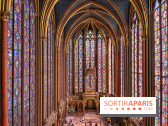
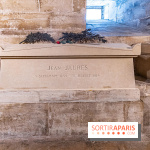
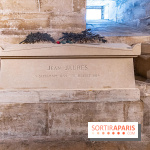
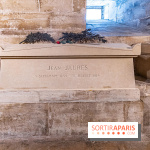
Who is interred in the Panthéon in Paris? The notable figures who have their tomb or cenotaph there
Victor Hugo, Marie Curie, Voltaire, Alexandre Dumas, Simone Veil... Inside Paris's Panthéon, the crypt holds the tombs of some of France’s most esteemed historical figures. But not every figure honored in the monument is actually buried there. Here are the best-known names laid to rest in the Panthéon and where to find their graves. [Read more]
Location
Paris Pantheon
Place du Panthéon
75005 Paris 5
Route planner
Access
Metro: Luxembourg / Cardinal Lemoine / Maubert Mutualité




























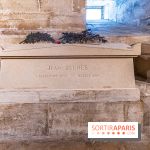 Who is interred in the Panthéon in Paris? The notable figures who have their tomb or cenotaph there