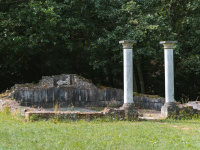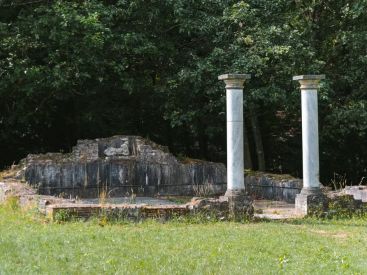
The name of Saint-Quentin-en-Yvelines hides a story that few Île-de-France residents suspect. This Yvelines conurbation, about twenty kilometers southwest of Paris, takes its name from a small medieval chapel that has vanished, dedicated to Saint Quentin, a 3rd‑century Roman martyr whose relics are said to have rested at the site of today’s Saint-Quentin-en-Yvelines leisure island. From Roman Gaul to the new town of the 1970s, the thread is direct, even though the chapel itself was demolished in 1780.
Quentin is said to have been the son of Senator Zenon. He left Rome for Gaul-Belgium with twelve companions, including Lucien, who would later be venerated as a martyr near Beauvais. He arrived in Amiens to preach the Gospel, where his reputation drew the attention of the vicar of the Roman prefect Rictiovarus. Arrested and tortured, he refused to renounce his faith. The prefect then sent him to Reims to stand trial. But when he reached a city known as Augusta Viromanduorum (today Saint-Quentin in the Aisne), Quentin escaped and resumed his preaching. Rictiovarus resolved to finish him off: Quentin was tortured again and then beheaded. His body was thrown by the Roman soldiers into the marshes surrounding the Somme. He is said to have been martyred under the reigns of the Roman emperors Diocletian and Maximian in 287. He is recognized as a saint by the Catholic Church and is commemorated on October 31.
The passage reads like a medieval legend. A wealthy, blind woman who came from Rome, Eusebie, guided by a dream, recovers the martyr’s remains. The body and head, miraculously intact, rise again from the waters. During the burial procession, the oxen halt atop a hill; Eusebie interprets this as a sign of divine will, has Quentin buried there, builds a chapel, and restores sight. It is from this Picard chapel that the great Basilica of Saint-Quentin in the Aisne would later be born.
The question deserves to be asked. It is known that the cult of Saint Quentin spread very early in northern Gaul, and that relics circulated. The relics of Saint Quentin are said to have been kept in a chapel adjoining a pond, at the site of today’s Saint-Quentin pond. It is this very real chapel that gave the region its name. And it is the same, lightly urbanized territory that French planners chose in the 1960s to host a new town.
The Saint-Quentin Pond was designed by Vauban in the 17th century to feed water to the fountains of the nearby Palace of Versailles. In 1677, thanks to Abbot Picard and his topographic telescope, the Étang de Trappes was created. Vauban had the entire plateau drained in 1684-1685, smoothing a gentle slope down to Rambouillet, with about a dozen ponds, 70 kilometers of channels, and a 34-kilometer royal river delivering the waters to Versailles. The pond, initially called the Étang de Trappes, later took the name of the nearby former chapel. It is the largest body of water in Île-de-France, spanning roughly 150 hectares.
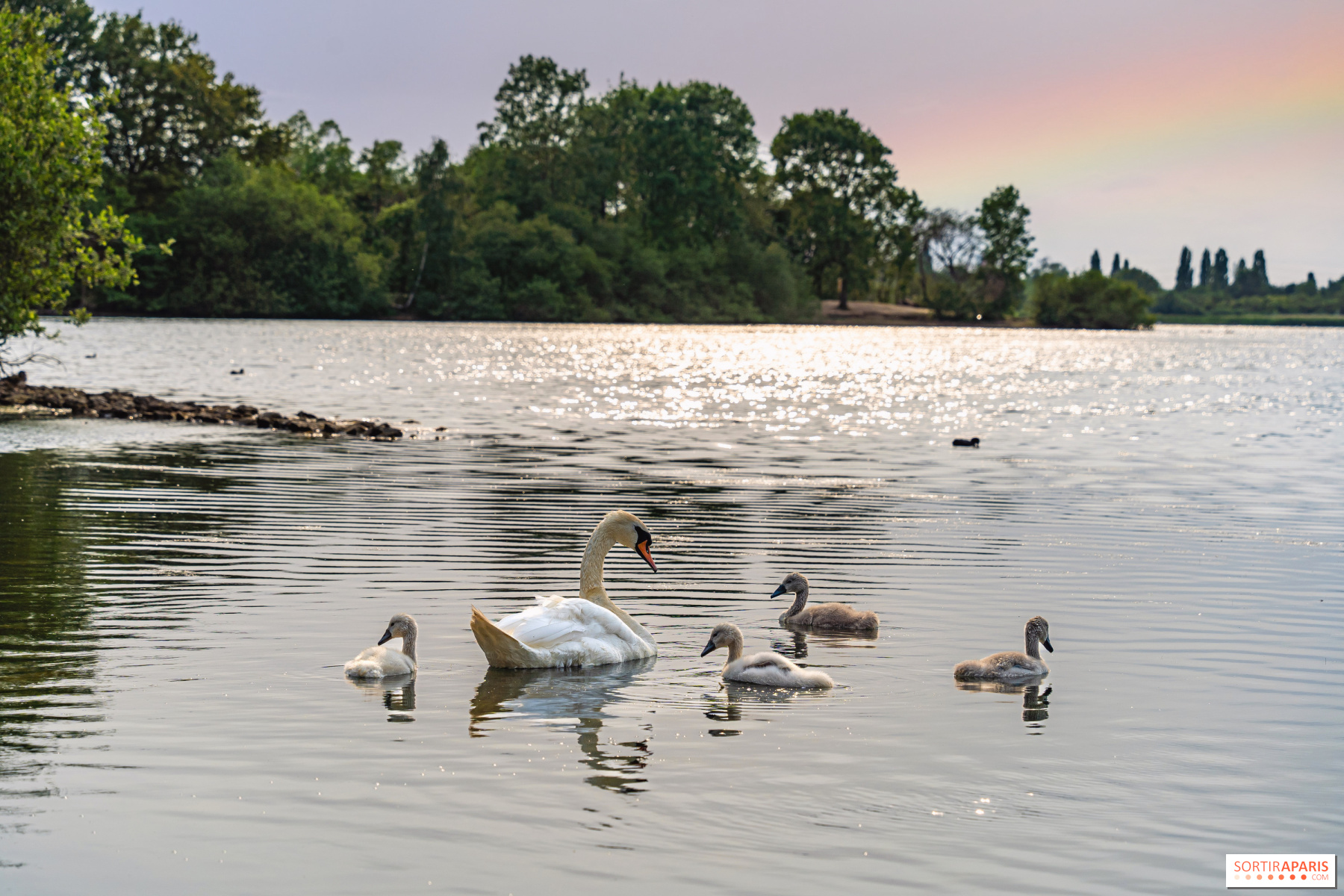
When the state decided, in the mid-1960s, to build there a a new town, the name naturally stuck. No fewer than 12 communes form Saint-Quentin-en-Yvelines, from Coignières to Voisins-le-Bretonneux. The urban area has since earned the label City and Country of Art and History, and its city museum in Montigny-le-Bretonneux traces this urban and heritage adventure.
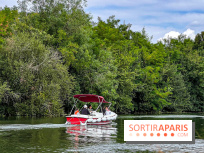
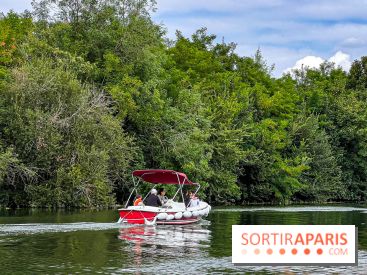
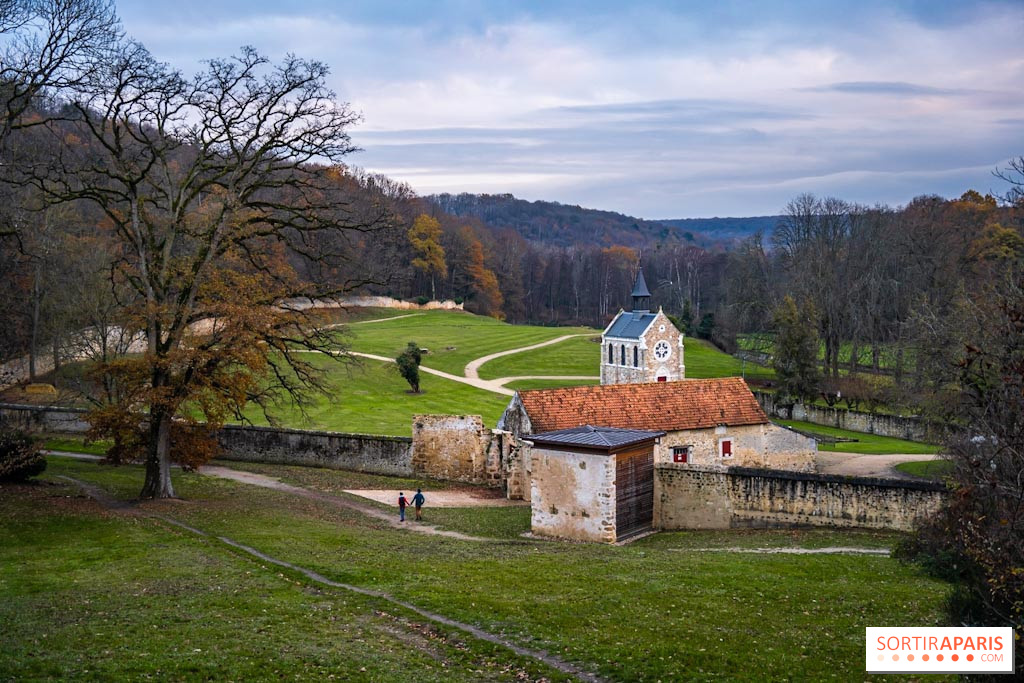
The little chapel did not endure: it was torn down in 1780. In its place today sits the Saint-Quentin-en-Yvelines leisure island, the largest educational outdoor space for sport and nature in Île-de-France, spanning 600 hectares. Sailing, canoe-kayaking, treetop adventures, a teaching farm, and a national nature reserve classified as Natura 2000… it’s a far cry from the modest medieval chapel, yet the name lives on. In 2026, a bold €51.8 million transformation project led by the Île-de-France region is underway to make it a premier nature destination for the western part of the Île-de-France region.
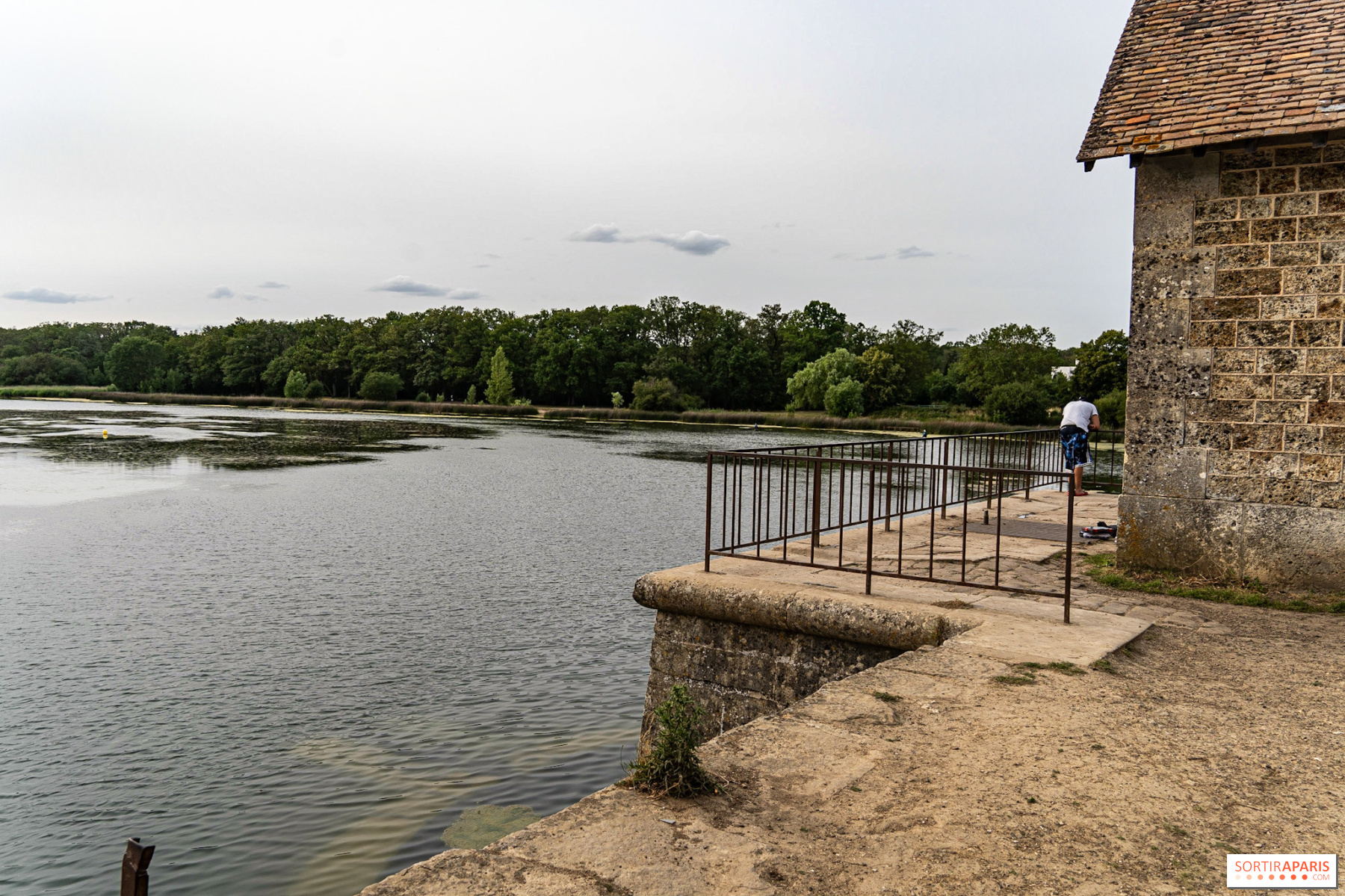
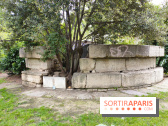
For the curious, all around the pond, the sandstone royal boundary markers planted at the start of the 18th century still bear fleur-de-lis and royal crowns carved in relief. Some were hammered by the revolutionaries. Today only about 200 survive of the original thousand, quiet little witnesses to a royal hydraulic network that has since been repurposed into an outdoor paradise.
Also to see on Sortiraparis: