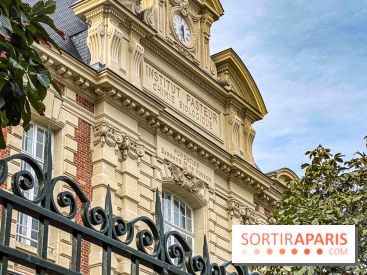
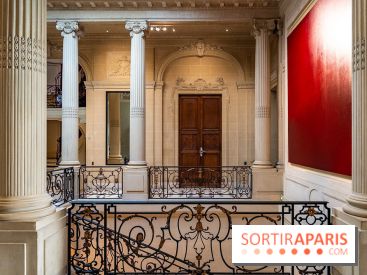
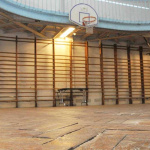
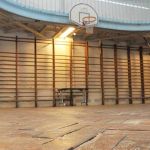
Hidden at 14 rue de Trévise in the 9e arrondissement, the 14Trévise is the oldest basketball court in the world, preserved in its original condition. More than just an old sports facility, it’s a founding site for the history of basketball in France and Europe.
The YMCA Paris building was completed in 1893, and its gymnasium hosted, on December 27, 1893, the very first basketball game played outside the United States, in Europe. The story is all the more remarkable because basketball had just been invented two years earlier, in 1891, by James Naismith at the YMCA Springfield College in Massachusetts.
In Paris, the young sport took hold almost instantly thanks to Melvin B. Rideout, trained in Springfield, who brought with him the rules of the game and introduced them in the gym of the YMCA Paris. The space, built with 7,444 floorboards imported directly from the United States, was modeled on Springfield, and the International Basketball Federation (FIBA) even describes it as a replica of the original gym.
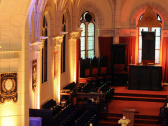
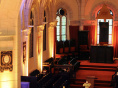
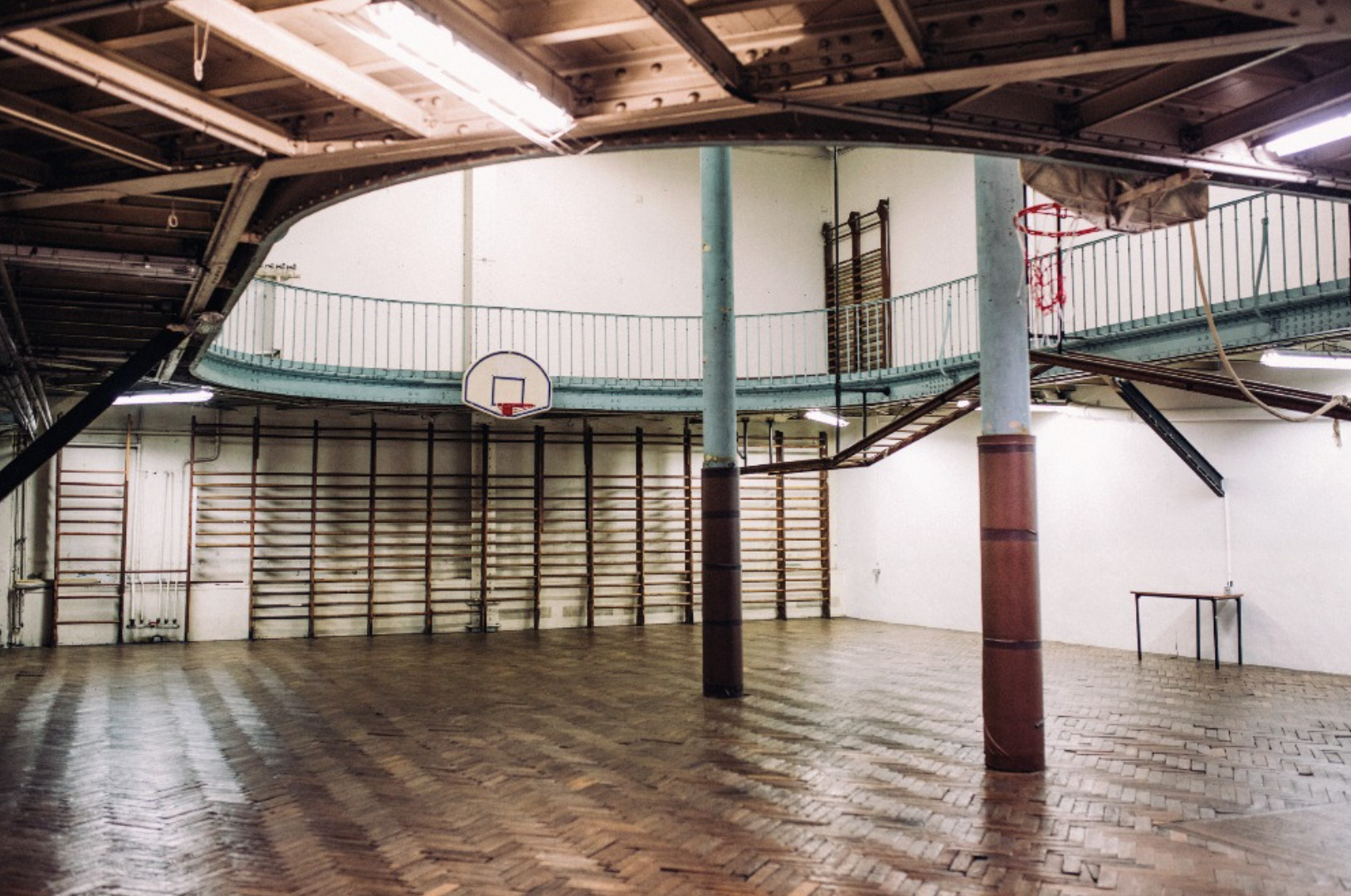
What makes the uniqueness of the gym on Rue de Trévise isn’t just its age, it’s also its state of preservation. It is the world's oldest basketball hall kept in its original state. The building, designed by architect Émile Bénard, a pupil of Gustave Eiffel, sits within the late‑19th‑century YMCA architectural tradition, with a mezzanine running track, gym equipment, and a layout conceived for the education of the body, the mind, and communal life.
The address at 14 rue de Trévise wasn't just about sport. From the outset, this complex united a gym, an indoor pool, a bowling alley, a restaurant, a library, conference rooms, a theater, and guest rooms. It is, in fact, the first French complex to bring together in one place so many social, educational, and sporting functions.
One of the most striking features of the gymnasium on Rue de Trévise is its two steel posts planted in the center of the court. Where contemporary venues seek completely open spaces, the world's oldest preserved basketball court embraces this constraint inherited from its original architecture.
These supports, crucial to the building’s structure, recall that basketball took root here in a space designed initially as a late-19th-century multi-purpose gymnasium. The result: in Treviso, you don’t just encounter an old court, but a court that still reveals, through its very materiality, what the birth of indoor basketball looked like!
The site has, since 2006, been listed as a Historic Monument for its originality and rarity. For several years now, YMCA Paris has been leading a broad restoration campaign to safeguard this exceptional heritage, with the backing of heritage and sports partners. The aim isn’t to turn the place into a static museum, but to keep it vibrant, true to its original vocation.
The question comes up often—and it’s a fair one: should such a rare site be open to visitors? As things stand, the historic premises at 14 rue de Trévise, home to YMCA Paris, do not operate as a regular tourist site with fixed visiting hours, online ticketing, or a clearly published price to tour this historic gym.
However, occasional tours, especially during heritage events like the Heritage Days, sometimes allow access to this basketball relic. And even though the site is undergoing a restoration program, which may limit accessibility, we recommend keeping an eye on the schedule for the next Heritage Days!
Adopt a blade from Paris' oldest basketball court to help renovate it
14Trévise, the YMCA's historic venue, has launched an unusual campaign to raise funds to renovate the floor of its basketball court, the oldest in the capital. [Read more]
Location
YMCA Paris - 14 Trévise - Christian Union
14 Rue de Trévise
75009 Paris 9
Route planner
Official website
ymcafrance.fr
























 Adopt a blade from Paris' oldest basketball court to help renovate it