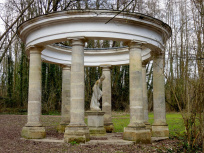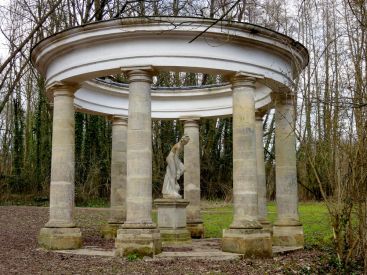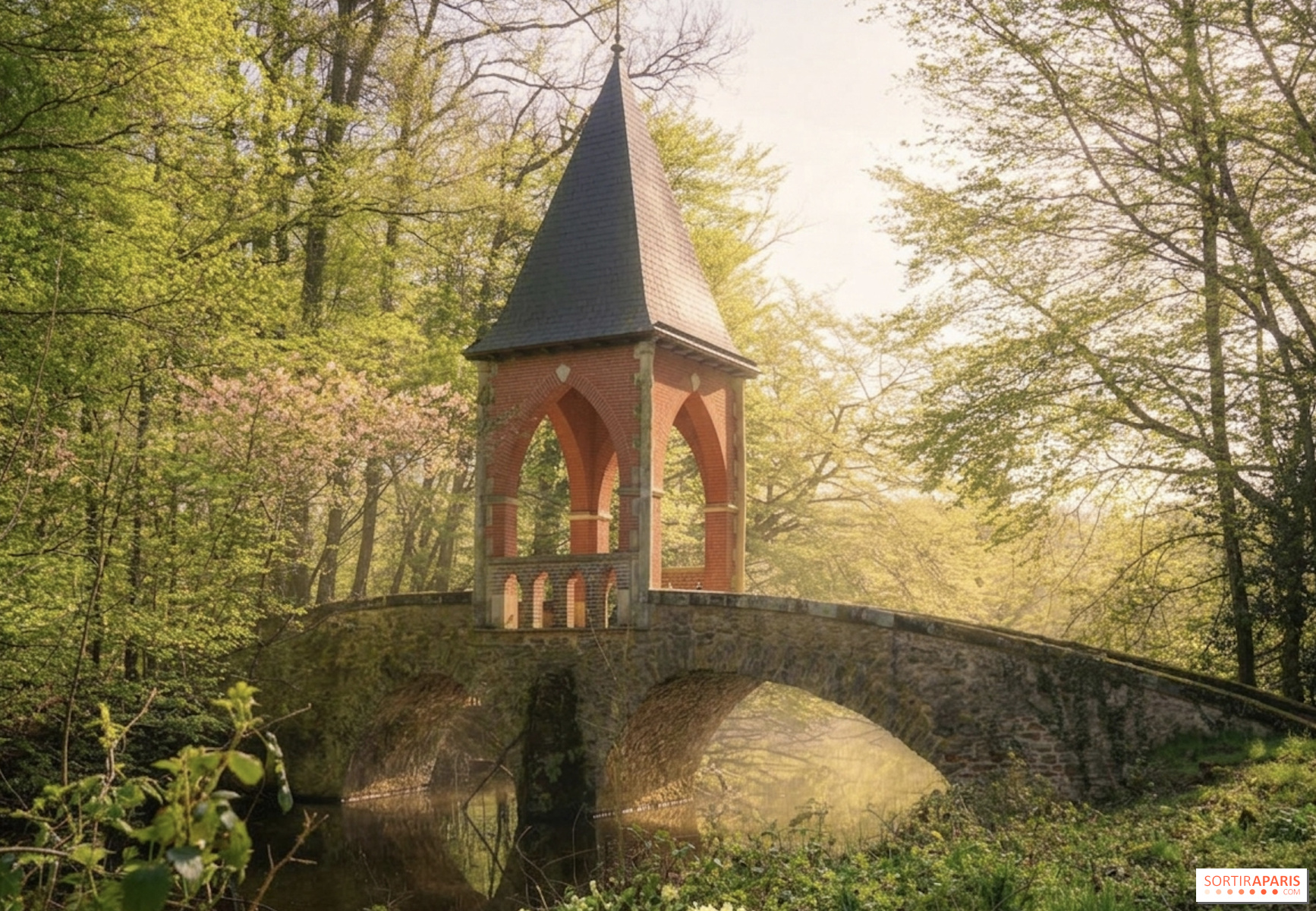
It doesn’t look like the temples of love one might first imagine, those with Corinthian columns and neoclassical domes as in Versailles or Rueil-Malmaison. In Bonnelles, in the Yvelines, the Temple of Love takes on a more singular form and, in many respects, an even more poetic one: it is a two-arch bridge crowned by a small building, tucked away in the heart of the regional nature reserve of the Bonnelles ponds, about fifty kilometers southwest of Paris, in the Parc naturel régional de la Haute Vallée de Chevreuse. A little-known place, freely accessible, that holds many surprises.
The regional nature reserve of the Bonnelles ponds covers about 22 hectares of wooded land, ponds and meadows, just a stone’s throw from the village. It comprises two ponds connected by a small canal: l'étang des Trois Ducs, the larger one with its three islets, and l'étang de Chartemps, the smaller and dedicated to regulated fishing. Designated a regional nature reserve in 2016, it is the direct heir to the landscaped park that once surrounded Bonnelles Castle, better known as the château de la duchesse d'Uzès. The northern part of the reserve lay precisely within this historic park, and it is there that the most notable ruins are concentrated.
To grasp the existence of this bridge-kiosk, you have to go back to the end of the 18th century. In 1782, the Duke of Uzès had the castle doubled and the surrounding park laid out as a Anglo-Chinese garden ornamented with follies, those fashionable ornamental structures that punctuated the walker’s route and created picturesque tableaux along the water. The park was even described by the landscape architect Le Rouge in his famous twelfth notebook of the Anglo-Chinese Gardens. At that time, it featured numerous elements: a cold store, a duck house, a mosque, a Chinese pavilion on a rocky plinth, and the famed bridge-temple of temple de l'amour, which provided access to the main island, dubbed Île du Kiosque. Today, most of these follies have vanished, but the love-temple bridge has been restored and remains one of the site’s most striking architectural elements.
Bonnelles cannot be discussed without invoking the figure who left an indelible mark on the manor. Anne de Rochechouart-Mortemart (1847-1933), who became the Duchess of Uzès through her 1867 marriage, was a singular personality. Great-great-granddaughter of the famed Veuve Cilliquot—wait, careful: it's Veuve Clicquot—she made Bonnelles her beloved residence and ran the legendary Rallye Bonnelles, one of France’s most renowned hunting packs. The first woman to earn a motor-driving license, a recognized sculptor, a committed feminist, and a chief nurse during World War I after transforming her château into an auxiliary military hospital, the duchess reads like a novel in real life. She died in 1933, and after her passing the estate was broken up and sold in parcels. In 1988 the commune bought back the ponds, narrowly averting a golf project, and the nature reserve soon came into being.
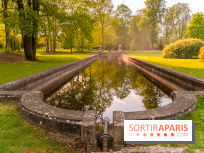
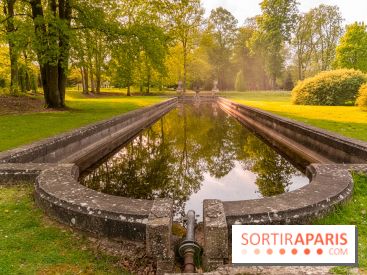
Strolling along the riverbanks, you discover a scene where wilderness and refined 19th-century touches mingle. The Temple of Love Bridge rises proudly above the waterway that links the two ponds, with its two stone arches and a small edifice perched atop. It leads to Kiosque Island, where the old wharf of the Three Dukes has been repurposed into an ornithological observatory. Several small stone bridges complete the walk, which follows a clearly marked, freely accessible circuit.
In terms of biodiversity, the reserve doesn’t disappoint. Nature lovers here glimpse the kingfisher, the grey heron, the reed bunting, or the sedge warbler among the many nesting species. The site is home to no fewer than 34 species of dragonflies, and protected flora is also well represented in this mosaic of wetland habitats. Guided activities and outings are regularly offered by Bonnelles Bullion Nature or by the Parc naturel régional de la Haute Vallée de Chevreuse.
The Bonnelles Pond Nature Reserve is freely accessible on foot, from the village in the direction of Saint-Arnoult-en-Yvelines. A discovery booklet published by the Île-de-France Regional Council is available at the town hall and at the welcome desk of the Regional Natural Park. The site is especially pleasant in spring and summer, when dragonflies hover above the Three Dukes’ Pond and the light plays on the reflections of the old stone bridge.
Our take: A beautiful nature and heritage outing, far from the crowds, ideal for fans of romantic, peaceful strolls. People go with family, as a couple, or solo, bringing binoculars to spot the nesting birds around the ponds.
Who is this outing for? Lovers of offbeat heritage, naturalists and walkers, families seeking a car-free stroll starting from the Rambouillet forest, and anyone drawn to places steeped in history and quiet charm.
Also to discover:
Dates and Opening Time
From April 21, 2026 to December 31, 2029
Location
étangs de bonnelle
78830 Bonnelles
Prices
Free
Recommended age
For all